
Home / Product Design / Manufacturing / How to Get a Part Made
How to Get a Part Made: Manufacturing Process Selection and Supplier Qualification
How to get a part made? Answer four questions in order: can it be made, with which process, to what quality and at what price? This page follows that chain, from a design for manufacturability review and manufacturing process selection to manufacturing cost estimation, supplier qualification and the tests that prove the result. Every step ends with a record or a test, so that the part you get is compliant and qualified, not only delivered.

Try search: CNC machining, injection molding, tolerances, ISO 9001, PPAP, supplier audit
Language
Loading…
Categories
Loading…
What do you need to do?
Pick a task. Each card jumps to the matching section of this page.
Check feasibility
Design for manufacturability review: geometry, tolerances, material and volume.
Choose the process
Manufacturing process selection: machining, molding, casting, sheet metal, forming and additive.
Estimate the cost
Manufacturing cost estimation: cost drivers, tooling against unit cost and should-cost.
Find the standards
Standards and certificates by industry: medical, automotive, aerospace, food.
Find certified suppliers
ISO 9001 certified suppliers by process and certificate, and the manufacturing RFQ.
Qualify the supplier
Supplier qualification: audit, first article inspection, PPAP and control plan.
Test and inspect
Metrology, non-destructive testing, material identification and test labs.
Move to production
Pilot run, change control, traceability and delivery terms.
Where to begin
I have a design to check
I have a drawing and need quotes
My part must be certified
I have a design to check
- The Ultimate Design Review Checklist: close a design phase with manufacturability, regulation, ageing, recyclability, safety and cleanability checks.
- Design for Assembly (DfA): design products that are as easy and inexpensive as possible to assemble.
- Plastics Design Tricks Collection: injection molding features such as ribs, clips, latches and living hinges, with no theory.
- Process FMEA (PFMEA): find the ways a manufacturing process can fail before the first part is made.
- Design for Manufacturing course: how to design parts that a factory can build at the intended cost and quality, with a 30-question quiz.
I have a drawing and need quotes
- Design for Manufacturing (DFM) suppliers: engineering services that run a DFM review to reduce production costs.
- Product Value Analysis Overview: relate the function of a part to its cost before you ask for quotes.
- Incoterms Introduction for Engineers: who pays and who bears the risk for transport, insurance and customs.
- Pugh Matrix: compare alternatives, such as quotes or processes, against several criteria.
- The full suppliers directory: search by map, keyword and category.
My part must be certified
- Manufacturing and Industries Standards Full Framework: international standards and norms for manufacturing, starting from ISO 9001:2015.
- ISO 9001 Quality Management System Standard: the most recognized quality management system framework, used for manufacturing certification.
- First Article Inspection (FAI): check that the process is set up correctly and produces parts to specification.
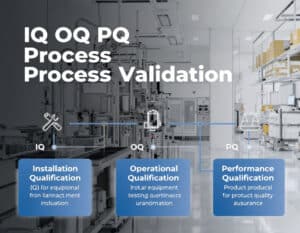
- IQ OQ PQ Process Validation: installation, operational and performance qualification, step by step.
- Quality Management and Compliance Systems course: management systems, verification and validation, with a 30-question quiz.
Check feasibility with a design for manufacturability review
A design for manufacturability review, or DFM review, checks that the part can be made, measured and delivered at your volume, in the material you chose. Check four things first: the geometry against the limits of the process, the tolerances and finish you really need, the material and its availability, and the regulations that apply. Run the review before you order tooling, ask suppliers for their own DFM feedback, and add a process FMEA to see what could go wrong in production. Tolerances and finish are strong cost drivers, so specify only what the function needs.
- The Ultimate Design Review Checklist: close a design phase with manufacturability, regulation, ageing, recyclability, safety and cleanability checks.
- Design for Assembly (DfA): design products that are as easy and inexpensive as possible to assemble.
- Process FMEA (PFMEA): analyze and mitigate the risks of manufacturing and assembly processes so that they run consistently.
- Plastics Design Tricks Collection: injection molding features: clips, ribs, latches, living hinges, reinforcements and parting lines.
- 20 Best Tips to Design for Cleanability: surface roughness, minimal inner radius and self-draining shapes, for food, medical and everyday products.
- Design for Disassembly in Plastic Consumer Electronics: snap-fit architecture, mono-material housings and adhesive-free joining under EU repair rules.
- Matweb Material Properties Database: the most complete freely accessible database of material properties, for metals, plastics, ceramics and composites.
- Materials Science Consulting suppliers: expert selection of alloys, polymers or ceramics.
- Less Is More. Why You Want To Design Simple: simple design cuts production cost and improves the user experience.
Manufacturing process selection: the main processes at a glance
Manufacturing process selection starts with volume. Processes that need tooling, such as injection molding, die casting and stamping, cost a lot to start and little per part, so they pay back at high volumes. Machining, laser cut sheet metal and additive manufacturing need little or no tooling and suit prototypes and small batches. Then check material, geometry and tolerance against the table. Each process name links to the suppliers that offer it.
| Process | Typical use and volume | Watch for |
|---|---|---|
| CNC machining | Prototypes and small to medium batches in metal or plastic, with tight tolerances and no tooling. | Cost follows machine time and setups. Avoid deep narrow pockets, thin walls and tiny inside radii. |
| Injection molding | Plastic parts from thousands to millions, with a low unit cost and a high mold cost. | Keep wall thickness even and add draft. Undercuts raise the mold cost. See the plastics design tricks. |
| Die casting | Aluminum, zinc and magnesium parts in high volumes, with complex thin walls. | High tooling cost and a porosity risk. Critical faces usually need machining afterwards. |
| Sheet metal fabrication | Laser cutting and bending from single parts to batches, and stamping for high volumes. | Bend radius, hole to edge distance and springback set what is feasible and which tolerance to expect. |
| Metal stamping and forging | High-volume structural parts with good strength. | Dies are costly and slow to make, so freeze the design before ordering them. |
| Welding and joining | Frames, enclosures, pressure parts and assemblies of several pieces. | Distortion and weld quality. Ask which welding procedures and welders are qualified. |
| Investment and sand casting | Complex metal shapes in medium volumes, and large parts. | Shrinkage, surface finish and porosity. Plan a machining allowance and X-ray inspection for critical parts. |
| Thermoforming and vacuum forming | Large shallow plastic shells with low tooling cost. | Wall thinning on deep draws and looser tolerances than injection molding. See thermoplastics vs thermosets. |
| Hydroforming | Hollow metal shapes and tubes formed with fluid pressure. | Presses and tooling pay back mainly at high volumes, as in automotive parts. |
| Additive manufacturing | Prototypes, complex geometry and low volumes without tooling. | Surface finish, direction-dependent properties and post-processing. Qualify the process before using it for certified parts. |
| Heat treatment and surface treatment | Secondary operations for hardness, corrosion resistance and finish. | Often certified processes in themselves, for example NADCAP in aerospace. |
Manufacturing cost estimation: what drives the price of a part
A manufacturing cost estimation adds material, machine time and labor, tooling spread over the volume, finishing, inspection and certification, packaging and freight. Build it bottom-up as a should-cost estimate, then ask for quotes at two or three volumes to see where tooling pays back. Compare quotes on one basis: same material certificate, tolerances, inspection level, quantity and delivery terms. Then count total cost, including scrap, rework and late delivery.
- Product Value Analysis Overview: the value equation of function against cost, and functional analysis methods such as FAST.
- How to Reduce Product Cost by 15% (example): a bill of materials review, functional analysis and redesign, with no loss in user experience.
- Cost of Poor Quality (COPQ): quantify the losses caused by defects and process inefficiencies.
- Cost-Benefit Analysis: weigh the expected costs against the expected benefits before a major decision.
- Incoterms Introduction for Engineers: the eleven rules that set who pays and who bears the risk for transport, insurance and customs.
- Pugh Matrix: select the best option from several alternatives against multiple criteria, for example processes or quotes.
Know which standards and certificates apply
The standards that apply depend on the industry and the product, not on the process. A medical device, a car part and a food container face different requirements even when they are molded the same way. Start from the framework of your industry, note the quality system certificate you expect from the supplier, and list the product standards and test methods the part must meet. Write them into the drawing and the purchase order.
- Medical Devices Standards Full Framework: standards beyond the usual ones, including ISO 13485 quality management and ISO 14971 risk management.
- Automotive Standards Full Framework: quality management and other standards of the automotive industry.
- Aerospace Standards Full Framework: design, production and operation standards for aeronautics and aerospace.
- Food Industry Standards Full Framework: food safety, quality and consistency standards, including ISO 22000.
- Electronic Components Standards Full Framework: standards for electronic components and semiconductors.
- Home Appliances Standards Full Framework: household appliance standards, led by the IEC 60335 series on electrical safety.
- Mechanical Hardware Standards Full Framework: norms for mechanical hardware, beyond ISO 9001 requirements for manufacturers.
- Materials Standards Full Framework: where to find standards for metals, polymers, ceramics, composites, alloys and elastomers.
- ISO 9001 Quality Management System Standard: the most recognized quality management system framework.
- ISO Standards Search: find the standards related to your activity or product, then see ASTM, IEC and ANSI searches in the tools directory.
Find ISO 9001 certified suppliers and other certified manufacturers
Start from the process, then filter by certificate. About 900 of the 1,890 suppliers in the directory mention a certification or accreditation: over 650 name ISO 9001, about 250 ISO 14001, over 130 IATF 16949, about 100 ISO 13485 and about 70 AS9100. An ISO 9001 certified supplier has a quality management system audited by a third party. The certificate does not show that your part will be good, and its scope may not cover your process, so check the scope and the expiry date, then run the supplier qualification described below.
- Suppliers that mention ISO 9001: general quality management system certification.
- Suppliers that mention IATF 16949: quality management for the automotive supply chain.
- Suppliers that mention ISO 13485: quality management for medical devices.
- Suppliers that mention AS9100: quality management for aerospace and defense.
- Suppliers that mention NADCAP: accredited special processes such as heat treatment, coatings and welding.
- Technical Sourcing: finding rare components and auditing factories.
- Regulatory and Compliance Consulting: design-level preparation for CE, FDA and UL standards.
- Design for Manufacturing (DFM) suppliers: engineering services that optimize designs to reduce production costs.
Write a manufacturing RFQ that gives comparable quotes
A manufacturing RFQ, or request for quotation, turns your drawing into prices that you can compare. Send the same package to two or three qualified suppliers, and ask for tooling cost, unit price at each quantity and lead time, listed separately. The less a supplier has to guess, the fewer assumptions hide in the price.
- Drawing and 3D model: part name, number and revision, so that nobody quotes an obsolete version.
- Material and grade: with the certificate required, for example a material test report.
- Quantities and forecast: ask for prices at two or three volumes, and state the annual demand for production parts.
- Tolerances and surface finish: mark the critical characteristics only, because every tight tolerance adds cost. See Process Capability Index (Cpk).
- Standards, inspection and documents: certificates, inspection level and a first article inspection report.
- Packaging, labeling and delivery terms: define them with Incoterms.
- Quote format: tooling cost, unit price at each quantity, lead time and validity date, listed separately.
- Answer date: when the quotes are due, and who answers questions.
Supplier qualification: audit, first article inspection and PPAP
Supplier qualification confirms that a supplier has the systems, capacity and controls to deliver your part, then proves it on the part itself. Audit the supplier against your requirements. Then approve the part: a first article inspection checks the first parts against every requirement of the drawing, and a PPAP package, asked by automotive buyers, proves that the process can make the part repeatedly. In regulated sectors the process is validated in steps, installation, operation and performance, and documented under good manufacturing practice. Agree the acceptance criteria, the sampling plan and the control plan before the first order.
- First Article Inspection (FAI): validate that a process is set up correctly and can produce parts to the required specification, typically for new parts or changes.
- Audit: ensure compliance, give assurance and identify opportunities for improvement.
- Manufacturing Control Plan: control the quality of the process so that products consistently meet customer specifications.
- Acceptance Sampling: accept or reject large batches when 100% inspection is not feasible.
- IQ OQ PQ Process Validation: Full Theory & Praxis: installation, operational and performance qualification, with the key activities of each step.
- From GMP to cGMP: the Full Mastering Guide: the 10 core principles of good manufacturing practice, from written procedures to validation and facility design.
- Contamination Control Strategy & Cleanroom 26 Best Practices: facility and equipment design, personnel, utilities, raw materials and components.
- Validation vs Verification (V&V): the difference between checking against the specification and checking against the need.
Test and inspect to prove the part
Testing proves what a certificate cannot. Dimensional inspection checks geometry, non-destructive testing finds hidden defects, material identification confirms the alloy or polymer, and environmental and reliability tests show how the part ages. Choose methods from the risks in your process FMEA, and check that the measuring system is itself capable before you trust its numbers. Use accredited labs when a standard or a customer requires it.
- Measurement System Analysis (MSA): assess whether a measurement system gives trustworthy data for process control and product acceptance.
- Process Capability Index (Cpk): how well a process stays within specification limits, used in supplier quality and tolerance setting.
- How to Optimize Quality with Statistical Process Control (SPC): basics, core principles and the role of control charts in real-time process monitoring.
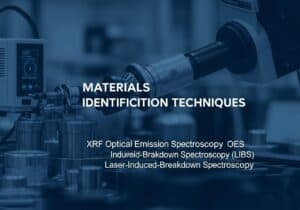
- Material Identification Techniques & Positive Material Identification (PMI): common techniques, non-destructive testing and quality control.
- Logic Tree & Chart to Identify Plastics: simple, methodical tests to identify an unknown plastic.
- Handling One-off Defects and Outliers in V&V, Manufacturing and Quality: statistical detection and treatment of rare events.
- Compliance Testing: verify that a product adheres to specific laws, regulations or standards.
Move to production without surprises
Before volume, run a pilot to validate tooling, assembly and quality control, and decide go or no go on measured results. Then control change: every engineering change goes through a formal order, so that its cost and quality effects are known. Keep traceability so that a defect can be followed back to a lot, and fix delivery terms and packaging in the contract. Monitor key indicators from the first lots.
- From Lab To Market: The Role of the Pilot Production Run: plan and run a pilot to validate tooling, assembly and quality control, with a go or no go decision.
- Engineering Change Order (ECO): Best Practices to Minimize Disruption and Cost: formal workflow, change board, root cause analysis and metrics to limit cost.
- All Production KPIs to Monitor and improve Production Efficiency: machine-focused and unit-focused indicators.
- Checksums in Product Design and Manufacturing: prevent wrong labels, barcode scan errors and costly recalls.
- Poka-Yoke: Best Tips for Error-Proof Processes: prevent assembly errors by design.
- 8D Problem Solving: The Comprehensive Guide: a structured team method to solve a recurring quality problem, for example with a supplier part.
See how parts are made
Seeing a process helps you judge feasibility and cost. These factory tours and process guides show how real parts are formed, joined and finished.
- Air Separation Unit: how an industrial plant liquefies air and splits it into gases by fractional distillation.
- Pressure Gauges Manufacturing: a semi-automatic Bourdon tube gauge line, with a video.
- Gas Cylinder Manufacture: steel or aluminum cylinders formed by hot or cold extrusion.
- Circuit board assembly: SMT for small components, wave soldering for bigger ones, and how each process is chosen.
- PCB Manufacturing: the Process & Efficiently: from copper sheets on a substrate to etched circuits.
- Tire Manufacturing: from raw material to the green tire, molded and cured.
- Knife Manufacturing: Factory Tours: steel selection, treatment, machining and handles.
- Seamless Steel Tubes Making: a solid billet pierced and rolled with no weld seam.
- Metal Drawing Process for Aluminum Cans: a thin plate pulled through a die until the part is longer than its diameter.
- How Are Plastic Bottles Made: from pellets to preforms, blown bottles and filling.
- How-to: Vacuum Resin Infusion Technology: thin-wall composite parts for high performance, in three videos.
- Hydroforming: Metal Shaping Technology Explained: shaping metal with fluid pressure of up to 10,000 PSI.
Rules that hold when you get a part made
- Decide the volume first. It selects the process family and decides whether tooling pays back.
- Specify only what the function needs. Every tight tolerance and special finish adds cost and risk.
- Give the supplier the whole picture: function, environment, forecast and standards, not only the drawing.
- Compare quotes on one basis. See Pugh Matrix.
- A certificate shows that a quality system exists. It does not qualify your part, so approve the first article. See First Article Inspection.
- Freeze the design before you pay for tooling. Changes after the steel is cut cost the most. See Engineering Change Order.
- Agree how you will measure before the first part is made: gauges, sampling plan and acceptance criteria. See Measurement System Analysis.
- Keep records by lot: material certificates, inspection reports and process data, so that a defect can be traced.
- Qualify a second source for critical parts when volume or risk justifies it.
- Test the part in conditions that match its use, not only on the bench: temperature, vibration, cleaning and ageing. See reliability and life cycle testing suppliers.
Find certified suppliers, test labs, universities and open positions
Suppliers by process
- CNC machining: precision milling, turning and multi-axis machining.
- Injection molding: high-volume plastic production and overmolding.
- Injection molds and tooling: steel and aluminum molds for plastics.
- Die casting: aluminum, zinc and magnesium.
- Sheet metal fabrication: laser cutting, bending and welding.
- Investment and sand casting: complex and large metal parts.
- Metal stamping and forging: high-strength structural parts.
- Welding and joining services: fusion, arc and solid-state joining.
- Thermoforming: vacuum and pressure forming of plastic sheet.
- Vacuum forming: single-sided sheet forming over a mold.
- Plastic and metal extrusion: continuous profiles, tubes and frames.
- Additive manufacturing: industrial SLS, DMLS and SLA production.
- Heat treatment: annealing, quenching and tempering.
- Surface treatment and finishing: anodizing, powder coating and plating.
- Contract electronics manufacturing (EMS): design, assembly and box build.
- The full suppliers directory: search by map, keyword and category.
Test and inspection labs
- Non-destructive testing (NDT): X-ray, CT scanning and ultrasonic.
- Metrology and dimensional inspection: CMM, 3D scanning and laser tracking.
- Inspection and measurement systems: vision systems and automated metrology.
- Failure analysis: root-cause investigation of broken components.
- Chemical and material analysis: spectroscopy, chromatography and SEM.
- Environmental stress testing: HALT, HASS and thermal cycling.
- Reliability and life cycle testing: MTBF validation and fatigue testing.
- EMC and EMI testing: electromagnetic compatibility and interference.
- Acoustic and vibration testing: noise floor and resonance analysis.
- Calibration services: NIST-traceable calibration.
- Aerospace testing: AS9100 and DO-160 standards.
- Automotive testing: IATF 16949, crash and vibration standards.
- Medical device validation: V&V services for ISO 13485 compliance.
- Safety certification: UL, CSA, ETL and TUV testing.
Universities, research and jobs
- Universities active in manufacturing
- Universities active in materials
- Universities active in mechanical engineering
- Universities active in quality
- Universities active in metrology
- Universities active in process control
- Universities active in logistics
- Engineering jobs worldwide: engineering vacancies in product design, innovation and manufacturing.
Train in design for manufacturing and quality
The Design for Manufacturing course teaches how to design parts that a factory can build at the intended cost and quality. The Quality Management and Compliance Systems course covers the framework that regulated and standards-driven manufacturing requires. Each course has a 30-question quiz to check your level.
- ISO 9001 Quality Management System Standard: the most recognized quality management system framework.
- Juran Trilogy (Quality Trilogy): quality planning, quality control and quality improvement as three linked processes.
- Total Quality Management (TQM): a philosophy in which everyone improves processes, products and culture.
- Seven Basic Tools of Quality: Ishikawa graphical techniques such as the cause-and-effect diagram.
- Process Capability Index (Cpk): how well a process stays within specification limits.
Editor's top picks
Pages selected by the editor for this topic: the suppliers directory first, then nine guides on feasibility, technology, price, qualification, testing and production.
The top page for sourcing a part: about 1,900 suppliers in more than 120 categories, searchable by map, keyword and category. Filter by process, then check the certificates and audit the supplier before you order.






How to get a part made: questions answered
How do I get a part made from a drawing or a prototype?
Work in this order. Confirm feasibility with a design for manufacturability review, then choose the process from volume, material, geometry and tolerance. Estimate the cost, find certified suppliers, send the same manufacturing RFQ to two or three of them, and qualify the one you pick with an audit and a first article inspection. Run a pilot batch before series orders. See the pilot production run.
How does manufacturing process selection work?
Start with volume, then material, geometry and tolerance. Tooled processes such as injection molding and die casting suit high volumes. Machining, sheet metal and additive manufacturing suit prototypes and small batches. The process table compares them, and each name leads to suppliers. Check the choice with the supplier before you freeze the design.
What is a design for manufacturability review?
It is a check of the design against the limits of the process: wall thickness, radii, draft, depth to width ratios, tolerances, surface finish and material availability. Do it between prototype and tooling, because a change on paper costs a revision, while the same change after the mold is cut costs the mold. See Design for Assembly and the design review checklist.
How is manufacturing cost estimation done for a part?
Add material, machine time at the shop rate, setup and tooling divided by the batch size, finishing, inspection, packaging and freight, then overhead and margin. This bottom-up method is the most accurate once you know the process and the volume. For an early concept, a quick estimate from similar parts is enough. Product Value Analysis shows how to relate function to cost.
What is tooling, and when does it pay back?
Tooling means molds, dies and fixtures made for one part. It is a fixed cost, spread over every part produced. The break-even volume is the tooling cost divided by the saving per part against a process without tooling. Below that volume, machining, sheet metal or additive manufacturing is usually cheaper.
How do I compare quotes fairly?
Put every quote on the same basis: same drawing revision, material and certificate, tolerances, inspection level, quantity, packaging and delivery terms. Note what each quote excludes, such as tooling, samples or testing. Incoterms define who pays for transport and bears the risk. A Pugh matrix helps to score the options on several criteria.
What should a manufacturing RFQ contain?
Send the drawing with its revision and a 3D model, the material and grade, quantities and forecast, tolerances and surface finish, the standards that apply, the inspection and documents required, packaging, delivery terms and the date you need quotes back. Ask for tooling cost, unit price at each quantity and lead time, listed separately. The RFQ checklist above lists each item.
What does an ISO 9001 certified supplier guarantee?
An independent body has audited the supplier quality management system against ISO 9001, so procedures, records and corrective actions exist. It does not guarantee that a given part meets your requirements, and the scope of the certificate may not cover your process. Ask for the certificate, check its scope and expiry date, then qualify the part. See ISO 9001.
Which certificates matter for my industry?
IATF 16949 is the quality management standard of the automotive supply chain, ISO 13485 of medical devices and AS9100 of aerospace and defense. Food contact parts follow food safety rules such as HACCP. Your product may need further standards, for example for electrical safety. The standards frameworks list them by industry.
What is supplier qualification, and how do I qualify a new supplier?
Supplier qualification checks that a supplier can meet your requirements for quality, delivery, cost and compliance. Define the requirements, pre-screen capability and certificates, audit the supplier on site or remotely, approve the first parts with a first article inspection, agree a control plan and acceptance criteria, and run a pilot batch before series orders. For critical parts, qualify a second source and keep monitoring the supplier. See Audit and the pilot production run.
What is the difference between first article inspection and PPAP?
A first article inspection checks that the first parts from a new setup meet every requirement of the drawing, so it proves the part. PPAP, the Production Part Approval Process of the automotive industry, proves that the process can make conforming parts repeatedly. Its package includes the dimensional results, which are a first article inspection, plus a process FMEA, a control plan, measurement system analysis and capability studies, up to 18 elements. Aerospace uses the AS9102 standard for first articles. See First Article Inspection, PFMEA, the control plan and measurement system analysis.
What is the difference between verification and validation?
Verification checks that the part was made to the specification. Validation checks that the part meets the need it was made for, in the conditions of use. Both are needed. See Validation vs Verification.
How can I lower the price without lowering quality?
Review the bill of materials and the function of each part, relax tolerances and finishes that the function does not need, use standard materials and sizes, and design for the chosen process. Compare volume breaks, and count the cost of poor quality before you pick the cheapest quote. See How to Reduce Product Cost by 15% and Cost of Poor Quality.
Related topics
Getting a part made connects with cost and value engineering, lean production, emerging manufacturing technologies, the environmental footprint of production and the supplier ecosystem.