
Home / Product Design / Value-Driven Design
Value-Driven Design: Design to Cost and Design Review Methods
Value-driven design delivers the required function and reliability at a target cost. These guides cover design to cost, cost reduction in product design, design for reliability, failure analysis methods and design review methods, sorted by the phase of your design.
Search guides, methods, tools and standards
Type a topic, a material, a standard or a tool name. Results appear below the search box.
Try search: FMEA, validation, verification, design to cost, value analysis, design review
Language
Loading…
Categories
Loading…
What do you need to do?
Pick a task. Each card jumps to the matching section of this page.
Define what users value
User needs, QFD, Kano, form fit function and requirements.
Cut cost without cutting function
Value analysis, design to cost, DfM, DfA and simplicity.
Check a design before release
Design Review Tree, review checklist, verification and validation.
Predict and prevent failure
Bathtub curve, FMEA, FMECA, reliability and physics of failure.
Compare review methods
Eight methods in one table, with the question each one answers.
Find experts and suppliers
Design for manufacturing, simulation and reliability testing partners.
Train in design and development
Courses on product design, DfM, UX and ergonomics.
Get a quick answer
Value analysis, verification versus validation, FMEA and form fit function.
Where to begin
New to value-driven design
Reviewing a design
Cost and robustness
New to value-driven design
- Product Value Analysis Overview: core principles, functions, the value equation of function versus cost, and functional analysis methods such as FAST.
- Less Is More. Why You Want To Design Simple: minimalist principles, form follows function, K.I.S.S. and jugaad applied to products.
- Forms Follow Function … in Product Design Especially: the form follows function principle from architecture to product design, value analysis, ergonomics and CAD, with examples and a video.
- Form Fit and Function Analysis: Optimize Your Design: its history in military applications, the concepts of form, fit with GD&T, and function, to reduce design flaws.
- “Best” 10 Design Mistakes To Avoid: home-calling devices, special connectors, separate configuration software, odd screw patterns, no remote update.
Reviewing a design
- The Ultimate Design Review Checklist: regulation, environment and ageing, IP, manufacturability, recyclability, safety, ergonomics and cleanability.
- The Design Review Tree™ (DRT): Double-check Your Product Design: the Design Review Tree, a structured tool to evaluate product designs, identify potential failures and improve quality and safety.
- Design Reviews: structured checks of a design at planned gates.
- Validation vs Verification (V&V): What’s The Difference and Usage in R&D: definitions, process and purpose of each, examples, and their role in ISO 9000 quality management.
- 101 on Failure Mode Effects And Criticality Analysis (FMECA): objectives, process steps, risk priority number calculation, types, benefits and limitations, plus standards, guidelines and software.
Cost and robustness
- How to Reduce Product Cost by 15% (example): cutting the cost of an entry-level product by 15% through BOM review, functional analysis and redesign.
- Design for X (DFX): guidelines that optimize a product for one lifecycle goal such as assembly, with examples like flat-pack furniture and snap-fit parts.
- Design for Assembly (DfA): design products with ease of assembly in mind.
- Taguchi Methods (Robust Design): make performance insensitive to variation through robust design.
- Engineering Change Order (ECO): Best Practices to Minimize Disruption and Cost: formal workflow, essential form components, the change board, root cause analysis and metrics to limit cost.
Define what users value
Value starts with the user, not with the technology. Capture needs with the voice of the customer, rank them with Kano and QFD, and fix form, fit and function before you choose solutions. Test early with real users, because wrong assumptions are the most expensive defects.
- Voice of the Customer (VOC): capture what customers need and value, in their own words.
- Kano Analysis (Kano Model): classify features by how they affect customer satisfaction.
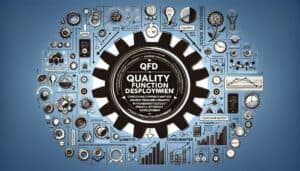
- Quality Function Deployment (QFD): translate customer requirements into technical characteristics.
- Critical to Quality (CTQ) Tree: break customer needs down into measurable quality requirements.
- Form Fit and Function Analysis: Optimize Your Design: its history in military applications, the concepts of form, fit with GD&T, and function, to reduce design flaws.
- Human-Centered Design: a design approach built on understanding users and testing with them.
- User-Centered Design (UCD): putting end-user needs and limits first at every design stage, with examples from the iPhone interface and ergonomic products.
- ISO 9241-11 Definition of Usability: effectiveness, efficiency and satisfaction for specified users and goals, a base for usability test metrics.
- Minimum Viable Product (MVP): Pro Tips: why an MVP matters, reduced marketing risk, faster R&D and projects, and early income for the next development steps.
- Weighted MVP Features Prioritizer™: free tool to list, categorize and prioritize the features of a minimum viable product, with a visual matrix: quick wins.
- Innovation.world’s Concept Explorer™: concept Explorer, the site's visual tool to browse concepts and linguistic connections.
- Use or Abuse 25 Cognitive Biases in Product Design and Manufacturing: 25 cognitive biases to use or avoid in product design and manufacturing, including anchoring, availability, bandwagon.
Design to cost: cut cost without cutting function
Most of a product’s cost is decided during design, so design is the cheapest place to remove it. Value analysis asks what each function is worth and what it costs. Simplify, standardize parts and design for manufacture and assembly before tooling is cut.
- Product Value Analysis Overview: core principles, functions, the value equation of function versus cost, and functional analysis methods such as FAST.
- How to Reduce Product Cost by 15% (example): cutting the cost of an entry-level product by 15% through BOM review, functional analysis and redesign.
- Less Is More. Why You Want To Design Simple: minimalist principles, form follows function, K.I.S.S. and jugaad applied to products.
- Forms Follow Function … in Product Design Especially: the form follows function principle from architecture to product design, value analysis, ergonomics and CAD, with examples and a video.
- Design for X (DFX): guidelines that optimize a product for one lifecycle goal such as assembly, with examples like flat-pack furniture and snap-fit parts.
- Design for Assembly (DfA): design products with ease of assembly in mind.
- Cost-Benefit Analysis: compare the expected costs and benefits of a decision.
- Non-Value Added Analysis: find activities and features that add cost but no value.
- Benchmarking: compare your design or process against the best known.
- Reverse Engineering for Product Design: electronics, software, communication and mechanics, static versus dynamic analysis, and legal and ethical limits.
- Top 5 Advantages Of Clean Sheet Design For Product Design: stronger innovation, creative solutions and freedom from traditional constraints.
- 90 Mechanical Principles to Get Savvy Design Solutions: 90 mechanical principles from Ralph Steiner's 1930 film, with CAD renderings, a Lego version and Theo Jansen mechanisms.
Design review methods: check a design before release
A design review finds what the designer no longer sees. Use a structured tree or checklist, review with people from manufacturing, quality and purchasing, and record the decisions. Separate verification, did we build it right, from validation, did we build the right thing.
- The Design Review Tree™ (DRT): Double-check Your Product Design: the Design Review Tree, a structured tool to evaluate product designs, identify potential failures and improve quality and safety.
- The Ultimate Design Review Checklist: regulation, environment and ageing, IP, manufacturability, recyclability, safety, ergonomics and cleanability.
- Design Reviews: structured checks of a design at planned gates.
- Validation vs Verification (V&V): What’s The Difference and Usage in R&D: definitions, process and purpose of each, examples, and their role in ISO 9000 quality management.
- Verification vs. Validation: building the product right versus building the right product, and their role in agile and systems engineering V-models.
- “Best” 10 Design Mistakes To Avoid: home-calling devices, special connectors, separate configuration software, odd screw patterns, no remote update.
- IQ OQ PQ Process Validation: Full Theory & Praxis: installation, operational and performance qualification, with key stages and activities of each step in theory and practice.
- Engineering Change Order (ECO): Best Practices to Minimize Disruption and Cost: formal workflow, essential form components, the change board, root cause analysis and metrics to limit cost.
- Product design reviews: teardowns and analysis of design choices, materials and mechanics.
- Fly Swatter Design Review: stress concentration from aesthetic shapes cracks it after a few uses, with improvement suggestions.
- Headlamp design review: plastic design tricks, tight assembly, one-board electronics and optics, strap, body and possible improvements.
- Low cost pulse oximeter %SpO2 design review: packaging, instructions for use, main design, and whether it is really low-cost.
Design for reliability: predict and prevent failure
Reliability is designed in, not tested in. These reliability design methods start with a list of failure modes, ranked by severity, occurrence and detection, so that the highest risks are fixed first. Know how failure rates change over a product’s life, and use physics of failure to find causes.
- Understanding the Bathtub Curve & Product Life Failure: infant mortality, normal life and wear-out periods, and how to use it in reliability modeling.
- Reliability Function (Survival Function): the probability a system works without failure for time t, with uses in warranty calculation and preventive maintenance.
- Physics of Failure (PoF): modeling root-cause failure mechanisms from materials science and physics, such as electromigration and thermal fatigue.
- FMEA (Failure Mode and Effects Analysis): a proactive method to find potential failure modes, assess their effects and prioritize actions.
- Design FMEA (DFMEA): analyze how functions of the design can fail and with what effect.
- Process FMEA (PFMEA): analyze how the manufacturing process can fail.
- 101 on Failure Mode Effects And Criticality Analysis (FMECA): objectives, process steps, risk priority number calculation, types, benefits and limitations, plus standards, guidelines and software.
- Risk Priority Number (RPN): severity times occurrence times detection, the score used in FMEA to prioritize corrective actions in manufacturing.
- Risk Matrix: rank risks by likelihood and severity.
- Taguchi Methods (Robust Design): make performance insensitive to variation through robust design.
- Triple Modular Redundancy (TMR): three identical modules run in parallel and vote, a fault-tolerance technique used in aerospace and satellites.
- Checksums in Product Design and Manufacturing: How to Prevent Wrong Labels, Barcode Scan Errors, and Costly Recalls: GS1 check digits, CRC, SHA-256, barcode scan errors, wrong labels and firmware verification.
Design review and risk assessment methods compared
Several design risk assessment methods and review methods look at a design from different angles. The table shows the question each one answers and when to use it.
| Method | Question it answers | Best used |
|---|---|---|
| Design review checklist | Did we cover the known points? | Before any gate, as a baseline |
| Design Review Tree | Which areas of the design are still unvalidated? | Systematic review of a design and its project, with status rolled up to one root |
| Design FMEA (DFMEA) | How can each function or part fail, and with what effect? | Early to mid design, function by function |
| Process FMEA (PFMEA) | How can the manufacturing process fail? | Before production starts |
| FMECA | Which failure modes are the most critical? | When ranking by criticality matters, as an extension of FMEA |
| Quality Function Deployment | Which technical features serve which customer needs? | Concept phase, to set priorities |
| Verification and validation | Did we build it right, and did we build the right thing? | When planning tests and acceptance |
| Taguchi methods | How do we make performance insensitive to variation? | Robust design of parameters and tolerances |
Value rules that hold in practice
- Write down what the user values, and what it is worth, before you choose solutions. See Voice of the Customer.
- Prioritize the critical-to-quality attributes and spend your effort there. The CTQ tree helps.
- Bring manufacturing and purchasing into the concept phase, not after the drawings are frozen. The Design for Manufacturing course covers why.
- Test assumptions with users early and often. A prototype costs less than a tool. See Rapid Prototyping.
- Quantify the value proposition with KPIs linked to user outcomes and business goals.
- Question every function and feature. If it does not serve a need, remove it, as in Less Is More.
- Cut cost where the user will not notice, and never where safety or a critical-to-quality attribute is at stake.
- Review the design with a cross-functional team at each gate, and record the decisions. Use the Design Review Tree.
- List failure modes before the first prototype, and revisit the list after every change. See FMEA.
- Control changes: each engineering change after release costs more than the one before. See Engineering Change Order.
- Close the loop after launch. Field data and complaints are the best input for the next design.
Find experts, simulation and test partners
Suppliers and consultants
- Design for manufacturing: optimizing designs to reduce production costs.
- Industrial design: aesthetics, ergonomics and form-factor development.
- Mechanical engineering: structural design, mechanisms and kinematics.
- Simulation and analysis: FEA, CFD and thermal simulation.
- Prototyping strategy
- Reliability and life cycle testing: MTBF validation and fatigue testing.
- Failure analysis: root-cause investigation of broken components.
- The full suppliers directory: search by map, keyword and category.
Universities, research and jobs
- Universities active in mechanical engineering
- Universities active in industrial design
- Universities active in materials
- Universities active in ergonomics and UX
- Free Latest Patents Search: the latest English-language patents from the European Patent Office.
- Engineering jobs worldwide: engineering vacancies in product design, innovation and manufacturing.
Train in design and development
The Product Design and Development courses give a shared vocabulary and a repeatable review habit. Design for Manufacturing closes the gap between a model on screen and a part a factory can build at the intended cost and quality. The UX courses cover interface design and human-centered design. Each course is free and has must-know checklists and a final exam.
- Product Design & Development – Level 2: engineers must advance beyond basic design to effectively align product development with cost management and strategic planning.
- Design Thinking & Innovation – Level 1: before a concept becomes a formal specification, an engineer needs frameworks for generating and shaping it.
- Ergonomics & Human Factors Engineering: methods to measure physical and cognitive strain on users and workers.
- Quality Management & Compliance Systems: quality systems and compliance in regulated or standards-driven manufacturing.
- All courses
Editor's top picks
Pages selected by the editor for this topic.


Value-driven design questions, answered
What is value-driven design?
Value-driven design aims at the required function and reliability for a target cost. It starts from what the user values, removes cost and complexity that add no value, and verifies the result before launch. Value analysis and value engineering are its core methods. See Product Value Analysis Overview.
What is the difference between value analysis and value engineering?
Value analysis reviews an existing product to remove cost that adds no function. Value engineering applies the same thinking during design, before the cost is committed. Both ask what each function is worth and what it costs. See Product Value Analysis Overview.
How do I reduce product cost without hurting quality?
Remove the functions and parts that the user does not value, simplify and standardize parts, and design for manufacture and assembly. Protect safety and critical-to-quality features. How to Reduce Product Cost by 15% gives an example.
What is the difference between verification and validation?
Verification checks that the product meets its specification: did we build it right? Validation checks that it meets the real need of the user: did we build the right thing? See Validation vs Verification.
What is a design review and who should attend?
A design review is a structured check of a design against its requirements and known risks, held at planned gates. Include design, manufacturing, quality, purchasing and, where relevant, service and regulatory affairs. The Design Review Checklist and the Design Review Tree give a structure.
What does the bathtub curve show?
It shows the failure rate over the life of a product: high early failures, a low and stable period, then rising wear-out failures. Design, screening and maintenance each address a different part of the curve. See Understanding the Bathtub Curve and Product Life Failure.
What does form, fit and function mean?
It defines an item by its physical form, how it fits with other parts and the function it performs. When all three stay identical, parts are interchangeable. See Form Fit and Function Analysis.
What is design to cost?
Design to cost sets a target cost for the product before design starts and treats it as a requirement, like performance or reliability. The team then trades features, materials and processes against that target at every design review. See How to Reduce Product Cost by 15% and Product Value Analysis Overview.
Related topics
Value-driven design connects with lean production, user needs and marketing, emerging technologies and environmental design.