The Engineering Change Order (ECO) process is an important aspect of modern manufacturing environments, significantly impacting both operational efficiency and cost management. In industries such as aerospace and defense manufacturing, automotive, and medical devices, understanding how to efficiently handle design changes prevents costly disruptions and spreads a culture of continuous improvement. This article will describe some of best practices associated with the ECO process, exploring its workflow, essential documentation components, and the role of the Change Control Board (CCB).
Successfully managing design changes requires a deep understanding of stakeholder communication and a well-documented strategy for root cause analysis, especially in industries where the cost of inefficiencies can be staggering. Differentiating between minor, major, and emergency changes is crucial for prioritizing resources and mitigating future disruptions.
Key Takeaways

- Follow structured ECO workflow for consistency.
- Document key details on the ECO form clearly.
- Involve CCB for informed change approvals.
- Conduct root cause analysis to reduce recurrence.
- Classify changes as minor, major, or emergency.
- Measure ECO performance with specific metrics.
The formal ECO Process Workflow in Manufacturing Environments

The formal Engineering Change Order (ECO) process workflow within manufacturing environments involves a structured series of steps to ensure changes are implemented smoothly.
Initially, change requests are submitted and reviewed by engineering teams, Quality and product owner or customer representative to assess their validity and necessity.
Research indicates that a well-defined ECO process can reduce change-related disruptions by up to 30%, allowing for efficient management of resources.
Following the initial review, the proposed changes are presented to the Change Control Board (CCB) for further evaluation. This group assesses the implications of changes by scrutinizing design impacts and cost factors. Decisions stemming from the CCB can lead to several outcomes, including approval, modifications, or rejection of the change, ensuring alignment with organizational goals.
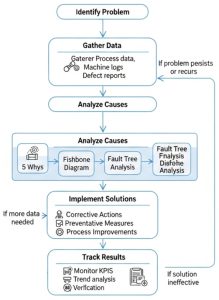
After approval, detailed documentation and a communication plan are established to inform all stakeholders of the changes. This includes updates to relevant design documents and production processes. Timely implementation of these changes is essential, as it can greatly influence production timelines, potentially decreasing lead times by up to 25% if managed effectively.
Tip: implement a digital tracking system to monitor ECO status in real-time, enhancing visibility and accountability.
The rest of this article is reserved for members
To limit scraping bots (currently 40,000 hits per day!),
we had to restrict access to full articles and tools to registered members only.
to access all the rest.