

Incoterms®, a short for International Commercial Terms, are a set of eleven three-letter trade terms published by the International Chamber of Commerce (ICC) that define, in a standardized and internationally recognized way, the respective obligations of a seller and a buyer in a contract for the sale of goods. Their scope is narrow but critical: they settle where and when the seller’s obligation to deliver is fulfilled, at what point the risk of loss or damage passes from seller to buyer, which party pays for carriage, insurance, loading and unloading, and which party is responsible for export and import customs clearance.
For an engineer who occasionally issues a purchase order to an overseas supplier – a machine tool from Germany, a batch of custom castings from Vietnam, an instrumentation module from the United States – Incoterms are not an abstract legal nicety. They directly determine the final landed cost of the goods, who is exposed if a crate falls off a forklift in a foreign port, who has to deal with a customs broker at 6 a.m., and whether an unexpected import VAT bill arrives on your desk six weeks after the equipment does. Misreading a three-letter code on a quotation is one of the most common and most expensive mistakes in industrial procurement.
This guide is written specifically for occasional buyer engineers but not full-time trade specialists.
Scope: Delivery Terms, Risk Transfer, Cost Allocation, Insurance and Customs for Engineers Making Occasional International Purchases, as in the 11 Incoterms® 2020 rules published by the International Chamber of Commerce (ICC Publication No. 723E, effective 1 January 2020)
Disclaimer: our article is an independent explanatory reference for non-pro buyers. It is not published by, endorsed by, or affiliated with the ICC. “Incoterms” is a registered trademark of the International Chamber of Commerce.
What Incoterms are NOT
Incoterms rules do not determine who owns the goods (title/ownership transfer), the price or payment terms, the currency, the remedies available if goods are defective or the seller breaches the contract, or which country’s law or courts apply.
They must be used alongside, never instead of, a proper sales contract or purchase order terms and conditions.
History of the Incoterms® Rules
The ICC first published Incoterms in 1936, in response to the same problem that makes them necessary today: traders in different countries used the same shorthand terms – “FOB”, “CIF” – to mean subtly different things depending on local custom and law. A single, voluntary, internationally agreed set of definitions reduced disputes and made contracts easier to negotiate across borders. The rules have been revised roughly once a decade ever since, each revision responding to changes in transport technology, containerization, electronic documentation and trade security requirements:
Timeline of revisions
| Year | Milestone / Change |
| 1936 | First publication. Covered FAS, FOB, C&F (the forerunner of CFR), CIF, Ex Ship and Ex Quay – almost exclusively for sea and inland waterway trade, then the dominant mode for intercontinental cargo. |
| 1953 | Revised and expanded to cover rail transport more explicitly. |
| 1967 | Addressed misinterpretations of the 1953 edition and added two new terms: DAF (Delivered at Frontier) and DDP (Delivered Duty Paid) – the ancestor of today’s DDP rule. |
| 1974 | Responded to the growth of air freight with a new FOB Airport variant, adapting the ship-based FOB concept to air cargo. |
| 1980 | Responded to the growing use of containerized shipping with a new term, FRC (Free Carrier … Named at Point) – the forerunner of today’s FCA rule – reflecting that containers are typically handed to a carrier at an inland point, long before reaching a vessel. |
| 1990 | A significant simplification: multiple mode-specific “free carrier” variants were consolidated into a single general-purpose FCA term, and the rules were updated to accommodate electronic data interchange (EDI) in place of paper documents. |
| 2000 | Refinements to FAS and the then-existing DEQ term to better align loading/unloading obligations with customs and terminal-handling practice. |
| 2010 | A structural overhaul: the rules were reorganized into the two-group structure still used today (“any mode of transport” versus “sea and inland waterway only”). Four D-terms from the 2000 edition – DAF, DES, DEQ and DDU – were withdrawn and replaced by two new terms, DAT (Delivered at Terminal) and DAP (Delivered at Place), consolidating overlapping delivery concepts into a cleaner set. |
| 2020 | The current edition, launched by the ICC in September 2019 and effective from 1 January 2020. It renamed and broadened DAT into DPU (Delivered at Place Unloaded) so the rule is no longer limited to a “terminal”; it re-engineered FCA to let the parties agree that the buyer’s carrier issues an on-board bill of lading (helpful where payment is by letter of credit); it raised the minimum insurance cover the seller must buy under CIP from Institute Cargo Clauses (C) to the broader Clauses (A); it made explicit that costs are listed together per rule (rather than scattered across clauses) for easier reading; and it added express references to security-related transport requirements and to the parties’ own transport arrangements. |
FYI, why the rules keep changing: each revision has tracked a real shift in how goods actually move. The 1990 consolidation followed the standardization of intermodal containers; the 2010 restructuring followed the near-total shift of general cargo to container shipping, which made ship’s-rail-based terms like FOB increasingly artificial; and the 2020 edition responds to tightened cargo security regulation, the greater use of letters of credit requiring on-board bills of lading even for FCA-based container shipments, and a recognition that CIP (used mostly for higher-value finished goods and equipment) warranted a higher insurance floor than CIF (used mostly for bulk commodities). The rules are reviewed by an ICC drafting group of trade-law and logistics experts roughly every ten years; there is no fixed date for a future revision beyond 2020 at the time of writing.
Structure of the 2020 Rules: Two Groups of Eleven
Incoterms® 2020 comprises eleven rules, deliberately split into two groups according to the mode of transport they are designed for. Choosing a rule from the wrong group for your shipment is one of the most frequent and most consequential errors in international purchasing (see Chapter 10).
Group 1 – Rules for any mode or modes of transportSeven rules that can be used regardless of transport mode, including multimodal movements (e.g., truck plus ocean plus truck) and, notably, containerized cargo of any kind:
| Group 2 – Rules for sea and inland waterway transport onlyFour rules retained specifically for bulk and break-bulk cargo moved by sea or inland waterway, where delivery is defined by reference to a vessel:
|
The container trap: FAS, FOB, CFR and CIF define delivery by reference to the ship’s rail or the vessel itself. For containerized cargo, the container is almost always handed to the carrier at an inland or port container terminal, days before it is loaded aboard a vessel – so a risk-transfer point defined “on board” is either meaningless or dangerously delayed. The ICC’s own guidance, repeated in the 2020 edition’s introduction, is that FCA, CPT or CIP should be used instead of FOB, CFR or CIF whenever cargo is containerized, even though FOB/CIF remain extremely common in practice out of habit and letter-of-credit convention.
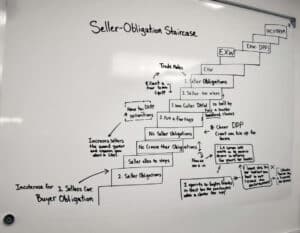
The “seller-obligation staircase”
A useful mental model, widely used in trade training, is to read the eleven rules as a staircase of increasing seller obligation and decreasing buyer obligation, from EXW (seller does the absolute minimum) to DDP (seller does almost everything):
Once the terms are agreed, route planning for the shipment is itself an optimization task, and the applications of travelling salesman problem include planning multi-stop transport. Traveling salesman problem applications in logistics help reduce the kilometers driven.
EXW → FCA → FAS → FOB → CFR → CIF → CPT → CIP → DAP → DPU → DDP
The Eleven Rules, One by One
This chapter gives a working definition of each rule, focused on what a technical buyer actually needs to check on a quotation or purchase order: where risk passes, who pays for what, and where the rule is easy to misuse.
EXW – Ex WorksGroup: any mode of transport Risk transfers to buyer: at the seller’s premises (or another named place), as soon as the goods are placed at the buyer’s disposal – before loading onto any collecting vehicle and before export clearance. Seller must: make the goods available, packaged, at the named place. The seller is not obliged to load the goods or to clear them for export, though the parties may agree otherwise. Buyer must: arrange collection, loading, export clearance, main carriage, insurance, import clearance and final delivery – effectively the entire logistics chain. Insurance: not required by the rule; entirely the buyer’s decision from the point of collection. Typical use: domestic-style transactions, or cross-border deals where the buyer has its own capable freight forwarder already operating in the seller’s country. Caution: EXW places export customs clearance on the buyer, but in many countries only a locally established entity (often the seller) can legally lodge an export declaration. In practice the seller frequently ends up doing the export formalities anyway, which blurs risk allocation and can create disputes if something goes wrong during that phase. For international purchases, FCA (seller’s premises) is usually the safer equivalent – it keeps the low-obligation profile for the seller while correctly placing export clearance back on the seller. | FCA – Free CarrierGroup: any mode of transport Risk transfers to buyer: when the goods are handed over to the carrier (or other person, e.g. a freight forwarder) nominated by the buyer, at the named place – either loaded onto the buyer’s collecting vehicle at the seller’s premises, or made available on the seller’s arriving vehicle, not unloaded, at another named place. Seller must: clear the goods for export and deliver them to the nominated carrier at the named place, loading them if delivery happens at the seller’s own premises. Buyer must: arrange and pay for main carriage from the named place onward, arrange insurance if desired, and handle import clearance. Insurance: not required by the rule; the buyer bears transit risk from handover and should insure independently. Typical use: the recommended default rule for containerized and multimodal cargo of any kind, including the common case of a supplier handing goods to a forwarder’s truck at the factory gate. Caution: the 2020 edition added an option: buyer and seller can agree that the buyer’s carrier will issue an on-board bill of lading to the seller once the goods are loaded aboard the vessel. This matters when payment is by documentary letter of credit that requires an on-board bill of lading – previously that requirement pushed many exporters toward FOB even for container cargo, despite FOB being poorly suited to it. Always specify precisely which named place applies (seller’s premises vs. a terminal), since the seller’s loading obligation differs between the two. |
FAS – Free Alongside ShipGroup: sea and inland waterway transport only Risk transfers to buyer: when the goods are placed alongside the vessel nominated by the buyer (e.g. on the quay or on a barge) at the named port of shipment, before loading. Seller must: clear the goods for export and deliver them alongside the vessel. Buyer must: arrange loading onto the vessel, main carriage, insurance and import clearance. Insurance: Not required by the rule. Typical use: bulk and break-bulk cargo loaded by a ship’s own gear or shore cranes – grain, ore, timber, heavy fabricated items – rather than containers. Caution: not appropriate for containerized cargo, which is handed to a terminal rather than placed alongside a vessel; use FCA instead. | FOB – Free On BoardGroup: sea and inland waterway transport only Risk transfers to buyer: when the goods are loaded on board the vessel nominated by the buyer, at the named port of shipment. Seller must: clear the goods for export, deliver them to the port and load them on board. Buyer must: arrange and pay for main carriage, insurance and import clearance. Insurance: not required by the rule. Typical use: traditional bulk and break-bulk shipping. Still extremely common in commodity trading and, out of habit or letter-of-credit convention, in general container trade. Caution: the ICC explicitly advises against using FOB for containerized cargo: containers usually reach the terminal, and pass into the carrier’s custody, well before the vessel arrives, making an “on board” risk-transfer point impractical to police and a poor match for how the shipment actually moves. Use FCA for containers instead. |
CFR – Cost and FreightGroup: sea and inland waterway transport only Risk transfers to buyer: identical to FOB – when the goods are loaded on board the vessel at the port of shipment – even though the seller pays freight onward to the named port of destination. Seller must: clear the goods for export, load them on board, and contract and pay for carriage to the named port of destination. Buyer must: arrange insurance for the sea leg and handle import clearance at destination. Insurance: not required by the rule – the buyer bears transit risk from loading, despite the seller paying the freight, and should insure that leg independently. Typical use: bulk commodity sales where the buyer wants the seller to organize and prepay the ocean freight but is willing to accept transit risk itself. Caution: the classic illustration that cost and risk transfer are not the same thing: the seller keeps paying (for freight) well after the buyer has started bearing risk. Same container-suitability caveat as FOB. | CIF – Cost, Insurance and FreightGroup: sea and inland waterway transport only Risk transfers to buyer: identical to FOB/CFR – on board at the port of shipment. Seller must: everything under CFR, plus procure marine cargo insurance for the buyer’s benefit against the sea-leg risk. Buyer must: handle import clearance at destination; may negotiate a higher insurance level than the default minimum. Insurance: required. The seller must buy cover of at least Institute Cargo Clauses (C) – a narrow, named-perils minimum – unless the parties agree otherwise. This minimum is unchanged from the 2010 edition. Typical use: the single most iconic Incoterms rule, deeply embedded in bulk commodity contracts and documentary letters of credit. Caution: the default insurance level is a minimum, not a recommendation – it excludes many everyday transit risks such as theft, rough handling or weather damage short of total loss. Buyers of anything other than low-value bulk commodities should explicitly negotiate broader cover (Clauses A) in the contract. Same container-suitability caveat as FOB. |
CPT – Carriage Paid ToGroup: any mode of transport Risk transfers to buyer: when the goods are handed over to the first carrier contracted by the seller – not at the named place of destination, even though the seller pays freight all the way there. Seller must: clear the goods for export, contract and pay for carriage to the named place of destination, and comply with any security-related transport requirements en route. Buyer must: bear transit risk from the first carrier handover, arrange insurance if desired, and handle import clearance at destination. Insurance: not required by the rule. Typical use: multimodal or container shipments where the seller organizes and pays for the main transport but the buyer is willing to carry the transit risk. Caution: the gap between where cost ends (destination) and where risk transfers (first carrier, at or near origin) is the single most common source of confusion with this rule – read it together with the named place of destination stated in the contract, not just the rule’s cost coverage. | CIP – Carriage and Insurance Paid ToGroup: any mode of transport Risk transfers to buyer: identical to CPT – at the first carrier handover. Seller must: everything under CPT, plus procure cargo insurance for the buyer’s benefit covering the full transit. Buyer must: handle import clearance at destination. Insurance: required, and set higher than CIF: since the 2020 edition, the seller must buy cover of at least Institute Cargo Clauses (A) – broad “all risks” cover, subject to standard exclusions – reflecting that CIP is typically used for higher-value manufactured goods and equipment rather than bulk commodities. Typical use: the recommended multimodal, higher-cover equivalent of CIF – the rule most relevant to engineers importing machinery, instrumentation or finished equipment by any combination of transport modes. Caution: confirm the insured value basis (commonly invoice value plus 10%) and check whether any named additional risks (e.g. war, strikes) should be added; Clauses (A) is broad but not unconditional. |
DAP – Delivered At PlaceGroup: any mode of transport Risk transfers to buyer: when the goods are placed at the buyer’s disposal on the arriving means of transport, ready for unloading, at the named place of destination. Seller must: bear all costs and risks of bringing the goods to the named destination, including export clearance and main carriage, but not unloading. Buyer must: unload the goods and handle import clearance, duties and taxes. Insurance: not required by the rule. Typical use: door delivery where the seller controls logistics end-to-end but the buyer, as the local party, is better placed to clear imports and unload. Caution: the named place must be precise – a full address or identifiable point, not just a city – since it is both the risk-transfer point and the place the seller’s cost obligation ends. | DPU – Delivered at Place UnloadedGroup: any mode of transport Risk transfers to buyer: after unloading, when the goods are placed at the buyer’s disposal at the named place of destination. Seller must: bear all costs and risks to the named destination and unload the goods there – the only Incoterms rule that requires the seller to unload. Buyer must: handle import clearance, duties and taxes. Insurance: not required by the rule. Typical use: project cargo and heavy equipment where the seller (or its logistics contractor) has the rigging or crane capability to unload safely at the destination – replaces the 2010 rule DAT and is no longer limited to a “terminal”; the named place can be any location. Caution: because the seller is responsible for unloading, confirm in advance who supplies unloading equipment and who is liable if unloading causes damage, especially for heavy or delicate machinery. |
DDP – Delivered Duty PaidGroup: any mode of transport Risk transfers to buyer: when the goods are placed at the buyer’s disposal, cleared for import, ready for unloading, at the named place of destination. Seller must: bear all costs and risks to the named destination, including export clearance, main carriage, and import clearance with all import duties and taxes (such as VAT) paid. Buyer must: unload the goods; otherwise, essentially nothing beyond taking delivery. Insurance: not required by the rule. Typical use: the maximum-obligation rule for the seller; attractive to buyers who want a single, fully landed, duty-paid price with no customs involvement. Caution: the seller must be able to act, legally and practically, as importer of record in the buyer’s country – not always possible without a local subsidiary, fiscal representative or VAT registration. Import VAT paid by a foreign seller is frequently not recoverable by anyone, which can become a hidden cost baked into the price. Confirm the supplier can genuinely perform DDP in your country before agreeing to it – see following chapters. | 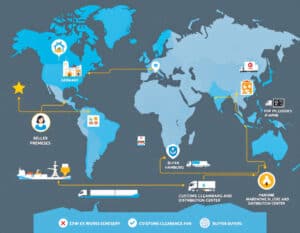 |
Full Comparison of the Eleven Rules
The two tables below give, rule by rule within each transport-mode group, the exact point at which risk passes from seller to buyer and whether the rule mandates cargo insurance. Chapter 6 covers the legal status of these obligations; Chapter 7 covers insurance in depth; Chapter 8 covers customs and duties. The full cost-and-responsibility matrix – who pays for packing, loading, carriage, insurance, import duty and unloading across all eleven rules – follows on the wide table in Table 5.3.
Group 1 – Any mode of transport
| Code | Full name | Risk transfers to buyer | Insurance |
| EXW | Ex Works | At the seller’s premises/named place, before loading, goods not export-cleared. | Not required |
| FCA | Free Carrier | On handover to the carrier nominated by the buyer, at the named place. | Not required |
| CPT | Carriage Paid To | On handover to the first carrier contracted by the seller (not at destination). | Not required |
| CIP | Carriage and Insurance Paid To | Same point as CPT – handover to the first carrier. | Required – min. Clauses (A), “All Risks” |
| DAP | Delivered At Place | On arrival, ready for unloading, at the named destination (before unloading). | Not required |
| DPU | Delivered at Place Unloaded | After unloading, at the named destination. | Not required |
| DDP | Delivered Duty Paid | On arrival, import-cleared, ready for unloading, at the named destination. | Not required |
Group 2 – Sea and inland waterway transport only
| Code | Full name | Risk transfers to buyer | Insurance |
| FAS | Free Alongside Ship | When placed alongside the vessel at the named port of shipment. | Not required |
| FOB | Free On Board | When loaded on board the vessel at the named port of shipment. | Not required |
| CFR | Cost and Freight | Same point as FOB, despite seller paying freight onward. | Not required |
| CIF | Cost, Insurance and Freight | Same point as FOB/CFR. | Required – min. Clauses (C), minimum cover |
Master cost-and-responsibility matrix
| Cost / responsibility item | EXW | FCA | FAS | FOB | CFR | CIF | CPT | CIP | DAP | DPU | DDP |
| Export packing & marking | S | ||||||||||
| Loading for carriage at seller’s location | B | S | |||||||||
| Export customs clearance & export duty | |||||||||||
| Main international carriage (freight) cost | B | S | |||||||||
| Cargo insurance for main carriag | B* | S | B* | S | B* | ||||||
| Import customs clearance, duty & VAT | B | S | |||||||||
| Unloading at final named destination | B | S | B | ||||||||
S = the seller’s obligation/cost.
B = the buyer’s obligation/cost.
B* = insurance is not mandated by the Incoterms rule itself for that term; the party bearing transit risk at that stage should arrange cargo insurance independently; only CIF and CIP require the seller to procure insurance for the buyer’s benefit (see dedicated chapter below).
This matrix is a commercial simplification of the eleven rules’ A/B obligations for quick reference; the ICC’s official rule text (see References chapter below) always governs in case of any conflict, and items such as terminal handling charges can still be shaped by the specific carriage contract or port tariff.
Legal Status and Contractual Integration
Incoterms are not a law and not a treaty.
They are a set of standard-form definitions published by a private organization, the ICC, that only apply because a contract chooses to incorporate them by reference. They have no legal force on their own.
How to incorporate them correctly
Best practice is to state the rule, the named place, and the edition year together, for example: “CIP Rotterdam Incoterms® 2020” or “DAP 14 Rue de l’Industrie, Lyon, France, Incoterms® 2020”. Three elements, all necessary:
- The three-letter rule: identifies which set of A/B obligations applies.
- The named place: must be specific and unambiguous – an address, a terminal name, or a clearly identified point, not just a city or country. Vagueness here is the single most common cause of Incoterms-related disputes (Chapter 10).
- The edition year: matters because older editions still exist in force in many long-running contracts and framework agreements, and some codes from earlier editions (DAF, DES, DEQ, DDU, DAT) no longer exist in the 2020 edition or mean something different. Omitting the year invites disputes about which edition governs.
What the rules do and do not cover
Each Incoterms rule fixes exactly three things: the point of delivery (when the seller has performed its delivery obligation), the transfer of risk of loss or damage, and the allocation of costs between the parties, together with certain ancillary duties (packaging, notices, provision of documents, export/import formalities, and, since 2020, compliance with security-related transport requirements). They do not cover, and must be supplemented by the rest of the sales contract or purchase order terms:
- Transfer of ownership/title in the goods; governed by the sales contract and the applicable law, not by the Incoterms rule.
- Price, payment terms, currency and payment security (e.g. letters of credit).
- Remedies for late delivery, non-conforming goods, or breach of contract.
- The governing law and dispute-resolution forum (courts or arbitration).
- The terms of the actual contracts of carriage and insurance entered into by whichever party is responsible for arranging them; those are separate contracts with third parties (carriers, insurers), not the sale contract itself.
Interaction with the applicable law and the CISGMany international sales contracts are governed, by default or by choice, by the United Nations Convention on Contracts for the International Sale of Goods (CISG), which applies automatically between parties in different contracting states unless expressly excluded. The CISG governs matters such as conformity of goods, remedies and passing of title-adjacent risk in general terms, but leaves the precise mechanics of delivery, risk transfer and cost allocation open – which is exactly the gap Incoterms rules are designed to fill. The two instruments work together: Incoterms operate within, and do not override, whatever law and dispute-resolution mechanism the contract specifies. | Domestic useSince 2010, the ICC has explicitly encouraged use of the rules for domestic transactions too (for example, within the EU single market or intra-US trade), where cross-border customs formalities are simplified or absent but the risk/cost allocation logic remains useful. The 2020 introduction repeats this encouragement. |
Risk Transfer and Insurance
Risk and cost are not the same thing: the most persistent source of confusion in the entire system is that cost allocation and risk transfer frequently occur at different points in the journey. Under CFR, CIF, CPT and CIP, the seller pays for main carriage all the way to the named destination or port, yet risk passes to the buyer much earlier, on board the vessel (CFR/CIF) or on handover to the first carrier (CPT/CIP).
A buyer who assumes “the seller is paying for the freight, so the seller must be carrying the risk” is wrong under four of the eleven rules, and this is precisely where uninsured buyers get burned when a container is lost or damaged mid-voyage.
Only two of the eleven rules, CIF and CIP, require the seller to purchase cargo insurance for the buyer’s benefit. Under the other nine rules, insurance is not addressed by the rule at all – each party is left to decide, commercially, whether to insure the portion of the journey during which it bears the risk. In practice, a prudent buyer insures its own risk period under EXW, FCA, FAS, FOB, CFR, CPT, DAP, DPU and DDP even though no Incoterms rule obliges anyone to do so.
Institute Cargo Clauses: the standard insurance tiers
| Clause | Coverage | Default minimum under |
| Institute Cargo Clauses (A) | Broadest “all risks” cover for physical loss or damage from any external cause, subject to standard exclusions (e.g. war, strikes, inherent vice, insufficient packing, wilful misconduct). | CIP – since Incoterms® 2020 (raised from Clauses C) |
| Institute Cargo Clauses (B) | Intermediate, named-peril cover: fire, explosion, vessel stranding/sinking/capsizing, collision, earthquake, jettison, washing overboard, and similar events. | Not a default under any Incoterms rule; may be agreed by the parties |
| Institute Cargo Clauses (C) | Narrowest named-peril cover: essentially major casualty events only (fire, explosion, vessel loss, collision, general average) – excludes many everyday transit risks such as theft, rough handling, or weather-related damage short of total loss. | CIF – unchanged since Incoterms® 2010 |
Practical guidance
- For anything other than low-value bulk commodities, do not rely on the CIF default (Clauses C); negotiate Clauses (A) cover explicitly in the contract, and ask for a copy of the insurance certificate naming your organization as beneficiary.
- For CIP shipments, confirm the insured value basis (commonly invoice value plus 10%, a market convention, not an ICC rule) and whether any named additional perils (war, strikes) are included.
- Under any of the nine rules where insurance is not mandated, arrange your own cargo insurance for the period during which you bear risk. Again, do not assume it is “someone else’s problem” simply because that party is paying for freight.
Customs, Duties and Taxes
Incoterms rules allocate the obligation to clear customs and the associated cost, but they do not, and cannot, override a country’s actual customs law.
Whether a given party is legally capable of performing the customs role the rule assigns to it is a separate question that must be checked before the contract is signed, not after the goods are already in transit.
| Term(s) | Export clearance | Import clearance, duties & VAT |
| EXW | Buyer (nominally – but the seller often assists or is the only party legally able to file the export declaration; see Chapter 4) | Buyer |
| FCA, FAS, FOB, CFR, CIF, CPT, CIP, DAP, DPU | Seller | Buyer |
| DDP | Seller | Seller |
The EXW export-clearance trap
EXW is the only rule that nominally places export clearance on the buyer. In many jurisdictions, however, only an entity established or registered in the country of export can lodge a valid export customs declaration, which a foreign buyer typically cannot do directly. In practice the seller ends up handling the export formalities regardless of what the rule says, creating a mismatch between the written allocation of responsibility and what actually happens, a common source of disputes if the shipment is delayed, seized, or incorrectly declared.
Tip: this is the main practical reason experienced buyers can prefer FCA over EXW for cross-border purchases.
The DDP import-capability trap
DDP is the mirror image: the seller must be able to act as importer of record in the buyer’s country, which can require a local subsidiary, a fiscal representative, or a VAT/tax registration that many foreign sellers simply do not have. Where a seller quotes DDP without genuinely having this capability, the shipment can stall in customs, or the seller may quietly expect the buyer to handle import formalities anyway despite the quotation. Import VAT paid by a seller with no right to recover it locally also tends to be folded into the price as a hidden markup. Always ask a supplier quoting DDP how it will act as importer of record, and get written confirmation rather than assuming the quotation is deliverable as stated.
Duties, VAT and total landed cost
Under every rule except DDP, the buyer is the importer of record and is responsible for import duties, tariffs and import VAT (or equivalent consumption tax) in its own country, in addition to whatever price is agreed for the goods and transport. When comparing supplier quotations issued under different Incoterms rules, always normalize to an equivalent all-in landed cost basis before comparing price.
Practical Guidance for the Occasional Technical Buyer
Most engineers do not negotiate Incoterms daily, which is exactly why a small set of defaults and checks is more useful than trying to memorize every clause. This chapter gives scenario-based recommendations and a checklist to apply to any incoming quotation or outgoing purchase order.
Scenario-based defaults
- Collecting from the supplier’s factory, cross-border –> ask for FCA (seller’s premises) rather than EXW. You get the same low seller-obligation profile without the export-clearance ambiguity that EXW creates (§8.1).
- Importing finished machinery or equipment by sea or air, want the seller to arrange and insure carriage –> prefer CIP over CIF whenever the shipment could plausibly move by more than pure ocean transport (e.g. any container leg), and because CIP carries the higher Clauses (A) insurance floor appropriate to higher-value equipment.
- Want a single all-in, duty-paid price with no customs involvement –> DDP can work, but confirm in writing that the supplier can act as importer of record in your country (§8.2) and get a full landed-cost breakdown, not just a headline number.
- Heavy or oversized equipment needing special unloading (crane, rigging) at your site –> DPU, if the supplier or its logistics contractor genuinely has unloading capability at your location; otherwise DAP with unloading arranged separately on your side.
- Any containerized cargo –> avoid FAS, FOB, CFR and CIF; use FCA, CPT or CIP instead, regardless of what the supplier’s standard quotation defaults to.
A working checklist
- Is the rule appropriate for the actual mode of transport?
- Is the named place stated precisely enough to be unambiguous – a full address or identified point, not just a city?
- Is the edition year “Incoterms® 2020” stated? If a contract or framework agreement still says “Incoterms 2010” or earlier, check whether that was deliberate.
- Where does risk actually transfer, and does that match where your organization can practically accept and inspect the goods?
- Is insurance mandated (CIF/CIP) or does your organization need to arrange its own cover for the risk period it bears?
- Who is the importer of record, and does that party have the legal capacity (registration, fiscal representative) to perform that role in the destination country?
- Does your organization have the customs-broker relationship and logistics capability the rule assumes it has (relevant mainly for EXW, FCA and FAS, where the buyer takes on more of the chain)?
- Have you requested the document set that goes with the rule – commercial invoice referencing the Incoterms rule and named place, packing list, transport document (bill of lading/airway bill/CMR), certificate of origin, and insurance certificate where applicable?
Tip: never compare an EXW quotation from one supplier directly against a DDP quotation from another; the headline price differences will simply reflect how much of the logistics chain each figure includes, not the underlying value of the goods. Build a landed-cost comparison that adds, for each quotation, the cost items the quoted rule leaves to the buyer (inland transport, export clearance, main freight, insurance, import duties/VAT, destination handling, delivery). Only the fully landed, delivered-to-your-door total is a fair basis for comparing suppliers.
Tips, Common Pitfalls and Misconceptions
- Comparing apples to oranges: comparing supplier quotations issued under different Incoterms rules without normalizing to the same landed-cost basis.
- Using ship-based rules for containers: specifying FOB, CFR or CIF for containerized cargo, when FCA, CPT or CIP would place the risk-transfer point where the goods actually change custody.
- Vague named places: writing “FCA Shanghai” instead of “FCA [Supplier], 123 Example Road, Pudong, Shanghai, Incoterms® 2020” – ambiguity about the named place is the most common trigger for disputes about where risk transferred.
- Omitting the edition year: leaving the contract silent on which edition applies, which matters because some 2010-and-earlier codes (DAF, DES, DEQ, DDU, DAT) no longer exist or have been redefined.
- Assuming Incoterms cover title, payment or remedies: they do not. A separate, complete purchase order or sales contract is always required.
- Treating DDP as “no work for the buyer”: some countries will not allow a foreign seller to import goods without a local fiscal representative or subsidiary; verify capability before relying on DDP.
- Under-insuring high-value cargo: relying on the CIF default minimum (Clauses C) for anything other than low-value bulk goods, leaving many everyday transit risks uncovered.
- Confusing who unloads: DAP leaves unloading to the buyer; DPU is the only rule where the seller unloads. Confirm which one your contract actually specifies before assuming unloading arrangements are in place.
- The EXW export-clearance trap: assuming the buyer can simply “handle export clearance” under EXW, when in many countries a foreign buyer cannot legally lodge that declaration at all.
- Ignoring compliance obligations that sit outside Incoterms: export controls (dual-use goods, sanctioned destinations), Authorised Economic Operator (AEO) status, and port/vessel security codes (e.g. ISPS) are not addressed by the Incoterms rule itself but can affect delivery timing and legality regardless of which rule is used.
Quick-Reference Decision Guide
A short, sequential set of questions to reach a sensible default rule quickly. This is a starting point for a conversation with your supplier and freight forwarder, not a substitute for the analysis in previous chapters.
- Is the cargo containerized or multimodal? – If yes, restrict yourself to the any-mode group (EXW, FCA, CPT, CIP, DAP, DPU, DDP) and skip FAS/FOB/CFR/CIF entirely.
- Do you want to pick up from the supplier’s premises with your own forwarder? – Use FCA (seller’s premises), not EXW, to keep export clearance correctly with the seller.
- Do you want the seller to arrange and insure the main carriage to a point near you? – Use CIP (any mode) or CIF (sea/inland waterway bulk only), and if using CIF for anything but low-value bulk goods, negotiate broader insurance cover than the default minimum.
- Do you want door delivery but are comfortable handling import customs yourself? – Use DAP (buyer unloads) or DPU (seller unloads, if it has the equipment and you need that).
- Do you want a single all-in, duty-paid price and no customs involvement at all? – Consider DDP, but only after confirming the seller can legally act as importer of record in your country.
- Whatever you land on – State the rule, the precise named place, and “Incoterms® 2020” together in the contract or purchase order, and request the matching document set.
Specific Transport Glossary
- Named place: the specific location stated after the Incoterms code (e.g. a factory address, port or terminal) that fixes where delivery, risk transfer and/or cost allocation occurs. Must be precise and unambiguous.
- Carrier: the party that physically transports the goods (a shipping line, airline, trucking company or their agent), under a separate contract of carriage from the sales contract.
- Freight forwarder: a logistics intermediary that arranges carriage, customs formalities and documentation on behalf of a buyer or seller, often acting as, or contracting with, the carrier.
- Institute Cargo Clauses (A/B/C): standard-form marine cargo insurance clauses defining the scope of cover, from broadest (A) to narrowest (C); see Chapter 7.
- Importer of record: the legal entity responsible, under the destination country’s customs law, for filing the import declaration and paying import duties and taxes.
- EORI number (EU) / equivalent registrations: an identifier required to act as an importer or exporter in many jurisdictions (the EU’s Economic Operators Registration and Identification number is one example); needed by whichever party is performing customs clearance.
- Fiscal representative: a locally registered agent that allows a foreign company to account for VAT/import tax in a country where it has no establishment – often required for a seller attempting DDP.
- Multimodal transport: carriage of goods using more than one mode of transport (e.g. truck, then ocean vessel, then truck) under a single contract of carriage.
- Documentary letter of credit (L/C): a bank-issued payment mechanism that pays the seller once it presents specified documents (commonly including an on-board bill of lading) – its document requirements can influence which Incoterms rule is practical, especially for FCA vs FOB.
- Bill of lading / airway bill / CMR: transport documents issued by the carrier for sea, air, and international road (CMR) carriage respectively, serving as evidence of the contract of carriage and, for a bill of lading, as a document of title.
- AEO (Authorised Economic Operator): a customs compliance certification that can speed clearance and reduce inspections; independent of, but relevant alongside, the Incoterms rule chosen.
- General average: a maritime law principle under which all parties with cargo on a vessel share the cost of a deliberate sacrifice (e.g. jettisoning cargo) made to save the voyage as a whole – a risk covered even under the narrowest Institute Cargo Clauses (C).
FAQ
What’s the single biggest misconception engineers have about Incoterms?
That the term determines who owns the goods or who is liable for defects. It doesn’t – Incoterms only fix three things: the delivery point, the transfer of risk, and the allocation of costs (plus a few ancillary duties like export/import clearance). Title transfer, payment terms, warranty and remedies for non-conformity are governed by the underlying sales contract and the applicable law, never by the three-letter code.
Why do CFR and CIF feel like a trap the first time you use them?
Because the seller keeps paying for freight all the way to the destination port, but risk transfers to the buyer much earlier – when the goods are loaded on board the vessel at the port of shipment. A buyer who assumes “seller’s paying, so seller’s carrying the risk” is wrong, and will find out the hard way if the cargo is damaged mid-voyage with no insurance in place.
Should I ever accept an FOB or CIF quote for a container shipment?
Only if you understand what you’re giving up. Containers are handed to the carrier at an inland or port terminal days before the vessel sails, so a risk-transfer point defined “on board” is either meaningless or dangerously delayed. The ICC’s own guidance is to use FCA, CPT or CIP instead – FOB/CIF persist mainly out of habit and letter-of-credit convention, not because they fit containerized cargo.
Why does everyone warn against EXW for cross-border purchases?
Because EXW nominally makes the buyer responsible for export customs clearance, but in most countries only a locally established entity can legally lodge an export declaration – a foreign buyer often can’t do it. In practice the seller ends up handling it anyway, which creates a mismatch between the contract and reality and is a common source of disputes. FCA (seller’s premises) gives you the same low seller-obligation profile without this trap.
If a supplier offers DDP, should I just take it?
Only after confirming they can actually act as importer of record in your country – which often requires a local subsidiary, fiscal representative, or VAT registration many foreign sellers don’t have. Import VAT a seller can’t recover locally tends to get folded into the price as a hidden markup, and if the seller can’t genuinely clear imports, the shipment can stall in customs despite what the quotation says.
What’s the practical difference between CIF and CIP for equipment purchases?
Both require the seller to insure the goods for your benefit, but CIF only mandates the minimum Institute Cargo Clauses (C) – a narrow, named-perils cover that excludes theft, rough handling and most transit damage. CIP, since the 2020 revision, mandates the broader Clauses (A), “all risks” cover, reflecting that CIP is meant for higher-value manufactured goods and machinery rather than bulk commodities. For equipment, CIP is the better-matched rule.
Is Clauses (C) insurance under CIF actually enough for my cargo?
Almost never, for anything beyond low-value bulk goods. Clauses (C) covers major casualty events only – fire, explosion, vessel loss, collision, general average – and excludes everyday transit risks like theft or rough handling. If you’re buying under CIF, negotiate Clauses (A) cover explicitly in the contract rather than relying on the default.
What’s the difference between DAP and DPU, and why does it matter for heavy machinery?
DAP leaves the goods on the arriving vehicle, ready for unloading – you unload. DPU is the only Incoterms rule where the seller is responsible for unloading at the named destination. For heavy or delicate equipment needing a crane or rigging, DPU only makes sense if the seller (or its logistics contractor) genuinely has that capability – confirm this before specifying DPU, since the seller is liable if unloading damages the goods.
Does it matter if my purchase order just says “FCA” without a full address?
Yes – significantly. The named place is not decoration; it’s what fixes exactly where risk transfers and where the seller’s cost obligation ends. “FCA Shanghai” is dangerously vague; “FCA [Supplier], 123 Example Road, Pudong, Shanghai, Incoterms® 2020” is not. Vague named places are the single most common cause of Incoterms-related disputes.
Why should I always write “Incoterms® 2020” and not just the three-letter code?
Because older codes from previous editions – DAF, DES, DEQ, DDU, and the 2010 edition’s DAT – no longer exist or mean something different today. A contract silent on the edition year is genuinely ambiguous about which rule set applies, especially in long-running framework agreements that may predate 2020.
Can I compare an EXW quote from one supplier directly against a DDP quote from another?
No. This is one of the most expensive mistakes in procurement. The headline prices mostly reflect how much of the logistics chain each figure includes, not the value of the goods. Normalize every quote to a fully landed, delivered cost, adding back inland transport, export clearance, freight, insurance, import duty/VAT and delivery as needed, before comparing suppliers.
Does Incoterms 2020 let the buyer or seller use their own truck instead of hiring a carrier?
Yes. This was a real, if under-publicized, 2020 change. FCA, DAP, DPU and DDP now explicitly accommodate a party arranging its own means of transport rather than contracting a third party, which matters for near-border or domestic-adjacent shipments where hiring an external carrier would be an unnecessary formality.
Do Incoterms rules override my country’s customs law?
No, never. They allocate the obligation and cost of clearance between buyer and seller, but whether a given party is legally capable of performing that role – filing an export declaration, acting as importer of record – is governed entirely by local customs law and must be checked independently, especially for EXW (export side) and DDP (import side).
As an occasional buyer, what’s a reasonable default rule to ask for, absent other constraints?
For picking up from a supplier’s factory, ask for FCA (seller’s premises) rather than EXW. For seller-arranged, seller-insured delivery of equipment by any transport mode, ask for CIP with Clauses (A) cover rather than CIF. Avoid FAS/FOB/CFR/CIF entirely for anything containerized, and treat DDP as workable only once the seller has confirmed, in writing, that it can act as importer of record in your country.
References
This article is an independent explanatory reference, not a substitute for the official rule text. For binding contractual purposes, always consult the ICC’s official publication:
- International Chamber of Commerce – Incoterms® 2020 rules, ICC Publication No. 723E (effective 1 January 2020). iccwbo.org/business-solutions/incoterms-rules/incoterms-2020/
- International Chamber of Commerce – Incoterms® Rules History. iccwbo.org/business-solutions/incoterms-rules/incoterms-rules-history/
- ICC Academy – “Incoterms® 2020 vs 2010: What’s changed?” academy.iccwbo.org/incoterms/article/incoterms-2020-vs-2010-whats-changed/
- United Nations Convention on Contracts for the International Sale of Goods (CISG), 1980.
- Joint Cargo Committee (International Underwriting Association of London and Lloyd’s Market Association) – Institute Cargo Clauses (A), (B), (C), 1/1/2009. The “Institute” name is retained for these clauses by market convention; the original Institute of London Underwriters itself merged into the International Underwriting Association in 1998.
“Incoterms” is a registered trademark of the International Chamber of Commerce. This article is an independent educational summary and is not produced, reviewed or endorsed by the ICC.
External Links on Incoterms
International Standards
(hover the link to see our description of the content)