
Home / Product Design / Innovation Ecosystem & Collaboration
Innovation Ecosystem and Open Innovation for Engineers
Few products are built alone. Open innovation and engineering collaboration bring in suppliers, universities, users, standards bodies and communities that hold knowledge your team lacks. This innovation ecosystem page sorts collaboration models and innovation partners, with open innovation models and examples, by what you need.

Search guides, methods, tools and standards
Type a topic, a material, a standard or a tool name. Results appear below the search box.
Try search: open innovation, NDA, patent, standards, conference, consortium
Language
Loading…
Categories
Loading…
What do you need to do?
Pick a task. Each card jumps to the matching section of this page.
Find a supplier
Design, test and manufacturing partners by category, plus trade terms.
Find a university or lab
Universities by domain, with publications and patents to check first.
Collaborate and innovate openly
Co-creation, crowdsourcing, hackathons and stakeholder analysis.
Protect what you share
NDAs, trade secrets, patent status and patent search.
Check standards and norms
Sector frameworks and ISO, IEC, ASTM, ANSI and SAE searches.
Join communities and events
IRC channels, events, software directories and reading lists.
Choose a collaboration model
Six models in one table, with the benefit and the risk of each.
Get a quick answer
Suppliers, university partners, open innovation, NDAs and standards.
Where to begin
New to collaboration
Sourcing a partner
Standards and IP
New to collaboration
- Stakeholder Analysis: identify the people and groups affected by a project and assess their influence.
- Co-Creation Workshops: involve users and stakeholders in designing the solution.
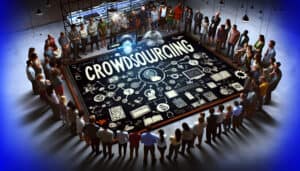
- Crowdsourcing: open a problem to a large group of outside contributors.
- Trade Secret vs NDA: Key Legal Protection Differences: definitions, examples, economic value, scope, enforceability and duration of protection.
- Universities and Technical Schools Worldwide: directory of 2,400+ engineering and technical schools and universities worldwide, browsable by country, status and diploma type.
Sourcing a partner
- Worldwide Suppliers Directory: free worldwide directory connecting engineers and buyers with industrial suppliers. Search by map, keyword, category or full text.
- Search the Suppliers Directory: find industrial and engineering suppliers by keyword and category.
- Incoterms® Introduction for Engineers: history, the two groups of rules, the seller-obligation staircase and the eleven rules one by one, for managing trade costs.
- PCB Manufacturing: the Process & Efficiently: PCB manufacturing steps, from thin copper sheets layered on a non-conductive substrate to etched circuits.
- Trade Secret vs NDA: Key Legal Protection Differences: definitions, examples, economic value, scope, enforceability and duration of protection.
Standards and IP
- ISO Standards Search: find ISO standards and read their scope.
- Manufacturing and Industries Standards Full Framework: framework of international standards, norms and methodologies for manufacturing and industries.
- Free Latest Patents Search: free search tool for the latest patents in English from the European Patent Office, updated in real time, filterable by topic, country.
- All Patent Status: PCT vs Pending Patent vs Published Patent vs Granted Patent: PCT application, pending, published and granted patents, their timeline and what each means for design freedom.
- Patent vs Copyright: Key Differences Explained: what each protects, originality, protection duration, registration, and how both relate to trademarks and trade secrets.
Find a supplier
Most products depend on partners: design offices, test labs, component makers and factories. Browse the directory by category, check the capabilities, and prepare a clear request before you contact anyone. Know the trade terms before you sign.
- Worldwide Suppliers Directory: free worldwide directory connecting engineers and buyers with industrial suppliers. Search by map, keyword, category or full text.
- Search the Suppliers Directory: find industrial and engineering suppliers by keyword and category.
- Add Your Company In the Suppliers Directory (100% free): check that it is not already listed and submit only your own company.
- Simulation and analysis: FEA, CFD and thermal simulation.
- Design for manufacturing: optimizing designs to reduce production costs.
- Embedded systems and firmware: low-level programming for hardware control.
- Mechanical engineering: structural design, mechanisms and kinematics.
- Metrology and dimensional inspection: CMM, 3D scanning and laser tracking.
- Failure analysis: root-cause investigation of broken components.
- Electronics and PCB design: schematic capture, layout and hardware architecture.
- Incoterms® Introduction for Engineers: history, the two groups of rules, the seller-obligation staircase and the eleven rules one by one, for managing trade costs.
- PCB Manufacturing: the Process & Efficiently: PCB manufacturing steps, from thin copper sheets layered on a non-conductive substrate to etched circuits.
Find a university or lab
Universities hold research that industry rarely reads. Browse by domain to find labs, programs and contacts, then check their publications and patents before you reach out.
- Universities and Technical Schools Worldwide: directory of 2,400+ engineering and technical schools and universities worldwide, browsable by country, status and diploma type.
- Universities active in engineering
- Universities active in AI and machine learning
- Universities active in materials
- Universities active in mechanical engineering
- Universities active in electrical and electronics
- Universities active in manufacturing
- Universities active in robotics
- Universities active in ecology and sustainability
- Free Latest Scientific Publications Search: free search tool for the latest articles of leading peer-reviewed journals, updated in real time, with filters by topic, journal.
- Free Latest Patents Search: free search tool for the latest patents in English from the European Patent Office, updated in real time, filterable by topic, country.
- Digital Object Identifier (DOI) Extensive F.A.Q.: what a DOI is, what it applies to, how to cite it, who can register it, where and at what cost.
Open innovation for engineers: collaborate and innovate openly
External ideas and skills speed up internal projects. Choose a model that fits the question: co-creation with users, crowdsourcing for a wide search, hackathons for fast prototypes. Map the stakeholders first, so that the right people are in the room.
- Co-Creation Workshops: involve users and stakeholders in designing the solution.
- Crowdsourcing: open a problem to a large group of outside contributors.
- Hackathons: a time-boxed event where teams build prototypes on a challenge.
- Stakeholder Analysis: identify the people and groups affected by a project and assess their influence.
- Ideation Campaigns: run a time-limited call for ideas across an organization.
- Idea Challenge: a call for ideas on a defined problem.
- Innovation Games: use game formats to explore needs and ideas.
- Delphi Method: reach expert consensus through anonymous rounds of questions.
- Concurrent Engineering: run design, manufacturing and support work in parallel.
- Market Pull & Technology Push: How to Combine for Innovative Designs: definitions, examples of market pull innovations and how to combine both.
- Technology transfer suppliers: moving research from universities to the market.
Protect what you share
Collaboration means sharing know-how. Decide in advance what is shared, under which agreement, and what stays secret. Check patents before you disclose, and know the difference between a patent and copyright. This is general information, not legal advice.
- Trade Secret vs NDA: Key Legal Protection Differences: definitions, examples, economic value, scope, enforceability and duration of protection.
- Patent vs Copyright: Key Differences Explained: what each protects, originality, protection duration, registration, and how both relate to trademarks and trade secrets.
- All Patent Status: PCT vs Pending Patent vs Published Patent vs Granted Patent: PCT application, pending, published and granted patents, their timeline and what each means for design freedom.
- How-to Best Fight a Pending Patent: monitoring, offensive actions, defensive preparation and typical litigation costs.
- Best 10 Patent Invalidation Strategies and Tools: substantive grounds, procedural methods, patent databases and AI-powered search software.
- Best 20 Tricks for Free Patent Search + Bonus: 20 tricks to search patents for free, plus 5 bonus tricks for finding patents.
- Free Latest Patents Search: free search tool for the latest patents in English from the European Patent Office, updated in real time, filterable by topic, country.
- 101 on How to Best Read a Patent (for a non Patent Attorney): the 15 most important points to analyze, starting with the claims, specification, dates, legal status and assignee.
- Intellectual Property & Patent Strategy for Engineers: enhancing patent literacy in engineering curricula to empower R&D professionals and streamline innovation processes.
- Intellectual property and patents suppliers: patent searches, filings and IP strategy.
Check standards and norms
Standards are the common language of collaboration. They define what a supplier must deliver and what a customer may expect. Use the sector frameworks to find the relevant ones, and the search tools to read their scope.
- ISO Standards Search: find ISO standards and read their scope.
- IEC Standards Search: find IEC standards and read their scope.
- ASTM Standards Search: find ASTM standards and read their scope.
- ANSI Standards Search: find ANSI standards and read their scope.
- SAE Standards Search: find SAE standards and read their scope.
- GB Chinese Standards Search: find Chinese GB standards and read their scope.
- Manufacturing and Industries Standards Full Framework: framework of international standards, norms and methodologies for manufacturing and industries.
- Mechanical Hardware Standards Full Framework: framework of norms and standards for mechanical hardware, beyond the usual ISO 9001:2015 quality management requirements.
- Materials Standards Full Framework: where to find international standards and norms for each of 6 material families: metals, polymers, ceramics, composites.
- Electronic Components Standards Full Framework: framework of standards for electronic components and semiconductors.
- Medical Devices Standards Full Framework: framework of medical device standards beyond the usual ones, including ISO 13485 quality management and ISO 14971 risk management.
- Automotive Standards Full Framework: framework of automotive industry standards, including ISO/TS 16949 quality management system requirements for the automotive sector.
- Aerospace Standards Full Framework: international standards and norms for the aeronautics and aerospace sectors, including the design.
- Food Industry Standards Full Framework: international standards and regulations for food safety, quality and consistency, including ISO 22000 food safety management.
Join communities and events
Engineers help each other in public. Find live chat channels, events and software directories where practitioners share what works. Start by reading, then ask precise questions.
- Innovation and Design Worldwide Events: directory of worldwide and online innovation, design, manufacturing and start-up events.
- Best 100+ IRC Channels for Engineering: the most complete selection of 100+ IRC channels dedicated to engineering disciplines.
- Free IRC Client for Chat – no install: free browser-based IRC client to chat on engineering, innovation and product development without any installation, on IRCnet, DALnet.
- Essential IRC Commands and IRC Usage Introduction: origins in 1988 with Jarkko Oikarinen, clients and servers, choosing and configuring a client, networks and channels.
- Best 10 Wikipedia Articles for Product Design: selection of Wikipedia articles useful to designers and engineers for product design and innovation.
- Linux for Engineers and Scientists: A Professional Guide for 2026: comparison with Windows and macOS, distributions, risks, 20 professional applications and 2026 data.
- 100 Best Linux Software for Engineers and Scientists in 2026: 100 professional tools by domain, from simulation and CAD to EDA, HPC and research workflows.
- Programming Languages For Engineering, Science And Research – Full Comparison: comparison criteria, performance benchmarks on typical tasks, and emerging languages.
- CAD Software Directory: directory of CAD software for technical drawings and product geometry, filterable by pricing model.
- Online Engineering Tools and Product Design Tools Directory: CAD, simulation, calculation, GIS, OSINT, patents and standards, sorted by category.
Collaboration models at a glance
Six models cover most partnerships. Each name links to a directory or a method page.
| Model | What you get | Watch out for |
|---|---|---|
| Supplier or contract manufacturer | Capacity and expertise you do not have | Dependence, quality drift and exposure of your IP |
| University partnership | Deep knowledge, labs and students | Slow timelines and shared IP terms |
| Co-creation with users | Real needs and early feedback | Participants who do not represent your market |
| Crowdsourcing | Many proposals for a well-defined problem | Vague briefs and unusable entries |
| Hackathon | Fast prototypes and new contacts | Little follow-through after the event |
| Technology transfer and licensing | Access to patented know-how | Terms, royalties and freedom to operate |
Collaboration rules that hold in practice
- Write the question before you look for a partner. A clear brief attracts better answers.
- Check capability, not claims. Ask for samples, references and test reports.
- Sign the NDA before you share, and share only what is needed. See Trade Secret vs NDA.
- Agree on IP ownership and licensing at the start, not at the end.
- Write down deliverables, acceptance tests and dates.
- Know the trade terms. Incoterms decide who pays for transport and who bears the risk in transit. See Incoterms Introduction for Engineers.
- Audit the supplier, in person or by video, before volume orders. The factory tours show what to look for.
- Keep a second source for critical parts where you can.
- Name one owner on each side, and meet on a fixed rhythm.
- Share credit and results. Partners who are thanked come back.
Learn the basics before you partner
The IP and Patent Strategy course teaches engineers to read and search patents. The Quality Management and Compliance course covers working inside regulated or standards-driven manufacturing. Each course is free and has must-know checklists and a final exam.
Editor's top picks
Pages selected by the editor for this topic.





Ecosystem and collaboration questions, answered
How do I find a reliable supplier?
Define the part or service and its requirements first. Then search the directory by category, shortlist several suppliers, ask for samples, references and test reports, and audit the final candidates. See Worldwide Suppliers Directory and Incoterms Introduction for Engineers.
How do I find a university partner?
Search the universities directory by domain, read the recent publications and patents of the labs you shortlist, and contact the research group with a specific question. See Universities and Technical Schools Worldwide and Free Latest Scientific Publications Search.
What is open innovation?
Open innovation combines internal ideas with external ones, through partners, users, universities and competitions, and lets good ideas reach the market through external paths as well as internal ones. See Co-Creation Workshops and Crowdsourcing.
What is the difference between an NDA and a trade secret?
A trade secret is information that gives you an advantage because it is kept secret and protected by reasonable measures. An NDA is the contract that obliges a partner to keep your information secret, so it is a tool to preserve a trade secret. This is general information, not legal advice. See Trade Secret vs NDA.
What is a hackathon good for?
A hackathon is a short event where teams build prototypes on a challenge. It is good for fresh ideas, new contacts and fast learning, but it needs a plan to continue the best results afterwards. See Hackathons.
What is crowdsourcing in engineering?
It means inviting a large group of outsiders to propose solutions or contribute work on a clearly defined problem, often with a prize or recognition. A precise brief and clear selection criteria decide the quality of the result. See Crowdsourcing.
Where do I find the standards that apply to my product?
Start with the sector framework pages, such as medical devices, automotive or materials, to learn which standards bodies and documents matter. Then use the standards search tools to read the scope and the current edition. See Medical Devices Standards Full Framework and ISO Standards Search.
Where can engineers chat and ask questions?
IRC channels give live chat on engineering topics, and the events page lists conferences and meetups. See Best 100+ IRC Channels for Engineering and Innovation and Design Worldwide Events.
What are open innovation examples?
Open innovation examples include co-creation workshops with users, crowdsourced challenges with prizes, hackathons, university research partnerships and technology licensing. See Co-Creation Workshops, Crowdsourcing and Hackathons.
Related topics
Partnerships connect with innovation methods, market launch, design review and the people side of technical teams.