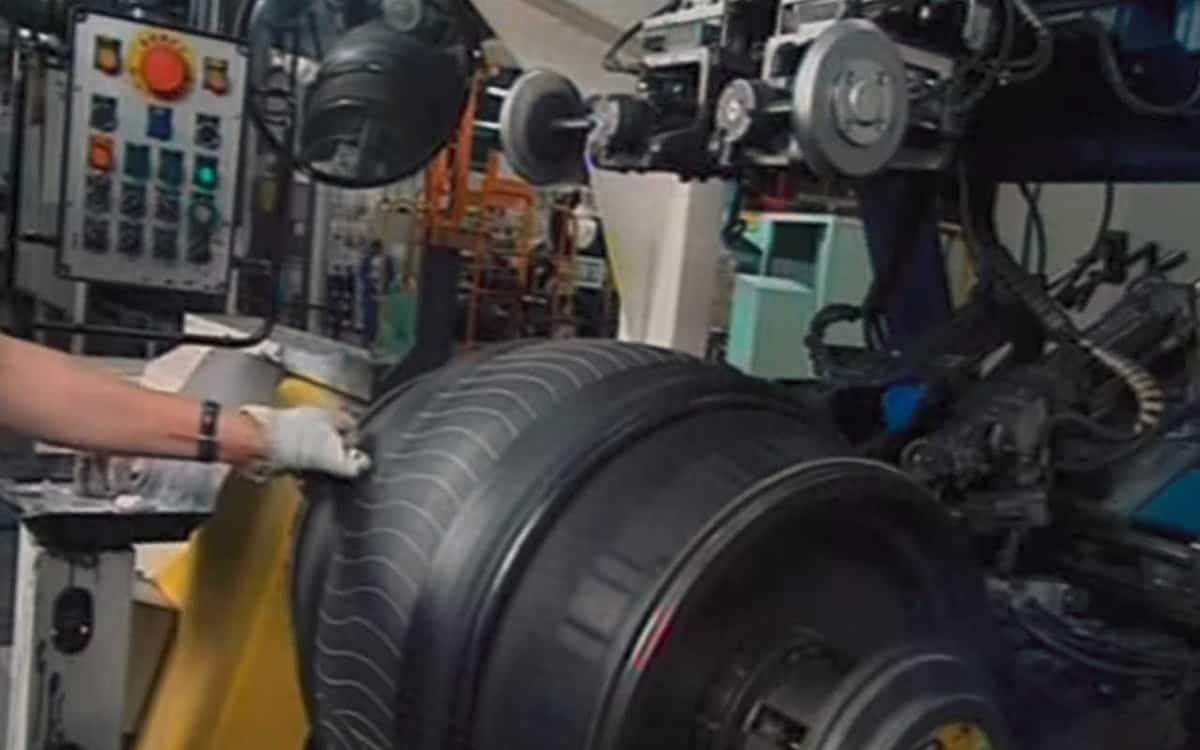
All the processes, from the raw material to the green tire finally molded and cured. Not many products involve so many different processes and materials in volumes of millions per year.
The technologies involved:
- elastomer, natural rubber & curing
- complex mold technics
- leak-tight and pressure
- metal reinforcing
All that with very high volume production (5 tires per car, summer + winter tires, +1 car per family …) for sure one of the most produced products worldwide after food production.
The logic here is all the way from the rubber tree to the final finished tire.
Let’s first harvest the rubber
A very good design principle of tires:
To be compared with a 1930 production
Improvements have been
- in the materials
- the assembly of layers
- in the automation replacing handwork
But obviously a continuous improvement rather than a radical breakthrough innovation design concept except suppressing the inner tube
Missing: what about recycling? Please complete or comment below.
Complementary Readings & Techniques
- Rubber compounding and formulation: blending, vulcanization, and material testing.
- Material science and polymers: polymer synthesis, reinforcement with fillers, and nano-material integration.
- Quality control in manufacturing: statistical process control, defect detection, and non-destructive testing.
- Sustainable and eco-friendly practices: recycling of tire materials, use of bio-based materials, and life cycle assessment.
- Supply chain management: Just-In-Time inventory, demand forecasting, and logistics optimization.
- Performance testing and evaluation: tread wear analysis, traction testing, and temperature resistance assessments.
External Links on Tires and Automotive Components Manufacturing
International Standards
(hover the link to see our description of the content)
Glossary of Terms Used
Life Cycle Assessment (LCA): a systematic analysis of the environmental impacts associated with all stages of a product's life, from raw material extraction through production, use, and disposal, aimed at identifying opportunities for improvement and informing decision-making.
Non-Destructive Testing (NDT): a method used to evaluate material properties, integrity, or structure without causing damage, employing techniques such as ultrasonic, radiographic, magnetic particle, and dye penetrant testing to detect flaws or discontinuities.
Statistical Process Control (SPC): a method of quality control that employs statistical techniques to monitor and control a process, ensuring it operates at its full potential by identifying variations and maintaining consistent output within specified limits.