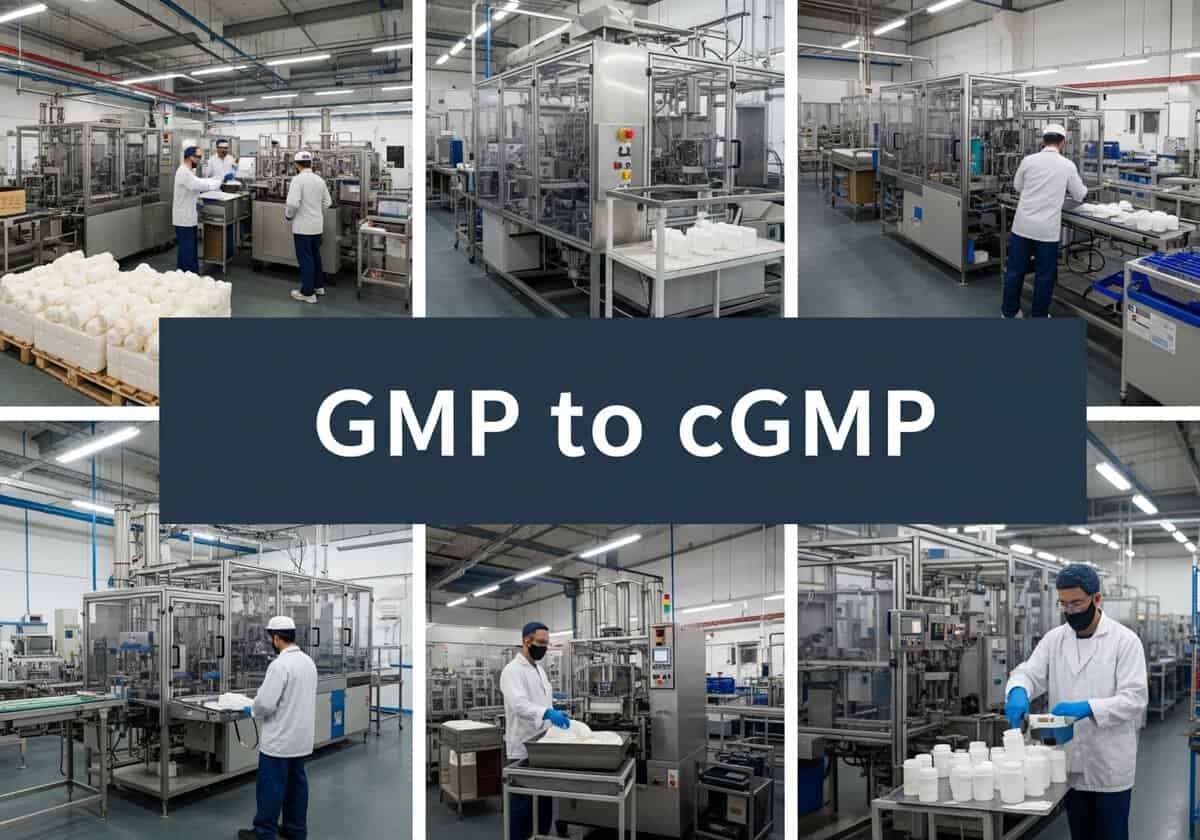
Good Manufacturing Practice, or GMP, is the universal standard for quality production. It is a set of rules to ensure that products like medicines, food, and medical devices are made consistently and safely, batch after batch. The central idea is simple: quality cannot be inspected into a product at the end of the line. Instead, it しなければならない be built into every step of the manufacturing process, from the raw materials that arrive at the loading dock to the final package that leaves it.
cGMPの「c」はCurrent(最新)の略です。この一文字が、重要かつ動的な要件を示しています。GMPは基本的な規則集を提供する一方、cGMPは製造業者に対し、現在利用可能な最新の技術、システム、科学的知見を用いることを法的に義務付けています。10年前にはGMP基準で完全に許容されていたプロセスでも、その後、より優れた信頼性の高い方法が登場すれば、cGMPの検査に不合格となる可能性があります。cGMPは企業に継続的な改善を促します。
主なポイント

- GMP & cGMP distinction is now academic; the expectation is universal.
- 品質リスク管理 (QRM) はエンジンであり、事務処理や PLM ではありません。
- Data integrity is a primary audit focus.
- “Human Error” is a symptom, not a root cause. Attributing a deviation to “human error” is a red flag for a weak quality system.
- Process Analytical Technology (PAT) embodies the shift from testing to real-time assurance. The “c” in cGMP is exemplified by PAT.
- Supplier oversight is data-driven, not just audit-driven.
- The Qualified Person (QP) represents a critical EU-specific responsibility.
- の Contamination Control Strategy (CCS) is the new cornerstone of sterile manufacturing.
The 10 Core Principles of Good Manufacturing Practice (GMP)
GMP is not just a set of rules but a quality mindset built upon ten fundamental principles. These principles work together to create a robust system that ensures quality is built into a product at every stage, rather than merely being tested for at the end.
1. Write Step-by-Step Procedures and Work Instructions
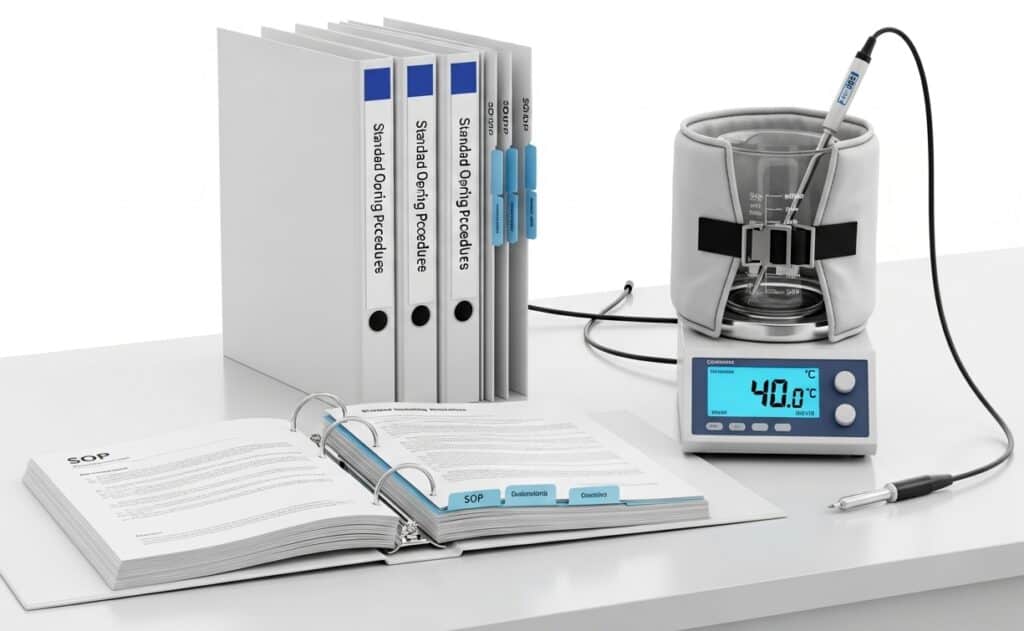
The foundation of GMP is ensuring that all processes are clearly defined and documented. This principle requires creating detailed, unambiguous Standard Operating Procedures (SOPs) for every critical task. The goal is to ensure that operations are performed consistently and correctly every time, regardless of who is performing the task. This eliminates ambiguity and provides a clear reference for training and execution.
Example of application: a company, “PharmaBlend Inc.,” manufactures a temperature-sensitive liquid drug. Their SOP for “Compounding Tank Temperature Control” (SOP-MFG-101) specifies not just the target temperature (40°C ± 2°C), but also the exact sequence for starting the heating jacket, the rate of temperature increase (not to exceed 5°C per minute), the specific calibrated probe to use for monitoring, and the actions to take if the temperature overshoots.
ヒント: instead of writing monolithic SOPs, use a modular approach. Create “master” SOPs for complex processes that reference smaller, task-specific “work instruction” documents for individual steps (e.g., calibrating a specific sensor, operating a single valve). This allows for easier updates—if a single piece of equipment is replaced, you only need to revise one small work instruction instead of the entire process SOP, significantly reducing review and approval time and minimizing the risk of introducing errors into unrelated sections.
2. Follow Procedures and Instructions Meticulously
Having documented procedures is meaningless if they are not followed. This principle demands strict adherence to the written SOPs without deviation. If a deviation is necessary, it must be formally documented, justified, and approved through a defined change control process. This ensures that any departure from the standard is controlled, assessed for risk, and recorded for traceability.
ヒント: implement a “Right-First-Time” (RFT) metric for procedure execution, tracked during batch record review. When deviations occur due to non-adherence, don’t just retrain the operator. Perform a root cause analysis focused on the procedure’s 使いやすさ (a Human Factors approach). Was the instruction ambiguous? Was the sequence illogical? Is the required tool hard to access? Improving the procedure itself is a more effective long-term Corrective and Preventive Action (CAPA) than simply blaming human error.
3. Promptly and Accurately Document Work
This is the principle of “if it wasn’t written down, it didn’t happen.” All activities, from receiving raw materials to shipping the final product, must be documented in real-time. This includes recording data, signatures, dates, and any observations. Accurate, contemporaneous documentation provides a complete and traceable history of a batch (known as a Batch Record or Device History Record), which is essential for investigating deviations, troubleshooting problems, and proving compliance during an audit.
ヒント: when designing batch records (paper or electronic), incorporate “data integrity checks” directly into the fields. For example, instead of just a blank space for “End Time,” structure it to require a start time and an end time, with an automated or manual check to ensure the duration is logical for the process step. For critical entries, use “verify-by-second-person” sign-offs, but ensure the verifier is trained to re-perform the critical calculation or check the setting, not just “check the box.”
Difference between DMR and DHR:
- The Device Master Record, or DMR, is the master recipe for a medical device. It is a formal, controlled compilation of all the instructions, specifications, and procedures required to produce a consistent product. The DMR contains everything from the design drawings and material specifications to the detailed manufacturing instructions, quality control test methods, labeling, and packaging requirements. Think of it as the complete blueprint; it defines exactly how the device is supposed to be made, from start to finish.
- The Device History Record, or DHR, is the proof that a specific batch, lot, or individual unit was actually built according to that recipe. It is the completed production record. The DHR contains the specific dates of manufacture, quantities produced, test results for that batch, and traceability information like serial or lot numbers. While the DMR is the instruction manual that applies to all units, the DHR is the historical evidence that demonstrates one specific production run followed those instructions and met all acceptance criteria.
4. Validate Your Work & Process
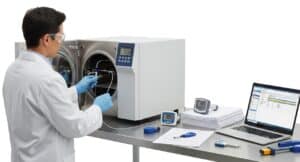
検証とは、プロセス、システム、または機器が期待された結果を一貫して生成することを文書化した証明です。
実際には、 IQ OQ PQ process validation is how a company produces that documented proof: installation, operational and performance checks of each system are signed off before routine production starts. Smaller sites often begin with IQ and OQ validation of new equipment, then complete the performance step during the first production batches.
ヒント: この原則により、製造業者は自社のプロセスが信頼でき、管理下にあることを証明する必要があります。これには、製造プロセス、分析試験方法、洗浄手順、およびコンピュータ化されたシステムが意図された目的に適合していることを確認する検証が含まれます。 Qualification – PPQ) not just to confirm the process works, but to verify that it remains within this state of control. This shifts the focus from a simple pass/fail event to demonstrating ongoing process understanding and control, which is highly valued by regulators.
For this stage, we suggest our very complete reading on IQ OQ PQ プロセス検証:
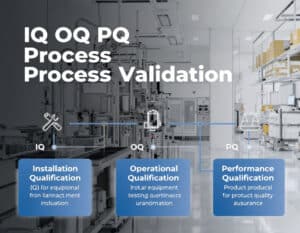
専門家のアドバイス: validation is becoming a continuous lifecycle, not a one-time event. The “three successful batches” mindset is becoming obsolete. cGMP demands a lifecycle approach to ensure the process remains in a state of control for its entire commercial life:
- a robust process design (Stage 1)
- formal qualification (Stage 2)
- 継続的プロセス検証プログラム(ステージ3)
5. Properly Design, Build, and Maintain Facilities and Equipment
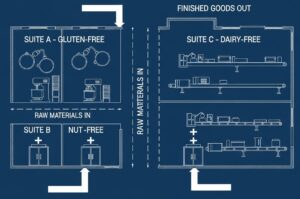
The physical environment and the tools used are critical to product quality. This principle dictates that facilities must be designed to prevent cross-contamination and mix-ups. Equipment must be designed for its intended use, easy to clean, and properly calibrated and maintained.
The layout, airflow, and material flow should all be logically designed to protect the product such as unidirectional flow for personnel and materials. Raw materials enter one end, move through dedicated processing suites with positive air プレッシャー differentials, and finished goods exit the other end. There are no crossing paths between raw and finished goods, and personnel must pass through airlocks to enter production areas, minimizing the risk of cross-contamination.
ヒント: when designing a new facility or modifying an old one, use 3D modeling and virtual reality (VR) walkthroughs with a cross-functional team (including operators, maintenance, and QA) before construction begins. This allows you to identify 人間工学に基づいた issues, inefficient material flows, and hard-to-clean areas (e.g., inaccessible pipework, awkward equipment placement) at the design stage, where changes are cheap, rather than after the facility is built, where they are prohibitively expensive.
6. Maintain Good Housekeeping and Hygiene
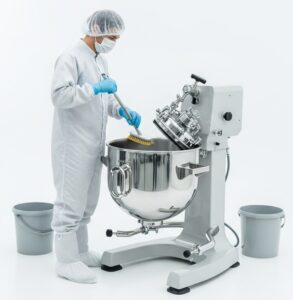
Contamination is a major risk in manufacturing. This principle requires maintaining a high level of cleanliness and hygiene throughout the facility. This includes personal hygiene standards for employees (e.g., proper gowning), documented cleaning and sanitation schedules for facilities and equipment, and pest control programs. The goal is to protect the product from physical, chemical, and microbial contaminants.
Example of application: the cleaning procedure for a mixing vessel is not just “wash with detergent.” It’s a validated, multi-step process: pre-rinse with purified water, wash with a specific concentration of a validated cleaning agent for a set time, final rinse with Water-For-Injection (WFI), and finally, a swab test for chemical and microbial residues to prove the vessel is truly clean before the next batch can be made.
Note: cleaning is different from disinfection (refer to other articles on this).
ヒント: implement a robust environmental monitoring (EM) program that goes beyond routine sampling. Use EM data to create trend analysis charts and heat maps of your facility. A spike in microbial counts in one area isn’t just a deviation to be closed; it’s a data point. Use this data proactively to identify “hot spots,” assess the effectiveness of cleaning procedures over time, and adjust sanitation frequencies based on risk and data, rather than a fixed, arbitrary schedule.
7. Build Quality into the Entire Product Lifecycle
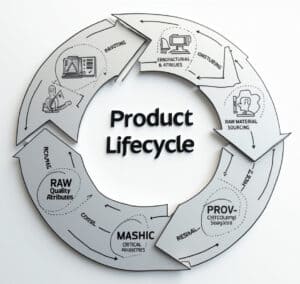
This principle emphasizes that quality is not just the responsibility of the Quality Control (QC) department. It must be integrated into every stage, from research and development, through raw material sourcing (supplier qualification), manufacturing, packaging, and distribution. It involves a holistic approach where every department understands its role in maintaining product quality.
Example of application: “Precision Pills LLC” is developing a new tablet. During the R&D phase (long before manufacturing), they use Quality by Design (QbD) principles. They identify Critical Quality Attributes (CQAs) like tablet hardness and dissolution rate. They then perform experiments to understand how Critical Process Parameters (CPPs) like turret speed and compression force affect these CQAs. This knowledge is then transferred to manufacturing, ensuring a robust and well-understood process from day one.
ヒント: 研究開発、エンジニアリング、製造の間の架け橋として機能する正式な技術移転チームを設立します。 このチームは、プロセスパラメータだけでなく、 behind them (the “why”). This package should detail failed experiments, process boundaries, and the scientific understanding of the product. This prevents manufacturing from treating the process like a “black box” and enables more effective troubleshooting and continuous improvement later on.
8. Perform Quality Control and Audits
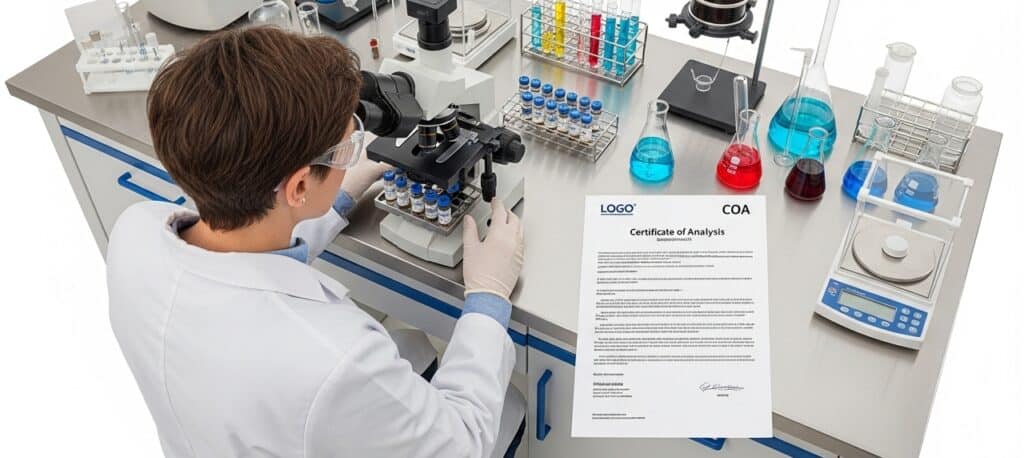
An independent Quality unit (comprising Quality Assurance and Quality Control) is essential. This principle ensures that proper controls are in place. This includes testing raw materials, in-process samples, and finished products against pre-defined specifications. It also involves conducting regular internal audits (self-inspections) to assess the effectiveness of the GMP system and ensure it is being followed correctly.
Example of application: “SafeInjectables Corp.” receives a shipment of vials from a new supplier. Even though the supplier provided a Certificate of Analysis (CoA) showing the vials meet all specifications, the internal QC lab performs its own independent identity and critical defect testing (e.g., for cracks and dimensions) on a sample of the vials before the shipment is released for use in production. This verifies the supplier’s data and protects against potential quality issues.
ヒント: structure your internal audit program to be process-based, not just department-based. Instead of auditing the “Warehouse Department,” conduct an audit of the “Material Control Process” which would follow the material from receiving, through warehouse storage, dispensing, and return-to-stock. This approach breaks down departmental silos and provides a much clearer picture of the health and efficiency of the エンドツーエンド process, revealing risks that occur at the hand-off points between departments.
9. Protect Products Against Contamination

This is a central theme that overlaps with other principles but deserves its own focus. It involves designing processes and facilities to prevent contamination of the product with any foreign substance.
This includes preventing cross-contamination between different products, microbial contamination, and contamination from personnel or the environment.
Measures like closed production systems, proper gowning, and controlled material handling are key applications of this principle.
Example of application: a facility, “MultiHerb Supplements,” produces both a ginseng supplement and a potent herbal extract known to be an allergen. To prevent cross-contamination, the allergenic extract is produced in a completely segregated suite with its own dedicated air handling system (HVAC) and equipment. All tools are color-coded red and are never allowed to leave the suite. This physical and procedural separation is critical to protecting other products.
ヒント: 物理的な隔離にとどまらず、毒性学的データに基づいた共有機器の「洗浄検証」戦略を実施してください。各製品について、許容一日曝露量(PDE)値を算出してください。このPDE値を使用して、製品残留物に対する科学的に正当化された健康に基づく洗浄限度を設定してください。このリスクベースのアプローチは、現在の業界標準(EMAが推奨)であり、「10 ppm」や「目視で清潔」といった古い恣意的な限度値に頼るよりもはるかに堅牢です。
10. Train and Develop Competent Personnel

The human element is often the most critical and variable factor in manufacturing. This principle requires that all employees are properly trained for their specific roles. Training should cover not only the technical aspects of their 仕事 (how to operate equipment) but also the principles of GMP and the potential consequences of not following procedures. Competency must be regularly assessed and documented.
Example of application: before an operator at “CellTherapy Innovations” is allowed to work independently on the critical cell culture expansion step, they must complete a multi-stage qualification program. This includes reading SOPs, observing a qualified operator, performing the task under direct supervision, and finally, successfully processing several “test” batches on their own. Their competency is documented and certified by their supervisor and the QA department in their official training file ( mandatory in most of the sectors where GMP applies).
ヒント: 単純な「トレーニングベース」システムから「コンピテンシーベース」システムに移行します。オペレーターがSOPで「トレーニングを受けた」ことを文書化するだけでなく、オペレーターがスキルと知識を実証することを要求する正式なコンピテンシー評価を開発します。これには、実技テスト(例:「正しく組み立て、 分解する この充填ポンプの操作方法)と口頭での説明(「このステップの重要なパラメータと、それらが逸脱した場合の対処法を説明してください」)を組み合わせることで、より確実な資格認定記録が作成され、単なる出席ではなく、真の理解が保証されます。
Scope and Applications of GMP
The scope of GMP is broad, covering any industry where the quality of the product can have a significant impact on consumer health and safety. The application of GMP principles is tailored to the specific risks associated with each industry.
1. Pharmaceuticals and biotechnology 処方薬、市販薬、医薬品を含むすべての医薬品の製造を対象としています。 ワクチン、および有効医薬品成分(API)。 This is the most stringent application of GMP. It involves strict control over raw materials, aseptic (sterile) processing for injectables, rigorous process validation, stability testing to determine shelf life, and a “Qualified Person” in the EU responsible for certifying that each batch meets all legal and quality requirements before release. この分野は、21 CFR Part 211(米国)やEudraLex Volume 4(EU)などの規制によって規制されています。 | 2. Medical devices Includes everything from simple tongue depressors to complex life-sustaining equipment like pacemakers and MRI machines. The focus is on design controls, ensuring the device is designed to be safe and effective from the outset. GMP for medical devices (often called the Quality System Regulation or QSR) emphasizes risk management (ISO14971), traceability of components, and maintaining a complete Device Master Record (DMR) and Device History Record (DHR). The key regulation in the US is 21 CFR Part 820. |
3. Food and beverage Covers the processing, packaging, and holding of human food. GMP in the food industry focuses on preventing contamination and ensuring food safety. Key applications include 危害分析重要管理点 (HACCP) systems to identify and control food safety hazards, allergen management programs to prevent cross-contact, sanitation procedures, and pest control. The Food Safety Modernization Act (FSMA) in the US heavily incorporates cGMP principles. | 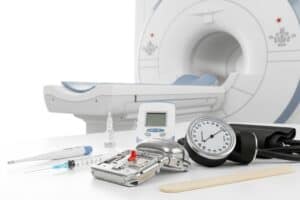 |
4. Cosmetics Includes products like makeup, lotions, shampoos, and soaps. While often less stringent than for pharmaceuticals, GMP for cosmetics focuses on preventing microbial contamination, ensuring product stability, and accurately labeling ingredients. The ISO 22716 standard provides specific GMP guidelines for the cosmetic industry, covering production, control, storage, and shipment. | 5. Dietary supplements Covers vitamins, minerals, herbs, and other supplements. GMP ensures that supplements are produced without contaminants, are accurately labeled, and contain the ingredients they claim to. This involves identity testing of raw materials, ensuring proper formulation, and controlling for contaminants like heavy metals and pesticides. In the US, this is governed by 21 CFR Part 111. |
The Qualified Person (QP)
In the European Union, the Qualified Person (QP) serves as the final, legally mandated gatekeeper for every batch of medicinal product.
Before a batch can be released for sale or for use in a 臨床試験, a QP must personally certify that it complies with all regulatory requirements. This certification is a formal attestation that the batch was manufactured and tested in accordance with its specific マーケティング Authorisation and the principles of Good Manufacturing Practice (GMP). This is not a corporate sign-off; it is a profound personal and legal responsibility placed upon a named individual, who must be a registered professional, such as a pharmacist or chemist, with extensive practical experience.
The QP’s responsibilities extend far beyond the final review of a batch record. They must ensure that the entire Pharmaceutical Quality System is functioning correctly. This includes verifying that all starting materials are from qualified supply chains, that manufacturing and testing processes are properly validated, that all deviations and changes have been appropriately investigated and approved, and that all necessary audits have been performed.
The QP does not personally perform every task, but they are ultimately accountable for the systems that do. They must have a comprehensive understanding of the entire manufacturing and control process, with the authority to access any relevant area or document and the power to halt a release if any aspect of compliance is in doubt.
cGMPに特有の追加要件
cGMPは、GMPの基本原則を基盤として、より動的で、積極的かつ技術的に高度な一連の要件を導入するものです。
「Current」の「c」は単なる提案ではなく、製造業者のシステムが最新鋭であることを求める法的および規制上の期待事項です。
1. 積極的な品質リスク管理(QRM)
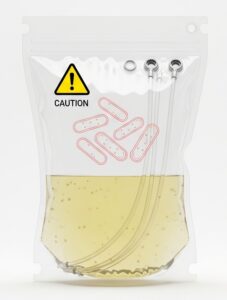
While basic GMP implicitly involves managing risk, cGMP mandates the use of a formal, systematic, and proactive process for managing risks to product quality throughout the 製品ライフサイクル. This is not just about reacting to failures but about anticipating and preventing them. This principle is heavily guided by the international standard ICH Q9.
Example of application: 架空の“ネクストジェン・バイオロジクス同社は新しいモノクローナル抗体を開発している。プロセス開発中に、正式な故障モード影響解析(FMEA)を実施する。FMEAバイオリアクタープロセスにおいて、細菌汚染を高リスクの重大な故障モードとして特定しました。このリスクを事前に管理するため、複雑でリスクの高い定置蒸気滅菌(SIP)バリデーションを必要とする従来のステンレス鋼製リアクターの代わりに、使い捨ての滅菌済みバイオリアクターバッグを使用するようにプロセスを設計しました。この設計上の選択は、QRMプロセスの直接的な結果です(プラスチック廃棄物の削減はここでは話題ではありません)。
ヒント: Integrate your QRM system directly into your Change Control and Deviation Management systems. For every change or deviation, require a documented risk assessment that determines the scope of validation, testing, and regulatory action needed. This creates a scientifically sound and legally defensible rationale for your decisions, allowing you to justify why a minor change only required limited testing, while a major change required a full re-validation and submission to a regulatory agency.
2.医薬品品質システム(PQS)の導入

cGMPは、単なる品質管理手順の集合体以上のものを必要とします。GMPの原則を企業の事業目標と結びつけ、継続的な改善を推進する、包括的かつ統合的な管理システムが求められます。
ICHの指針に従って Q10PQSは、経営陣が品質に積極的に関与し、責任を負うことを保証する。
ヒント: PQSの有効性を監査員に証明するには、品質目標を主要業績評価指標(KPI)に直接リンクさせる必要があります。単に「逸脱件数」を追跡するのではなく、「逸脱再発率」を追跡してください。再発率が低いことは、強力な証拠となります。 KPI これは、根本原因分析とCAPAシステムが効果的であることを証明しています。 防止する 問題解決こそが、成熟したPQSの中核的な目標である。
3. プロセス分析技術(PAT)および高度プロセス制御の活用
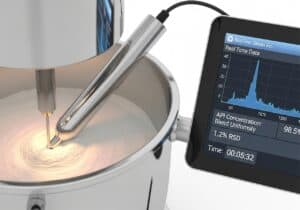
これは「Current」の哲学の礎石です。
cGMPは、製造業者に対し、完成品のサンプル検査だけに頼るのではなく、最新技術を用いて製造工程をリアルタイムで監視・管理し、あらゆる段階で製品の品質を確保することを奨励し、ますます期待している。
Example of application: while a traditional GMP process for tablet blending involves mixing powders for a fixed time (e.g., 20 minutes) and then taking a few samples to a lab for testing, the cGMP approach would use an in-line Near-Infrared (NIR) 分光法 probe directly inside the blender. The probe continuously measures the blend’s uniformity in real-time. The blending process is stopped not based on time, but at the precise moment the NIR data confirms the blend has achieved the validated state of homogeneity, ensuring perfect results for every batch.
ヒント: 新しいPAT機器を導入する際は、最初の10~20バッチは「シャドウイング」方式を採用してください。PATシステムを実行してリアルタイムデータを収集しますが、品質に関するすべての判断(バッチリリースなど)は、既存の検証済みオフライン方式に基づいて行います。これにより、旧来の効率の低い方式を置き換えるために変更管理を通じて正式に検証する前に、リスクの低い環境で堅牢なデータモデルを構築し、PATシステムの信頼性を実証することができます。
4. 妥協のないデータ整合性と21 CFR Part 11への準拠
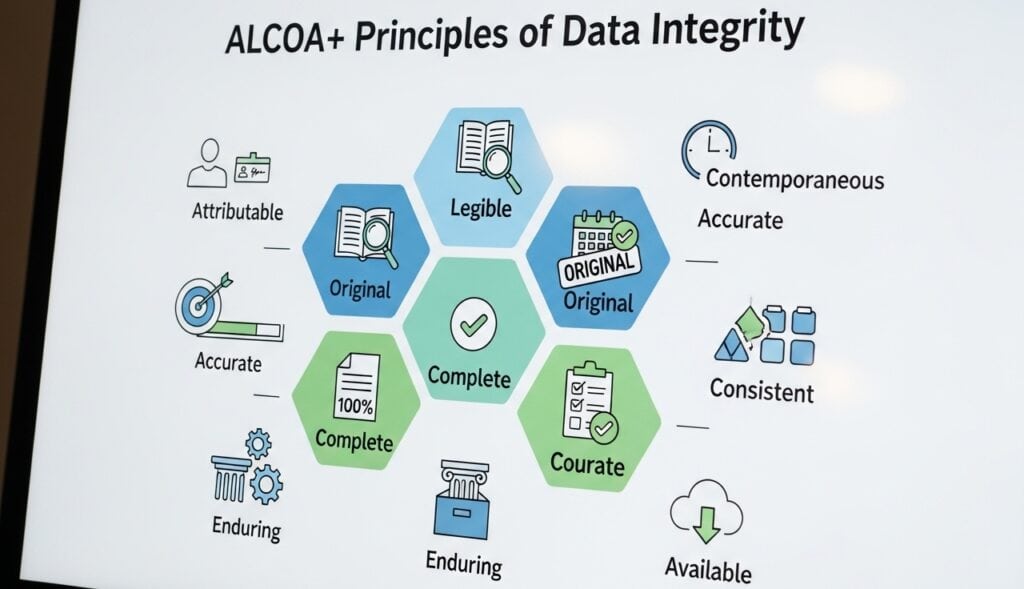
GMPは常に正確な記録を要求してきたが、cGMPは完全性に重点を置く。 電子 データ。コンピュータシステムの台頭により、
規制当局は、データがライフサイクル全体を通して、偶発的または意図的な改ざん、削除、または損失から完全に保護されることを要求します。これはしばしばALCOA+原則(帰属可能性、判読可能性、同時性、原本性、正確性、完全性、一貫性、永続性、可用性)によって要約されます。
Example of application: 「DataSecure Labs」のラボでは、クロマトグラフィーシステム(HPLC)を使用しています。基本的なGMP設定では、スタンドアロンPCから結果を印刷する場合があります。cGMP準拠の設定では、HPLCソフトウェアがネットワーク接続され、21 CFR Part 11に完全に準拠しています。分析者は、固有のユーザー名とパスワードがなければログインできません。すべての生データはセキュアサーバーに直接保存され、削除または上書きすることはできません。積分パラメータの変更を含むすべての操作は、改ざん不可能なタイムスタンプ付きの永続的な監査証跡に自動的に記録されます。
ヒント: 「ネガティブテスト」や「敵対的監査」を実施することで、自社のシステムに積極的に挑戦しましょう。技術に精通したチームメンバーに、意図的にシステムのデータ整合性を侵害するよう指示してください。システムクロックを変更して分析の日付を遡らせることはできますか?監査ログに記録されずに失敗した結果を削除できますか?ログインシステムをバイパスできますか?これらの演習は、熟練した規制当局が調査するであろう内容を模倣したものであり、脆弱性を発見して修正する最も迅速な方法です。
5.継続的な改善を実践する文化
cGMPの本質は、静的な目標ではなく、継続的な取り組みであるということです。規制当局は、あらゆる情報源(プロセス監視、逸脱、苦情、内部監査など)からのデータが積極的に収集、分析され、プロセスやシステムの有意義な改善に活用される正式なシステムを求めています。
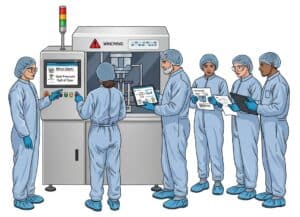
目標は、時間をかけて進化し、より効率的で信頼性の高いものになることです。
cGMPアプローチの例: 製造ラインのシーリングマシンで、軽微なアラームが繰り返し発生する。基本的なGMP対応では、アラームを記録し、毎回リセットする。cGMP対応では、3回目の発生後、PQSが自動的に正式なCAPA(是正措置・予防措置)を発動する。部門横断的なチームが傾向を調査し、根本原因はサプライヤーからの箔材のわずかなばらつきにあると特定し、サプライヤーと協力して材料仕様を厳格化する。その後、6か月間アラーム発生率を監視し、対策が効果的であったことを確認する。
ヒント: 年次報告書から正式な「フィーダー」システムを作成する 製品レビュー (APR)または製品品質レビュー(PQR)を継続的改善プログラムに直接組み込みましょう。PQRを棚に置かれたままの文書にしてはいけません。すべてのPQRにおいて、来年度のプロセス改善またはリスク低減のための、データに基づいた具体的な機会を少なくとも1つ特定することを義務付けましょう。これにより、規制遵守と積極的かつ将来を見据えたプロセス改善が正式に結び付けられます。
GMPとcGMPの比較
| GMP | cGMP | |
| 基本理念と目標 | A comprehensive quality system to ensure products are consistently produced and controlled according to established standards. The fundamental goal is to build quality into the 製品デザイン and manufacturing process to minimize risks that cannot be eliminated by testing the final product alone. | |
| 重要な重点事項 | 国際的に認められた、高品質な製造のための基礎的な最低要件を定める。これは基準となる規格である。 | 現行の「c」は、製造業者に対し、最新かつ最先端の技術、システム、科学的手法を用いることを法的に義務付けています。これは、積極的かつ進化し続ける基準です。 |
| 規格の性質 | 安定した、体系化された基準を提供する。定期的に更新されるが、重点は確立された文書化された規則の遵守にある。 | 変化が激しく、常に進化し続けています。企業は、業界の進歩を積極的に監視し、最新の品質保証システムを導入することで、コンプライアンスを維持する必要があります。昨日まで有効だった基準が、明日も有効であるとは限りません。 |
| 主要規制および統括機関 | この用語は世界的に使用されており、調和のとれた国際標準を表している。 | この特定の用語は、米国食品医薬品局(FDA)が施行する公式の法的基準です。 しかし、「最新であること」という原則は、ほとんどの主要な規制機関が求めるものである。 |
| 欧州連合 | 欧州医薬品庁(EMA)は、ヒト用および動物用医薬品に関する詳細なガイドラインを提供するEudraLex第4巻を通じてGMP(医薬品製造管理基準)を施行している。 | 「cGMP」という用語は使用されていませんが、最新の状態を維持するという期待はEudraLexに組み込まれており、査察の際に強制されます。 |
| アメリカ合衆国 | 米国食品医薬品局(FDA)は、規制が柔軟であり、最新の技術を必要とすることを強調するために、cGMPという用語を使用しています。主な規制は以下のとおりです。
| |
| 国際機関 | 世界保健機関(WHO)は、世界的なGMP基準を策定しており、これらの基準は、独自の包括的な規制枠組みを持たない国々によってしばしば採用されている。国際医薬品規制調和国際会議(ICH)は、EU、米国、日本間の基準を調和させるためのガイドライン(例:原薬に関するICH Q7)を作成している。 | これらの団体は、cGMPの理念の中核をなす継続的改善の原則と最新の品質システムを推進している。 |
| 適用分野 |
| |
| 企業にとっての実践的な意味合い | 堅牢で文書化されたシステムを構築することに重点を置いています。具体的には、標準作業手順書(SOP)、従業員研修、機器の適格性評価、そして綿密な記録管理などです。 | GMP(医薬品製造管理基準)の要件をすべて満たすことに加え、継続的な改善を積極的に推進する企業文化が求められます。これには、高度なプロセス管理、最新の分析試験方法、堅牢な品質リスク管理(QRM)、および包括的な是正措置・予防措置(CAPA)システムの導入が含まれます。 |
| コストと投資 | これには、法令遵守に基づいた品質システム、設備、および人材育成を確立・維持するために必要な標準的かつ費用が含まれます。 | 多くの場合、最新技術、高度な分析機器、継続的な検証研究、専門的なトレーニングへのより大規模かつ継続的な投資が必要となり、それによってプロセスが常に最先端の状態を維持できるようになります。 |
詳細な製造例 (無菌充填) | プロセス: 従来型のグレードA/Bクリーンルームに設置された、旧式の無菌充填ライン。作業員は防護服を着用し、頻繁に手作業による介入(例:ストッパーの装填、詰まりの解消)を行う。環境モニタリングは、バッチの開始時と終了時に、沈降板と空気サンプリングによって定期的に実施される。 規制: 旧GMP規制の書面(例:EudraLex Annex 1の旧バージョン)に準拠している。 検証: このプロセスは数年前に培地充填試験で成功裏に検証されており、再検証は最新のリスクベースのアプローチを用いずに、一定のスケジュール(例えば、半年ごと)で実施されている。 ドキュメント: 綿密な紙ベースのバッチ記録には、すべての手順、介入、および定期的なモニタリング結果が記録されている。 (手作業による介入による汚染リスクが高く、現在の技術では継続的なリアルタイムプロセスデータが得られないため、cGMP基準を満たさない可能性がある。) | プロセス: 完全自動化された制限アクセスバリアシステム(RABS)またはアイソレーターを使用した最新の無菌充填ライン。ロボットシステムがすべての材料移送を処理し、介入はグローブポートを介してのみ行われるため、人との接触は最小限に抑えられます。連続的なリアルタイム粒子モニタリングシステムが統合されており、環境異常が発生した場合は即座にアラートが発せられます。 規制: これは、リスクベースのアプローチと高度な技術の使用を義務付け、無菌性を確保することを定めた、現在のFDAの期待事項および改訂版EudraLex Annex 1に合致しています。 検証: このプロセスは、汚染リスクを事前に特定し軽減する品質リスクマネジメント(QRM)評価(ICH Q9)に基づいて検証されています。プロセス分析技術(PAT)を使用して、重要なパラメータをリアルタイムで監視することができます。 ドキュメント: 準拠した電子バッチ記録(21 CFR Part 11)は、すべてのプロセスパラメータと継続的な監視データを自動的に取得し、完全なリアルタイムかつ監査可能なデータ証跡を提供することで、常に管理状態が維持されていることを示します。 |
結論
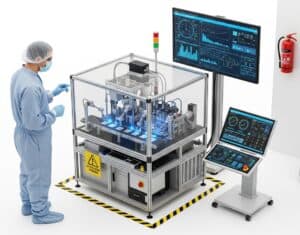
実際には、GMPとcGMPの区別は曖昧になりがちです。なぜなら、どちらのシステムも、一貫して安全で効果的な製品を製造するという、全く同じ基本目標を共有しているからです。GMPは、基本的な原則、つまり永続的なルールを定めています。cGMPの「c」は、これらの原則が最新の技術と科学的理解に基づいて実行されなければならないという、譲ることのできない要件を明確にするものです。
Documents in this field are easier to read with a list of manufacturing terms and acronyms such as GMP, cGMP and PQS at hand.
これはもはやアメリカのFDAだけの概念ではありません。世界の規制機関は、公式文書で「GMP」としか言及していなくても、現在ではこれを現行の適正製造基準(GMP)と解釈しており、監査員は、たとえ当時の基準にどれほど準拠していたとしても、時代遅れのプロセスは受け入れず、自己評価と改善をリアルタイムで行うプロセスを求めています。
要するに、cGMPはGMPを現代的に進化させたものであり、製品の安全性と品質が現代科学の進歩に遅れをとらないようにすることを保証するものである。
よくある質問
In a practical audit, how does an inspector’s expectation for ‘cGMP’ differ from the written ‘GMP’ regulations?
An inspector expects to see not just that you follow your written procedures (GMP), but that your procedures themselves reflect current industry best practices and technology (cGMP). They will question why you are using a 20-year-old analytical method when a more accurate and reliable one is now standard, or why you rely on manual checks where automated in-line verification is now common. They are auditing your awareness and proactive adoption of modern quality standards.
Does cGMP mean we must constantly invest in the newest technology, or can we justify using older, validated equipment?
You can absolutely justify using older equipment, but the burden of proof is on you. Your justification must be documented and risk-based. You need to demonstrate through robust validation, rigorous maintenance, intensive monitoring, and trend data that your older system provides an equivalent or superior level of quality assurance and プロセス制御 compared to modern alternatives. If your process using old equipment has a higher deviation rate, you will not be able to defend it.
Beyond audit trails, what are the most common ‘unseen’ data integrity gaps regulators are focusing on?
Regulators are heavily scrutinizing uncontrolled spreadsheets used for GMP calculations, the use of shared login credentials on standalone equipment (like balances or pH meters), and the ability to perform “test runs” on analytical equipment that can be deleted without a trace. Another major focus is the integrity of metadata—the data about the data, such as timestamps and user IDs, which must be securely linked to the original record.
How is a Pharmaceutical Quality System (PQS) under ICH Q10 different from just having a strong QA department?
A strong QA department enforces quality; a PQS manages it as a business-wide objective. The key difference is the formal integration of senior management and a focus on process performance and continuous improvement. A PQS ensures that quality metrics directly influence business decisions (like resource allocation and strategic planning) and that management is actively reviewing and driving the system’s effectiveness, as opposed to delegating all quality matters to QA.
What does a “lifecycle approach” to process validation (per ASTM E2500) actually mean for an engineer?
It means validation is no longer a “three-and-done” batch exercise. It’s a continuous process. For an engineer, this means: Stage 1 (Process Design): using Quality by Design (QbD) to define a robust process and its control space. Stage 2 (Process Qualification): verifying the facility and equipment are fit for purpose and that the process consistently works within its defined space (PPQ). Stage 3 (Continued Process Verification): actively monitoring the process during routine production using statistical process control (SPC) to ensure it remains in a state of control for its entire commercial life.
What is the most significant practical difference between EU GMP (EudraLex) and US cGMP?
The most significant difference is the role of the Qualified Person (QP) in the EU. In the US, the Quality Unit has the authority to release a batch. In the EU, a specifically named QP must personally certify that each batch has been manufactured and tested in accordance with all regulations and the marketing authorization before it can be released. This places an immense personal and legal responsibility on one individual.
Our CAPA system is compliant, but problems often recur. What is the cGMP expectation for “CAPA effectiveness”?
The cGMP expectation is that you formally verify your CAPAs worked. This requires building an “effectiveness check” step into your CAPA procedure. This check, performed weeks or months after the CAPA is implemented, must provide objective data (e.g., trend analysis of deviation rates, new audit findings) to prove that the root cause was eliminated and the problem has not recurred. A CAPA closed without this verification is a major red flag for auditors.
How has the cGMP expectation for supplier qualification evolved beyond just auditing the supplier?
Audits are still necessary, but cGMP now expects a more data-driven, risk-based approach. This includes establishing formal Quality Agreements that define responsibilities, monitoring the supplier’s performance through metrics (e.g., on-time delivery, deviation rates, quality of incoming material), and performing periodic raw material testing to verify the supplier’s Certificate of Analysis (CoA). You must demonstrate ongoing oversight, not just a one-time qualification.
With the revision of Annex 1, what is the single biggest cGMP shift in sterile manufacturing?
The biggest shift is the mandate for a formal, holistic Contamination Control Strategy (CCS). This is not just a collection of SOPs but a single, comprehensive document that justifies your facility design, processes, and monitoring programs based on risk management. It forces you to demonstrate how all your individual control measures (from gowning to HVAC to process design) work together to prevent contamination.
Why is Process Analytical Technology (PAT) considered a pillar of modern cGMP?
Because PAT embodies the core cGMP principle of building quality in, rather than testing it in. By providing real-time, in-process data, PAT allows for the active control of Critical Process Parameters (CPPs) to ensure Critical Quality Attributes (CQAs) are met. This shifts manufacturing from a rigid, recipe-based approach to a flexible, science-based model that can adjust to minor variabilities and guarantee a consistent outcome.
How should “human error” be treated as a root cause in a cGMP environment?
In a mature cGMP system, “human error” is rarely an acceptable root cause. It is usually a symptom of a flawed process or system. When an error occurs, the investigation must dig deeper: Was the procedure confusing? Was the training inadequate? Was the workspace poorly designed (human factors engineering)? Was the operator fatigued due to excessive overtime? A robust CAPA will address the underlying system failure, not just retrain the individual.
The Annual Product Review (PQR) is often seen as a chore. What is its intended cGMP purpose?
Its intended purpose is to be a proactive tool for continuous improvement. The PQR should not just be a retrospective data dump. It is a formal opportunity to analyze a year’s worth of data (trends, deviations, changes, stability results) to assess the health and consistency of a process. Its most important output should be a list of recommended CAPAs and process improvements for the upcoming year.
Related Readings
外部リンク
国際規格
(リンクにカーソルを合わせると、コンテンツの説明が表示されます)
用語集
American Society for Testing and Materials (ASTM): an international standards organization that develops and publishes voluntary consensus technical standards for materials, products, systems, and services, aimed at improving quality and safety across various industries.
Application Programming Interface (API): 異なるソフトウェアアプリケーションが相互に通信し、連携することを可能にする一連の規則とプロトコルであり、システム間の機能統合とデータ交換を可能にする。
Carbon Capture & Sequestration (CCS): a process that captures carbon dioxide emissions from sources like power plants and industrial processes, transporting it for storage underground or utilizing it in various applications, thereby reducing greenhouse gas concentrations in the atmosphere.
Certificate of Analysis (CoA): a document issued by a manufacturer or testing laboratory that confirms a product's specifications, quality, and compliance with regulatory standards, detailing test results and methods used for analysis.
Code of Federal Regulations (CFR): アメリカ合衆国の連邦機関が発行する一般規則および恒久規則をまとめたもので、主題別に50のタイトルに分類されており、連邦規則の公式な法的情報源として機能する。
Contamination Control Strategy (CCS): 管理された環境における汚染を予防、検出、軽減するための体系的なアプローチであり、定められた手順、監視、およびリスク管理の実践を通じて製品の品質と安全性を確保する。
Corrective Action and Preventative Action (CAPA): a systematic approach to identifying, investigating, and addressing nonconformities and potential issues to prevent recurrence and ensure compliance with regulatory standards in quality management systems.
Corrective and Preventive Action (CAPA): 不適合を特定、調査、対処するための体系的なアプローチにより、再発を防止し、潜在的な問題を排除し、規制基準への準拠とプロセスおよび製品の継続的な改善を確保する。
Cost and Freight (CFR): 輸送契約とは、売主が指定された港まで商品を配送するための輸送費と運賃を負担し、買主は商品が船舶に積み込まれた後の保険および費用に関するリスクと責任を負うという契約である。
Critical Control Points (CCP): specific stages in a process where control can be applied to prevent, eliminate, or reduce food safety hazards to acceptable levels. Identifying these points is essential for effective hazard analysis and critical control management in food production systems.
current Good Manufacturing Practice (cGMP): a system ensuring that products are consistently produced and controlled according to quality standards, encompassing regulations and guidelines for manufacturing processes, facilities, equipment, and personnel to ensure safety, quality, and efficacy in pharmaceuticals, food, and other regulated industries.
Design for Manufacturability (DFM): 設計段階で製造能力と制約を考慮することにより、製造プロセスを簡素化および最適化し、生産コストを削減し、品質を向上させ、市場投入までの時間を最小限に抑えることを目的とした一連のエンジニアリング手法。
Device History Record (DHR): a compilation of records that documents the production history of a medical device, including manufacturing, quality control, and testing data, ensuring compliance with regulatory requirements and facilitating traceability throughout the device's lifecycle.
Device Master Record (DMR): a compilation of documents and specifications that provide the necessary information to produce a medical device, including design specifications, production processes, quality assurance measures, and labeling requirements, ensuring compliance with regulatory standards.
Failure Mode and Effects Analysis (FMEA): a systematic method for evaluating potential failure modes within a system, process, or product, assessing their effects on performance, and prioritizing risks to improve reliability and safety through corrective actions.
Food and Drug Administration (FDA): a federal agency of the United States Department of Health and Human Services responsible for regulating food safety, pharmaceuticals, medical devices, cosmetics, and tobacco products to ensure public health and safety through scientific evaluation and enforcement of compliance standards.
Good Manufacturing Practice (GMP): a system ensuring products are consistently produced and controlled according to quality standards, minimizing risks involved in pharmaceutical production and related industries. It encompasses guidelines for manufacturing processes, facility conditions, personnel qualifications, and documentation practices to ensure product safety and efficacy.
Hazard Analysis and Critical Control Points (HACCP): a systematic approach to food safety that identifies, evaluates, and controls hazards at critical points in the production process to prevent foodborne illnesses and ensure product safety.
Heating Ventilation and Air Conditioning (HVAC): a system designed to regulate indoor climate by controlling temperature, humidity, and air quality through heating, cooling, and ventilation processes. It includes components such as furnaces, air conditioners, ductwork, and thermostats for efficient environmental management.
Heating, Ventilation, and Air Conditioning (HVAC): 暖房、冷房、換気といったプロセスを通じて温度、湿度、空気質を制御することで室内環境を調整するように設計されたシステムであり、住宅、商業施設、産業施設における快適性と安全性を確保する。
High-Performance Liquid Chromatography (HPLC): 液体サンプルを固体吸着剤を充填したカラムに高圧下で通すことにより、サンプルと固定相との相互作用の違いを利用して、混合物中の成分を分離、同定、定量する技術。
Installation Qualification (IQ): 設備やシステムが仕様書に従って設置されていることを検証するための文書化されたプロセス。これには、ユーティリティ、環境条件、設計要件への準拠の評価が含まれ、運用資格取得に向けた準備が整っていることを保証する。
International Organization for Standardization (ISO): a non-governmental international body that develops and publishes standards to ensure quality, safety, efficiency, and interoperability across various industries and sectors, facilitating global trade and cooperation. Established in 1947, it comprises national standardization organizations from member countries.
Key Performance Indicator (KPI): a measurable value that demonstrates how effectively an organization is achieving key business objectives, often used to evaluate success at reaching targets.
Magnetic Resonance Imaging (MRI): a medical imaging technique that uses strong magnetic fields and radio waves to generate detailed images of internal body structures, particularly soft tissues, by detecting the signals emitted from hydrogen nuclei in the presence of a magnetic field.
Operational Qualification (OQ): a validation process that ensures equipment or systems operate according to specified requirements within defined limits, confirming that they perform as intended in their operational environment.
Partial Differential Equation (PDE): 複数の独立変数、未知関数、およびその偏導関数を含む数式。熱伝導、流体の流れ、波動伝播などの現象を記述し、解を求めるには特定の境界条件と初期条件が必要となることが多い。
parts per million (ppm): a unit of measurement representing the concentration of one substance in one million parts of another, often used to quantify pollutants or contaminants in air, water, or soil. It is equivalent to milligrams of substance per liter of solution or per kilogram of material.
Performance Qualification (PQ): a process that verifies a system or equipment operates according to specified requirements under real-world conditions, ensuring it consistently performs its intended function within predetermined limits.
Product Lifecycle Management (PLM): 製品のライフサイクルを、構想段階からエンジニアリング設計、製造、サービス、廃棄に至るまで体系的に管理するアプローチであり、人材、プロセス、データ、テクノロジーを統合することで、製品品質の向上、市場投入までの時間の短縮、関係者間の連携強化を図る。
Programmable Logic Controller (PLC): 産業プロセスの自動化に使用されるデジタルコンピュータであり、命令を格納するためのプログラム可能なメモリ、機械の監視および制御のための入出力インターフェース、および制御アルゴリズムを実行するためのプロセッサから構成される。
Qualified Person (QP): an individual with the necessary education, experience, and authority to oversee and ensure compliance with regulatory requirements in the preparation and submission of technical documents, particularly in the mining and resource sectors, as defined by relevant industry standards.
Root Cause Analysis (RCA): 問題や失敗につながる根本的な要因を特定するための体系的なプロセスであり、単に症状を治療するのではなく、根本的な問題に対処し、排除することを目的としている。
Standard Operating Procedure (SOP): a set of step-by-step instructions created to help workers carry out routine operations consistently and efficiently, ensuring compliance with regulations and quality standards.
Statistical Process Control (SPC): a method of quality control that employs statistical techniques to monitor and control a process, ensuring it operates at its full potential by identifying variations and maintaining consistent output within specified limits.