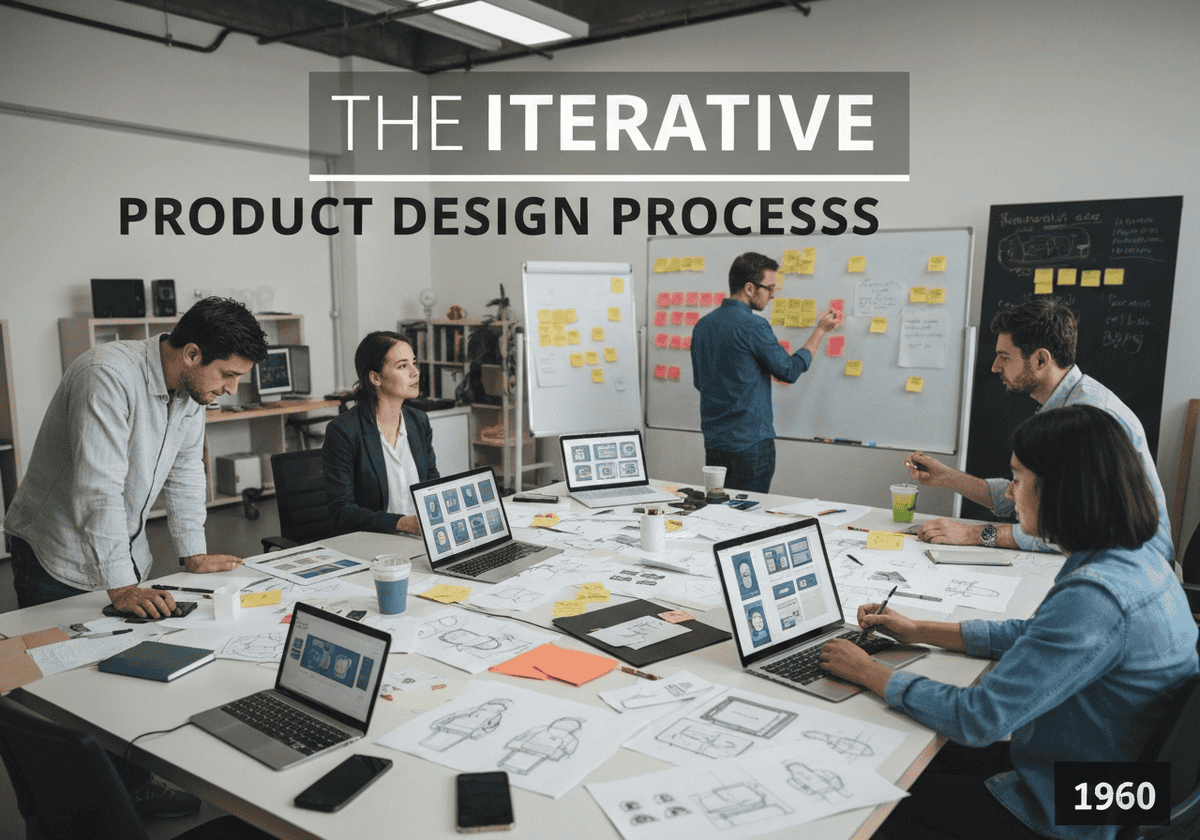
新製品開発のための体系的な手法であり、通常は分析、コンセプト開発、統合といった段階を経て進められます。これは、デザイナーがユーザーニーズを調査し、アイデアを出し合い、プロトタイプを作成し、テストを重ねて最終製品を改良していく反復的なサイクルです。このプロセスにより、本格的な量産に入る前に、最終製品が機能的であると同時に市場の需要を効果的に満たすことが保証されます。

(画像はイメージです)
新製品開発のための体系的な手法であり、通常は分析、コンセプト開発、統合といった段階を経て進められます。これは、デザイナーがユーザーニーズを調査し、アイデアを出し合い、プロトタイプを作成し、テストを重ねて最終製品を改良していく反復的なサイクルです。このプロセスにより、本格的な量産に入る前に、最終製品が機能的であると同時に市場の需要を効果的に満たすことが保証されます。

The product design process is a framework that guides designers and engineers from an initial idea to a market-ready product. It begins with the ‘Analysis’ phase, which involves deep market research, competitive analysis, and understanding user needs through methods like interviews and surveys. This phase defines the problem and sets the design constraints and goals. The subsequent ‘Concept’ phase is a creative exploration where designers brainstorm a wide range of potential solutions. Techniques like sketching, mind-mapping, and storyboarding are common. Multiple ideas are generated without initial judgment to foster innovation. Following this, the ‘Synthesis’ phase involves refining and combining the most promising concepts into a tangible design. This is where detailed specifications are created, and early prototypes, such as mockups or 3D models, are built. The process is inherently iterative; feedback from testing these prototypes is used to circle back to earlier stages for refinement. For example, a 使いやすさ test might reveal a flaw that requires a return to the concept phase to explore alternative solutions. This cyclical nature ensures continuous improvement and reduces the risk of market failure by validating the design against real-world user feedback and technical feasibility before committing to mass production.
反復的な製品設計プロセス
(日付が不明または関連性がない場合、例えば「流体力学」などでは、その注目すべき出現時期の概算値が提示されます。)

フルサイズの画像とダウンロードは、登録会員のみが100%無料で利用できます。
> ログイン <