Right then, let’s have a quiet word about the grubby business of マーケティング 説得。国民として、私たちはフェアプレー、整然とした列、そして毅然とした態度を装っていますが、互いに物を売りつける技術となると、まったく異なる、より狡猾な性格が現れます。それは、クイーンズベリー侯爵のルールが窓から投げ捨てられ、代わりにずる賢いトリックが書かれた使い古されたパンフレットが使われる世界です。 心理的 でたらめな話や、あからさまな嘘を、すべて魅力的な、ほとんど申し訳なさそうな笑顔で語る。
What follows is not a list of unfortunate accidents or clumsy mistakes. Oh no.
These are the masterpieces of the trade, the well-honed manœuvres passed down from one generation of cynical marketing executives to the next. They are the dark arts of distraction, deception, and bare-faced cheek, polished to such a grim perfection that they’ve become a sort of marketing pastime, as traditional as complaining about the weather or forming a committee. This is the unwritten rulebook of marketing techniques so utterly, magnificently dreadful, they’re practically a national art form.
The Unofficial Rulebook of Selling Your Soul
または
Mind the Gap: A Guide to Dodgy Marketing
Right, apprentice. Put that down. The customer’s wallet isn’t going to open itself. You’ve had your induction, you know where the fire escape is, now it’s time for the real education. Forget everything you think you know about honesty and integrity in marketing; they are luxuries for the rich and the bankrupt.
Your 仕事 is to create desire out of thin air.
You may want to read, in a similar tone, the two related posts:

Both in a same British’s humour style, with the same tip and 2 disclaimers:
ヒント: we really recommend reading the English version of this article (versus the automatic translations).
免責事項その1: pray, let it be understood, for the benefit of those with a less developed sense of the theatrical, that the following masterclass is a work of pure, theoretical マーケティング artistry. Should any of these exquisitely crafted stratagems happen to bear a fleeting, or indeed a startlingly precise, resemblance to the public pronouncements or corporate manœuvres of any actual entity, living or deceased, one しなければならない dismiss it as a most unfortunate and amusing coincidence. Perish the thought that real-world corporations, in all their earnest, plodding mediocrity, could ever possess the requisite panache and intellectual fortitude to execute such sublime deceptions. Reality, it seems, is so often a pale and clumsy imitation of truly superior fiction.
免責事項その2: furthermore, one must insist that these twenty principles below, heretofore elucidated, are offered not as a pedestrian manual for corporate malfeasance, but as a purely intellectual exercise for the discerning mind. Consequently, we shall abrogate any and all moral or legal culpability in their perfect (!) application. Should an acolyte’s masterful execution of these sublime arts lead to any… unfortunate entanglements with the clumsy machinations of the law, it must be considered a testament not to a flaw in the teachings, but to a lamentable deficiency in the practitioner’s own finesse. Navigating such terrestrial squabbles is, after all, a practical test of one’s aptitude, and we take no responsibility for those who, in their haste, trip over the vulgarities of litigation.
You are a wizard, and this is now your book of spells. Pay attention:
The Noble Art of Pulling a Fast One
First, you must understand that reality is a terribly drab affair. It is your sacred duty to embellish it, to paint it in dazzling colours, to transform the mundane into the magnificent. We are not liars; we are enhancers of the truth.
1. The Estate Agent’s Lexicon (aka Deceptive Advertising)
You are not selling a product; you are selling a dream, a lifestyle, an aspiration. The customer doesn’t want the grim, disappointing truth; they want the glossy, beautiful fantasy. Your job is to provide it. You must become a master of the euphemism, a poet of the positive spin. A small, dark room is “intimate and cosy.” A crumbling façade is “bursting with period character”. A view of a brick wall is “a dynamic urban vista”. You must learn to wield the English language not as a tool for コミュニケーション, but as a weapon of mass distraction. The product photograph is your canvas. It must be lit like a Rembrandt, angled like a supermodel, and digitally altered until any resemblance to the actual, physical object is purely coincidental.

Remember our campaign for ‘Sir Reginald’s Robust English Sausages’? The product itself was a sad, grey tube of rusk and regret. But we didn’t sell that. We sold “A Taste of the True British Breakfast.” The packaging featured a fictional coat of arms and a photo of the sausages sizzling in a sun-drenched country kitchen that we built in a studio in Slough. The copy spoke of a “time-honoured recipe passed down through generations”, which was technically true, as the recipe had been passed down from the previous factory owner in the 1980s.
Relabeling a weakness as a strength is an old trick of the trade, summed up by the line it’s not a bug it’s a feature. it’s not a bug it’s a feature meaning is this kind of spin: a flaw presented as a selling point.
Expert’s Whisper: your guiding principle is plausible deniability. You must construct sentences that are legally watertight but morally as leaky as a sieve. Our lawyers should be able to defend your words, even if they have to hold their noses while doing so. It’s not a lie if you can argue, with a straight face, that “globally-sourced ingredients” is a fair description for salt and water.
2. The Phantom of the Offer (aka Bait-and-Switch)
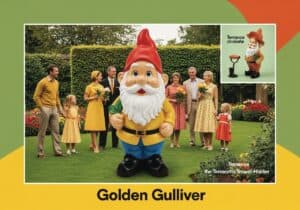
The first step is to craft an offer of such ludicrous generosity that it creates a gravitational pull, drawing customers in from miles around. This is the “bait.” A 60-inch television for the price of a pint, for instance. You must then ensure your actual stock of this item is laughably small—one, perhaps two units, ideally one of which is already “reserved.” When the hopeful punter arrives, you must greet them with the solemnity of a funeral director, informing them of the tragic news. Then, just as despair sets in, you pivot. Your face lights up with a sudden, brilliant idea. You can’t offer them that television, but you can offer them this other, far superior model, for only three times the price.
Our “Golden Gulliver” garden gnome promotion was a masterclass. We advertised a magnificent, 4-foot, hand-painted gnome for £9.99. We had exactly one, and it sat in the window. When customers came in, we’d explain with great sadness that the Golden Gulliver was a unique display piece, but they could have a “Terrance the Terracotta Trowel-Holder”—a miserable little lump of clay—for £29.99. We sold hundreds of Terrances. The Golden Gulliver is still in my office.
Expert’s Whisper: the transition from despair to hope is the key. You must become a theatrical performer. They should feel that you are on their side, a co-conspirator in finding a solution to the terrible problem you created. They’re not being upsold; they’re being saved from disappointment.
3. Death by a Thousand ‘Admin Fees’ (aka Hidden Fees and Drip Pricing)
広告価格は単なる魅力的な口実、会話のきっかけに過ぎません。本当の利益は、マージン、つまり、一つずつ追加していく小さな付加価値によって生み出されます。 マジシャン 耳の後ろからコインを取り出す。これが「ドリップ」だ。顧客は20ポンドのフライトを見つける。座席代(驚くほど必要不可欠なものだが)、荷物代、チェックインの特権、そしておそらくオフィスの観葉植物代にしかならない「カーボンオフセット拠出金」を支払う頃には、合計は80ポンドになっている。彼らはすでに手続きのかなり深いところまで入り込んでおり、心理的に引き込まれすぎていて、後戻りできない。それは敗北のように感じられるだろう。

当社のオンラインフラワーデリバリーサービス「ペタルプッシャーズ」は、「たったの5ポンド!」でブーケを宣伝していました。もちろん、これは必須の3.50ポンドの「茎の水分補給料」、2.00ポンドの「アレンジメントと構成料」、4.50ポンドの「配達時間指定保証料」、そして1.50ポンドの「環境に優しいラフィア製ネクタイ追加料金」が加算される前の金額です。5ポンドは、ゲームへの参加費に過ぎませんでした。
Expert’s Whisper: name your fees with pompous, impenetrable jargon. Nobody dares question a “Regulatory Compliance Surcharge” or a “Digital Fulfilment Protocol Fee”. It sounds far too important and boring to argue with. Make the customer feel that questioning the fee would reveal their own ignorance.
4. The ‘My Mate Down the Pub Reckons It’s Brilliant’ Gambit (aka Flogs and Astroturfing)

The modern customer is a cynical beast; they don’t trust us. But they do trust strangers on the internet, for some baffling reason. This is a weakness we must exploit with gusto. You will create a chorus of fake adoration. You will invent a cast of characters: “Dave from Manchester”, a no-nonsense bloke who loves your power drill; “Sarah, a busy mum,” who finds your stain remover to be a godsend. You will build fake blogs, fake review sites, and populate forums with your own glowing testimonials. You are not just a marketer; you are a fiction writer, a creator of worlds.
For ‘Guzzle,’ our spectacularly mediocre energy drink, we created an entire online 生態系. We had a fake blog run by a fictional extreme sports enthusiast, “Blade,” who swore by it. We paid a dozen students to write five-star reviews, and we even created a rival fake energy drink, ‘Slurp,’ and had our own fake accounts argue in forums about which was better. Guzzle always won the argument, of course.
Expert’s Whisper: the masterpiece of astroturfing is the four-star review. It builds trust. “I’d give it five stars, but the delivery driver left the box on its side. The product itself, however, is a revelation that changed my life and cured my gout.” This sliver of manufactured imperfection makes the whole lie believable.
5. The ‘Terms and Conditions Apply’ Mumble (aka Withholding or Obscuring Important Information)

The law, in its infinite tediousness, requires us to tell the customer about all the nasty, unpleasant things our product or service might do. But it doesn’t specify that they have to be able to read it. Your job is to take this legally mandated information and bury it. It must be presented in a font size visible only to insects, in a colour that blends seamlessly with the background, and written in prose so dense and convoluted that it would make a lawyer weep. The goal is for the customer to see this impenetrable wall of text and think, “Oh, bother it,” before ticking the box.
When we launched our “free” credit report service, the terms and conditions contained a delightful little clause, buried on page 47, that automatically signed the user up for a £29.99 a month “Premium Protection Plan” if they didn’t opt out within seven days by sending a handwritten letter to a PO Box in the Outer Hebrides. We called it “proactive customer care”.
Expert’s Whisper: on a webpage, place the link to the terms and conditions somewhere technically visible but practically invisible, like the bottom right corner of the footer, in a slightly different shade of white from the background. It’s an art form. You have fulfilled your legal duty without the slightest risk of informing the customer.
A Good Old-Fashioned Mind Game
Now, apprentice, we move from simple deception to the higher arts of psychological manipulation. The customer’s mind is not a fortress; it is a poorly secured allotment, and we are going to sneak in at night and plant our own ideas.
6. The ‘Moral Panic in a Bottle’ Approach (aka Fear-Based Marketing)
A comfortable, content customer is a useless customer. Your first duty is to shatter their peace of mind. You must identify a vague, low-level anxiety and amplify it into a full-blown existential crisis. Is their bathroom truly clean, or is it a festering pit of invisible germs that threaten their very children? Is their pension plan adequate, or are they destined for a miserable, impoverished old age? You must paint a vivid picture of doom and gloom, and then, with impeccable timing, present your product as the shining beacon of hope, the one thing that can save them.
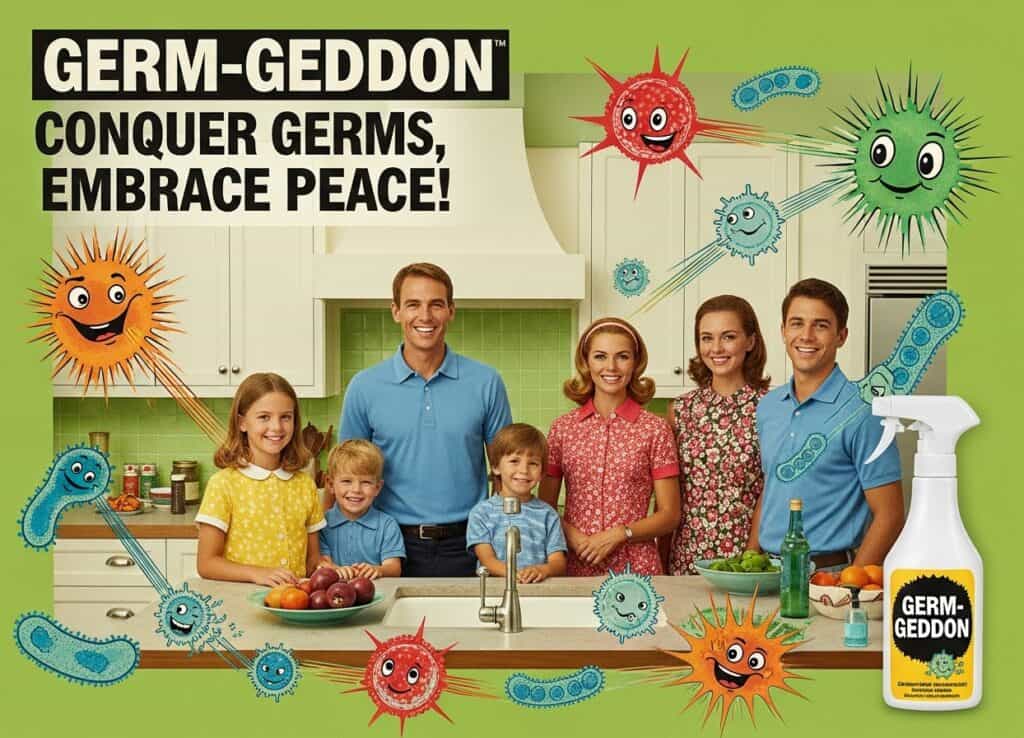
Our ‘Germ-Geddon’ kitchen spray campaign was a triumph. We ran ads showing terrifying, microscopic images of bacteria, overlaid with a thundering, apocalyptic soundtrack. We implied that an un-sanitised kitchen counter was more dangerous than a faulty parachute。
Expert’s Whisper: 私たちは掃除用品を販売していませんでした。
私たちは恐怖におののく中産階級に安心を売りました。
売上は3倍になりました。 fear of missing out so potent that it short-circuits the rational brain. They must feel that if they don’t click “Buy Now” this very second, they will regret it for the rest of their miserable lives.
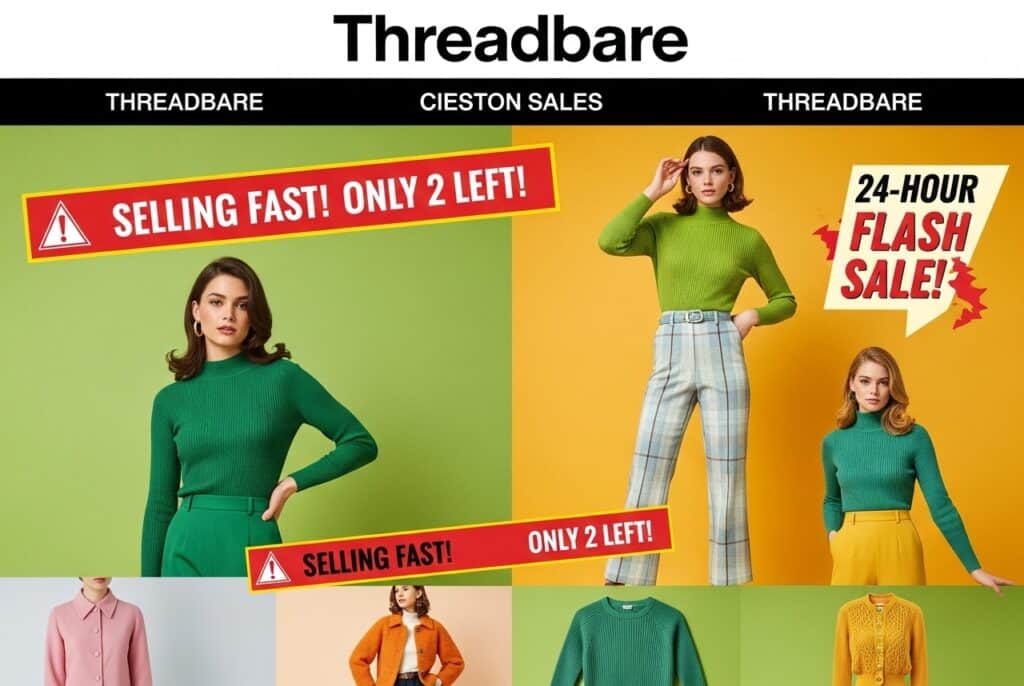
For our online clothing store, ‘Threadbare,’ every single item had a little red warning next to it: “Selling fast! Only 2 left!” For every single item. All the time. We also had a permanent “24-Hour Flash Sale” banner. It was always 24 hours from whenever you happened to be looking. The urgency was entirely fictional, but the sales were very, very real.
Expert’s Whisper: make the urgency personal. “3 other people are looking at this right now.” “Someone in your town just bought one.” This transforms a vague fear into a direct, competitive threat. They are not just buying a product; they are beating someone else to it.
8. The John Lewis Christmas Special (aka Emotional Exploitation)
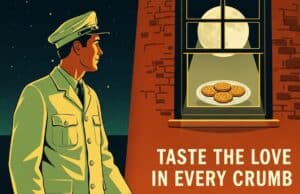
This is advanced stuff, my boy. You are no longer selling a product. You are selling a profound emotional experience. Your advert must be a cinematic masterpiece of manipulation. It must tell a story so heart-breakingly beautiful that the viewer is reduced to a weeping puddle on the floor. A lonely monster, a friendship between a boy and a penguin, a sad old man on the moon. The product itself is almost an afterthought, a brief ロゴ at the very end. The goal is to forge an unbreakable link between a deep, primal human emotion and your brand of car insurance.
To sell ‘Crumbly’s Traditional Biscuits,’ we produced an advert about a lighthouse keeper who communicates with his late wife’s spirit by leaving her favourite biscuit on the windowsill every night. It had absolutely nothing to do with biscuits. People wept. They called it a beautiful short 膜. They bought the biscuits because they associated them with tragic, eternal love.
Expert’s Whisper: the music is everything. Take a well-known, cheerful pop song and have a young woman with a breathy voice sing a slow, mournful, piano-only version. It is emotionally devastating and costs a fraction of licensing the original. It’s the secret weapon of sentimental commerce.
9. The Secret Agent’s Whisper (aka Subliminal Messaging)

Now this is a technique for the true artist, the connoisseur of the dark arts. It is the practice of embedding hidden messages—a single frame in a video, a quiet word buried in an audio track—that are designed to bypass the conscious mind entirely and plant a seed directly in the subconscious. Is it effective? Almost certainly not. But the sheer, delicious audacity of the attempt is what matters. It shows you are a true professional.
In the ice-cubes of a print ad for our ‘Glacier’ brand of gin, we very subtly shaped the air bubbles to spell out the word “MORE.” Nobody ever consciously noticed it. We have absolutely no evidence that it worked. But we all knew it was there. It was our little secret, our nod to the craft.
Expert’s Whisper: the beauty of this technique is that it is impossible to prove. If you are ever accused of it, simply laugh. Dismiss it as a conspiracy theory. This only adds to your mystique as a marketing guru who operates on a higher, more mysterious plane.
10. The Perpetual DFS Sale (aka Manipulative Pricing)
You must cleanse your mind of the traditional concept of a “sale.” A sale is not a temporary event; it is a permanent, glorious state of being. The “full price” is a mythical beast, a theoretical number that existed for a few minutes in the dead of night to satisfy some legal busybody. The “sale price” is the real price. The customer must always feel they are getting a bargain, that they have cleverly outsmarted the system. It is a comforting illusion that you must maintain at all costs.
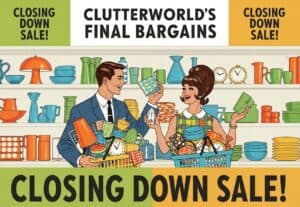
At ‘ClutterWorld,’ my old homewares emporium, we had a “Closing Down Sale.” It ran for twelve years. We had banners made. We’d occasionally move the stock around to give the impression of dwindling supplies. People came in every week to snap up the “final bargains.” It was the most successful closing down in British retail history.
Expert’s Whisper: the “WAS” price is your most powerful tool. It must be displayed with righteous prominence, in a large, angry font, slashed through with a violent red line. The bigger the chasm between the “WAS” and the “NOW,” the smaller the part of the customer’s brain that is actually thinking about how much money they are spending.
A Catalogue of Social Blunders and Bad Manners
Right, let’s get into the messy stuff. This isn’t about being clever; it’s about having the nerve to do what others won’t. This is where you separate the lions from the lambs.
11. Profiteering from a Predicament (aka Targeting Vulnerable Groups)

A person in a state of distress—be it financial, medical, or emotional—is not a victim. They are a highly motivated consumer with a clearly defined need. Your job is to locate these pockets of desperation and present your product as the answer to their prayers. You are not an exploiter; you are a provider of hope. A very expensive, high-margin hope. It is the purest form of capitalism.
We launched a vitamin supplement called ‘Vigor,’ with vague claims about “boosting vitality.” We specifically targeted our online ads to people whose search history included terms like “chronic fatigue”, “can’t sleep”, and “feeling low”. We sold them a simple multivitamin at a 500% markup, not as a supplement, but as a lifeline.
Expert’s Whisper: your language must be dripping with empathy. “We understand.” “You’re not alone.” “There is a way forward.” This creates a bond of trust, making them feel you are a benevolent helper, not a predator who has sniffed out their weakness from their data trail.
12. デジタル「あなたはリストに載っていません」(別名差別的広告)
Why on earth would you waste good money showing your adverts to people who can’t afford your product? The digital age allows for a wonderfully efficient form of social stratification. You can ensure your ads for luxury cars are only seen by people in the top 1% of postcodes. You can hide your job adverts for management positions from anyone over the age of 50. It’s not prejudice; it’s “optimising your ad spend.”
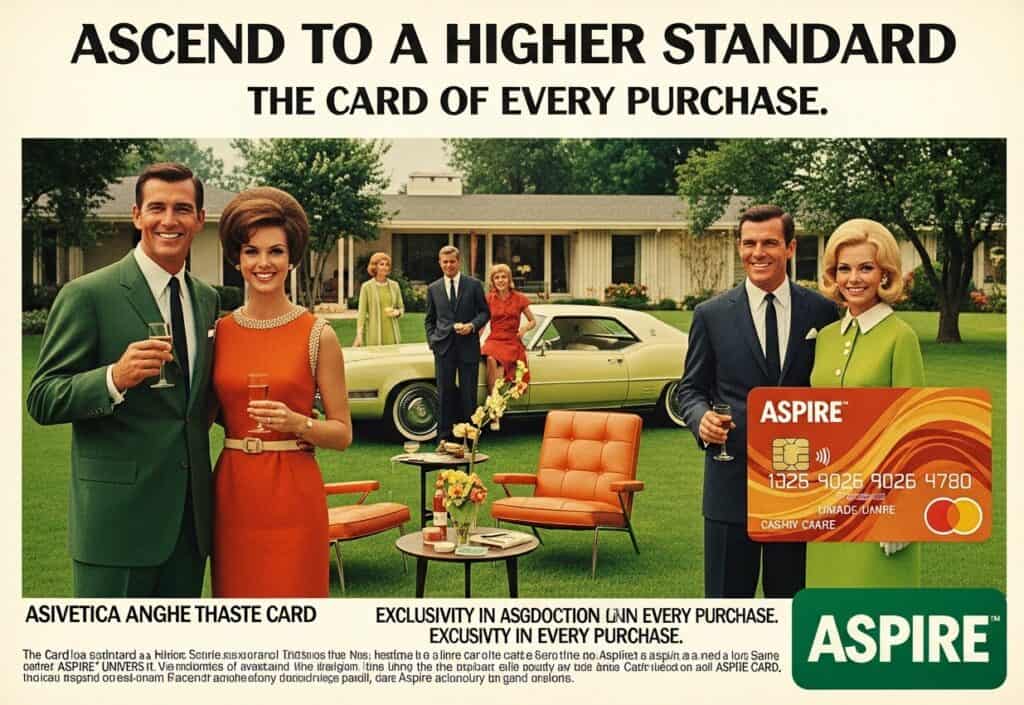
For the launch of the ludicrously exclusive ‘Aspire’ credit card, we ran a campaign on social media. The targeting was a work of art. We excluded anyone whose profile listed a non-prestigious university, anyone who “liked” budget supermarkets, and anyone who lived more than five miles from a Waitrose. We curated our customers before they even knew the product existed.
Expert’s Whisper: never state your exclusions. Always frame it as a positive. You are not “excluding the poor”; you are “targeting an aspirational, high-net-worth demographic.” It sounds so much more professional and so much less illegal.
13. The ‘Clueless Tourist’ School of Global Marketing (aka Cultural Insensitivity and Stereotyping)
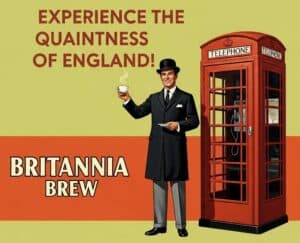
Look, you’re a busy person. You don’t have time to become an expert in anthropology every time you launch a product in a new country. Find the most obvious, well-worn cliché about that nation and lean into it. Hard. It’s a shortcut. It’s efficient. It shows you’ve made an “effort.” And if it’s a bit offensive, well, they’ll probably be too polite to say anything.
When we launched ‘Britannia Tea’ in America, the entire campaign was based on stereotypes from a bad Richard Curtis film. Every ad featured a bumbling man in a bowler hat, a red telephone box, and someone saying “Cheerio, guv’nor!” It was breathtakingly inaccurate, but the Americans thought it was “quaint” and “authentic.”
Expert’s Whisper: if you are accused of cultural insensitivity, your response must be swift and formulaic. You must issue a statement about how you “celebrate all cultures” and that the campaign was a “playful homage.” Then, quietly fire the intern you’re going to blame it on
14. The Passive-Aggressive Post-it Note (aka Unfair Competition)
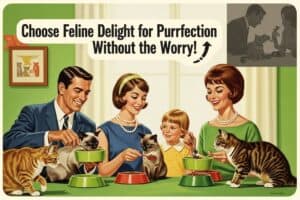
There are two ways to have the tallest building in town. One is to spend years building it. The other is to blow up all the other buildings. The second option is so much quicker. Why waste time talking about how great you are when you can be talking about how dreadful your competitors are? You can be direct, or you can be subtle. A whisper campaign, a few anonymous negative reviews… it’s all part of the game.
私たちはライバルブランドのキャットフード「パーフェクション」と競合していました。そこで、猫好きのための偽のオンラインフォーラムを立ち上げ、自社のスタッフに「パーフェクションのキャットフードを食べたら猫の毛が抜け落ちた」という体験談を投稿させました。もちろん、全く根拠のない話でしたが、疑念の種は植え付けられました。
Expert’s Whisper: anonymity is your armour. Use a VPN. Use burner accounts. Never leave a trail. The rumours must appear to spring organically from the fertile soil of public opinion, not from a marketing department with a dirty tricks budget.
15. The ‘Creative Reappropriation’ Defence (aka Plagiarism and Intellectual Property Theft)

Original ideas are a myth. Everything is a remix. Do not see this as theft. See it as “inspiration.” If your competitor has a brilliant advert, you should feel flattered on their behalf that you are going to copy it. You are simply taking their good idea and, by putting your logo on it, making it even better. It is an act of improvement, not piracy.
A small, independent coffee shop ran a lovely little campaign with the slogan “Your Daily Grind.” It was clever. So we, a massive multinational coffee chain, took it. We just added a ™ symbol at the end and had our lawyers send them a very stern letter. We didn’t steal their slogan; we liberated it for a wider audience.
Expert’s Whisper: the “10% rule” is your legal shield. Change the original idea by a small, token amount. Swap the dog for a cat. Change the blue background to a slightly different blue. It is this fig leaf of originality that will allow you to claim, with a straight face, that it is a “completely different creative concept.”
New-Fangled Digital Nuisances
And now for the modern battlefield. The internet is not a place for sharing pictures of your cat; it is the most powerful surveillance and manipulation tool ever invented for marketing and easy money. Use it.
16. The Digital Curtain-Twitcher (aka Privacy Violations and Data Misuse)
Data is the new oil, and you are an oil baron. Every click, every search, every idle moment a customer spends online is a resource to be harvested. You must track them, tag them, and build a profile so detailed it would make the secret service blush. You are not invading their privacy; you are “understanding their needs” on a granular level. You are getting to know them so you can serve them better. And sell them more things.
With our online shoe shop, we installed a cookie that tracked not just what shoes people looked at, but how long they hovered their mouse over each one. If a man spent more than 2.5 seconds looking at a pair of red stilettos, we’d start serving him ads for them on every single website he visited for the next month. We knew what he wanted before he did.
Expert’s Whisper: always have a privacy policy. It must be thousands of words long and completely incomprehensible. This allows you to claim, truthfully, that the customer “consented” to having their every digital move monitored, even if they had no earthly idea what they were agreeing to.
17. The Relentless Flyer Guy (aka Spamming)
これはシンプルで美しい数字のゲームです。
繊細さを忘れてください。
Expert’s Whisper: 魅力を忘れてください。
あなたの戦略は圧倒的な力を持っています。
電子メールのリストを取得し、購入したり、借りたり、インターネットの暗い隅からかき集めたり、それは重要ではありません。そして、デジタル電撃戦を開始します。

はい、通報されます。
Expert’s Whisper: しかし、あなたを軽蔑する人が 1,000 人いるごとに、1 人の人がクリックするでしょう。
そして、それは回心です。
The “free trial” is the most beautiful trap ever conceived. It operates on a single, glorious principle: human inertia. You offer them something for nothing, but you take their payment details for “security.” Then you sit back and wait. They will use the service, they will enjoy it, and then they will completely and utterly forget it exists. Until they check their bank statement. By which point, you’ve had months of payments. It is a tax on forgetfulness.
We created a language-learning app that offered a “14-day free trial.” The app was, of course, fiendishly difficult to cancel. It required the user to navigate a labyrinth of menus and then solve a logic puzzle to prove they were human. Most people just gave up. We have thousands of subscribers who haven’t logged in for years. They are our best customers.
Expert’s Whisper: the cancellation process must be a journey into the heart of darkness. It must be designed to induce despair. Multiple confirmation screens, guilt-tripping messages (“Are you sure you want to lose all your progress?”), and a final, hidden “confirm cancellation” button. Make it a battle of wills that you are guaranteed to win.
20. The Evil Twin Impersonation (aka Brandjacking)

This, apprentice, is the final lesson. It is the boldest stroke. You find a beloved, trusted brand, and you become its evil twin. You create a website with a near-identical name. You use their logos, their fonts, their colours. You ride on the coattails of the trust they have spent years building. You can use this to sell counterfeit goods, to steal their customers, or simply to cause chaos. It is the marketing equivalent of identity theft. It is ruthless, and it is beautiful.
There was a very popular, wholesome brand of organic baby food called ‘Little Sprouts.’ We bought the domain name ‘LitleSprouts.com’—note the missing ‘t’—and set up a site selling cheap, sugary baby formula. The number of people who made that typo was staggering. We made a fortune before the lawyers finally caught up with us.
Expert’s Whisper: when the inevitable cease-and-desist letter arrives from their lawyers, you simply shut down the site and start again with a different brand. It is a game of digital whack-a-mole, and you have an infinite number of moles. Now, stop looking so horrified and put the kettle on. You’ve got a lot to learn.
最後に(結論)

よし、これで全てだ、坊や。完全な武器庫だ。これは安っぽいトリックの寄せ集めではない。これは、輝かしい芸術の完全な教育なのだ。 マーケティング 商業的な説得。

人は必要なものを買うのではなく、欲しくなるように仕向けられたもの、恐れるように仕向けられたもの、そして周りのみんなが買っていると聞かされたものを買うということを理解しなければなりません。
市場調査や顧客満足度なんて忘れてください。あなたの真のビジネスは、人々の希望、貪欲、そして不安を巧みに、そして計画的に搾取することです。これらがあなたの道具です。決して美しいものではなく、公平でもありませんが、恐ろしく効果的です。さあ、まるで極悪非道な神の顔を見たかのように呆然とするのはやめて、さっさと行動に移しましょう。財布を空にするチャンスが待っています。
Related Readings
- 脳の怪しい配線を利用する(別名) 認知バイアス マーケティング分野において): 心理的な近道を探る(例: FOMO(アンカリング、確証バイアス、希少性ヒューリスティックなど)マーケターが消費者の意思決定に影響を与えるために利用するもの。
- The 99p Shenanigan and Other Pricing Wizardry (aka The Psychology of Pricing Strategies): 9.99ポンドのような価格設定が効果的な理由(魅力価格設定)、おとりとなる選択肢が別の選択肢をより良く見せる仕組み(おとり効果)、そして最初に目にする価格が価値の認識にどのように影響するか(価格アンカリング)について深く掘り下げます。
- 「一体どこに購読解除ボタンがあるんだ?」という難問(別名:UX/UIデザインにおけるダークパターン): 本書は、ウェブサイトやアプリのインターフェースに、ユーザーを騙して意図しない行動(例えば、定期購読への登録や、必要以上のデータの共有など)を取らせるための欺瞞的な仕組みが直接組み込まれている点に焦点を当てています。
- 買い物客の頭蓋骨の中を覗き見る(別名:ニューロマーケティングと消費者神経科学): 消費者の脳が広告やマーケティングの刺激にどのように反応するかを研究するもので、fMRIやEEGなどのツールを用いて、関心度や感情的な反応を直接測定する。
「そんなこと言っちゃダメ!」部隊(別名:広告法および規制機関):広告を規制する法律や組織(米国のFTCや英国のASAなど)の概要、虚偽または欺瞞的な行為を構成するものの定義。 - 完全な悪党にならないという過激な考え方(別名:倫理的マーケティングと企業の社会的責任): 欺瞞的な行為に対する反論として、透明性、公平性、価値、そして企業の社会や環境へのプラスの影響を中心とした戦略に焦点を当てる。
- デジタルカーテンの覗き見者の憲章(別名:パーソナライゼーション時代のデータプライバシー、GDPRおよびCCPA): 消費者データを利用して高度にパーソナライズされた(そして効果的な)マーケティングを行うことと、消費者のプライバシーとデータ保護の権利との間の緊張関係を検証する。
- フェイスクリームを愛することでお金をもらう(別名:インフルエンサーマーケティング:信憑性 vs. 非公開広告): クリエイター経済における倫理的な境界線について論じ、有料パートナーシップの開示の重要性や、不誠実な推薦がブランドへの信頼に与える影響などについて考察する。
- 悪党がGoogleを欺くためのガイド(別名「ブラックハット」対「ホワイトハット」SEO戦術): デジタルマーケティングの世界にも直接的な類似点があり、検索エンジンのランキングを操作するための非倫理的な手法(ブラックハット)と、真の価値を提供することに焦点を当てた倫理的な戦略(ホワイトハット)を対比させている。
- 「大変申し訳ございません」部門(別名:ブランド信頼と 評判 管理): 欺瞞的なマーケティング手法を用いることによる長期的なビジネス上の影響、そして企業が消費者の信頼を構築または回復するために用いる戦略。
- まず丁寧に尋ねるという斬新なアプローチ(別名:パーミッションマーケティングとインバウンド戦略): スパムのような割り込み型の手法とは対照的なマーケティング哲学であり、価値のあるコンテンツや体験を提供することで顧客の注意と同意を得ることに重点を置いている。
- 悲しいピアノと孤独なペンギンの策略(別名:感情的なブランディングとストーリーテリング): 物語と感情を巧みに用いることで、消費者を搾取するのではなく、消費者とブランドのアイデンティティや価値観との間に真の、永続的なつながりを築く。
- どの青色がクリック率を高めるのか?科学的探究(別名:A/Bテストとコンバージョン率最適化): マーケターが自社の手法をテストし、改良するために用いる科学的な方法論であり、どの見出し、色、オファーがユーザーの行動を促すのに最も効果的かを正確に測定する。
- ポルキーパイを見抜く方法(別名:メディアリテラシーと消費者懐疑主義): t消費者側の視点に立ち、日常生活における操作的なマーケティング手法を見抜き、分析し、抵抗するために必要なスキルと批判的思考に焦点を当てる。
マーケティングに関する外部リンク
国際規格
(リンクにカーソルを合わせると、コンテンツの説明が表示されます)
用語集
Computed Tomography (CT): X線とコンピュータ処理を用いて人体の断面画像を生成する医用画像技術であり、内部構造や組織の詳細な可視化を可能にする。2次元データから3次元表現を提供することで、診断能力を向上させる。
Conversion Rate (CR): ウェブサイトやランディングページへの訪問者のうち、購入やニュースレターへの登録など、目的の行動を完了した人の割合。コンバージョン数を総訪問者数で割って算出する。
Critical Control Points (CCP): specific stages in a process where control can be applied to prevent, eliminate, or reduce food safety hazards to acceptable levels. Identifying these points is essential for effective hazard analysis and critical control management in food production systems.
Fundamental Theorem of Calculus (FTC): 微分と積分の関係を確立し、関数が区間上で連続である場合、その区間における導関数の積分は、関数の両端における値の差に等しいと述べている。
Magnetic Resonance Imaging (MRI): a medical imaging technique that uses strong magnetic fields and radio waves to generate detailed images of internal body structures, particularly soft tissues, by detecting the signals emitted from hydrogen nuclei in the presence of a magnetic field.
User experience (UX): the overall satisfaction and perception of a user when interacting with a product, system, or service, encompassing usability, accessibility, design, and emotional response throughout the entire interaction process.
User Interface (UI): a system that enables interaction between users and software applications, encompassing visual elements, controls, and overall layout to facilitate user tasks and enhance experience.
Virtual Private Network (VPN): インターネットトラフィックを暗号化し、ユーザーのIPアドレスを隠蔽する安全な接続方法であり、プライバシーとデータの完全性を維持しながら、公共ネットワーク経由でプライベートネットワークへのリモートアクセスを可能にする。