Product Design, Manufacturing & Innovation Resources
家 » 分解設計(DfD)

分解設計(DfD)

1990
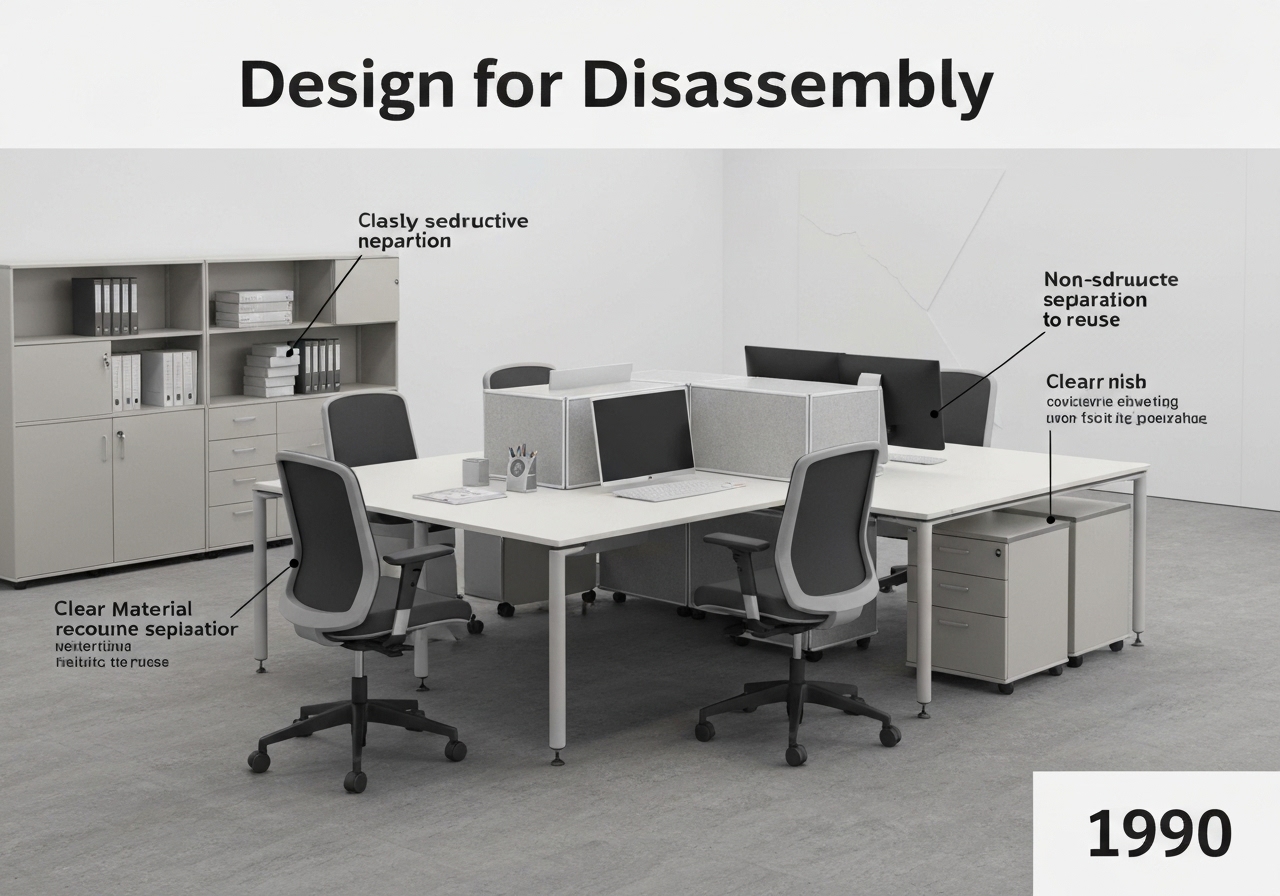
工業デザインにおける分解・再利用を前提としたモジュール式オフィス家具。

(画像はイメージです)

Design for Disassembly (DfD) is a design strategy focused on enabling the easy and cost-effective separation of a product’s components and materials at its end-of-life. By prioritizing non-destructive separation, DfD facilitates repair, reuse, 再生製造, and high-purity リサイクル. Key techniques include using mechanical fasteners over adhesives, modular construction, and clear material labeling to maximize value recovery.


分解設計は、 循環型経済 原理。その技術的な実行には、製品の構造と接合方法の意図的な選択が含まれます。DfDを採用する設計者は、接着剤やネジなどの永久的な結合ではなく、ネジなどの一般的なタイプの留め具を選択することで、留め具の種類と量を最小限に抑えます。 ultrasonic welds. Products are often designed with a clear hierarchy, allowing major modules to be removed without disturbing the entire assembly. Materials are selected not only for performance but also for their compatibility in recycling streams, and are clearly marked with international recycling codes to aid in sorting. This approach stands in contrast to conventional Design for Assembly (DfA), which often prioritizes initial production speed and can lead to integrated, inseparable designs that are destined for landfill. The novelty of DfD was its explicit consideration of the end-of-life phase as a critical design constraint, shifting the perspective from a linear ‘take-make-dispose’ model to a circular one where components and materials retain their value through multiple life cycles.

UNESCO Nomenclature: 3301
建築

タイプ

抽象システム

混乱

実質的な

使用法

広く普及している

前駆物質

  • 従来の修理およびメンテナンス方法
  • 組立性設計(DFA)の原則
  • 埋立地の限界と資源不足に対する意識の高まり
  • 拡大生産者責任(EPR)に関する法制
  • 電子産業の台頭とそれに伴う電子廃棄物問題

アプリケーション

  • モジュール式スマートフォン(例:フェアフォン)
  • 修理可能な家電製品
  • 整備や部品の取り出しを容易にするための自動車設計
  • 再構成と再利用を前提に設計されたオフィス家具
  • 溶接の代わりにボルト接合を用いた建築システム

特許:

NA

潜在的なイノベーションのアイデア

  • smart fasteners that release with a specific signal (e.g., heat, electronic)
  • self-healing materials that reduce the need for component replacement
  • 拡張現実 guides for consumer-led disassembly and repair
  • robotic disassembly lines that use ai to identify and separate components
  • product passports using qr codes that detail disassembly instructions and material composition
  • biodegradable adhesives that dissolve under specific conditions at end-of-life
  • subscription models for products where the manufacturer is responsible for disassembly
  • standardized modular battery packs for various electronic devices
  • 3d-printed replacement parts available through a digital library
  • architectural components designed for deconstruction and reuse in new buildings
Related to: design for disassembly, dfd, circular economy, repairability, recycling, modular design, product end-of-life, sustainable engineering, right to repair, e-waste.

歴史的背景

分解設計(DfD)

1987-03
1990
1990
1990
1990
1990
1990
1987
1989
1990
1990
1990
1990
1990
1990

(日付が不明または関連性がない場合、例えば「流体力学」などでは、その注目すべき出現時期の概算値が提示されます。)

10年目 周年

フルサイズの画像とダウンロードは、登録会員のみが100%無料で利用できます。