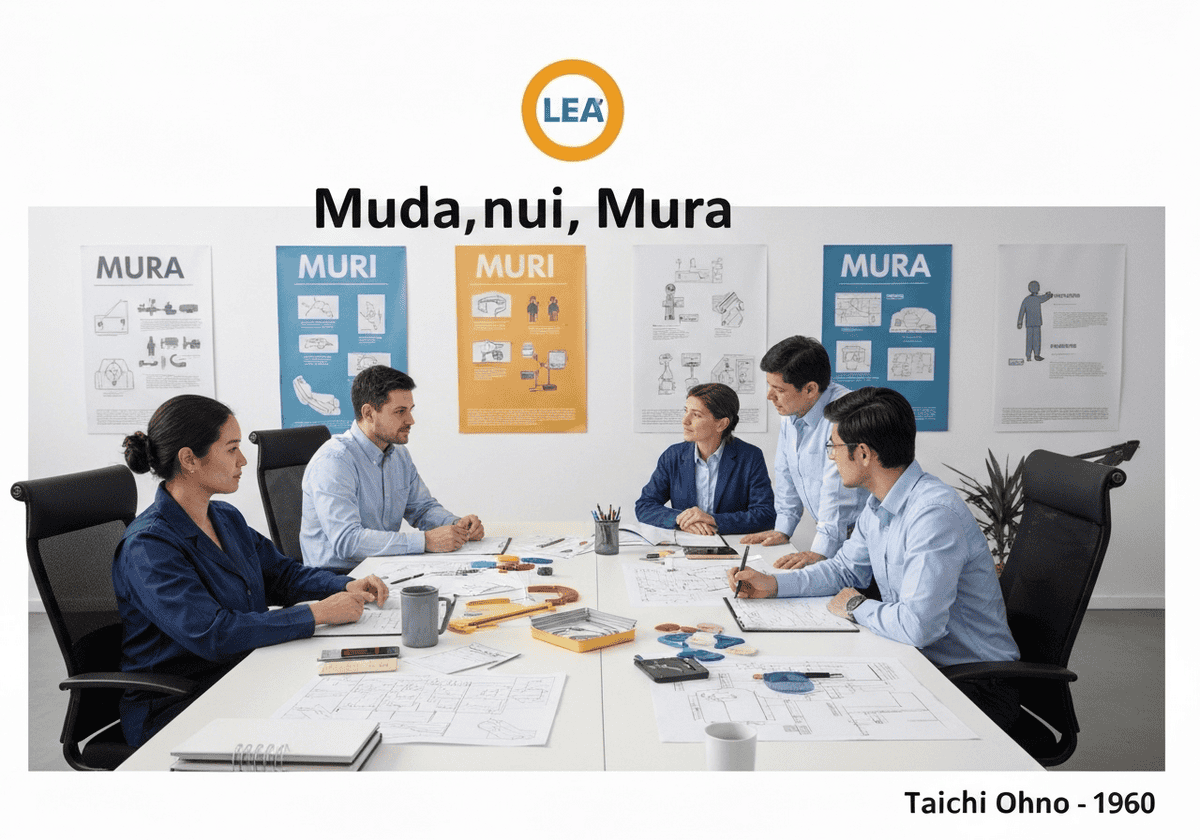
トヨタ生産方式は、7種類に分類される無駄の完全排除を基本としており、ここではその主な3種類について説明します。 ムダ (non-value-adding work), Muri (overburden), and Mura (不均一性)。ムダは最もよく議論される概念ですが、TPSではムリとムラがムダの根本原因であることが多く、真にリーンなシステムを実現するためにはまずこれらに対処する必要があることを認識しています。


(画像はイメージです)
トヨタ生産方式は、7種類に分類される無駄の完全排除を基本としており、ここではその主な3種類について説明します。 ムダ (non-value-adding work), Muri (overburden), and Mura (不均一性)。ムダは最もよく議論される概念ですが、TPSではムリとムラがムダの根本原因であることが多く、真にリーンなシステムを実現するためにはまずこれらに対処する必要があることを認識しています。

ムダ(無駄) ムダとは、資源を消費するものの、顧客にとって何の価値も生み出さないあらゆる活動を指します。大野耐一氏は当初、輸送(製品の不必要な移動)、在庫(過剰な製品や材料)、動作(人の不必要な移動)、待ち時間(次の生産工程を待つ)、過剰生産(必要以上の生産)、過剰加工(必要以上の作業)、不良(手直しや廃棄につながる労力)の7つのムダを特定しました。8つ目のムダとして、活用されていない人的資源がしばしば追加されます。
ムラ(不均一性) refers to inconsistency or irregularity in a process. It can be seen in fluctuating production schedules or inconsistent work methods, leading to periods of rushing followed by idleness. Mura is often addressed through Heijunka (production leveling), which smooths out the production mix and volume.
ムリ(過重負担) means overburdening equipment or operators by asking them to do more than their natural capacity allows. This can lead to safety issues, burnout, and defects. Muri is often caused by Mura and a lack of standardized work. The TPS philosophy emphasizes that eliminating Mura and Muri is essential for systematically and sustainably eliminating Muda. By creating a leveled, stable, and reasonably paced work environment, the conditions that generate waste (Muda) are removed at their source.
ムダ、ムリ、ムラ(7 つの廃棄物のうち 3 つ)
(日付が不明または関連性がない場合、例えば「流体力学」などでは、その注目すべき出現時期の概算値が提示されます。)

フルサイズの画像とダウンロードは、登録会員のみが100%無料で利用できます。
> ログイン <