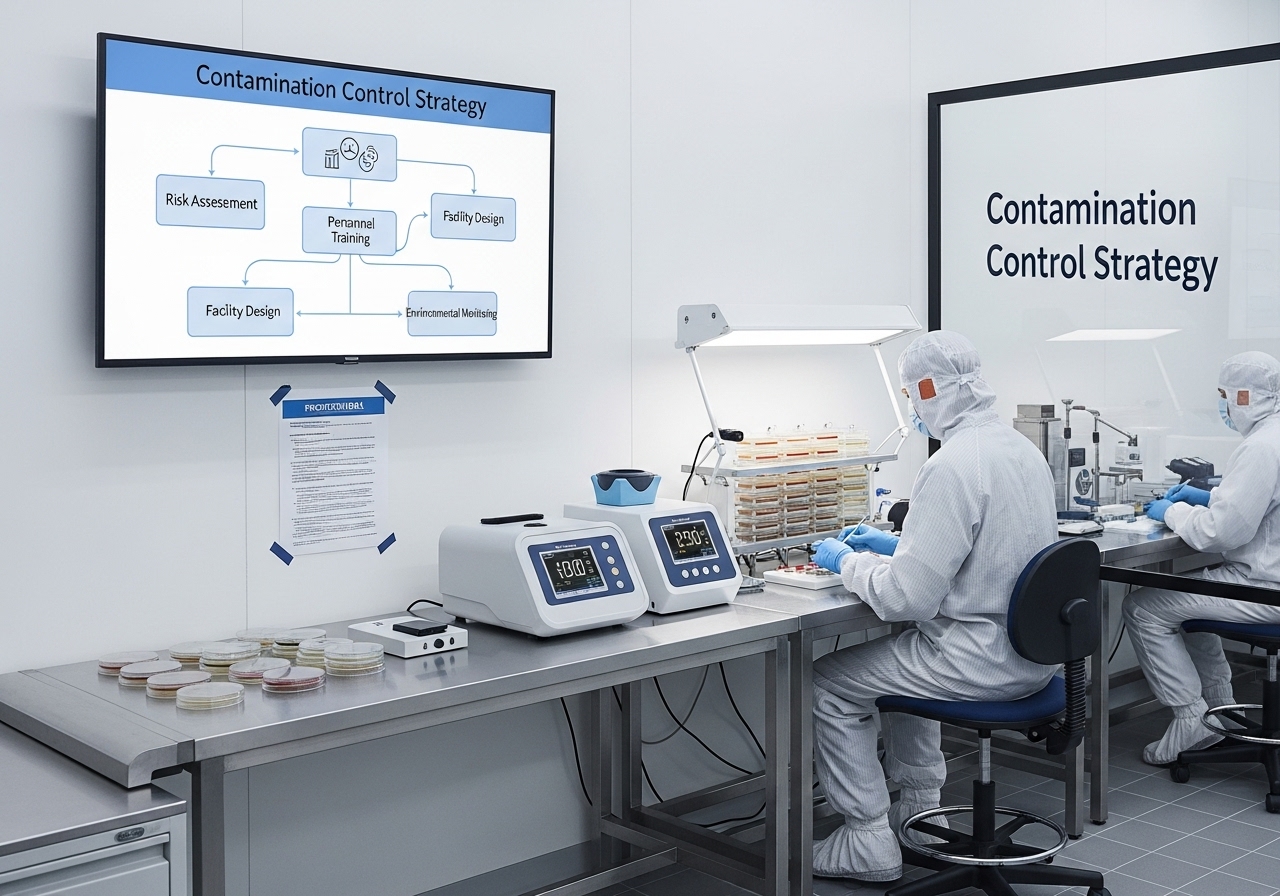
汚染管理戦略(CCS)とは、あらゆる形態の汚染による製品品質へのリスクを管理するための正式なアプローチを確立する、包括的かつ文書化された枠組みです。これは、施設設計をはるかに超えた、常に更新される文書であり、従業員研修、資材移送手順、プロセスフロー、環境モニタリング、ユーティリティ認定といった様々な要素を、単一の包括的な計画に統合します。CCSは既存の手順を単にまとめたものではなく、リスク管理に基づいた戦略的な正当性を示すものであり、特定の管理策を実施する理由、その監視方法、そして管理策が意図した状態から逸脱した場合に講じる措置を明確に定義します。
The cleanroom is one of the physical components, but it is fundamentally governed by the CCS. Its classification, operational parameters, and monitoring limits are direct outputs of the risk assessments detailed within the strategy. The CCS provides the rationale for the cleanroom’s existence and dictates its performance requirements to mitigate identified contamination risks.
主なポイント
- CCS should be built upon the principles of Quality Risk Management (QRM)
- Holistic, facility-wide implementation strategy.
- Define and monitor critical control points.
- Personnel are a primary contamination source.
- Proactive and continuous environmental monitoring.
- Implement strict material and waste controls.
- Process design to minimize exposure
- 法規制への準拠を確保します (例: 付属書 1)。
What is a Contamination Control Strategy (CCS)?
A Contamination Control Strategy (CCS) is a formal, comprehensive, and living document that defines a manufacturer’s entire approach to minimizing contamination in their products.
Mandated by the revised EU GMP Annex 1, its core purpose is to move away from a fragmented collection of separate procedures (for cleaning, gowning, monitoring, etc.) towards a single, holistic strategy that demonstrates a deep understanding of all potential contamination risks and the scientific rationale for the controls put in place to mitigate them.
The philosophy behind the CCS is that sterility and product quality are not achieved by any single action, but by the cumulative effect of a series of interconnected controls. The CCS is the master document that identifies every potential source of contamination—particulate, microbial, endotoxin/pyrogen, and chemical—and describes how the combination of facility design, equipment, procedures, and monitoring programs work together to protect the product throughout its lifecycle.
Key Elements of a Contamination Control Strategy
1. Facility and Equipment Design
This element is the physical foundation of the Contamination Control Strategy. It’s not enough to have a cleanroom; you しなければならない justify why it was designed the way it was, based on risk.
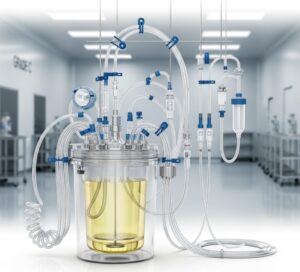
Rationale for the design: the CCS must detail the logic behind the facility’s layout, including unidirectional flows for personnel, materials, equipment, and waste to prevent mix-ups and backtracking from “dirty” to “clean” areas. It must scientifically justify the プレッシャー cascades between rooms (e.g., the Grade B cleanroom is maintained at a significant positive pressure relative to the surrounding Grade C support area), providing data from the Building Management System (BMS) to prove these differentials are continuously maintained. The design of material and personnel airlocks, including their interlock mechanisms and purge times, must be rationalized as critical control points.
Equipment design: the Contamination Control Strategy justifies the selection of process equipment based on its ability to mitigate contamination. This includes specifying sanitary design features like crevice-free surfaces, 316L stainless steel, and Tri-Clamp fittings to prevent microbial colonization and facilitate effective cleaning. Crucially, it details the rationale for using advanced aseptic technologies. For example, it would justify the use of a Restricted Access Barrier System (RABS) or a fully contained isolator by referencing a risk assessment (FMEA) that shows these technologies significantly reduce the risk of operator-borne contamination compared to a conventional open-process cleanroom.
Regulatory References:
- EU: EudraLex – Volume 4 – Annex 1: “Manufacture of Sterile Medicinal Products” (August 2022), specifically Section 4, “Premises.”
- FDA: Code of Federal Regulations, Title 21, Part 211.42, “Design and construction features” and 211.46, “Ventilation, air filtration, air heating and cooling.”
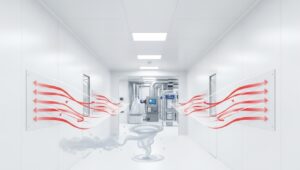
ヒント: use Computational Fluid Dynamics (CFD) modeling during the design phase of a new cleanroom or the installation of new equipment. Supplement this with physical smoke studies during qualification. The visual evidence from these studies provides irrefutable, science-based proof that your airflow patterns are unidirectional, effectively protecting the critical zone from contamination, which is far more powerful during an audit than simply presenting air velocity and pressure differential data.
2. Personnel
This element recognizes that humans are the primary source of microbial and particulate contamination in a cleanroom.
Gowning: 汚染管理戦略では、手順だけでなく、ガウン着用システム全体を詳細に説明します。これには、選択された衣服の素材科学(例:脱落防止、耐液性)、滅菌サイクルの検証、および各作業者に対するガウン着用適格性試験の結果が含まれます。これらの試験では、個人が衣服の滅菌性を損なうことなくガウンを着用できることを証明するために、客観的なデータ(例:手袋と袖の接触プレート)を提供する必要があります。

Training and aseptic technique: この戦略は単純な手順トレーニングを超えています。
Regulatory References:
- EU: これは、オペレーターが培地充填 (無菌プロセス シミュレーション) への参加の成功を通じて、無菌操作の習熟度を証明する必要がある正式な資格プログラムについて説明しています。 CCS は規則の背後にある「理由」を強調し、空気の乱流の発生を避けるためのゆっくりとした意図的な動きの重要性など、汚染管理の微生物学的原則を担当者が理解できるようにします。
- FDA: 連邦規則集、タイトル 21、パート 211.28、「職員の責任」および 211.113、「微生物汚染の管理」
ヒント: implement a “human factors” study for your most critical aseptic interventions. Instead of just writing a procedure, observe operators performing the task and analyze the 人間工学 and cognitive load. A procedure that is difficult, awkward, or confusing is a contamination risk. Simplifying the process based on human factors engineering is a proactive control that is far more effective than simply retraining personnel on a flawed procedure.
3. Utilities
Utilities that contact the product or product-contact surfaces are a direct potential pathway for contamination.
Control of critical utilities: the Contamination Control Strategy provides a comprehensive overview of the design, validation, and ongoing monitoring of critical utility systems. For a Water-for-Injection (WFI) system, it would detail the continuous hot-loop circulation (>80°C) to prevent biofilm formation, the validation of the multi-stage purification process, and the routine monitoring program for bioburden, endotoxin, Total Organic Carbon (TOC), and conductivity. Similarly, it would describe the filtration (e.g., sterile 0.22 µm filters) and qualification of process gases like compressed air or nitrogen that come into direct product contact.
Regulatory References:
- EU: EudraLex – Volume 4 – Annex 1 (August 2022), Section 6, “Utilities.”
- FDA: Code of Federal Regulations, Title 21, Part 211.63, “Equipment design, size, and location,” supported by the principles in the “Guidance for Industry: Sterile Drug Products Produced by Aseptic Processing — Current Good Manufacturing Practice.”
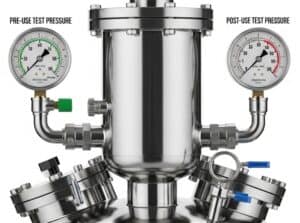
Application example: the CCS for a biologics facility details the risk assessment for the process air system. It identifies the point-of-use sterile filters on the bioreactor air inlet as Critical Control Points. The strategy can mandate an integrity test of these filters not only before the batch (pre-use) but also after the batch is harvested (post-use, pre-sterilization) to prove the filter remained integral throughout the entire cell culture process, thus ensuring the batch was protected.
ヒント: use online Total Organic Carbon (TOC) monitoring in your WFI loop not just as a quality attribute test, but as a leading indicator for system health. Establish a tight internal alert limit, well below the official action limit. A slow, upward trend in TOC levels is often the very first sign of developing biofilm in the system, allowing maintenance to intervene with sanitization cycles long before a significant microbial or endotoxin event occurs.
4. Raw Materials and Components
Contamination control begins with the materials that enter the facility.

Bioburden and endotoxin control: the CCS outlines a proactive strategy for managing the microbial quality of all incoming materials. This involves setting specifications for bioburden and endotoxin levels on raw materials, primary packaging (vials, stoppers), and product-contact components. This data is critical, as it is used to validate the robustness of downstream removal or sterilization steps (e.g., proving an autoclave cycle can achieve the required Sterility Assurance Level based on the maximum potential starting bioburden).
Supplier management: this section details the risk-based supplier qualification program. It describes how suppliers of critical components are audited and qualified, and the role of formal Quality Agreements in defining quality responsibilities. It also specifies the program for periodically verifying a supplier’s Certificate of Analysis (CoA) through in-house testing to ensure ongoing consistency and control.
Regulatory References:
- EU: EudraLex – Volume 4 – Part I, Chapter 5, “Production” and Chapter 7, “Outsourced Activities.”
- FDA: Code of Federal Regulations, Title 21, Part 211.84, “Testing and approval or rejection of components, drug product containers, and closures.”
ヒント: implement a risk-based program for your incoming component testing that goes beyond the standard pharmacopeia. For stoppers used in sensitive biologic drug products, your CCS should include a testing regime for extractables and leachables under worst-case conditions to ensure that no compounds that could degrade the drug molecule are introduced from the component itself.
Bioburden Details
The bioburden refers to the population of viable microorganisms present on a surface, in a liquid, or within a raw material before it undergoes a sterilization or disinfection process.
This microbial load, measured in Colony Forming Units (CFU), is a key indicator of the cleanliness of the manufacturing environment and a crucial factor in ensuring product safety and efficacy.
The primary goal in these industries is to maintain a low bioburden to minimize the challenge to the final sterilization process and to prevent product contamination. High bioburden levels can compromise the sterility of a product, potentially leading to infections in patients or defects in sensitive electronic components.
製薬業界におけるバイオバーデン The pharmaceutical industry operates under stringent regulatory requirements to control microbial contamination. The United States Pharmacopeia (USP) provides specific guidelines for bioburden limits in both sterile and non-sterile drug products. Non-sterile products: for non-sterile pharmaceuticals, the acceptable bioburden levels vary depending on the product’s intended use and route of administration. USP chapter <61> outlines the microbial enumeration tests, while chapter <1111> provides the acceptance criteria. These criteria are designed to ensure that the product is safe for its intended use and that the microorganisms present will not proliferate to harmful levels. Sterile products: for sterile drug products, the bioburden must be meticulously controlled before the final sterilization process. According to USP chapter <62>, sterile products should have a total aerobic microbial count (TAMC) and total yeast and mold count (TYMC) of no more than 10 CFU per 100 mL. The European Medicines Agency (EMA) also recommends a pre-sterilization bioburden limit of less than 100 CFU per 100 mL. | Bioburden in the medical device industry Similar to pharmaceuticals, the medical device industry places a strong emphasis on controlling bioburden to ensure the effectiveness of sterilization and the safety of the device. The international standard ISO 11737-1 provides guidance on the determination of the population of microorganisms on medical devices. The acceptable bioburden for a medical device can vary depending on its classification, intended use, and the materials it is made from. While there are no universal, mandated limits for all devices, a typical bioburden level for a medical device is between 0 and 150 CFUs. For some devices, a lower limit of less than 100 CFU may be targeted to ensure a higher sterility assurance level. The size and complexity of the device can also influence its bioburden, with larger and more intricate devices potentially having higher microbial loads. |
5. Cleaning and Disinfection
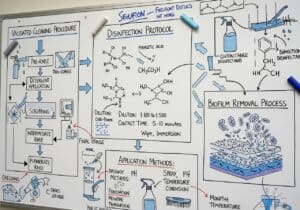
This element describes the chemical and physical removal of contaminants from surfaces (cleaning) and living organisms removal (disinfection).
Validated procedures: the CCS provides the scientific justification for the entire disinfection program. This includes the rationale for selecting specific disinfectants (e.g., a broad-spectrum bactericide) and sporicides (e.g., a peracetic acid-based agent), supported by coupon studies that prove their efficacy against the facility’s common microbial isolates. It details the validated parameters for their use, including dilution, contact time, and application method.
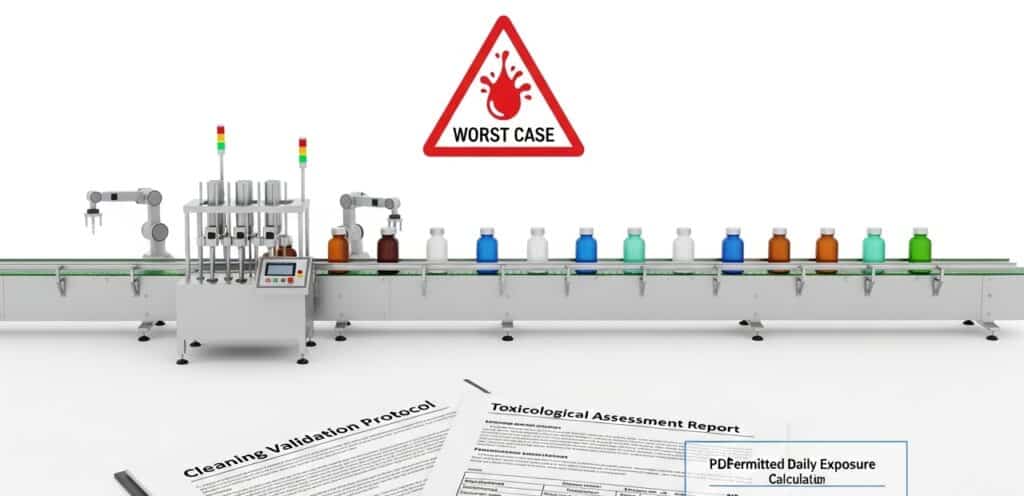
Efficacy and rotation: the strategy must include a disinfectant rotation program to prevent the development of resistant microbial strains. The CCS explains the frequency and logic of this rotation. It also describes the validation of cleaning procedures for product-contact equipment, proving they can effectively remove both chemical residues of the previous product and any microbial contamination to pre-defined, health-based limits.
Regulatory References:
- EU: EudraLex – Volume 4 – Annex 1 (August 2022), Section 5, “Cleaning and disinfection.”
- FDA: Code of Federal Regulations, Title 21, Part 211.67, “Equipment cleaning and maintenance.”
ヒント: your disinfectant efficacy validation should not be a one-time event. Your Contamination Control Strategy should mandate an ongoing “in-situ” efficacy program. Periodically, take environmental isolates (the actual bacteria and molds growing in your facility) and re-challenge your validated disinfectants in the lab. This verifies that your program remains effective against the current, relevant microflora, which can change over time.
6. Process Risk Management
This is the intellectual core of the CCS, where all potential hazards are formally identified and controlled.
Risk identification: the CCS must contain or reference a formal process risk assessment, typically an FMEA or HACCP. This assessment systematically breaks down the entire manufacturing process, step-by-step, to identify every potential contamination risk (e.g., aseptic connection, operator intervention, material transfer).
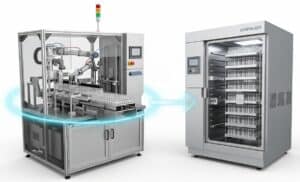
Critical Control Points: based on the risk assessment, the CCS identifies the Critical Control Points (CCPs)—the specific steps where control is essential to prevent or eliminate a risk. For each CCP, the CCS defines the specific control measure (e.g., use of a single-use sterile connector, continuous particle monitoring during filling) and the scientific rationale for why that control is effective.
Quality risk management always comes back to the risk benefit ratio of each control measure: a stricter cleanroom practice is justified only when its protection outweighs its cost. チーム that document the risk to benefit ratio of every control can defend their choices during an audit.
Regulatory References:
- EU: EudraLex – Volume 4 – Annex 1 (2022 年 8 月)、セクション 2、「医薬品品質システム (PQS)」。品質リスク管理 (ICH Q9) の適用を明示的に要求しています。
- FDA: The principles are embedded throughout the Aseptic Processing Guidance, which is built on a foundation of risk management. The FDA has formally adopted the ICH Q9 guideline.
ヒント: make your process risk assessments “living documents.” The CCS should mandate a formal review of the FMEA for a given process after a set period (e.g., one year) or after a set number of batches. During this review, use actual deviation and batch failure data to re-score the “Probability” and “Detection” elements of the FMEA. This transforms the FMEA from a theoretical exercise into a dynamic, data-driven tool that accurately reflects the real-world performance of your process.
7. Environmental and Process Monitoring
This element describes the systems used to verify that the facility and process remain in a state of control.
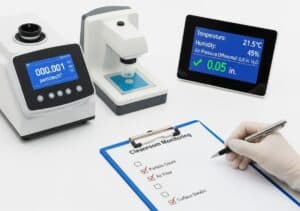
The EM program: the CCS provides a detailed rationale for the Environmental Monitoring (EM) program. It justifies every sampling location based on the process risk assessment (e.g., locations where sterile product is exposed, areas of frequent operator activity). It defines the methods (e.g., active air sampling, settle plates, contact plates), frequencies, and alert/action limits for both non-viable particulates and viable microbial counts.
Process monitoring: this section describes the use of modern monitoring technologies. This includes continuous, real-time particle monitoring in the Grade A critical zone, with alarms linked to the Batch Record. It also describes the trending of pressure differentials and other critical parameters. The Contamination Control Strategy must also define the program for identifying microbial isolates recovered from the EM program to the species level, which is crucial for tracking the facility’s microbial flora and investigating deviations.
Regulatory References:
- EU: EudraLex – Volume 4 – Annex 1 (August 2022), Section 9, “Viable and non-viable environmental and process monitoring.”
- FDA: Code of Federal Regulations, Title 21, Part 211.113(b), which requires “appropriate written procedures… designed to prevent microbiological contamination.” The Aseptic Processing Guidance provides detailed expectations.
ヒント: use the microbial identification data from your EM program to create a “microbial map” of your facility. Track not just the counts, but the species and where they are found. This allows you to identify resident “house” organisms and track their movement. If a media fill or sterility test failure occurs, you can compare the contaminating organism to your facility map, which can dramatically accelerate the root cause investigation by pointing to the likely source area.
8. Continuous Improvement
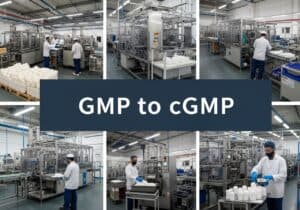
The CCS is not a static document; it must evolve and is highly related to the “c” of the cGMP.
Data trending: the CCS mandates a formal system for the routine trending of all data related to contamination control, including EM results, personnel monitoring, utility monitoring, and batch-related deviations. Statistical Process Control (SPC) should be used to identify negative trends, even if the results are still within specification.
Feedback loop: this is the most critical part of the continuous improvement cycle. The Contamination Control Strategy must be a formal agenda item in the site’s Quality Management Review. The trend data must be reviewed by senior management, and the output must be a set of documented actions for improvement. If a new microbial strain is frequently recovered, for example, the CCS must be updated to reflect a potential change in the disinfection program or an investigation into its source.
Regulatory References:
- EU: EudraLex 第4巻附属書1(2022年8月)、第2.5項には、CCSは「積極的に更新され、継続的な改善を推進すべきである」と記載されている。これはICHに直接リンクしている。 Q10, “Pharmaceutical Quality System.”
- FDA: The principles of continuous improvement are central to the PQS model described in ICH Q10, which the FDA has adopted.
ヒント: integrate the CCS review directly with the site’s Quality Management Review (QMR) and use a “Quality Risk Management” dashboard. Present KPIs derived from the CCS (e.g., EM excursion rates, media fill pass rates, contamination-related deviation trends) directly to senior leadership. This ensures that the health of your contamination control program has high-level visibility, which is critical for securing the resources and management commitment needed to drive meaningful continuous improvement.
クリーンルーム
クリーンルームは、物流手順やサプライヤー管理と並んで、汚染管理戦略(CCS)の重要な要素です。
免責事項: 以下の章は、設計、品質管理、およびプロセス管理の担当者がクリーンルームの原則をより効果的に適用できるよう支援することを目的としています。クリーンルーム管理は非常に詳細な内容ですが、製品や要件の多様性から多くの要素と特殊性を考慮する必要があり、そのためには専門家とサプライヤーの専門知識が不可欠です。
クリーンルームの分類
この表は、国際規格に基づく最も一般的なクリーンルームのクラスを比較したものです。 ISO 14644-1 標準規格および欧州連合のEudraLex第4巻附属書1(GMP)規格。
ISOクラス5 EU GMPグレードA | ISOクラス6 | ISOクラス7 EU GMPグレードB | ISOクラス8 EU GMPグレードC/D | |
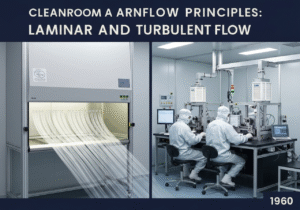
| 気流特性 | 一方向フロー(UDF) 層流とも呼ばれ、空気が一定の速度(通常0.36~0.54m/s)で一方向に流れる状態。 | 非一方向の流れ 乱流とも呼ばれる:汚染は希釈によって制御される。 | ||
| 主要機能 | 重要区域の保護 露出した滅菌製品や表面を汚染から積極的に保護するように設計されています。 | 高品質 プロセス制御 極めて低い粒子数を必要とするが、必ずしも完全な無菌状態を必要としないプロセスに使用されます。 | 無菌プロセスサポート グレードAゾーンの直接的な背景環境として機能する。 | 一般的な清掃サポート 重要度の低い活動の背景として、あるいは上級クラスの入場・着替えエリアとして利用される。 |
最大粒子濃度 (運用中) | ISO 5:
グレードA:
|
| ISO 7:
グレードB:
| ISO 8 / グレードC:
グレードD:運用において定義されていない。 |
最大粒子濃度 (安静時) | ISO 5 / グレードA:
|
| ISO 7 / グレードB:
| ISO 8 / グレードC:
グレードD:
|
微生物学的限界 (運用中) | Air Sample: <1 CFU/m³ Settle Plate (4 hrs): <1 CFU Contact Plate: <1 CFU | ISOによって正式に定義されているわけではなく、用途によって異なる。 | 空気サンプル:10 CFU/m³ 沈降平板培養(4時間):5 CFU 接触プレート:5 CFU | グレードC: 空気: 100、沈下: 50、接触: 25 グレードD: 空気: 200、沈下: 100、接触: 50 |
| 典型的な換気回数/風速 | 速度:0.36~0.54 m/s(90 ft/分 ± 20%) (ACHはUDFの主要な指標ではありません) | ただし:150~240 | しかし:60 ≒ 90 | しかし:20 45 |
| 必要な着替え | 完全滅菌ガウン:滅菌済みの個包装フード、ゴーグル、マスク、つなぎ服、オーバーブーツ。滅菌済み手袋2組。内側の手袋は袖口の下に挟み込み、外側の手袋は上にかぶせる。外側の手袋は定期的に消毒する。 | 全身防護服:洗浄処理済み(必ずしも滅菌済みである必要はない)のつなぎ服、フード、ブーツ、手袋、マスク。 | 完全滅菌ガウン:グレードAと同一。すべての物品は滅菌済みでなければならない。 | グレードC:専用のスクラブまたはつなぎ服、専用の靴/オーバーシューズ、ヘアネット、ひげカバー、マスク、手袋。 グレードD:清潔な工場制服、専用の靴または靴カバー、ヘアネット、ひげカバー。 |
| 必須のハードウェア | ・ろ過:末端のHEPA/ULPAフィルターを完全にカバーし、一方向の流れを実現します。 ・表面:医薬品グレードの、非多孔性で、剥離がなく、滑らかな表面(サンドイッチパネル、流し込みエポキシ/溶接ビニール床)。 ・構造:すべての継ぎ目は完全に覆われ、密閉されています。段差はありません。 | • フィルタリング: 端末 HEPA 天井にフィルターを設置。 ・表面:硬く、非多孔質で、滑らかな表面。 ・構造:コーブ型床。 | ・ろ過:天井に設置された末端HEPAフィルター。 ・表面:硬く、非多孔質で、毛羽立ちがなく、滑らかな表面。 ・構造:人員/資材用の連動式エアロック、視認可能な差圧計。 | • Filtering: HEPA filters (often in AHU or ducted). ・表面:滑らかで清掃しやすく、非多孔質の床と壁。 ・構造:明確に区切られた更衣室/エアロック、視認可能な差圧計。 |
| あれば便利なハードウェア | ・アラーム機能を備えた、リアルタイム粒子カウンターを内蔵。 ・生物学的除染のための自動噴霧システム。 ・アイソレーター用統合型グローブ完全性試験装置。 ・壁と床に完全に一体化したコーニス。 | ・連続粒子モニタリングシステム ・HEPAフィルターを備えた連動式通過チャンバー。 ・耐薬品性床材。 | ・重要区域付近におけるリアルタイムの粒子モニタリング。 ・自動高速巻き上げ式ドア。 ・壁面パネルに各種設備が埋め込まれているため、壁面がすっきりします。 | ・ネットワーク接続された粒子カウンター。 ・自動靴カバー装着装置。 ・壁掛け式ステンレス製家具。 |
| 代表的な用途 | ・バイアルの無菌充填 ・無菌接続および移送 ・滅菌材料の開放処理 ・細胞療法処理 | ・ハイエンド医療機器の組み立て ・非滅菌だが低バイオバーデンの医薬品充填剤 ・高品質の光学部品 | ・グレードAゾーンの背景室 ・緩衝液および培地の調製 ・無菌部品アセンブリ | ・グレードC:コンポーネントの洗浄、重要度の低い無菌操作、グレードBの背景。 ・グレードD:更衣室、重要度の低い調合、初期準備段階。 |
| 準拠基準 | 米国/国際規格: ISO 14644-1:2015 EU:EudraLex 第4巻、附属書1(2022年) | 米国/国際規格: ISO 14644-1:2015 | 米国/国際規格: ISO 14644-1:2015 EU:EudraLex 第4巻、附属書1(2022年) | 米国/国際規格: ISO 14644-1:2015 EU:EudraLex 第4巻、附属書1(2022年) |
| 代表的な汚染物質とそのサイズ | これらの基準は、特定の種類の粒子ではなく、総粒子数を測定するものです。ただし、主な汚染源とその典型的なサイズは以下のとおりです。
| |||
汚染比較
クリーンルーム基準の厳格さを理解するには、その粒子数制限を日常環境の粒子数制限と比較することが有効です。 (これらは典型的な値であり、もちろん大きく変動する可能性があります。)
| オフィス | ルームアットホーム | キッチン(調理中) | ノーマルファクトリー | |
| 標準粒子数(1立方メートルあたり) | 約1,900,000(≥0.5 µm) | 1億以上(0.3 µm以上) | 極めて高い急増、潜在的に850億を超える | 非常に変動が大きく、35,000,000を超える場合も多い。 |
| 一般的な粒子サイズ | ミクロンサイズの粉塵と繊維 | アレルゲンやサブミクロン粒子を含む幅広い範囲 | Primarily ultrafine particles (<0.1 µm) and fine particles (PM2.5) | プロセスに依存し、大きな粉塵から微細なサブミクロン粒子まで |
| 一次資料 | ほこり、衣類/カーペットの繊維、皮膚の剥がれ落ちたもの、HVACの吸気口 | ほこり、ペットのフケ、花粉、カビの胞子、人間の活動 | 燃焼、調理(揚げ物、焼き物)による油や脂肪のエアロゾル化 | 工業プロセス(研削、切断)、原材料、燃焼副産物 |
結論: 自宅よりもオフィスで仕事をする方が良い、特にアレルギーがある場合はね😉
究極のクリーンルーム: “記憶施設偉大な ブレードランナー2049 映画フィリップ・K・ディックの小説を原作とし、ドゥニ・ヴィルヌーヴが監督を務めた作品。
クリーンルームの最適な設計方法
医薬品から 半導体 製造業において、クリーンルーム設計の原則は、気流管理から建築材料の選定に至るまで、あらゆる面における多面的なアプローチに基づいています。
戦略的なレイアウトとワークフローの最適化汚染リスクを最小限に抑え、業務効率を向上させるためには、適切なレイアウト設計が不可欠です。設計は、人や資材の移動を規定することで、適切な手順を徹底し、交差汚染を防止するものでなければなりません。 ゾーニングと隣接関係: レイアウトは、外部エリアから更衣室、そして最終的にメインのクリーンルームへと、清浄度が段階的に高くなるように明確に定義されたゾーンを設けることで設計します。これにより緩衝地帯が作られ、最も重要なエリアを保護するのに役立ちます。 一方向の流れ: 交差汚染を防ぐため、人員、資材、廃棄物の流れを一方通行にする計画を立ててください。これは、可能な限り出入口を分け、汚染された資材と清潔な資材が接触しないようにすることを意味します。 | 綿密なHVACシステム設計暖房、換気、空調(HVAC)システムはクリーンルームの中核であり、空気の清浄度、温度、湿度、圧力を維持する役割を担っています。施設のエネルギー消費量の50~80%を占める場合もあります。 F濾過レベル: 0.3ミクロンの粒子を99.97%の効率で捕集する高効率粒子状空気(HEPA)フィルターが標準装備されています。最も厳しい分類(ISO 5以下)では、超低透過性空気(ULPAさらに小さな粒子を捕捉するには、フィルターが必要になる場合があります。 気流パターン: 単方向(層流)気流と非単方向(乱流)気流の選択は、要求されるISO分類によって決まります。単方向気流は、空気が通常下向きに一方向に流れるもので、ISO 5などのより厳しいクラスで、重要なプロセスから粒子を掃き出すために使用されます。一方、乱流は、それほど重要でない環境(ISO 6以上)に適しています。 |
汚染管理を優先する効果的な汚染管理戦略は最優先事項であり、設計の初期段階から組み込む必要があります。これには、人員、資材、設備など、あらゆる潜在的な汚染源を考慮した包括的なアプローチが求められます。 エアシャワー: 極めて高感度なクリーンルームの場合、更衣室の入り口にエアシャワーを設置することができます。 高速 HEPAフィルターを通した空気の噴射によって、作業員がクリーンルームに入る前に、作業員から微粒子状の汚染物質が吹き飛ばされる。 厳格なガウン着用規定: 設計は、厳格な着衣手順に対応できるものでなければなりません。これには、作業員が脱落しないクリーンルーム用衣類を正しい順序で着用するための十分なスペースと設備を提供することが含まれます。 |  |
材料の適切な選択建築に使用される材料は、毛羽立ちがなく、非多孔質で、清掃が容易であると同時に、洗浄剤や消毒剤に対する耐性も備えていなければならない。 一般的な素材の選択: ステンレス鋼は、耐久性、滑らかな表面、耐腐食性、耐薬品性といった利点から、しばしば好んで用いられます。その他によく用いられる材料としては、エポキシ樹脂コーティングされた表面、ガラス繊維強化プラスチック(FRP)、壁パネル用のコーティングされたアルミニウムなどがあります。 床材に関する考慮事項: 床材は継ぎ目がなく、耐久性に優れている必要があります。ビニール床材やエポキシ床材は、継ぎ目なしで施工できるため、粉塵の蓄積リスクを低減でき、電子機器製造に不可欠な帯電防止特性も備えていることから、人気のある選択肢となっています。 | 継ぎ目のない密閉された表面粒子の蓄積を防ぎ、効果的な清掃を容易にするため、壁、床、天井のすべての継ぎ目、接合部、貫通部は適切に密閉されなければなりません。 湾曲した遷移部: 床と壁、壁と天井の接合部にはコーニス(モールディング)を使用してください。これにより、曲線的で継ぎ目のない滑らかな移行部が生まれ、清掃が容易になり、鋭角な角に汚れが溜まるのを防ぎます。 フラッシュ統合: 窓、照明器具、コンセントなどは、壁面または天井面と面一になるように設計する必要があります。こうすることで、粒子が溜まる隙間や溝がなくなり、清掃がより効果的になります。 |
 | 制御環境パラメータ温度と湿度の精密な制御は、多くの繊細なプロセスにとって重要であるだけでなく、従業員の快適性や汚染防止にとっても不可欠である。 湿度の二重の脅威: 高湿度(通常60%以上)は微生物の増殖を促進し、精密機器の腐食を引き起こす可能性があります。逆に、低湿度(30%未満)は静電気の蓄積につながり、電子部品の損傷や粒子が表面に付着する原因となります。 気温と人員: 不快な温度は、作業員の発汗や震えを引き起こし、微粒子の飛散を増加させ、クリーンルーム用衣服の効果を損なう可能性があります。一般的な目標温度は21℃(70°F)で、多少の変動は許容されます。 (当社の“もご覧ください。業界の秘密、誰も誇りに思っていないことで 11. 手袋をはめた手を使ったルーティン 下記および室温制御との関連で結露を抑制し、鋭利なエッジや角、バリがない) |
正圧と負圧隣接する区域間の適切な気圧差を維持することは、汚染物質の侵入を防ぐために非常に重要です。空気は自然に、気圧の高い区域から気圧の低い区域へと流れます。 連鎖的な圧力: 一般的な戦略は、段階的な圧力差を利用するもので、最も清浄な部屋の圧力を最大にし、外側の部屋やエアロックの圧力を徐々に下げていくことで、常に清浄な空間から空気が排出されるようにし、汚染物質の侵入を防ぎます。 バブル式、シンク式、カスケード式エアロック: 目的に応じて、さまざまな圧力方式が使用できます。「バブル」エアロックは、エアロック内の内容物を保護するため、周囲の部屋よりも高い圧力に設定されています。「シンク」エアロックは、汚染物質を内部に封じ込めるため、低い圧力に設定されています。「カスケード」エアロックは、高圧クリーンルームと低圧通路の中間の圧力に設定されています。 | モジュール式で柔軟な設計設計にモジュール式の要素を取り入れることで、将来の拡張、移転、変化するプロセスニーズへの適応を最小限の混乱で実現できますが、慎重に評価する必要があります(下記のヒントを参照)。 工期短縮: 部品が工場で事前に製造されるため、現場での組み立ては従来の工法よりも大幅に速く、プロジェクトの期間とダウンタイムを削減できます。 拡張性と再構成性: モジュール式クリーンルームは、プロセス要件の変更に応じて容易に拡張または再構成できます。この適応性の高さから、長期的に見て費用対効果の高い投資となります。 ヒント: 通常、機器やベンチには車輪を推奨しますが、 リーン生産方式 生産のモジュール性を向上させることにより、車輪やブレーキによって発生する可能性のある微粒子のため、これはここでは最小限に抑えられる。 |
一体型でクリーンルーム対応の照明照明は、クリーンルームの完全性を損なうことなく、詳細な作業に必要な十分な明るさを提供する必要がある。 密閉型および埋め込み型器具: 照明器具は、粒子が付着したり剥がれ落ちたりするのを防ぐために完全に密閉されている必要があります。天井にぴったりと取り付け、最終的には 「ティアドロップ型」空気の流れを乱さないようにするため。 |  |
考え抜かれた更衣室のデザイン更衣室、または前室は、外部環境とクリーンルームの間の重要な緩衝地帯としての役割を果たします。その設計は、効果的な汚染管理にとって極めて重要です。 境界設定と流れ: 適切に設計された更衣室には、明確な境界線があり、多くの場合、「座れるベンチ」などが設置され、「汚れた」側と「清潔な」側が区切られています。レイアウトは、職員が論理的かつ直線的な手順で更衣できるよう誘導するものでなければなりません。 適切な設備: 室内には、衣服の保管や着替えを容易にするためのクリーンルーム専用の家具、例えばロッカー、手袋やマスクのディスペンサー、自己点検用の鏡などを備えなければならない。 | 家具や設備を最小限に抑えるこれらは リーン原則 そして 5Sただし、最大限に適用してください。汚染源や清掃が必要な表面を減らすため、クリーンルーム内には必要最低限の家具や機器のみを設置するようにしてください。 クリーンルームグレードの材料: すべてのアイテムは、ステンレス鋼や ポリプロピレン 簡単に消毒できるもの。 人間工学に基づいた そして ミニマルなデザイン: 家具は、粒子が蓄積する可能性のある水平面を最小限に抑えるように設計されるべきである。また、効率的かつ安全な作業を支援する人間工学に基づいた設計であることも重要である。 在庫なし、スペアなし、紙の説明書なし… |
 | 監視システム重要な環境パラメータを継続的に追跡・記録するための堅牢な監視システムを導入し、継続的な法令遵守を確保するとともに、迅速な是正措置を可能にする。 監視すべき主要パラメータ: これらのシステムは、空気中の粒子数、気圧差、温度、湿度をリアルタイムで追跡します。 制御と監視: 設定値を維持するために空調設備を積極的に制御するビル管理システム(BMS)と、品質保証と規制遵守のためにデータを独立して記録し、パラメータが仕様から外れた場合にアラームを発する環境監視システム(EMS)を区別することが重要です。 |
専用人員用エアロック(PAL)人員エアロック(PAL)は、管理されていない区域または低レベルの区域とクリーンルームの間を移動するスタッフにとって主要な障壁となる特殊な部屋です。その目的は、人によって持ち込まれる汚染を制御することです。 連動ドア: PALの重要な特徴の一つは、入口ドアと出口ドアが同時に開かないようにする連動式ドアシステムです。これにより、2つのエリア間の圧力差が維持され、空気中の汚染物質がクリーンな空間に直接侵入するのを防ぎます。 ガウンの着用とガウンの取り外しの手順: PAL(パーソナル・アクセス・ライン)は、クリーンルーム用衣服の着脱手順を適切に行うための設計であり、更衣室と同義語として用いられることが多い。設計は、ユーザーが手順をスムーズに進められるよう物理的に誘導し、ミスを最小限に抑えるように設計されるべきである。 | 物品・資材の入出庫(MAL)マテリアルエアロック(MAL)とは、クリーンルームの完全性を損なうことなく、材料、機器、完成品をクリーンルーム内外へ搬入・搬出するために設計された専用スペースです。 通路と大型エアロック: 小型の物品には、連動ドア付きの壁掛け式パススルーボックスが効率的な解決策です。大型の機器やカートには、ウォークイン式のMAL(資材搬入室)が必要です。MALはPAL(資材搬入室)と同様の機能を持ちますが、資材搬入用に設計されています。 除染と拭き取り: 設計においては、クリーンルームに入る前に材料を除染できるような環境を整える必要がある。通常、これには作業員が適切な滅菌剤で全ての物品を拭き取るためのスペースと表面の確保が含まれる。一部の高度なMAL(材料アクセスライン)には、過酸化水素蒸気(VHP)噴霧器などの自動除染システムが組み込まれている場合もある。 |
エネルギー効率と持続可能性に重点を置く
クリーンルームは非常にエネルギーを消費するため、 持続可能なデザイン 原則は、長期的な運用コストと環境への影響を大幅に削減できます。主な要因は断熱と 可変風量(VAV) システム:VAVシステムは、HVACシステムを常時フルパワーで稼働させる代わりに、粒子数や在室状況などのリアルタイムの状況に基づいて気流を調整できるため、活動が少ない時間帯のエネルギー消費を削減できます。
ヒント: 頻繁に訪問者が来る業界であれば、大きな窓やガラス張りのトンネルを設置することを検討してください(そうすることで、あなたが顧客を大切にし、手順を厳守していることを示すことができます)。
ボーナスヒント: 使用する材料はすべて非常に特殊なため、既存の施設を必死に改修しようとするよりも、壁や天井を含めてクリーンルームを一から建設する方が費用が安く済む場合がある。
クリーンルームにおける最善の人的実践
上記で述べたような優れたクリーンルーム設計と最先端の設備は、無菌環境を維持するための要素のほんの一部にすぎません。
クリーンルームにおける最大の汚染源は、そこで働く人々である。
したがって、特定の人間的な慣習や行動様式を厳格に遵守することは、単に推奨されるだけでなく、絶対に不可欠である。
1. ガウンの着脱手順これは第一の防衛線です。作業員は、クリーンルーム用衣服の着脱に関する正確な手順を段階的に習得しなければなりません。 「最もきれいなものから最も汚いものへ」の原則: 防護服の着用は、滅菌済みの衣服の汚染を最小限に抑える順序に従うべきであり、通常は頭から下(フード、マスク、つなぎ服)に着用し、最後に手袋を着用することが多い。 非接触技術: 滅菌手袋を装着する際は、手袋の滅菌された外側が素手や非滅菌の表面に触れないようにする手順を踏まなければならない。 | 2. 意図的かつ制御された動きクリーンルーム内でのすべての動作は、粒子発生と拡散を抑制するために、ゆっくりと、慎重に、そして最小限に抑える必要がある。 「クリーンルームウォーク」: 従業員は、腕を振らずにゆっくりと一定のペースで歩くように訓練されるべきである。速くぎこちない動きは乱流を生み出し、表面に付着した微粒子を巻き上げる可能性がある。 体の動きを最小限に抑える: 伸びをしたり、体を掻いたり、頭を急に回したりといった不必要な動作は避けてください。必要な動作はすべて、効率的かつスムーズに行うようにしてください。 |
3. 厳格な個人衛生汚染対策は、作業者が更衣室に入る前から始まっている。 化粧品および香水の禁止: 化粧品、ヘアスプレー、香水、ローションなどは、大量の微粒子や揮発性有機化合物(VOC)を放出する可能性がある。これらは厳禁である。 入室前の手洗い: ガウン着替えエリアに入る直前に、手と前腕を指定された抗菌石鹸で十分に洗い、毛羽立ちのないタオルで乾かさなければならない。 |  |
4. 適切な「クリーンルーム姿勢」人の立ち方や作業スペースとの関わり方は、汚染に直接的な影響を与える。 前かがみになるのではなく、前に傾くようにしてください。 作業台や工程ステーションで作業する際は、腰から体を傾け、頭と胴体をできるだけ重要な作業領域から遠ざけてください。製品や工程の上に直接体を傾けることは絶対に避けてください。 空気の流れを尊重してください。 一方向(層流)の流れ環境においては、作業者は自身の身体が重要な汚染源であることを理解しなければなりません。清浄でろ過された空気が最初に製品に到達するように、作業者は常に重要な製品またはプロセスの下流に位置する必要があります。 | 5. 「ファーストエア」の精神この原理は、一方向気流クリーンルームにおいて最も重要です。「ファーストエア」とは、物体を通過する前にHEPA/ULPAフィルターから直接送られてくる、清浄でろ過された空気のことです。 N空気の流れを遮断する: 作業者は、フィルター面と重要な製品の間に、物品、手、または工具を絶対に挟んではなりません。これは、乱流が発生し、汚染される可能性のある空気の「影」を作り出すことになります。 最も清潔な区域で作業してください。 すべての重要な操作は、「最初の空気」の直接経路で、できるだけ上流側で行う必要があります。 |
 | 6. 露出した肌への「非接触」ポリシー適切な防護服を着用していても、皮膚が意図せず露出してしまうことは起こり得る。 顔と服装の規律: 作業員は、クリーンルーム内では絶対に顔に触れたり、マスクやフードを調整したり、露出した皮膚のどの部分にも触れたりしないよう訓練を受けなければならない。調整が必要な場合は、一度クリーンルームから出て、再びガウンを着用しなければならない。 手袋の完全性: 手袋は、クリーンルーム用消毒剤(例:70%イソプロピルアルコール)で頻繁に消毒し、破れや穴がないか定期的に点検する必要があります。 |
7. クリーンルームにおける通信方法会話は、かなりの量の粒子や飛沫による汚染を引き起こす。 会話を最小限に抑える: verbal コミュニケーション should be kept to an absolute minimum. 非言語的な合図やシステムを活用する: 可能な限り、手信号、社内電話システム、またはホワイトボードを使用してコミュニケーションをとってください。発言が必要な場合は、重要な作業から顔を背けて話してください。 | 8.資材および廃棄物の流れに関する手順資材の取り扱い方は、人の移動方法と同じくらい重要である。 「トリプルラップ」エントリー: 材料は、多くの場合、三重包装システムを使用してクリーンルームに搬入されます。外側の層は材料エアロックで、2番目の層は更衣室で、そして最後の層は使用場所でのみ取り外されます(コンポーネントとサプライヤーについては、下記の専用章を参照してください)。 専用の廃棄物処理サービス: 廃棄物は、指定されたクリーンルーム対応容器に収集し、搬出時にクリーンエリアを汚染しないよう、特定の手順に従って搬出する必要があります。 |
9. 身の回り品工程に不可欠でないものはすべて汚染源となる。 私物持ち込み禁止: これには、宝飾品(手袋を着用している場合でも)、腕時計、携帯電話、鍵、およびクリーンルームでの使用を想定して設計されていない紙や筆記用具などが含まれます。 承認済みのクリーンルーム用品: クリーンルーム認証を受けた、繊維が抜け落ちないように設計された紙、ペン、工具のみを使用してください。 |  |
10.健康と福祉に関する方針作業員の健康状態は、クリーンルーム環境に直接影響を与える。 体調が悪いときは家にいましょう。 風邪、咳、皮膚疾患などの病気を従業員が報告し、自宅待機することを促すような方針を策定する必要がある。体調不良のまま出勤することは、重大な感染リスクとなる。  すべての皮膚病変を覆う: 切り傷、擦り傷、日焼けは、ガウンを着用する前に、剥がれ落ちない承認済みの包帯で完全に覆わなければなりません。 | 11. 手袋をはめた手を使ったルーティン手袋は機器や材料と接触する主要な部分であり、容易に交差汚染される可能性がある。 重要な作業の前後に消毒を行う: 手袋を着用した手は、重要な製品を取り扱う前、重要でない表面(機器のパネルなど)に触れた後、および定期的に、滅菌済みの70%イソプロピルアルコール溶液を噴霧し、自然乾燥させる必要があります。 適切な消毒方法: 両方の手袋の表面全体が消毒剤で十分に濡れていることを確認してください。 業界の秘密(誰も誇りに思っていないこと): 手袋は、単層または二重層で使用しても密閉性が高いため、作業者は汗をかきやすい。また、使い捨てで薄いため、壊れやすい。手袋が破れたら、汗はどこへ行くのだろうか? 手袋の交換を厳格に行い、室温を管理して発汗を抑えることが重要だ。 |
 | 12. 更衣室を移行ゾーンとして活用する更衣室は休憩室ではありません。 重要管理点. 交流禁止: 更衣室は、ガウンの着脱のみを目的としています。そこで私的な会話をすることは禁止されています。 ここにはコーヒーメーカーはありません! 境界線に沿って進んでください。 「座れるベンチ」または同様の仕切りによって、「汚れた」側と「清潔な」側が区切られています。作業員は、「汚れた」側の履物や衣服が「清潔な」側の床に触れないようにしなければなりません。 |
ヒント: 正しく服装を整えたオペレーターの場合、目だけが見えるようにするのが望ましいので、衣服に個々の名前を記載する必要があるかもしれない(ただし、マジックテープは使用しない)。(オペレーターができるだけ目立たないようにし、お互いをよく知っている必要があるという事実とのバランスを取る必要がある)。
人事行動、資格、 個人の責任と手順の遵守
さらに一般的に、規制対象産業におけるあらゆる工程と同様に、すべての作業員は、機密区域への立ち入り前に正式な資格を取得する必要があります。資格取得は、区域固有の標準作業手順書(SOP)、無菌操作、および汚染管理の原則を網羅した文書化された研修プログラムを通じて行われます。この研修は、作業員が常に状況認識能力を身につけ、担当区域の具体的な要件を理解できるようにすることを目的としています。
サプライヤー仕様
ここでは、クリーンルームで使用する製品を納入するサプライヤーに対する具体的な指示の典型的な例をいくつか詳しく説明するにとどめる。
ヒント: サプライヤーがクリーンルーム向けの納品に慣れていない場合は、急な学習曲線に備えてください(私の経験では、ラベルには特殊な素材が必要であり、「ただ貼る」だけでは不十分であることを説明することから始めてください)。
注:通常の規制産業の仕様はここには含まれていません(供給される材料には、材料の組成、ロット番号、および関連規格への準拠を明記した適合証明書(CoC)と分析証明書(CoA)が添付されている必要があります。原材料から完成部品までの完全なトレーサビリティが求められ、記録は保管され、監査のために利用可能である必要があります)。
1. 規定された材料構成および表面仕上げ
すべての部品は、本質的に低粒子発生性かつ低ガス発生性の材料から製造されなければならない。
- 禁止されている資料: 最終部品には、未加工の木材、紙製品、無塗装の炭素鋼、天然繊維織物(綿、羊毛など)、粉末やシリコーンを含む材料は一切使用できません。
- 表面要件: 表面は、粒子の剥離を防ぎ、清掃を容易にするために、非多孔質で滑らかでなければなりません。金属の場合は、電解研磨などの仕上げが必要です。 プラスチックバリやバリのない成形仕上げが必要です。該当する場合は、最大表面粗さ(例:Ra < 0.8 µm)を指定してください。
2. 検証済みの精密洗浄プロセス
すべての商品は、梱包直前に最終的な洗浄工程を経て、その洗浄が承認されなければなりません。
- 方法論: これは通常、複数の段階を伴います 超音波 クリーンルームでの使用が承認された洗剤を用いた洗浄工程の後、加熱した高純度脱イオン水(DI水)による複数回のカスケードすすぎを行う。
- 最終すすぎ確認: 最終洗浄に使用した純水は、品質検査を実施する必要があります。最終洗浄水が、抵抗率(例:18 MΩ・cm以上)、全有機炭素(TOC)、および液状粒子数(LPC)の仕様を満たしていることを示すデータを提供し、残留物や異物がすべて除去されたことを証明しなければなりません。
- 乾燥手順: 部品は、加熱したHEPAフィルターまたはULPAフィルターを通した窒素ガス、あるいは清浄な乾燥空気を吹き付けるなど、汚染のない方法で乾燥させなければなりません。最終段階では、低リントワイプを含むいかなる種類の布による拭き取りも禁止されています。
3. 二重包装義務化
すべての物品は、認証を受けたクリーンルーム環境内で二重に袋詰めされなければなりません。この手順は厳守されなければならず、変更は認められません。

- 包装環境: 内袋は、エンドユーザーのクリーンルームと同等またはそれ以上に清浄であることが認証された環境内で密封されなければならない(例えば、ISO 5クリーンルームに搬入される物品の場合は、ISO 5環境)。
- バッグの素材: 新品の認証済みクリーンルームグレードのもののみを使用する ポリエチレン またはナイロン製の袋。袋は静電気の発生が少なく、滑剤や可塑剤などの加工添加剤を含まないものでなければなりません。袋自体の認証書を提出してください。
- 内袋の密封: 洗浄・乾燥させた部品を内袋に入れます。指定がある場合は、ろ過した窒素ガスで袋内をパージし、緩衝性のある不活性雰囲気を作ります。熱式シーラーを使用して袋を密封し、しっかりと密閉します。 テープ、ホッチキス、ファスナーの使用は禁止されています。
- 工程間の拭き取り: 次の包装工程に進む前に、密封された内袋の外側を、滅菌済みで毛羽立ちのないポリエステル製のワイプを用いて、イソプロピルアルコール(IPA)と脱イオン水の70対30の溶液で丁寧に拭き取らなければならない。
- 外袋の密封: より低いクリーンルーム環境(例:ISO 7)では、拭き取った内袋を外袋に入れ、同様の方法で密封します。これにより、外袋を更衣室または資材エアロックで取り外すことができ、清潔な内袋をメインのクリーンルームに持ち込むことができるシステムが構築されます。
専門家のアドバイス: 場合によっては、内袋が気密に密封されている場合、航空輸送が必要な場合は、圧力膨張効果に注意してください(密封または周囲を十分な強度のある段ボール箱で覆うか、膨張のためのスペースを残してください)。
4. 包装に関する厳格な「紙・段ボール不使用」ルール

部品またはその一次/二次クリーンルームバッグに、紙や段ボールが直接接触してはならない。
- ラベル: バッグに直接貼付するすべての識別ラベルは、アクリル系接着剤を使用した合成素材(例:ポリエステル)製で、インクが剥がれにくいインクで印刷されている必要があります。ラベルは外袋の外側に貼付してください。内側に「旅行者」タグが必要な場合は、クリーンルームグレードの合成紙(例:タイベック)に印刷する必要があります。
- ドキュメント: 適合証明書、分析レポート、梱包明細書などのすべての書類は、 外観 最終的な密封された輸送箱に梱包されているか、または電子的に送信されます。 いかなる場合でも、輸送箱の中に紙類を入れてはいけません。
5. 最終的な輸送コンテナの準備
最終的な輸送容器(通常は段ボール箱)は、重大な汚染源となる可能性があり、清潔に梱包された商品を隔離するための準備が必要である。
- 箱のライナー: 輸送箱の内側には、まず新品の汎用ポリエチレン製ライナーバッグを敷いてください。
- 緩衝材: 箱の内側の二重包装された製品の緩衝材には、新品のポリエチレンフォームや気泡緩衝材など、クリーンルーム対応の緩衝材のみを使用してください。 梱包材として発泡スチロール、シュレッダー紙、クラフト紙を使用することは固く禁じられています。
- 密封: 二重に袋詰めした製品を内張り付きの箱に入れた後、内張りを折り返し、標準的な梱包テープで段ボール箱を封をします。こうすることで、箱を開けたときに、受け取った人が最初に触れるのは段ボールの粉塵ではなく、清潔な内張りになります。
アウトロ

堅牢な汚染管理戦略は、単なる文書ではなく、クリーンルームのあらゆる作業を統括する能動的な情報です。それは、品質リスク管理の原則を、資材の移送や無菌操作から検証済みの消毒手順に至るまで、日々の具体的なベストプラクティスの実行へと落とし込みます。
最終的に、この戦略の成功は、その規模ではなく、検証可能な成果、すなわち、管理状態を確認し、システムの継続的な進化を促す環境モニタリングからの一貫したデータによって測られる。
よくある質問
How does a Contamination Control Strategy (CCS) differ from individual cleaning and gowning SOPs?
A CCS is the overarching strategic document that integrates all control elements based on risk. SOPs are the detailed, tactical instructions for executing specific tasks defined within that strategy.
What is the correct technique for wiping items for transfer into a Grade A/B area, and why is contact time critical?
The correct technique involves using sterile, low-lint wipes saturated with a validated disinfectant in overlapping, unidirectional strokes. Contact time is critical because it is the validated duration required for the disinfectant to achieve its sporicidal or bactericidal action.
What are the most critical data inputs for the periodic review and update of a CCS?
The most critical inputs are environmental and personnel monitoring trend data, process deviations, media fill results, and CAPA effectiveness data. These inputs verify control and highlight areas needing reassessment.
What is the best practice for integrating supplier and raw material controls into the facility’s CCS?
The CCS must reference the supplier qualification program, which mandates audits, quality agreements, and microbial specifications for incoming materials. This extends contamination control to the entire supply chain.
Why are unidirectional, overlapping strokes mandated for cleaning and disinfecting surfaces in a cleanroom?
This technique ensures complete surface coverage and prevents the re-contamination of areas that have already been cleaned. It physically lifts and removes contaminants rather than just spreading them around the surface.
What are the key validation requirements for cleaning and disinfection agents cited in a CCS?
Validation requires efficacy studies (coupon studies) using in-house microbial isolates on representative manufacturing surfaces. These studies must prove the effectiveness of the agents at their specified contact times.
What are the primary differences in a CCS for an aseptic process versus a terminally sterilized product?
An aseptic process CCS focuses intensely on the exclusion of all microorganisms, as there is no final kill step. A CCS for terminal sterilization focuses on controlling the pre-sterilization bioburden to a validated limit.
What is the correct sequence for de-gowning, and why is it as critical as the gowning process itself?
De-gowning proceeds from the “dirtiest” items to the “cleanest,” typically starting with gloves and moving inward to the coverall, to contain contaminants on the gown. This prevents the operator from contaminating their scrubs or skin and dispersing particles from the used gown into the changing room.
Related Readings
- Aseptic Process Simulation (Media Fill) design and interpretation: it involves designing worst-case simulations to qualify a process’s aseptic integrity. Interpreting the results is critical for validating the process and qualifying operators.
- 微生物の同定戦略とデータの傾向: this deals with identifying environmental isolates to the species level to understand the facility’s microflora. Trending this data is essential for detecting shifts that indicate a loss of control.
- Design and control of RABS and isolator technology: it explores the validation and operation of advanced barrier systems. It includes integrity testing and glove management to ensure a superior aseptic environment.
- WFI and Pure Steam System validation and biofilm control: it shall cover the design and routine monitoring of high-purity water systems. A primary focus is on system validation and ongoing strategies to prevent and control biofilm formation.
- Container Closure Integrity Testing (CCIT) methodologies: the technologies used to ensure the final product seal is integral, guaranteeing sterility until use. It includes methods like vacuum decay and high voltage leak detection.
- Supplier and raw material microbial control programs: it shall extend contamination control to the supply chain through supplier audits and quality agreements. It involves setting and verifying microbial specifications for all incoming materials.
- Sterilization validation for components and equipment: validating the lethality and repeatability of sterilization cycles (e.g., autoclave, dry heat) for all items entering the aseptic processing area.
- Management of disinfectant and cleaning agent residues: it addresses the potential for chemical residues to inhibit disinfectant efficacy or become a product contaminant. It covers strategies for residue detection, removal, and rotation of cleaning agents.
External Links on Contamination Control Strategy (CCS)
国際規格
- ISO 14644-1: 2015 Cleanrooms and controlled environments – Part 1: Classification of air cleanliness
- ISO 14644-2: 2015 Cleanrooms and controlled environments – Part 2: Monitoring to provide evidence of cleanroom performance related to air cleanliness by airborne particulate contamination
- ISO 14644-3: 2019 Cleanrooms and controlled environments – Part 3: Test methods
(リンクにカーソルを合わせると、コンテンツの説明が表示されます)
用語集
Bioburden: the presence of viable microorganisms on a surface or in a substance, typically measured to assess contamination levels in pharmaceuticals, medical devices, and other sterile products. It is crucial for determining sterilization efficacy and product safety.
Building Management System (BMS): a centralized control system that monitors and manages a building's mechanical and electrical equipment, including heating, ventilation, air conditioning, lighting, security, and fire safety systems, to enhance operational efficiency, comfort, and energy management.
Carbon Capture & Sequestration (CCS): a process that captures carbon dioxide emissions from sources like power plants and industrial processes, transporting it for storage underground or utilizing it in various applications, thereby reducing greenhouse gas concentrations in the atmosphere.
Certificate of Analysis (CoA): a document issued by a manufacturer or testing laboratory that confirms a product's specifications, quality, and compliance with regulatory standards, detailing test results and methods used for analysis.
Certificate of Conformance (CoC): 製品が特定の基準、規制、または契約上の要件を満たしていることを確認するために製造業者または供給業者によって発行される文書で、品質保証およびコンプライアンス検証プロセスでよく使用されます。
Code of Federal Regulations (CFR): アメリカ合衆国の連邦機関が発行する一般規則および恒久規則をまとめたもので、主題別に50のタイトルに分類されており、連邦規則の公式な法的情報源として機能する。
Colony Forming Units (CFU): サンプル中の生存可能な微生物の数を推定するために用いられる測定値であり、特定の生育条件下でコロニーを形成できる細胞の数を示す。
Computational Fluid Dynamics (CFD): 流体運動と熱力学の支配方程式を離散化技術を用いて解くことにより、流体の流れ、熱伝達、および関連現象を解析するために使用される数値的手法であり、さまざまな工学的応用における複雑な流体挙動のシミュレーションと可視化を可能にする。
Contamination Control Strategy (CCS): 管理された環境における汚染を予防、検出、軽減するための体系的なアプローチであり、定められた手順、監視、およびリスク管理の実践を通じて製品の品質と安全性を確保する。
Corrective Action and Preventative Action (CAPA): a systematic approach to identifying, investigating, and addressing nonconformities and potential issues to prevent recurrence and ensure compliance with regulatory standards in quality management systems.
Corrective and Preventive Action (CAPA): 不適合を特定、調査、対処するための体系的なアプローチにより、再発を防止し、潜在的な問題を排除し、規制基準への準拠とプロセスおよび製品の継続的な改善を確保する。
Critical Control Points (CCP): specific stages in a process where control can be applied to prevent, eliminate, or reduce food safety hazards to acceptable levels. Identifying these points is essential for effective hazard analysis and critical control management in food production systems.
current Good Manufacturing Practice (cGMP): a system ensuring that products are consistently produced and controlled according to quality standards, encompassing regulations and guidelines for manufacturing processes, facilities, equipment, and personnel to ensure safety, quality, and efficacy in pharmaceuticals, food, and other regulated industries.
Electronics Manufacturing Services (EMS): 電子部品およびシステムの設計、製造、組み立て、テストを相手先ブランド製造業者(OEM)向けに提供するアウトソーシングサービスであり、費用対効果が高く効率的な製造プロセスを実現すると同時に、顧客がコアビジネス活動に集中できるようにする。
Environmental Monitoring System (EMS): 大気、水、土壌の質などの環境条件に関するデータを体系的に収集、分析、報告し、規制への準拠を評価し、時間の経過に伴う変化を追跡し、環境管理と保護のための意思決定をサポートするように設計されたシステム。
Failure Mode and Effects Analysis (FMEA): a systematic method for evaluating potential failure modes within a system, process, or product, assessing their effects on performance, and prioritizing risks to improve reliability and safety through corrective actions.
Food and Drug Administration (FDA): a federal agency of the United States Department of Health and Human Services responsible for regulating food safety, pharmaceuticals, medical devices, cosmetics, and tobacco products to ensure public health and safety through scientific evaluation and enforcement of compliance standards.
Good Manufacturing Practice (GMP): a system ensuring products are consistently produced and controlled according to quality standards, minimizing risks involved in pharmaceutical production and related industries. It encompasses guidelines for manufacturing processes, facility conditions, personnel qualifications, and documentation practices to ensure product safety and efficacy.
Hazard Analysis and Critical Control Points (HACCP): a systematic approach to food safety that identifies, evaluates, and controls hazards at critical points in the production process to prevent foodborne illnesses and ensure product safety.
Heating Ventilation and Air Conditioning (HVAC): a system designed to regulate indoor climate by controlling temperature, humidity, and air quality through heating, cooling, and ventilation processes. It includes components such as furnaces, air conditioners, ductwork, and thermostats for efficient environmental management.
Heating, Ventilation, and Air Conditioning (HVAC): 暖房、冷房、換気といったプロセスを通じて温度、湿度、空気質を制御することで室内環境を調整するように設計されたシステムであり、住宅、商業施設、産業施設における快適性と安全性を確保する。
International Organization for Standardization (ISO): a non-governmental international body that develops and publishes standards to ensure quality, safety, efficiency, and interoperability across various industries and sectors, facilitating global trade and cooperation. Established in 1947, it comprises national standardization organizations from member countries.
Key Performance Indicator (KPI): a measurable value that demonstrates how effectively an organization is achieving key business objectives, often used to evaluate success at reaching targets.
Material Airlock (MAL): a sealed entryway designed to control the transfer of materials between different environments, preventing contamination and maintaining specific atmospheric conditions. It typically consists of two or more interlocking doors that ensure isolation during the transfer process.
Performance Qualification (PQ): a process that verifies a system or equipment operates according to specified requirements under real-world conditions, ensuring it consistently performs its intended function within predetermined limits.
Personnel Airlock (PAL): a sealed entryway designed to allow personnel to transition between different pressure environments while minimizing contamination and maintaining safety, typically used in space stations, laboratories, or cleanrooms. It features interlocking doors that prevent simultaneous opening.
Standard Operating Procedure (SOP): a set of step-by-step instructions created to help workers carry out routine operations consistently and efficiently, ensuring compliance with regulations and quality standards.
Statistical Process Control (SPC): a method of quality control that employs statistical techniques to monitor and control a process, ensuring it operates at its full potential by identifying variations and maintaining consistent output within specified limits.
Total Organic Carbon (TOC): a measure of the amount of carbon found in organic compounds within a sample, often used to assess water quality and environmental health. It quantifies the concentration of carbon derived from organic matter, excluding inorganic carbon sources.
Unique Selling Point (USP): a distinctive feature or benefit that sets a product or service apart from competitors, aimed at attracting customers by addressing specific needs or preferences.
Volatile Organic Compound (VOC): organic chemicals that have a high vapor pressure at room temperature, leading to significant evaporation and potential air pollution. They are commonly found in paints, solvents, and fuels, contributing to smog formation and adverse health effects.