エンジニアリング変更指示(ECO)プロセスは、現代の製造環境において重要な要素であり、業務効率とコスト管理の両方に大きな影響を与えます。航空宇宙・防衛産業、自動車産業、医療機器産業などでは、設計変更を効率的に処理する方法を理解することで、コストのかかる混乱を防ぎ、継続的な改善の文化を醸成することができます。本稿では、ECOプロセスに関連するベストプラクティスについて、ワークフロー、必須の文書構成要素、および変更管理委員会(CCB)の役割を詳しく解説します。
設計変更をうまく管理するには、ステークホルダーを深く理解する必要がある。 コミュニケーション 特に非効率性によるコストが莫大になる業界においては、根本原因分析のための明確な戦略が不可欠です。軽微な変更、重大な変更、緊急の変更を区別することは、リソースの優先順位付けと将来の混乱の軽減に極めて重要です。
主なポイント

- 一貫性を保つため、構造化されたECOワークフローに従ってください。
- ECOフォームには重要な詳細事項を明確に記載してください。
- 情報に基づいた変更承認を得るためには、CCB(建設建設委員会)を関与させる。
- 再発を減らすために、根本原因分析を実施する。
- 変更内容を、軽微なもの、重大なもの、緊急のものに分類する。
- ECOのパフォーマンスを具体的な指標で測定する。
製造環境における正式なECOプロセスワークフロー

製造現場における正式な設計変更指示(ECO)プロセスワークフローは、変更が円滑に実施されることを保証するための構造化された一連の手順から構成されています。
まず、変更要求はエンジニアリング部門によって提出され、審査されます。 チーム品質および製品責任者または顧客担当者が、それらの妥当性と必要性を評価する。
研究によると、明確に定義されたECOプロセスは、変更に伴う混乱を最大30%削減し、資源の効率的な管理を可能にする。
最初のレビュー後、提案された変更は、さらなる評価のために変更管理委員会(CCB)に提出されます。この委員会は、設計上の影響とコスト要因を精査することで、変更の影響を評価します。CCBによる決定は、変更の承認、修正、却下など、さまざまな結果につながり、組織目標との整合性を確保します。
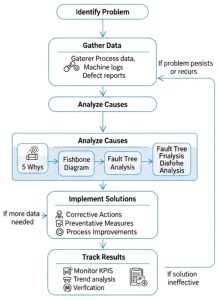
承認後、変更内容をすべての関係者に周知するための詳細な文書とコミュニケーション計画が策定されます。これには、関連する設計文書や製造プロセスの更新が含まれます。これらの変更をタイムリーに実施することは、生産スケジュールに大きな影響を与え、適切に管理すればリードタイムを最大25%短縮できる可能性があるため、非常に重要です。
ヒント: ECOの状況をリアルタイムで監視するためのデジタル追跡システムを導入し、可視性と説明責任を強化する。
効果的な文書化のためのECOフォームの必須構成要素

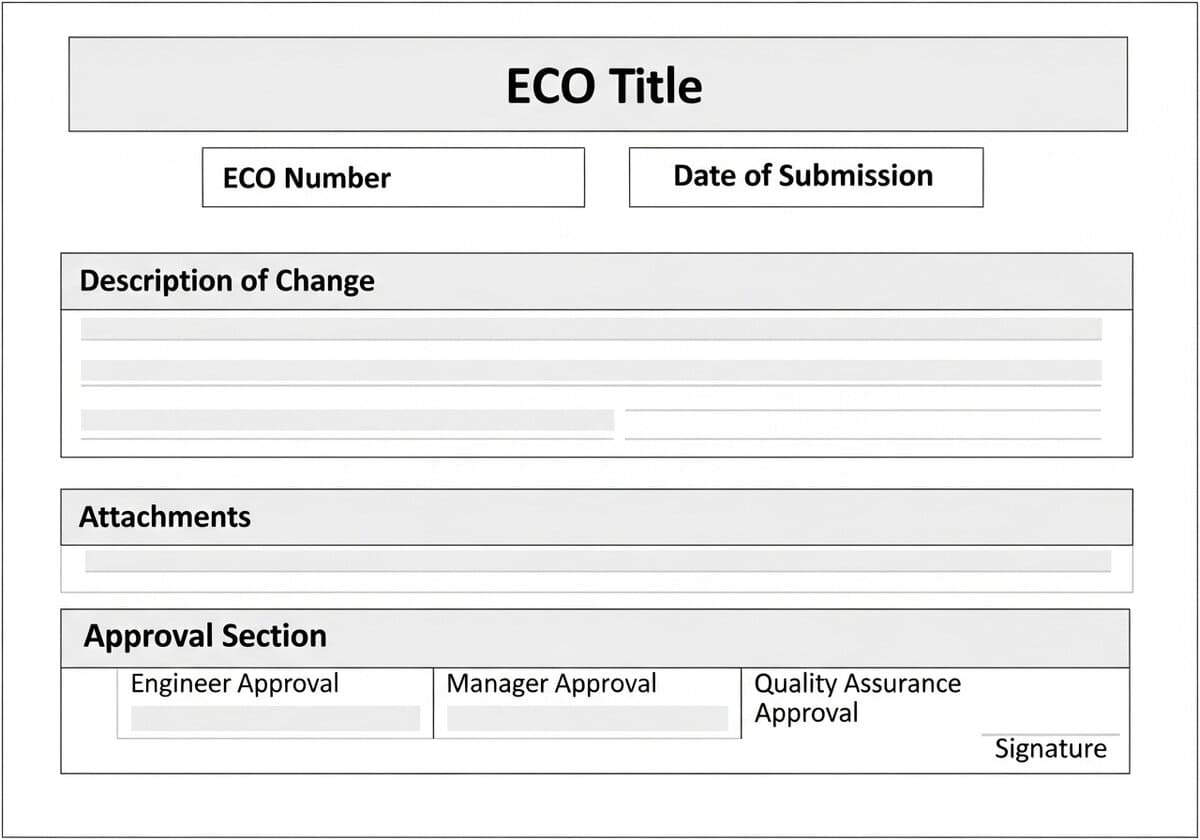
効果的な設計変更指示書(ECO)フォームには、製造現場における明確なコミュニケーションと文書化を促進するために、いくつかの重要な構成要素が含まれているべきである。
適切に構成されたECOフォームには、通常、以下の属性が参照として含まれています。
- 標準化されたタイトル、
- 固有識別子(ECO番号)、
- 発起人または著者
- そして提出日。
これらの要素は、設計変更プロセス全体を通して追跡と検索の両方において重要な参照点として機能するだけであり、内容、原因、あるいは変更そのものではありません。
もう一つの重要な要素は、提案された変更内容の詳細な説明です。 this section しなければならない articulate the reason behind the change while also identifying the affected items, such as parts, assemblies, or system designs. It enables stakeholders to understand the implications of the change, thus minimizing misunderstandings and potential disruption. Proper documentation here can reduce the average ECO processing time from weeks to just a few days in high-performing organizations.
スケッチ、仕様書、関連文書などの添付資料も、後々のトレーサビリティを確保するために不可欠です。これらの視覚的な補助資料は、エンジニアリングチームと生産チームが複雑な変更内容を理解するのに役立ちます。すべての関連データをECO(エンジニアリング変更指示書)にまとめる包括的なアプローチは、レビュープロセスの全体的な品質を向上させ、変更管理委員会による効率的な評価を可能にします。
最終的には、いくつかのテスト、検証、または再検証が必要と判断される可能性がある。
最後に、ECOフォームには承認欄を設けるべきです。 ここでは、指定された権限者が提案された変更を正式に承認または拒否することができます。明確に定義された役割と署名により、説明責任と追跡可能性が確保されます。
The Role and Function of the Change Control Board

Operational effectiveness relies significantly on the CCB’s methodical review process. Each proposed ECO undergoes rigorous examination to assess its technical viability, cost impact, and alignment with overarching business objectives. Typically, this team includes engineers, quality assurance specialists, and project managers. Their diverse expertise contributes to well-informed decisions, thereby minimizing the risk of costly mistakes stemming from uninformed alterations.
Effective communication is integral to the CCB’s operations. Regularly scheduled meetings allow stakeholders to discuss pending modifications and their potential effects. By meticulously documenting decisions and their justifications, the CCB ensures traceability for any issues that may surface post-implementation. This level of transparency is particularly important in industries such as Aerospace and Defense, where compliance with regulations bears significant consequences.
In instances requiring immediate design alterations, the CCB may convene emergency meetings. These expedited sessions enable rapid decision-making, thereby reducing production delays. For instance, automotive manufacturers have utilized emergency CCBs to swiftly address component failures, preserving production timelines and maintaining customer satisfaction.
To assess the CCB’s performance, organizations should track metrics such as for example:
| CCB Metrics | Importance |
|---|---|
| Average Approval Time | Measures decision-making efficiency |
| Revisitation Rate | Indicates quality of initial decisions |
ヒント: establish a clear documentation process during CCB meetings to ensure proper tracking of decisions and rationale, enhancing accountability and transparency
Strategies for Root Cause Analysis to Mitigate ECOs

Root cause analysis (RCA) serves as a fundamental process for reducing the occurrence of Engineering Change Orders (ECOs) within diverse manufacturing sectors. Structured methodologies, such as the “5 Whys” technique, enable teams to delve deeper into problems by continuously probing the reasons behind them. For instance, when examining a recurring defect in aerospace components, this approach can reveal that the root cause lies in insufficient material specifications.
The use of Fishbone Diagrams enhances brainstorming sessions, allowing cross-functional teams to collaboratively identify potential 設計上の欠陥 causes. This visual tool systematically organizes various contributory factors, promoting comprehensive analysis. Furthermore, employing Pareto Analysis aids in prioritizing significant issues that require immediate intervention, allowing teams to allocate their resources effectively.
Incorporating data-driven decision-making bolsters the RCA process. Analyzing historical ECO data allows manufacturers to identify trends that reveal common causes of change orders. For example, if a specific component frequently results in ECOs that cause production delays, targeted strategies—such as design modifications or supplier evaluations—can be implemented to significantly reduce the frequency of these orders.
ヒント: always document the findings from RCA sessions and track the corrective actions taken. This creates a repository of knowledge that can optimize future design processes and enhance overall efficiency, further contributing to the objectives outlined in the Art of the Engineering Change Order (ECO): Best practices for managing design changes in a manufacturing environment to minimize disruption and cost.
Differentiating between minor major and emergency changes in design
In product design, distinguishing between minor, major, and emergency changes is essential to efficiently manage.

- Minor changes: typically involve adjustments that have minimal impact on the product performance or regulatory compliance and can often be handled with informal communication. For instance, surface finish adjustments or slight dimension modifications that fall within the acceptable tolerances are common examples of minor changes.
- Major changes: require a more formal ECO process, as they involve alterations that can significantly affect the functionality, safety, or compliance of the product. Such changes often necessitate comprehensive testing and validation. According to the Aerospace Industries Association, approximately 20% of all changes in aerospace projects are categorized as major, often resulting in extended project timelines and increased costs.
- Emergency changes: on the other hand, are those implemented in response to unforeseen issues that could jeopardize product safety or compliance. For example, a critical defect identified in a medical device might trigger urgent design modifications before the next production batch. These changes should follow a rapid yet structured ECO pathway to mitigate risks while ensuring that documentation and communication maintain their integrity.
Metrics for Tracking ECO Efficiency
Evaluating the effectiveness of engineering change orders (ECOs) necessitates the application of several fundamental metrics that shed light on the 変更管理 framework. Among these, the ECO cycle time and cost impact are particularly noteworthy, especially within industries such as aerospace and defense.
Another important metric is the implementation success rate, which measures the proportion of ECOs that meet their intended objectives without necessitating further modifications or regressions. This metric is especially pertinent in sectors like automotive manufacturing, where achieving an implementation success rate exceeding 90% is often the target. Monitoring this rate not only aids in identifying patterns but also serves as a basis for developing strategies aimed at ongoing enhancement.
Analyzing the frequency of ECOs across different product categories can also provide valuable information for prioritizing engineering activities. Data analysis frequently indicates that more sophisticated electronic assemblies tend to require modifications more often than simpler designs (obvious ? Not necessarily taking into account that the more complex designs may have more tools and staff and protocols around).
Some of suggested metrics above can be captured for clarity as:
| Product Category | Frequency of ECOs | Average Cost Impact |
|---|---|---|
| Aerospace Components | 5 per quarter | $50,000 |
| 医療機器 | 3 per quarter | $30,000 |
| Automotive Parts | 8 per quarter | $20,000 |
ヒント: regularly review these metrics in conjunction with the ECO process to identify patterns that can lead to proactive design solutions and enhance operational efficiency.

結論
The Engineering Change Order (ECO) process serves as a fundamental component within the manufacturing sector, balancing innovation with operational efficiency. Our comprehensive analysis of best practices reveals pathways for organizations in all industries to maximize the effectiveness of their ECO workflows.
Documentation stands as a cornerstone of the ECO process. The Change Control Board plays a crucial role in overseeing changes, ensuring that all modifications are aligned with organizational goals. Continuous improvement, driven by measurable outcomes, contributes to logistics optimization. This transformation not only enhances operational efficiency but also cultivates a culture of adaptability and resilience within the organization.In an environment where accuracy and reliability are key, companies dedicated to mastering the Engineering Change Order process position themselves favorably amidst challenges. They turn obstacles into opportunities for advancement and innovation. Prioritizing a structured approach to change management enables organizations to navigate complexity and maintain a competitive edge.

よくある質問
製造環境における正式なECOプロセスワークフローとはどのようなものですか?
正式なECO(環境影響評価)プロセスのワークフローは、通常、開始、分析、レビュー、実施および有効性管理の各段階で構成されます。各段階では、変更が徹底的に評価され、文書化されることで、生産中の混乱とコストを最小限に抑えます。
効果的な文書化のために、ECOフォームの必須構成要素は何ですか?
ECOフォームには、少なくとも部品番号、変更理由、安全性またはリスク分析、およびコスト影響分析を含める必要があります。適切な文書化は、変更プロセス全体を通して明確性と説明責任を確保します。
意思決定における変更管理委員会の役割と機能は何ですか?
変更管理委員会(CCB)は、提案された変更を審査し、承認または却下する責任を負います。このガバナンス構造により、リスクやリソース配分を含む変更のあらゆる側面が、実施前に検討されることが保証されます。
将来の環境影響評価(ECO)を軽減するために、根本原因分析にはどのような戦略が用いられるでしょうか?
効果的な根本原因分析戦略には、次のような手法が含まれます。 5つの理由、フィッシュボーン図、および故障モード影響解析(FMEAこれらの手法は、変化につながる根本的な問題を特定するのに役立ち、チームが再発を防ぐための是正措置を実施できるようにします。
設計における軽微な変更、重大な変更、緊急時の変更をどのように区別すればよいでしょうか?
軽微な変更は通常、人的リスクが低くコストも最小限に抑えられますが、重大な変更は設計、顧客、または生産スケジュールに大きな影響を与える可能性があります。緊急の変更は緊急を要するものであり、安全または法令遵守上の問題から、迅速な承認が必要となる場合が多くあります。
ECOの効率性を追跡し、成功を測定するために、どのような指標を用いるべきでしょうか?
ECO(環境改善命令)の効率性を追跡するための主要な指標には、開始から実施までのサイクルタイムと、変更に伴うコストが含まれます。これらの指標は、ECOプロセスの有効性と改善の機会に関する洞察を提供します。
航空宇宙・防衛、自動車、医療機器といった様々な製造業分野において、ECOプロセスはどのように異なるのでしょうか?
ECO(環境適合性確認)プロセスは、業界規制、コンプライアンス基準、製品の複雑さによって異なる場合があります。例えば、安全性を最重要原則とする点では共通していますが、航空宇宙・防衛分野では、大量生産と訓練を受けていない非専門家ユーザーによる使用を前提としてコスト効率を重視する自動車分野に比べて、より厳格な検証手順が必要となる場合があります。
効果的なECOプロセスを導入する際に、一般的にどのような課題に直面するのでしょうか?
効果的な環境影響評価(ECO)プロセスを導入する上での課題としては、変化への抵抗、明確なコミュニケーションの欠如、評価のためのリソース不足などが挙げられます。これらの問題に早期に対処することで、導入の成功確率を高めることができます。
関連トピック
- 変更影響評価: 設計変更がプロジェクト全体および生産に及ぼす潜在的な影響を分析する。
- Design Verification 検証: 変更された設計が規定の要件および意図された用途を満たしていることを確認するための手順。
- バージョン管理システム: ECOライフサイクル全体を通して設計文書の変更を追跡するためのソフトウェアソリューション。
- Supplier Communication Plan: サプライヤーがECOプロセスに情報提供を受け、関与することで、整合性と品質を維持するための戦略。
- 変更指示データベース: 将来の参照および分析のために、すべてのECOをアーカイブする中央リポジトリ。
- 法令遵守および規制上の考慮事項: 特に医療機器などの業界においては、関連する規制を理解し、ECOプロセスに組み込むこと。
- 変化が持続可能性に及ぼす影響: 製造工程における設計変更が、環境目標および持続可能性目標とどのように整合しているかを評価する。
- 導入後レビュー: ECO(環境改善命令)の実施後にその成果を評価し、得られた教訓と改善の機会を特定する。
- 技術文書の更新情報: ECOプロセスで行われた変更を反映させるため、関連するすべての文書が改訂されていることを確認する。
- ECO(環境影響評価)が予算に及ぼす影響: エンジニアリング変更に伴う財務的影響(潜在的な節約額と支出額を含む)を評価する。
External Links on Engineering Change Order (ECO)
国際規格
(リンクにカーソルを合わせると、コンテンツの説明が表示されます)
用語集
Engineering Change Order (ECO): 製品の設計、仕様、またはプロセスに対する変更を承認する文書であり、変更内容、理由、および実施手順を詳細に記載し、製品ライフサイクル全体を通して変更の適切な追跡と管理を保証する。
Failure Mode and Effects Analysis (FMEA): a systematic method for evaluating potential failure modes within a system, process, or product, assessing their effects on performance, and prioritizing risks to improve reliability and safety through corrective actions.
Root Cause Analysis (RCA): 問題や失敗につながる根本的な要因を特定するための体系的なプロセスであり、単に症状を治療するのではなく、根本的な問題に対処し、排除することを目的としている。
Verification and Validation (V&V): システムが仕様を満たし、意図された目的を達成していることを保証するプロセスであり、2つの異なる活動が含まれる。検証は製品が設計仕様を満たしているかどうかをチェックし、妥当性確認はそれがユーザーのニーズと要件を満たしているかどうかを評価する。