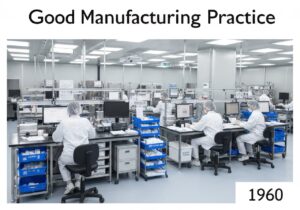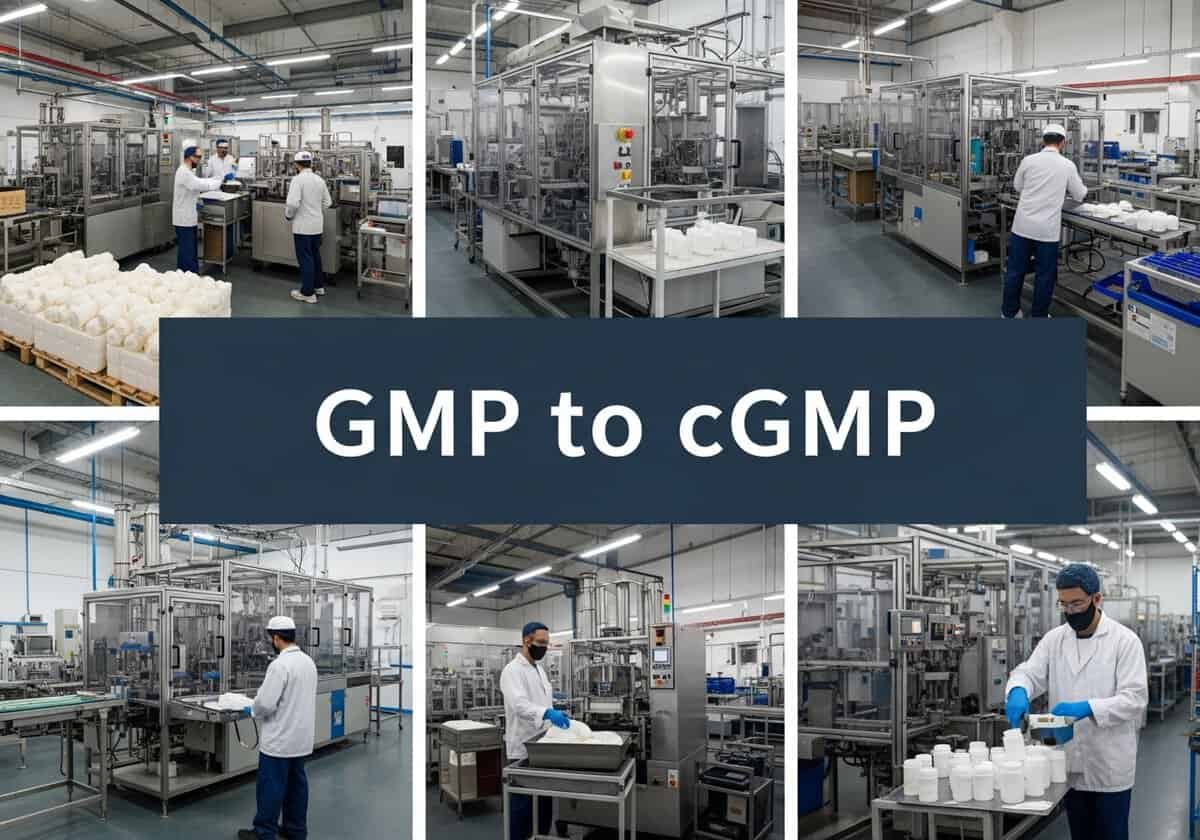
Good Fabricação Practice, or GMP, is the universal standard for quality production. It is a set of rules to ensure that products like medicines, food, and medical devices are made consistently and safely, batch after batch. The central idea is simple: quality cannot be inspected into a product at the end of the line. Instead, it must be built into every step of the manufacturing process, from the raw materials that arrive at the loading dock to the final package that leaves it.
O “c” em cGMP significa Atual. tecnologiasEsta única carta introduz um requisito crítico e dinâmico. padrões Embora as GMP forneçam o conjunto de regras fundamental, as cGMP obrigam legalmente os fabricantes a usarem os mais atualizados
Principais conclusões

- GMP & cGMP distinction is now academic; the expectation is universal.
- Quality Risk Management (QRM) is the engine, not the paperwork nor the PLM.
- Data integrity is a primary audit focus.
- “Human Error” is a symptom, not a root cause. Attributing a deviation to “human error” is a red flag for a weak quality system.
- Process Analytical Technology (PAT) embodies the shift from testing to real-time assurance. The “c” in cGMP is exemplified by PAT.
- Supplier oversight is data-driven, not just audit-driven.
- The Qualified Person (QP) represents a critical EU-specific responsibility.
- O Contamination Control Strategy (CCS) is the new cornerstone of sterile manufacturing.
The 10 Core Principles of Good Manufacturing Practice (GMP)
GMP is not just a set of rules but a quality mindset built upon ten fundamental principles. These principles work together to create a robust system that ensures quality is built into a product at every stage, rather than merely being tested for at the end.
1. Write Step-by-Step Procedures and Work Instructions
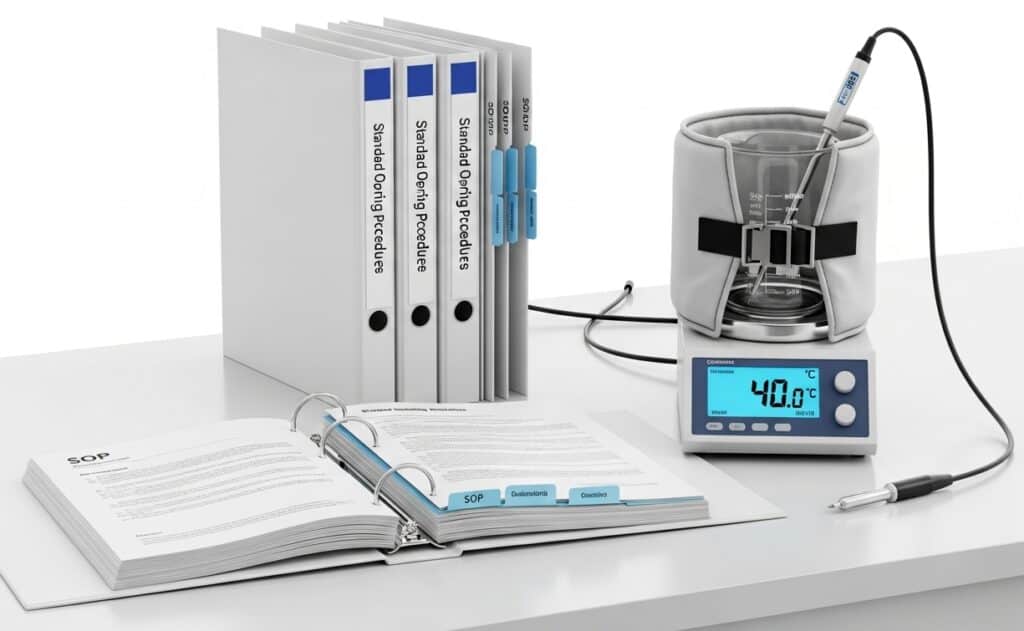
The foundation of GMP is ensuring that all processes are clearly defined and documented. This principle requires creating detailed, unambiguous Standard Operating Procedures (SOPs) for every critical task. The goal is to ensure that operations are performed consistently and correctly every time, regardless of who is performing the task. This eliminates ambiguity and provides a clear reference for training and execution.
Example of application: a company, “PharmaBlend Inc.,” manufactures a temperature-sensitive liquid drug. Their SOP for “Compounding Tank Temperature Control” (SOP-MFG-101) specifies not just the target temperature (40°C ± 2°C), but also the exact sequence for starting the heating jacket, the rate of temperature increase (not to exceed 5°C per minute), the specific calibrated probe to use for monitoring, and the actions to take if the temperature overshoots.
Dica: instead of writing monolithic SOPs, use a modular approach. Create “master” SOPs for complex processes that reference smaller, task-specific “work instruction” documents for individual steps (e.g., calibrating a specific sensor, operating a single valve). This allows for easier updates—if a single piece of equipment is replaced, you only need to revise one small work instruction instead of the entire process SOP, significantly reducing review and approval time and minimizing the risk of introducing errors into unrelated sections.
2. Follow Procedures and Instructions Meticulously
Having documented procedures is meaningless if they are not followed. This principle demands strict adherence to the written SOPs without deviation. If a deviation is necessary, it must be formally documented, justified, and approved through a defined change control process. This ensures that any departure from the standard is controlled, assessed for risk, and recorded for traceability.
Dica: implement a “Right-First-Time” (RFT) metric for procedure execution, tracked during batch record review. When deviations occur due to non-adherence, don’t just retrain the operator. Perform a root cause analysis focused on the procedure’s usabilidade (a Human Factors approach). Was the instruction ambiguous? Was the sequence illogical? Is the required tool hard to access? Improving the procedure itself is a more effective long-term Corrective and Preventive Action (CAPA) than simply blaming human error.
3. Promptly and Accurately Document Work
This is the principle of “if it wasn’t written down, it didn’t happen.” All activities, from receiving raw materials to shipping the final product, must be documented in real-time. This includes recording data, signatures, dates, and any observations. Accurate, contemporaneous documentation provides a complete and traceable history of a batch (known as a Batch Record or Device History Record), which is essential for investigating deviations, troubleshooting problems, and proving compliance during an audit.
Dica: when designing batch records (paper or electronic), incorporate “data integrity checks” directly into the fields. For example, instead of just a blank space for “End Time,” structure it to require a start time and an end time, with an automated or manual check to ensure the duration is logical for the process step. For critical entries, use “verify-by-second-person” sign-offs, but ensure the verifier is trained to re-perform the critical calculation or check the setting, not just “check the box.”
Difference between DMR and DHR:
- The Device Master Record, or DMR, é a receita mestre para um medical device. It is a formal, controlled compilation of all the instructions, specifications, and procedures required to produce a consistent product. The DMR contains everything from the design drawings and material specifications to the detailed manufacturing instructions, quality control test methods, labeling, and packaging requirements. Think of it as the complete blueprint; it defines exactly how the device is supposed to be made, from start to finish.
- The Device History Record, or DHR, is the proof that a specific batch, lot, or individual unit was actually built according to that recipe. It is the completed production record. The DHR contains the specific dates of manufacture, quantities produced, test results for that batch, and traceability information like serial or lot numbers. While the DMR is the instruction manual that applies to all units, the DHR is the historical evidence that demonstrates one specific production run followed those instructions and met all acceptance criteria.
4. Validate Your Work & Process
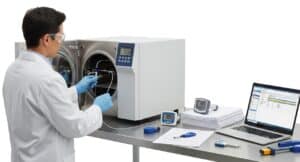
Validation is the documented proof that a process, system, or piece of equipment consistently produces the expected result. This principle requires manufacturers to prove that their processes are reliable and under control. This includes validating manufacturing processes, analytical testing methods, cleaning procedures, and computerized systems to ensure they are fit for their intended purpose.
Dica: adopt a lifecycle approach to validation based on ASTM E2500. Instead of treating validation as a one-time event, integrate it with Quality by Design (QbD). Define a “control space” during process development, and use the validation exercise (Process Performance Qualification – PPQ) not just to confirm the process works, but to verify that it remains within this state of control. This shifts the focus from a simple pass/fail event to demonstrating ongoing process understanding and control, which is highly valued by regulators.
For this stage, we suggest our very complete reading on IQ OQ PQ Validação de Processos:
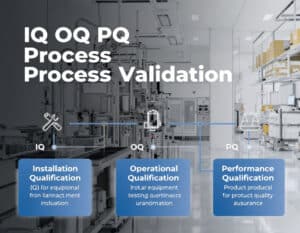
Expert tip: validation is becoming a continuous lifecycle, not a one-time event. The “three successful batches” mindset is becoming obsolete. cGMP demands a lifecycle approach to ensure the process remains in a state of control for its entire commercial life:
- a robust process design (Stage 1)
- formal qualification (Stage 2)
- and a program for Continued Process Verification (Stage 3)
5. Properly Design, Build, and Maintain Facilities and Equipment
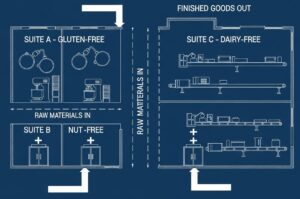
The physical environment and the tools used are critical to product quality. This principle dictates that facilities must be designed to prevent cross-contamination and mix-ups. Equipment must be designed for its intended use, easy to clean, and properly calibrated and maintained.
The layout, airflow, and material flow should all be logically designed to protect the product such as unidirectional flow for personnel and materials. Raw materials enter one end, move through dedicated processing suites with positive air pressão differentials, and finished goods exit the other end. There are no crossing paths between raw and finished goods, and personnel must pass through airlocks to enter production areas, minimizing the risk of cross-contamination.
Dica: when designing a new facility or modifying an old one, use 3D modeling and virtual reality (VR) walkthroughs with a cross-functional team (including operators, maintenance, and QA) before construction begins. This allows you to identify ergonomic issues, inefficient material flows, and hard-to-clean areas (e.g., inaccessible pipework, awkward equipment placement) at the design stage, where changes are cheap, rather than after the facility is built, where they are prohibitively expensive.
6. Maintain Good Housekeeping and Hygiene
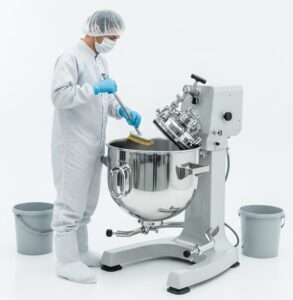
Contamination is a major risk in manufacturing. This principle requires maintaining a high level of cleanliness and hygiene throughout the facility. This includes personal hygiene standards for employees (e.g., proper gowning), documented cleaning and sanitation schedules for facilities and equipment, and pest control programs. The goal is to protect the product from physical, chemical, and microbial contaminants.
Example of application: o procedimento de limpeza de um recipiente de mistura não é apenas “lavar com detergente”.
É um processo validado de várias etapas: pré-enxágue com água purificada, lavagem com uma concentração específica de um agente de limpeza validado por um tempo definido, enxágue final com Água para Injeção (WFI) e, finalmente, um teste de cotonete para resíduos químicos e microbianos para provar que o recipiente está realmente limpo antes que o próximo lote possa ser feito. (refer to other articles on this).
Dica: implement a robust environmental monitoring (EM) program that goes beyond routine sampling. Use EM data to create trend analysis charts and heat maps of your facility. A spike in microbial counts in one area isn’t just a deviation to be closed; it’s a data point. Use this data proactively to identify “hot spots,” assess the effectiveness of cleaning procedures over time, and adjust sanitation frequencies based on risk and data, rather than a fixed, arbitrary schedule.
7. Build Quality into the Entire Product Lifecycle
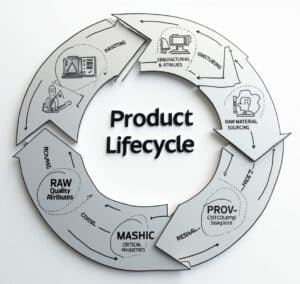
This principle emphasizes that quality is not just the responsibility of the Quality Control (QC) department. It must be integrated into every stage, from research and development, through raw material sourcing (supplier qualification), manufacturing, packaging, and distribution. It involves a holistic approach where every department understands its role in maintaining product quality.
Example of application: “Precision Pills LLC” is developing a new tablet. During the R&D phase (long before manufacturing), they use Quality by Design (QbD) principles. They identify Critical Quality Attributes (CQAs) like tablet hardness and dissolution rate. They then perform experiments to understand how Critical Process Parameters (CPPs) like turret speed and compression force affect these CQAs. This knowledge is then transferred to manufacturing, ensuring a robust and well-understood process from day one.
Dica: establish a formal Technology Transfer team that acts as a bridge between R&D, Engineering, and Manufacturing. This team should manage a “knowledge transfer package” that includes not just the process parameters, but the rationale behind them (the “why”). This package should detail failed experiments, process boundaries, and the scientific understanding of the product. This prevents manufacturing from treating the process like a “black box” and enables more effective troubleshooting and continuous improvement later on.
8. Perform Quality Control and Audits
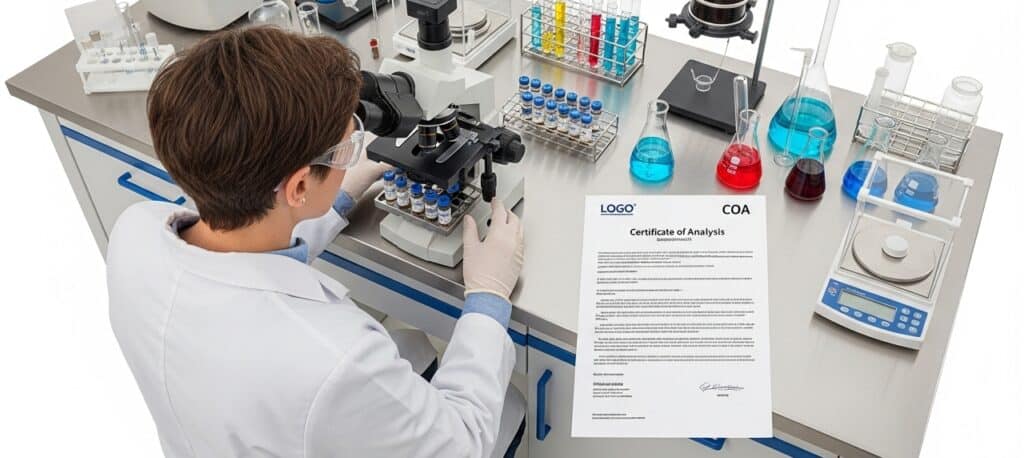
An independent Quality unit (comprising Quality Assurance and Quality Control) is essential. This principle ensures that proper controls are in place. This includes testing raw materials, in-process samples, and finished products against pre-defined specifications. It also involves conducting regular internal audits (self-inspections) to assess the effectiveness of the GMP system and ensure it is being followed correctly.
Example of application: “SafeInjectables Corp.” receives a shipment of vials from a new supplier. Even though the supplier provided a Certificate of Analysis (CoA) showing the vials meet all specifications, the internal QC lab performs its own independent identity and critical defect testing (e.g., for cracks and dimensions) on a sample of the vials before the shipment is released for use in production. This verifies the supplier’s data and protects against potential quality issues.
Dica: structure your internal audit program to be process-based, not just department-based. Instead of auditing the “Warehouse Department,” conduct an audit of the “Material Control Process” which would follow the material from receiving, through warehouse storage, dispensing, and return-to-stock. This approach breaks down departmental silos and provides a much clearer picture of the health and efficiency of the de ponta a ponta process, revealing risks that occur at the hand-off points between departments.
9. Protect Products Against Contamination

This is a central theme that overlaps with other principles but deserves its own focus. It involves designing processes and facilities to prevent contamination of the product with any foreign substance.
This includes preventing cross-contamination between different products, microbial contamination, and contamination from personnel or the environment.
Measures like closed production systems, proper gowning, and controlled material handling are key applications of this principle.
Example of application: a facility, “MultiHerb Supplements,” produces both a ginseng supplement and a potent herbal extract known to be an allergen. To prevent cross-contamination, the allergenic extract is produced in a completely segregated suite with its own dedicated air handling system (HVAC) and equipment. All tools are color-coded red and are never allowed to leave the suite. This physical and procedural separation is critical to protecting other products.
Dica: go beyond physical segregation and implement a “cleaning verification” strategy for shared equipment that is based on toxicological data. For each product, calculate the Permitted Daily Exposure (PDE) value. Use this PDE to establish a scientifically-justified, health-based cleaning limit for product residues. This risk-based approach is the current industry standard (promoted by EMA) and is far more robust than relying on older, arbitrary limits like “10 ppm” or “visibly clean.”
10. Train and Develop Competent Personnel

The human element is often the most critical and variable factor in manufacturing. This principle requires that all employees are properly trained for their specific roles. Training should cover not only the technical aspects of their trabalho (how to operate equipment) but also the principles of GMP and the potential consequences of not following procedures. Competency must be regularly assessed and documented.
Example of application: before an operator at “CellTherapy Innovations” is allowed to work independently on the critical cell culture expansion step, they must complete a multi-stage qualification program. This includes reading SOPs, observing a qualified operator, performing the task under direct supervision, and finally, successfully processing several “test” batches on their own. Their competency is documented and certified by their supervisor and the QA department in their official training file ( mandatory in most of the sectors where GMP applies).
Dica: passar de um sistema simples “baseado em formação” para um sistema “baseado em competências”.
Em vez de apenas documentar que um operador foi “treinado” em um POP, desenvolva uma avaliação formal de competência que exija que ele demonstre suas habilidades e conhecimentos.
Isto poderia envolver um teste prático (por exemplo, “montar e desmontar corretamente esta bomba de enchimento”) e um componente verbal (“explique-me os parâmetros críticos desta etapa e o que você faria se eles se desviassem”).
Isto cria um registro de qualificação muito mais robusto e garante a verdadeira compreensão, não apenas a presença. Covers the manufacturing of all medicinal products, including prescription drugs, over-the-counter medications, vaccines, and Active Pharmaceutical Ingredients (APIs). This is the most stringent application of GMP. It involves strict control over raw materials, aseptic (sterile) processing for injectables, rigorous process validation, stability testing to determine shelf life, and a “Qualified Person” in the EU responsible for certifying that each batch meets all legal and quality requirements before release. Regulations like 21 CFR Part 211 (US) and EudraLex Volume 4 (EU) govern this sector. | 2. Medical devices Includes everything from simple tongue depressors to complex life-sustaining equipment like pacemakers and MRI machines. The focus is on design controls, ensuring the device is designed to be safe and effective from the outset. GMP for medical devices (often called the Quality System Regulation or QSR) emphasizes risk management (ISO 14971), traceability of components, and maintaining a complete Device Master Record (DMR) and Device History Record (DHR). The key regulation in the US is 21 CFR Part 820. |
3. Food and beverage Covers the processing, packaging, and holding of human food. GMP in the food industry focuses on preventing contamination and ensuring food safety. Key applications include Análise de Perigos e Pontos Críticos de Controle (HACCP) systems to identify and control food safety hazards, allergen management programs to prevent cross-contact, sanitation procedures, and pest control. The Food Safety Modernization Act (FSMA) in the US heavily incorporates cGMP principles. | 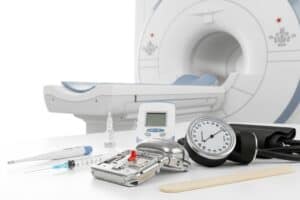 |
4. Cosmetics Includes products like makeup, lotions, shampoos, and soaps. While often less stringent than for pharmaceuticals, GMP for cosmetics focuses on preventing microbial contamination, ensuring product stability, and accurately labeling ingredients. The ISO 22716 standard provides specific GMP guidelines for the cosmetic industry, covering production, control, storage, and shipment. | 5. Dietary supplements Covers vitamins, minerals, herbs, and other supplements. GMP ensures that supplements are produced without contaminants, are accurately labeled, and contain the ingredients they claim to. This involves identity testing of raw materials, ensuring proper formulation, and controlling for contaminants like heavy metals and pesticides. In the US, this is governed by 21 CFR Part 111. |
The Qualified Person (QP)
In the European Union, the Qualified Person (QP) serves as the final, legally mandated gatekeeper for every batch of medicinal product.
Before a batch can be released for sale or for use in a clinical trial, a QP must personally certify that it complies with all regulatory requirements. This certification is a formal attestation that the batch was manufactured and tested in accordance with its specific Marketing Authorisation and the principles of Good Manufacturing Practice (GMP). This is not a corporate sign-off; it is a profound personal and legal responsibility placed upon a named individual, who must be a registered professional, such as a pharmacist or chemist, with extensive practical experience.
The QP’s responsibilities extend far beyond the final review of a batch record. They must ensure that the entire Pharmaceutical Quality System is functioning correctly. This includes verifying that all starting materials are from qualified supply chains, that manufacturing and testing processes are properly validated, that all deviations and changes have been appropriately investigated and approved, and that all necessary audits have been performed.
The QP does not personally perform every task, but they are ultimately accountable for the systems that do. They must have a comprehensive understanding of the entire manufacturing and control process, with the authority to access any relevant area or document and the power to halt a release if any aspect of compliance is in doubt.
Additional Requirements Specific to cGMP
Building upon the foundational principles of GMP, cGMP introduces a more dynamic, proactive, and technologically advanced set of requirements.
The “c” for “Current” is not merely a suggestion; it is a legal and regulatory expectation that a manufacturer’s systems are state-of-the-art.
1. Proactive Quality Risk Management (QRM)
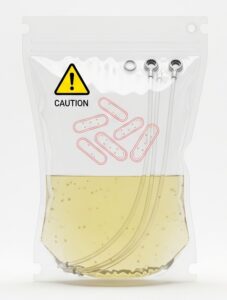
While basic GMP implicitly involves managing risk, cGMP mandates the use of a formal, systematic, and proactive process for managing risks to product quality throughout the product lifecycle. This is not just about reacting to failures but about anticipating and preventing them. This principle is heavily guided by the international standard ICH Q9.
Example of application: the fictional “NextGen Biologics” company is developing a new monoclonal antibody. During process development, they conduct a formal Failure Mode and Effects Analysis (FMEA) on their bioreactor process. They identify “bacterial contamination” as a critical failure mode with a high-risk score. To control this risk proactively, they design the process to use single-use, pre-sterilized bioreactor bags instead of a traditional stainless-steel reactor, which would require complex and riskier steam-in-place (SIP) validation. This design choice is a direct result of the QRM process (eliminating plastic wastes is not the topic here).
Dica: Integrate your QRM system directly into your Change Control and Deviation Management systems. For every change or deviation, require a documented risk assessment that determines the scope of validation, testing, and regulatory action needed. This creates a scientifically sound and legally defensible rationale for your decisions, allowing you to justify why a minor change only required limited testing, while a major change required a full re-validation and submission to a regulatory agency.
2. Implementation of a Pharmaceutical Quality System (PQS)

cGMP requires more than just a set of quality control procedures. It demands a comprehensive and integrated management system that connects GMP principles with the company’s business objectives to drive continuous improvement.
Guided by ICH Q10, the PQS ensures that senior management is actively involved and accountable for quality.
Dica: to demonstrate the effectiveness of your PQS to an auditor, link your quality objectives directly to your Key Performance Indicators (KPIs). Instead of just tracking “Number of Deviations,” track “Deviation Recurrence Rate.” A low recurrence rate is a powerful KPI that proves your root cause analysis and CAPA system are effective at preventing problems, which is the core goal of a mature PQS.
3. Use of Process Analytical Technology (PAT) and Advanced Process Control
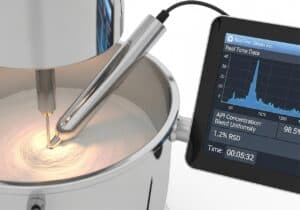
This is a cornerstone of the “Current” philosophy:
cGMP encourages and increasingly expects manufacturers to move away from relying solely on testing finished product samples. Instead, they should use modern technology to monitor and control the manufacturing process in real-time, ensuring quality is built into the product at every step.
Example of application: while a traditional GMP process for tablet blending involves mixing powders for a fixed time (e.g., 20 minutes) and then taking a few samples to a lab for testing, the cGMP approach would use an in-line Near-Infrared (NIR) spectroscopy probe directly inside the blender. The probe continuously measures the blend’s uniformity in real-time. The blending process is stopped not based on time, but at the precise moment the NIR data confirms the blend has achieved the validated state of homogeneity, ensuring perfect results for every batch.
Dica: when implementing a new PAT instrument, use a “shadowing” approach for the first 10-20 batches. Run the PAT system and collect the real-time data, but continue to make all quality decisions (e.g., batch release) based on your existing, validated offline método. This allows you to build a robust data model and prove the reliability of the PAT system in a low-risk environment before formally validating it via change control to replace the older, less efficient method.
4. Uncompromising Data Integrity and 21 CFR Part 11 Compliance
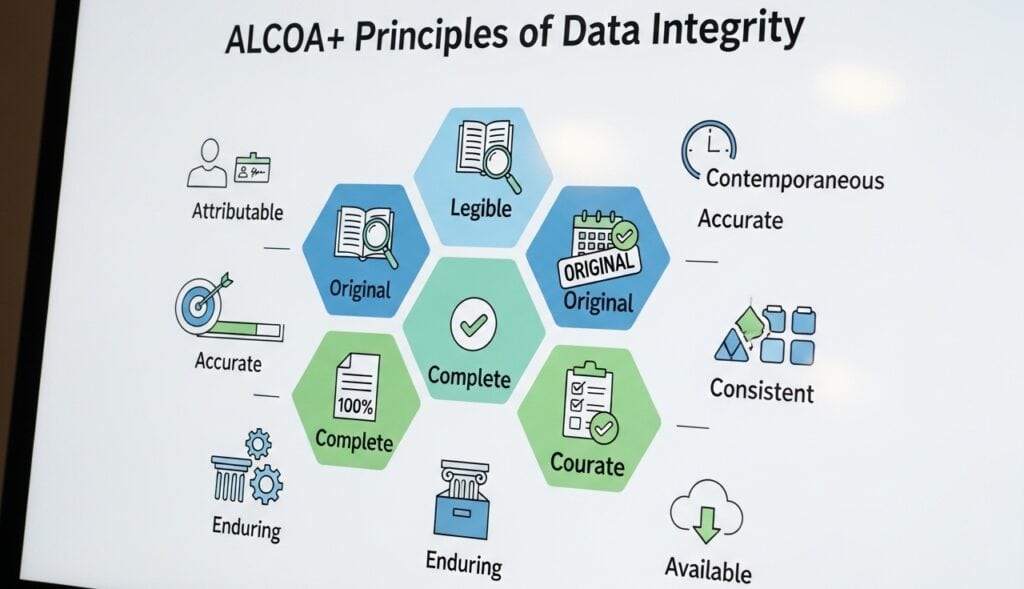
While GMP has always required accurate records, cGMP places an intense focus on the integrity of eletrônico data. With the rise of computerized systems,
regulators demand absolute assurance that data is protected from accidental or intentional alteration, deletion, or loss throughout its entire lifecycle. This is often summarized by the ALCOA+ principles (Attributable, Legible, Contemporaneous, Original, Accurate, plus Complete, Consistent, Enduring, and Available).
Example of application: a lab at “DataSecure Labs” uses a chromatography system (HPLC). A basic GMP setup might have the results printed from a standalone PC. The cGMP-compliant setup has the HPLC software networked and fully compliant with 21 CFR Part 11. An analyst cannot log in without a unique username and password. All raw data is saved directly to a secure server and cannot be deleted or overwritten. Every single action, including changing an integration parameter, is automatically recorded in a permanent, time-stamped audit trail that cannot be altered.
Dica: actively challenge your own systems by conducting “negative testing” or a “hostile audit.” Instruct a tech-savvy team member to intentionally try to compromise the data integrity of a system. Can they change the system clock to backdate an analysis? Can they delete a failing result without the audit trail showing it? Can they bypass the login system? These exercises mimic what a savvy regulator might investigate and are the fastest way to find and fix vulnerabilities.
5. A Demonstrable Culture of Continuous Improvement
As its core, cGMP is not a static goal; it is a continuous journey. Regulators expect to see a formal system where data from all sources (process monitoring, deviations, complaints, internal audits) is actively collected, trended, and used to drive meaningful improvements to processes and systems.
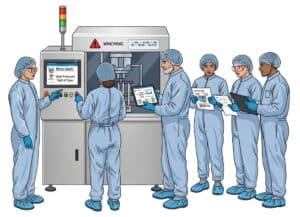
The goal is to evolve and become more efficient and reliable over time.
Example of cGMP approach: a manufacturing line experiences a recurring minor alarm on a sealing machine. A basic GMP response would be to document the alarm and reset it each time. The cGMP response is that after the third occurrence, their PQS automatically triggers a formal CAPA. A cross-functional team investigates the trend, determines the root cause is a slight variation in the foil material from a supplier, and works with the supplier to tighten the material specification. They then monitor the alarm rate for the next six months to verify the solution was effective.
Dica: create a formal “feeder” system from your Annual Product Review (APR) or Product Quality Review (PQR) directly into your continuous improvement program. Don’t let the PQR be just a document that sits on a shelf. Mandate that every PQR must identify at least one specific, data-driven opportunity for process improvement or risk reduction for the upcoming year. This formally links regulatory compliance with proactive, forward-looking process enhancement.
GMP & cGMP Comparison
| Boas Práticas de Fabricação (BPF) | cGMP | |
| Core Principle & Goal | A comprehensive quality system to ensure products are consistently produced and controlled according to established standards. The fundamental goal is to build quality into the product design and manufacturing process to minimize risks that cannot be eliminated by testing the final product alone. | |
| Key Emphasis | Establishes the foundational, internationally recognized minimum requirements for quality manufacturing. It is the baseline standard. | The “c” for Current legally mandates that manufacturers use up-to-date and state-of-the-art technologies, systems, and scientific approaches. It is a proactive and evolving standard. |
| Nature of Standards | Provides a stable, codified baseline. While updated periodically, the focus is on adherence to established, documented rules. | Dynamic and continuously evolving. Requires companies to actively monitor industry advancements and implement modern quality assurance systems to remain compliant. What was compliant yesterday may not be tomorrow. |
| Primary Regulations & Governing Bodies | This term is used globally, representing a harmonized international standard. | This specific term is the official legal standard enforced by the U.S. FDA. The principle of being “current,” however, is an expectation of most major regulatory bodies. |
| European Union | The European Medicines Agency (EMA) enforces GMP through EudraLex – Volume 4, which provides detailed guidelines for medicinal products for human and veterinary use. | While the term “cGMP” is not used, the expectation to be current is embedded within EudraLex and enforced during inspections. |
| Estados Unidos | The U.S. Food and Drug Administration (FDA) uses the term cGMP to emphasize that the regulations are flexible and require current technologies. Key regulations include:
| |
| International Bodies | The World Health Organization (WHO) sets global GMP standards, often adopted by countries without their own extensive regulatory frameworks. The International Council for Harmonisation (ICH) develops guidelines (e.g., ICH Q7 for APIs) to harmonize standards between the EU, USA, and Japan. | These bodies promote the principles of continuous improvement and modern quality systems that are central to the cGMP philosophy. |
| Fields of Application |
| |
| Practical Implication for Companies | Focuses on having robust, documented systems in place: Standard Operating Procedures (SOPs), personnel training, equipment qualification, and meticulous record-keeping. | Requires everything under GMP, plus a proactive culture of continuous improvement. This includes implementing advanced process controls, modern analytical testing methods, robust Quality Risk Management (QRM), and a comprehensive Corrective and Preventive Action (CAPA) system. |
| Cost & Investment | Involves the standard, necessary cost of establishing and maintaining compliant quality systems, facilities, and personnel training. | Often requires a higher and more continuous investment in new technology, advanced analytical equipment, ongoing validation studies, and specialized training to ensure processes remain state-of-the-art. |
Detailed Manufacturing Example (Aseptic Filling) | Process: an older aseptic filling line in a conventional Grade A/B sala limpa. Operators, fully gowned, perform frequent manual interventions (e.g., loading stoppers, clearing jams). Environmental monitoring is done periodically via settle plates and air sampling at the start and end of the batch. Regulation: complies with the written letter of older GMP regulations (e.g., an earlier version of EudraLex Annex 1). Validation: the process was validated years ago with successful media fills; re-validation is performed on a fixed schedule (e.g., biannually) without a modern risk-based approach. Documentation: meticulous paper-based batch records document all steps, interventions, and periodic monitoring results. (Could fail cGMP criteria due to high contamination risk from manual interventions and lack of continuous, real-time process data possible with current technologies) | Process: a modern aseptic filling line using a fully automated Restricted Access Barrier System (RABS) or isolator. Robotic systems handle all material transfers and interventions are made only via glove ports, minimizing human contact. Continuous, real-time particle monitoring systems are integrated, providing immediate alerts for any environmental deviations. Regulation: aligns with the current FDA expectations and the revised EudraLex Annex 1, which mandate risk-based approaches and use of advanced technology to ensure sterility. Validation: the process is validated based on a Quality Risk Management (QRM) assessment (ICH Q9) that proactively identifies and mitigates contamination risks. Process Analytical Technology (PAT) may be used to monitor critical parameters in real-time. Documentation: compliant electronic batch records (21 CFR Part 11) automatically capture all process parameters and continuous monitoring data, providing a complete, real-time, and auditable data trail that demonstrates a constant state of control. |
Conclusão
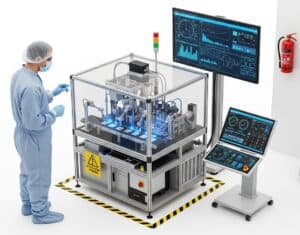
In practice, the distinction between GMP and cGMP blurs, as both systems share the exact same foundational goal: to manufacture products that are consistently safe and effective. GMP lays out the essential principles, the permanent rules of the jogo. The ‘c’ in cGMP simply clarifies the non-negotiable expectation that these principles must be executed using current, state-of-the-art technology and scientific understanding.
This is no longer just an American FDA concept. Global regulatory bodies, even when their official texts only mention ‘GMP,’ now universally interpret this to mean current Good Manufacturing Practice, and an auditor will not accept an outdated process, regardless of how well it complied with the standards of its time, but ask for a self evaluating & improvement real-time process.
In essence, cGMP is GMP in motion, ensuring that product safety and quality keep pace with modern science.
Perguntas frequentes
In a practical audit, how does an inspector’s expectation for ‘cGMP’ differ from the written ‘GMP’ regulations?
An inspector expects to see not just that you follow your written procedures (GMP), but that your procedures themselves reflect current industry best practices and technology (cGMP). They will question why you are using a 20-year-old analytical method when a more accurate and reliable one is now standard, or why you rely on manual checks where automated in-line verification is now common. They are auditing your awareness and proactive adoption of modern quality standards.
Does cGMP mean we must constantly invest in the newest technology, or can we justify using older, validated equipment?
Você pode absolutamente justificar o uso de equipamentos mais antigos, mas o ônus da prova recai sobre você. Sua justificativa deve ser documentada e baseada em riscos. Você precisa demonstrar, por meio de validação robusta, manutenção rigorosa, monitoramento intensivo e dados de tendências, que seu sistema mais antigo fornece um nível equivalente ou superior de garantia de qualidade e
Beyond audit trails, what are the most common ‘unseen’ data integrity gaps regulators are focusing on?
Regulators are heavily scrutinizing uncontrolled spreadsheets used for GMP calculations, the use of shared login credentials on standalone equipment (like balances or pH meters), and the ability to perform “test runs” on analytical equipment that can be deleted without a trace. Another major focus is the integrity of metadata—the data about the data, such as timestamps and user IDs, which must be securely linked to the original record.
How is a Pharmaceutical Quality System (PQS) under ICH Q10 different from just having a strong QA department?
A strong QA department enforces quality; a PQS manages it as a business-wide objective. The key difference is the formal integration of senior management and a focus on process performance and continuous improvement. A PQS ensures that quality metrics directly influence business decisions (like resource allocation and strategic planning) and that management is actively reviewing and driving the system’s effectiveness, as opposed to delegating all quality matters to QA.
What does a “lifecycle approach” to process validation (per ASTM E2500) actually mean for an engineer?
It means validation is no longer a “three-and-done” batch exercise. It’s a continuous process. For an engineer, this means: Stage 1 (Process Design): using Quality by Design (QbD) to define a robust process and its control space. Stage 2 (Process Qualification): verifying the facility and equipment are fit for purpose and that the process consistently works within its defined space (PPQ). Stage 3 (Continued Process Verification): actively monitoring the process during routine production using statistical process control (SPC) to ensure it remains in a state of control for its entire commercial life.
What is the most significant practical difference between EU GMP (EudraLex) and US cGMP?
The most significant difference is the role of the Qualified Person (QP) in the EU. In the US, the Quality Unit has the authority to release a batch. In the EU, a specifically named QP must personally certify that each batch has been manufactured and tested in accordance with all regulations and the marketing authorization before it can be released. This places an immense personal and legal responsibility on one individual.
Our CAPA system is compliant, but problems often recur. What is the cGMP expectation for “CAPA effectiveness”?
The cGMP expectation is that you formally verify your CAPAs worked. This requires building an “effectiveness check” step into your CAPA procedure. This check, performed weeks or months after the CAPA is implemented, must provide objective data (e.g., trend analysis of deviation rates, new audit findings) to prove that the root cause was eliminated and the problem has not recurred. A CAPA closed without this verification is a major red flag for auditors.
How has the cGMP expectation for supplier qualification evolved beyond just auditing the supplier?
Audits are still necessary, but cGMP now expects a more data-driven, risk-based approach. This includes establishing formal Quality Agreements that define responsibilities, monitoring the supplier’s performance through metrics (e.g., on-time delivery, deviation rates, quality of incoming material), and performing periodic raw material testing to verify the supplier’s Certificate of Analysis (CoA). You must demonstrate ongoing oversight, not just a one-time qualification.
With the revision of Annex 1, what is the single biggest cGMP shift in sterile manufacturing?
The biggest shift is the mandate for a formal, holistic Contamination Control Strategy (CCS). This is not just a collection of SOPs but a single, comprehensive document that justifies your facility design, processes, and monitoring programs based on risk management. It forces you to demonstrate how all your individual control measures (from gowning to HVAC to process design) work together to prevent contamination.
Why is Process Analytical Technology (PAT) considered a pillar of modern cGMP?
Because PAT embodies the core cGMP principle of building quality in, rather than testing it in. By providing real-time, in-process data, PAT allows for the active control of Critical Process Parameters (CPPs) to ensure Critical Quality Attributes (CQAs) are met. This shifts manufacturing from a rigid, recipe-based approach to a flexible, science-based model that can adjust to minor variabilities and guarantee a consistent outcome.
How should “human error” be treated as a root cause in a cGMP environment?
In a mature cGMP system, “human error” is rarely an acceptable root cause. It is usually a symptom of a flawed process or system. When an error occurs, the investigation must dig deeper: Was the procedure confusing? Was the training inadequate? Was the workspace poorly designed (human factors engineering)? Was the operator fatigued due to excessive overtime? A robust CAPA will address the underlying system failure, not just retrain the individual.
The Annual Product Review (PQR) is often seen as a chore. What is its intended cGMP purpose?
Its intended purpose is to be a proactive tool for continuous improvement. The PQR should not just be a retrospective data dump. It is a formal opportunity to analyze a year’s worth of data (trends, deviations, changes, stability results) to assess the health and consistency of a process. Its most important output should be a list of recommended CAPAs and process improvements for the upcoming year.
Related Readings
External Links on
Normas internacionais
- ISO 22716:2007 Good Manufacturing Practices (GMP) - Guidelines on Good Manufacturing Practices
- FDA 21 CFR Part 210 and 211: Current Good Manufacturing Practice in Manufacturing, Processing, Packing, or Holding of Drugs
- ISO 13485:2016 Dispositivos médicos - Sistemas de gestão da qualidade - Requisitos para fins regulatórios
(Passe o cursor sobre o link para ver nossa descrição do conteúdo)
Glossário de termos utilizados
American Society for Testing and Materials (ASTM): an international standards organization that develops and publishes voluntary consensus technical standards for materials, products, systems, and services, aimed at improving quality and safety across various industries.
Application Programming Interface (API): Um conjunto de regras e protocolos que permite que diferentes aplicações de software se comuniquem e interajam entre si, possibilitando a integração de funcionalidades e a troca de dados entre sistemas.
Carbon Capture & Sequestration (CCS): a process that captures carbon dioxide emissions from sources like power plants and industrial processes, transporting it for storage underground or utilizing it in various applications, thereby reducing greenhouse gas concentrations in the atmosphere.
Certificate of Analysis (CoA): a document issued by a manufacturer or testing laboratory that confirms a product's specifications, quality, and compliance with regulatory standards, detailing test results and methods used for analysis.
Code of Federal Regulations (CFR): a compilation of the general and permanent rules published by federal agencies in the United States, organized by subject matter into 50 titles, serving as the official legal source for federal regulations.
Contamination Control Strategy (CCS): Uma abordagem sistemática para prevenir, detectar e mitigar a contaminação em ambientes controlados, garantindo a qualidade e a segurança do produto por meio de procedimentos definidos, monitoramento e práticas de gerenciamento de riscos.
Corrective Action and Preventative Action (CAPA): a systematic approach to identifying, investigating, and addressing nonconformities and potential issues to prevent recurrence and ensure compliance with regulatory standards in quality management systems.
Critical Control Points (CCP): specific stages in a process where control can be applied to prevent, eliminate, or reduce food safety hazards to acceptable levels. Identifying these points is essential for effective hazard analysis and critical control management in food production systems.
current Good Manufacturing Practice (cGMP): Um sistema que garante que os produtos sejam produzidos e controlados de forma consistente, de acordo com padrões de qualidade, abrangendo regulamentos e diretrizes para processos de fabricação, instalações, equipamentos e pessoal, a fim de assegurar segurança, qualidade e eficácia nas indústrias farmacêutica, alimentícia e outras indústrias regulamentadas.
Device History Record (DHR): a compilation of records that documents the production history of a medical device, including manufacturing, quality control, and testing data, ensuring compliance with regulatory requirements and facilitating traceability throughout the device's lifecycle.
Device Master Record (DMR): a compilation of documents and specifications that provide the necessary information to produce a medical device, including design specifications, production processes, quality assurance measures, and labeling requirements, ensuring compliance with regulatory standards.
Failure Mode and Effects Analysis (FMEA): a systematic method for evaluating potential failure modes within a system, process, or product, assessing their effects on performance, and prioritizing risks to improve reliability and safety through corrective actions.
Food and Drug Administration (FDA): Uma agência federal do Departamento de Saúde e Serviços Humanos dos Estados Unidos responsável por regulamentar a segurança alimentar, produtos farmacêuticos, dispositivos médicos, cosméticos e produtos de tabaco para garantir a saúde e a segurança públicas por meio da avaliação científica e da aplicação de padrões de conformidade.
Good Manufacturing Practice (GMP): a system ensuring products are consistently produced and controlled according to quality standards, minimizing risks involved in pharmaceutical production and related industries. It encompasses guidelines for manufacturing processes, facility conditions, personnel qualifications, and documentation practices to ensure product safety and efficacy.
Hazard Analysis and Critical Control Points (HACCP): Uma abordagem sistemática à segurança alimentar que identifica, avalia e controla os perigos em pontos críticos do processo de produção para prevenir doenças transmitidas por alimentos e garantir a segurança do produto.
Heating Ventilation and Air Conditioning (HVAC): a system designed to regulate indoor climate by controlling temperature, humidity, and air quality through heating, cooling, and ventilation processes. It includes components such as furnaces, air conditioners, ductwork, and thermostats for efficient environmental management.
Installation Qualification (IQ): Um processo documentado para verificar se os equipamentos ou sistemas estão instalados de acordo com as especificações, incluindo a avaliação das instalações, das condições ambientais e da conformidade com os requisitos de projeto, garantindo a prontidão para a qualificação operacional.
International Organization for Standardization (ISO): a non-governmental international body that develops and publishes standards to ensure quality, safety, efficiency, and interoperability across various industries and sectors, facilitating global trade and cooperation. Established in 1947, it comprises national standardization organizations from member countries.
Key Performance Indicator (KPI): Um valor mensurável que demonstra a eficácia com que uma organização está atingindo seus principais objetivos de negócios, frequentemente usado para avaliar o sucesso no alcance de metas.
Magnetic Resonance Imaging (MRI): Uma técnica de imagem médica que utiliza campos magnéticos fortes e ondas de rádio para gerar imagens detalhadas de estruturas internas do corpo, particularmente tecidos moles, detectando os sinais emitidos pelos núcleos de hidrogênio na presença de um campo magnético.
Operational Qualification (OQ): a validation process that ensures equipment or systems operate according to specified requirements within defined limits, confirming that they perform as intended in their operational environment.
parts per million (ppm): a unit of measurement representing the concentration of one substance in one million parts of another, often used to quantify pollutants or contaminants in air, water, or soil. It is equivalent to milligrams of substance per liter of solution or per kilogram of material.
Performance Qualification (PQ): a process that verifies a system or equipment operates according to specified requirements under real-world conditions, ensuring it consistently performs its intended function within predetermined limits.
Product Lifecycle Management (PLM): a systematic approach to managing a product's lifecycle from inception, through engineering design and manufacturing, to service and disposal, integrating people, processes, data, and technology to improve product quality, reduce time to market, and enhance collaboration across stakeholders.
Qualified Person (QP): an individual with the necessary education, experience, and authority to oversee and ensure compliance with regulatory requirements in the preparation and submission of technical documents, particularly in the mining and resource sectors, as defined by relevant industry standards.
Standard Operating Procedure (SOP): a set of step-by-step instructions created to help workers carry out routine operations consistently and efficiently, ensuring compliance with regulations and quality standards.
Statistical Process Control (SPC): a method of quality control that employs statistical techniques to monitor and control a process, ensuring it operates at its full potential by identifying variations and maintaining consistent output within specified limits.