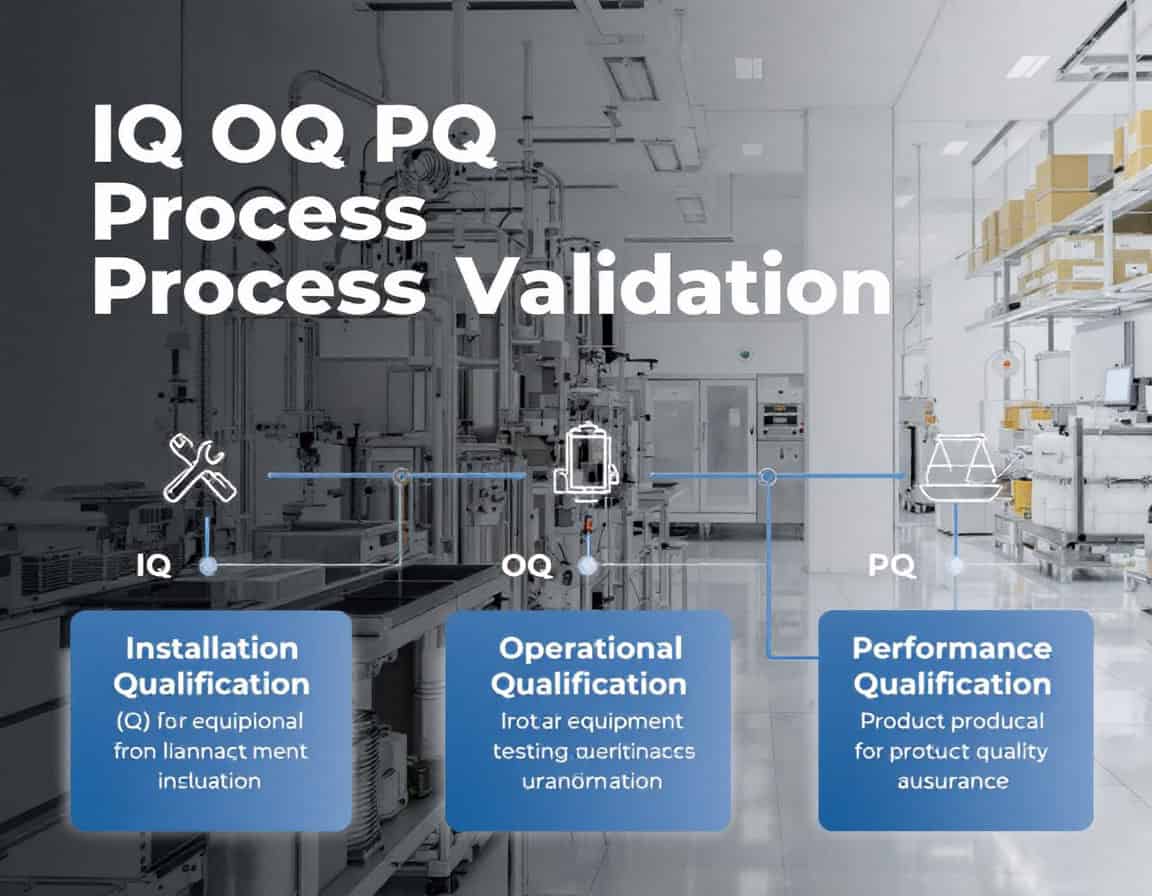
The IQ OQ PQ process validation methodology, standing for Installation Qualification (IQ), Operational Qualification (OQ), and Performance Qualification (PQ) sequence constitutes the established framework for process validation, serving as the systematic generation of documented evidence that a manufacturing process is in a state of control. This methodology follows a deliberate and logical progression, beginning with the static, documented verification that equipment is installed correctly (IQ), moving to the dynamic confirmation that the equipment operates reliably across its specified ranges (OQ), and culminating in the demonstration that the integrated process consistently produces product meeting all quality attributes (PQ).
この一連の手順は、商業利用に先立ち、そのプロセスが堅牢で再現性があり、意図された目的に適していることを客観的かつ追跡可能な形で証明するために設計されている。
この方法論は、医薬品、バイオ医薬品、および medical device 製造業においては、工程の一貫性が患者の安全に直接的に結びついています。この技術は初期研究には適用されず、工程開発が完了した後、日常的な商業生産が承認される前に実施される重要な検証段階に用いられます。
主なポイント

- 検証の出力は証拠であり、製品ではありません。
- 「最悪のケース」のOQテストでは、複数のストレス要因が組み合わされます。
- PQは、機器だけでなく、統合されたプロセスを検証する。
- 「3バッチ」ルールは再現性を示す。
- PQの成功は、単に仕様を満たすことではなく、一貫性によって定義される。
- The protocol is a contract; deviations しなければならない be justified and well-documented.
- サプライヤーの文書(FAT/SAT)を活用するが、自社のOQに取って代わるものではない。
- 検証はライフサイクルの開始を定義するものであり、プロジェクトの終了を定義するものではない。
- いかなる「同等品」の変更も正当化を必要とする。
- OQおよびPQの前提条件は人材育成である。
設置適格性確認(IQ)
設置適格性確認(IQ)は、IQ、OQ、PQプロセス検証方法論における最初の基礎段階です。これは、機器、システム、および付属コンポーネントが、製造元の推奨事項およびユーザーの設計仕様に完全に準拠して納入、設置、構成されていることを検証および確認する、正式に文書化されたプロセスです。
IQ(設置適格性確認)の基本原則は、設置が正しく行われ、その後の適格性確認段階に適した安全な環境が構築されていることを文書で証明することです。
IQの目的と重要性: IQ(初期適格性確認)の主な目的は、機器の妥当性検証のための基準値を確立することです。運用テストを開始する前に、機器が実際に設置され、正しく組み立てられ、適切な環境に設置されていることを確認することが不可欠です。この段階により、不適切な設置に伴うリスクを軽減できます。不適切な設置は、機器の誤動作、製品の品質問題、および安全上の危険につながる可能性があります。
設置資格取得における主要な段階と活動
IQプロセスは体系的で、いくつかの詳細な段階から構成されており、通常は事前に承認された手順書とチェックリストに基づいて管理されます。
1. 設置前の準備と計画
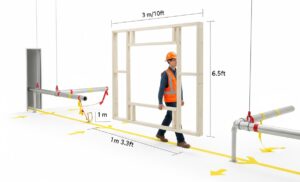
機器が到着する前、あるいは発注される前から、IQプロセスは綿密な計画から始まります。これには以下が含まれます。
- サイトの準備状況確認: 指定された場所が新しい機器の設置に適した状態であることを確認する。これには、十分な床面積、構造的な支持力、および必要なユーティリティが適切な接続箇所で利用可能であることを確認することが含まれる。
- 環境条件: 設置環境が、温度、湿度、および清浄度に関して製造元の仕様を満たしていることを確認する。
- 資料収集: 購入注文書、製造元のマニュアル、設計仕様書、エンジニアリング図面、および統合計測機器の校正証明書など、必要なすべての文書を収集する。
ヒント: 実際に経路を歩いて、容積をモデル化してください。2D の平面図を見るだけではいけません。最も一般的でコストのかかる IQ の失敗はここで発生します。主要な関係者 (施設管理、エンジニアリング、およびベンダーのプロジェクト マネージャー) と一緒に、荷積みドックから最終設置場所までの計画された経路を実際に歩いてください。機械の最大高さ、幅、長さの寸法に合わせて作られたシンプルな木製または PVC 製のフレームを使用します。この「ゴースト」フレームを経路全体に沿って実際に運びます。これにより、図面では見落とされがちな、出入口、低い位置にあるパイプ、狭い角、エレベーターの容量などのクリアランスの問題が明らかになります。 また、床の耐荷重は最終地点だけでなく、輸送経路全体にわたって確認してください。
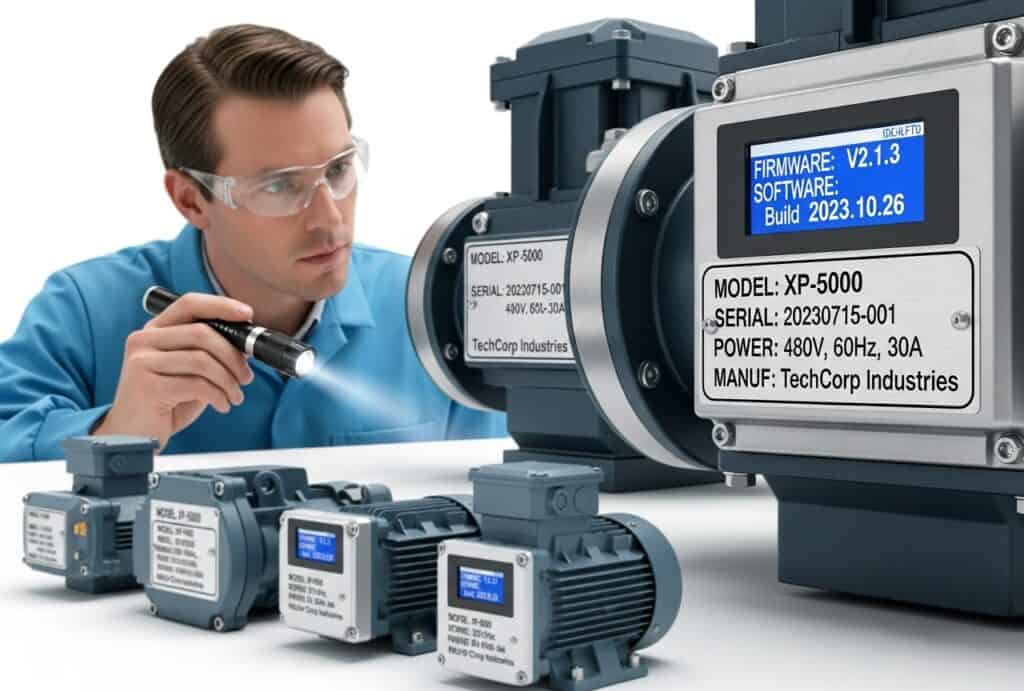
2. 機器の受領と確認
機器が納品されると、徹底的な検査が実施されます。
- コンポーネントの検証: 納品された商品は、梱包リストと発注書と照合して綿密にチェックされ、ソフトウェアを含むすべてのコンポーネントが受領され、注文した正しいモデルとバージョンであることを確認します。
- 損傷の検査: 輸送および取り扱い中に損傷が発生していないことを確認するために、目視検査が実施されます。
注記: IQ、OQ、PQ方式を採用しているほとんどの業界では、機器には適合証明書(CEマーク、FDAマークなど)、場合によってはその他の証明書、そして製造元独自の試験結果が添付されている必要があります。これらの書類は、物理的な製品そのものと同等の重要性を持つものとして扱われるべきです。実際、これらの書類が添付されていない、または事前に受領されていない場合(少なくとも検疫区域では)、納品を拒否する必要があります。
関連のヒント: 信頼はするが、ファームウェアは必ず確認する。梱包リストは最低限の項目に過ぎない。本当に注目すべきは、重要なコンポーネント、そして何よりもソフトウェアとファームウェアのバージョンだ。ベンダーは、あなたのプロセスで検証されていない、より新しい「優れた」バージョンを出荷する可能性がある。配達員が立ち去る前、そして出荷書類に署名する前に、すべての重要なコンポーネント(モーター、ポンプ、コントローラー)の銘板とメイン機器の銘板を高解像度で撮影する。可能であれば、コントローラーユニットのみの電源を入れて、起動画面に表示されるファームウェア/ソフトウェアのバージョンを確認する。これを、ユーザー要件仕様書(URS)または発注書に記載されているバージョンと照合する。後で不一致に対処するよりも、玄関先で出荷を拒否する方がはるかに簡単だ。
3. インストールと接続確認
これはIQプロセスの核心であり、物理的な設置状況が綿密に検証される部分である。

- 正しい組み立てと配置: 機器が製造元の指示書および設計図に従って組み立てられ、配置されていることを確認する。
- 公共設備の接続: これは、必須サービスへのすべての接続を確認する重要なステップです。これには、以下の事項の確認が含まれます。
- 電気: 電源が要求される電圧と位相に合致していること、および適切な接地と安全回路が設置されていることを確認する。
- 配管工事: 給水、蒸気、排水のための接続部は、正しく設置され、漏れがなく、適切な材料で作られている。
- ガスおよび圧縮空気: すべての空気圧およびガスラインが正しく接続されており、 プレッシャー 品質は仕様を満たしている。
- 補助機器: 補助機器や周辺機器も正しく設置・接続されていることを確認する。
- ソフトウェアのインストール: コンピュータ制御システムの場合、これにはソフトウェアが正しくインストールされていることを確認することが含まれます。 コミュニケーション ハードウェアが整備され、アクセス制御も導入済みです。
ヒント: 図面をリアルタイムで赤線で修正してください。配管計装図(P&ID)や電気図面が最終的な設置状況を100%正確に表していると決して思い込まないでください。ベンダーの設置業者は必ず現場で軽微な調整を行います。自社のエンジニアまたは資格のある技術者を派遣し、公式図面と赤ペンを持ってベンダーの設置業者に同行させてください。設置業者が接続作業を行う際、エンジニアは各ライン(パイプ、電線管、ケーブル)を物理的にトレースし、図面からの逸脱箇所を直接図面にマークする必要があります。この「竣工図」の赤線入り図面は、非常に貴重な資料となります。IQ(設置品質検査)の最後に、この赤線入り図面をスキャンして、実際の設置状況の公式記録としてください。これは、将来のトラブルシューティング、メンテナンス、監査において非常に役立ちます。
4. 文書化と記録管理

IQプロセス全体を通して、綿密な文書化が極めて重要です。これには以下が含まれます。
- シリアル番号の記録: 主要機器およびすべての重要部品のシリアル番号と型番を記録する。
- ドキュメントパッケージのコンパイル: マニュアル、図面、校正記録、完了したIQプロトコルなど、関連するすべての文書を収めたバインダーまたは電子フォルダを作成する。
- 保守および校正スケジュールを確立する: 製造元が推奨する定期メンテナンスおよび校正のスケジュールを設定し、文書化する。
ヒント: あなたの主な目標は、機器の永久バインダーまたはデジタル記録を 製品ライフサイクル 管理 (PLM) または品質管理システム (QMS) を唯一の真実の情報源とします。IQ を開始する前に、システム内の機器の固有の資産レコードを作成します。ベンダー証明書から署名済みのプロトコルページまで、各ドキュメントが生成されるたびに、すぐにスキャンしてアップロードし、この中央資産レコードに直接リンクします。このプラクティスは、単なるアーカイブを超え、管理された権威ある資産レコードを作成します。 デジタルツイン 機器の導入当初からのドキュメントをすべて収集します。最終的なIQパッケージは、システムの電子署名ワークフローを使用してレビューと承認のために送付します。これにより、安全でコンプライアンスに準拠した監査証跡が確保されます。さらに重要なのは、IQドキュメントを他のエンタープライズシステムにリンクすることで、リレーショナルモデルを構築することです。
5.最終IQレポートおよび承認

このような業界では特に複雑な手順は必要ありません。すべてのチェックが完了すると、最終的なIQレポートが作成されます。このレポートには、実施された活動の概要、文書化された証拠、発見された逸脱や不一致の詳細、それらの解決方法、そして機器が設置適格性確認(IQ)に合格したかどうかの結論が記載されます。その後、このレポートは品質保証部門などの担当者によってレビューされ、正式に承認されることで、IQフェーズが正式に終了し、運用適格性確認(OQ)の開始が許可されます。
ヒント: treat deviations as evidence of a robust System, not as a failure. The goal of IQ is not to have a “perfect” run with no deviations. The goal is to truthfully document the as-installed state. A well-managed deviation is a sign of a healthy and transparent quality system. When a discrepancy is found, document it immediately as a planned deviation within the IQ protocol. Then, lead a formal risk assessment. Could it be creating a corrective action to replace the part before OQ begins or different approach? Documenting this entire process in the final IQ report shows auditors that your system is meticulous, risk-based, and in control.
Operational Qualification (OQ)
Moving from the static verification of Installation Qualification, we now enter the dynamic testing phase of Operational Qualification (OQ). It is a formal, documented series of tests designed to prove that the equipment and its subsystems operate as intended throughout their specified operating ranges.
Where IQ confirms the equipment is installed correctly, OQ confirms it works correctly.
This phase is crucial for providing documented evidence that the system’s functions are reliable and under control before introducing actual product or complex manufacturing processes.
Purpose and importance of OQ: the primary goal of OQ is to challenge and verify every critical function of the equipment in isolation. This systematic testing ensures that all controls, alarms, indicators, and operational mechanisms perform according to their design specifications. By testing the equipment’s capabilities at the limits of its operating parameters (e.g., fastest/slowest speed, highest/lowest temperature), OQ establishes a robust operational envelope. A successful OQ provides high confidence that the equipment itself is not a source of variability and will perform predictably, which is a prerequisite before evaluating the overall manufacturing process in the Performance Qualification (PQ) phase.
Key Stages and Activities in Operational Qualification
OQ is driven by a detailed, pre-approved test protocol. This protocol outlines each test case, the method for execution, and the pre-defined acceptance criteria that constitute a pass or fail.
1. Test Protocol Development

Before any testing begins, a comprehensive OQ protocol is written and approved by key stakeholders (e.g., Engineering, Validation, Quality Assurance, and the System Owner). This document includes:
- A reference to the successfully completed IQ.
- A list of all critical functions to be tested.
- Step-by-step test procedures.
- The specific, measurable, and unambiguous acceptance criteria for each test.
- A list of calibrated test equipment required (e.g., certified tachometer, calibrated temperature probes).
ヒント: co-author with the operator and group your tests logically. Do not write the OQ protocol in an engineering vacuum. The person who will operate the equipment daily has invaluable, nuanced knowledge. Sit with a senior operator and review your test plan. He will quickly identify tests that are impractical, out of sequence, or missing a critical real-world step. Furthermore, structure your protocol not by component, but by function. Group all HMI screen navigation tests together, all モーター start/stop/speed tests together, and all alarm acknowledgment tests together.
2. Functional and Control System Testing

This forms the core of OQ execution. Each function is tested individually to confirm its correct operation. Examples include:
- Controls: verifying that every button, switch, and Human-Machine Interface (HMI) command performs its intended action (e.g., pressing “Start” begins the cycle, adjusting a speed setting on the HMI accurately changes motor RPM).
- Motors and actuators: testing start/stop sequences, speed controls, and directional controls.
- Heaters, coolers, and sensors: confirming the system can accurately reach and maintain temperature, pressure, or other critical setpoints. This often involves using external, calibrated sensors to verify the equipment’s own display.
ヒント: don’t trust the screen; bring your own calibrated instruments. The most common OQ mistake is treating the equipment’s own display as the source of truth. The HMI screen showing “150.0°C” is not proof of temperature; it’s proof that the controller is requesting that temperature. The purpose of OQ is to verify the physical reality. Always use external, independently calibrated measurement tools to verify critical parameters.
3. Alarm and Interlock Verification

This is a critical step to ensure both プロセス制御 and operator safety. Each alarm and safety feature is deliberately triggered to verify its function.
- Alarms: simulating a failure condition (e.g., opening a door during operation, creating an over-temperature condition) to confirm that the corresponding visual and audible alarms activate correctly.
- Safety interlocks: testing features like emergency stops (E-stops) to ensure they immediately and safely halt equipment operation. Verifying that guard door interlocks prevent the machine from running when a safety door is open.
ヒント: test the consequence, not just the trigger. A novice tests if an alarm light turns on. An expert tests that the alarm performs its intended protective action and that the system enters a safe, predictable state. Don’t just open a guard door to see if a siren sounds; verify that the drive motor’s power is immediately cut and that it cannot be restarted until the door is closed and the system is formally reset.
4. “Worst-Case” or Edge-of-Range Testing

OQ is not just about testing at normal operating setpoints. It involves pushing the equipment to the defined limits of its operational parameters, that will happen in real production conditions.
Example: For a variable-speed mixer, testing would be performed not just at the typical 100 RPM, but also at its minimum specified speed (e.g., 20 RPM) and its maximum specified speed (e.g., 500 RPM). This demonstrates that the equipment is capable and stable across its entire validated range. This testing is often referred to as “challenging the operating envelope'#8220;。
ヒント: combine parameters and test for dwell time stability. “Worst-case” is rarely a single parameter at its limit. True worst-case testing involves challenging the system with a combination of conditions and holding it there. Don’t just test the maximum heater temperature. Test the max temperature while the main motor is running at its maximum speed and hold those conditions for a sustained period (e.g., 30-60 minutes). This is how you find the real breaking points.
This is where, in any IQ OQ PQ, a validation expert truly earns their keep, by designing tests that find the breaking points of a system in a controlled way.
A novice tests single parameters at their limits; an expert understands that true failure modes often appear at the intersection of multiple stressors.
Below are examples of “worst-case” parameter combinations for OQ across various processes and equipment types. These are typical examples only; your case must be adapted according to exact product, usage, conditions … For each machine, there is likely more than one extreme case, despite our examples.
Autoclave sterilization Maximum permissible load density (e.g., chamber packed with the densest surgical tool kits) + Lowest validated temperature setting + Longest validated cycle time. This doesn’t just test if the chamber can get hot. It challenges the system’s ability to achieve heat penetration into the most difficult-to-sterilize load. It also puts maximum sustained ストレス on the chamber, plumbing, and steam generator, revealing potential weaknesses in thermal stability or component fatigue that a short, empty cycle would miss. | CNC machining center Hardest specified workpiece 合金 (e.g., Inconel) + Maximum spindle RPM + Maximum tool feed rate + A toolpath program with the highest density of rapid directional changes. This combination creates the highest possible stress on the entire machine. It tests for motor torque sag, spindle bearing vibration, ball screw accuracy under extreme load, and the controller’s ability to process a dense block of Gコード without stuttering. It’s a test of mechanical rigidity and computational power simultaneously. |
 | High-speed liquid filling line Fastest line speed + Tallest and narrowest container type (most unstable) + Product at its lowest specified 粘度 (most likely to splash or foam). This challenges the entire integrated system’s timing and stability. It tests the filler nozzles’ cut-off precision to prevent drips, the star wheels’ and guide rails’ ability to handle unstable containers without tipping, and the check-weigher’s and rejection station’s ability to function accurately at maximum throughput. |
Robotic pick-and-place arm Maximum payload weight + Farthest horizontal and vertical reach points (maximum moment arm) + Highest programmed acceleration and deceleration values. This tests the system under the highest possible inertial load. It’s designed to reveal servo motor overshoot, arm deflection (whipping), vibration at the endpoint, and the positional accuracy of the encoders when the mechanical system is under the most strain. | Chromatograpy skid for biopharma Maximum specified flow rate + Highest viscosity buffer solution + Executing the steepest possible gradient change (e.g., 0% to 100% Buffer B in the minimum possible time). This creates a “pressure shock” scenario. It tests the pumps’ ability to maintain accurate flow against a sudden increase in system backpressure and verifies the gradient proportioning valves can respond instantly and accurately under the highest differential pressure. It finds weaknesses in ポンプ seals and valve diaphragms. |
Environmental stability chamber Fastest possible temperature and humidity ramp rate (e.g., from -20°C/10% RH to +70°C/95% RH) + A full load of product placebo. This challenges the absolute limits of the refrigeration, heating, and humidification systems’ capacity. The full load acts as a thermal ballast, making it harder for the chamber to meet its ramp rate. This test reveals if the system can perform under load, not just when empty, and tests the controller’s ability to manage setpoints without significant overshoot. |  |
Tablet press Maximum turret speed + Maximum main compression force + Using a placebo formulation known to be “sticky” or have poor flow characteristics. This simulates the most challenging production scenario. It tests the feeder’s ability to maintain a consistent die fill with difficult powder, the clutch’s ability to handle force spikes without slipping, and the punch heads’ and cams’ resistance to wear under maximum strain. It also challenges the tablet take-off and rejection system to function flawlessly at high speed. | Computerized vision inspection system Maximum conveyor/part feed speed + Parts containing the smallest allowable defect + Lowest permissible lighting condition. This pushes the camera, lens, and software to their limits. It tests if the camera’s shutter speed is fast enough to avoid motion blur, if the lens aperture can gather enough light in a worst-case scenario, and if the processing algorithm is fast and robust enough to find the tiniest flaw at the highest throughput. |
 | Lyophilizer (freeze dryer) A full load of vials containing the highest fill volume + Fastest freezing ramp + Fastest vacuum pull-down during primary drying. This creates the maximum possible water vapor load on the system. It challenges the refrigeration system’s ability to keep the condenser coils cold against a massive influx of sublimated ice and tests the vacuum pump’s capacity to maintain deep vacuum under the highest possible gas load, which is the primary bottleneck of any 凍結乾燥 cycle. |
Centrifuge Maximum RPM + The maximum allowable imbalance specified by the manufacturer (using a deliberately unbalanced test load) + Longest possible run time setting. This is a mechanical torture test. It verifies that the imbalance detection system will trip at the correct threshold without nuisance alarms. It also puts maximum stress on the drive spindle, bearings, and motor, testing for thermal stability and mechanical integrity over a sustained, high-stress period. | Water for Injection (WFI) distribution loop Lowest validated operating temperature (where microbial growth is a higher risk) + Opening all points-of-use simultaneously to create maximum flow demand. This tests the main circulation pump’s ability to maintain turbulent flow (a key factor in preventing biofilm) throughout the entire loop, even at the most distant point, during a period of maximum system demand. It verifies the system is hydraulically balanced and the pump is sized correctly. |
Blister packaging machine Maximum cycles per minute + Thickest, hardest-to-form polymer 膜 + Deepest draw blister pocket design. This combination puts the forming and sealing stations under maximum stress. It tests if the heaters can provide enough energy to soften the thickest film at high speed, if the compressed air system can provide enough pressure for a deep draw, and if the sealing station has enough dwell time and pressure to create a perfect seal under these challenging conditions. |  |
5. Verification of Computerized Systems and Data Integrity

For modern equipment, this is a non-negotiable part of OQ and part of legal requirements in some industries.
- User access control: verifying that different user levels (e.g., Operator, Supervisor, Administrator) have the correct permissions and that unauthorized users cannot perform critical functions.
- Audit trails: confirming that the system accurately records all critical actions, changes to setpoints, and alarms, logging the user, date, and time (as required by regulations like 21 CFR Part 11).
- Data handling: testing data backup, recovery, and archiving functions to ensure process data is secure and cannot be lost or altered.
ヒント: be the malicious user and verify the ‘Before and After’ in audit trails. Don’t just follow the happy path. Actively try to break the system’s logic. Use an operator-level login and try to execute an administrator-level function. Try to enter letters into a numeric-only field. For audit trails, the gold standard is not just verifying that an entry is created, but that it contains the critical context: Parameter, Original Value, New Value, User ID, and Timestamp.
6. Final OQ Report and Approval
As for the IQ, after all tests are executed, a final OQ report is compiled. This report summarizes the results, explicitly stating whether each test passed or failed its acceptance criteria. Any deviations encountered during testing are documented, investigated, and resolved with a clear rationale. The conclusion of the report makes a definitive statement: the equipment has successfully passed Operational Qualification and is now ready to proceed to the final stage, Performance Qualification (PQ). This report is formally reviewed and approved, officially closing the OQ phase.
Performance Qualification (PQ)
Performance Qualification (PQ) is the final stage of the IQ OQ PQ validation methodology. It is the documented process of demonstrating that a manufacturing process, operating within its established parameters, consistently and reproducibly produces a product that meets all its pre-determined quality specifications. PQ moves beyond the isolated equipment and challenges the entire integrated system—combining the qualified equipment, the actual raw materials, the approved procedures, and trained personnel—under real-world, routine production conditions.
The ultimate goal of PQ is to answer the definitive question: “Can we consistently make a quality product?“
While OQ proved the equipment works, PQ proves the process works.
This phase provides the final, tangible evidence required by regulatory agencies like the FDA that the manufacturing process is robust, in a state of control, and capable of reliably delivering a safe and effective product. A successful PQ is the capstone of the validation effort and is the final gate before a process is approved for commercial manufacturing. It provides the baseline data that will be used for ongoing process monitoring throughout the product’s lifecycle.
Key Stages and Activities in Performance Qualification
PQ is executed against a comprehensive, pre-approved protocol that details the entire plan, from the number of runs to the specific quality attributes to be tested.
1. PQ Protocol Development
The PQ protocol is the master plan for the validation effort. It is a detailed document that must be approved by the cross-functional validation team (e.g., Quality, Manufacturing, Engineering, R&D) before execution. Key contents include:
- Reference to IQ/OQ: a statement confirming the successful completion of the prerequisite IQ and OQ for all relevant equipment.
- Number and size of batches: specifies the number of consecutive, successful production runs required. The industry standard is typically three, as this demonstrates reproducibility and ensures a single successful run wasn’t an anomaly. The batch size must be representative of the intended commercial scale.
- Critical Process Parameters (CPPs): lists all process parameters that are critical to product quality (e.g., mixing time, temperature, compression force) and their proven acceptable ranges, which were established during process development and OQ.
- Critical Quality Attributes (CQAs): defines all the physical, chemical, biological, and microbiological attributes of the final product that must be controlled to ensure the desired quality. This includes the test methods and their strict acceptance criteria (specifications).
- Sampling plan: a detailed plan outlining what will be sampled, how it will be sampled, how many samples will be taken, and from where and when during the process (e.g., beginning, middle, end of a batch; top, middle, bottom of a blender).
2. Execution of Production Runs (The PQ Batches)

This is the practical execution phase where the process is run under conditions that are as close to routine manufacturing as possible.
Real-World Conditions: PQ must use the final, approved versions of all inputs:
- Raw materials: from qualified vendors, meeting all release specifications.
- Personnel: executed by fully trained production operators, not just engineers or scientists.
- ドキュメント: using the final, approved Standard Operating Procedures (SOPs) and Master Batch Records.
- Environment: conducted in the actual production facility with qualified utilities.
(see below the dedicated chapter on the “Three Batch” rule)
3.vIntensive In-Process and Final Product Testing

During and after each PQ run, the product is subjected to a level of scrutiny far greater than what will occur in routine quality control.
- In-process Controls (IPCs): critical parameters are tested at intermediate stages of the process (e.g., blend uniformity, granule moisture content, tablet hardness) to ensure the process is staying in control.
- Final product testing: a large number of samples from each batch are tested against all CQAs. For a pharmaceutical tablet, this could include tests for appearance, identity, assay (potency), content uniformity, dissolution, purity (impurities), and microbial limits. The goal is to prove both inter-batch consistency (the results from Batch 1, 2, and 3 are very similar) and intra-batch uniformity (the results from the beginning, middle, and end of a single batch are very similar).
4. Process Monitoring and Data Collection
Throughout each of the PQ runs, all identified CPPs are meticulously monitored and recorded to prove they were maintained within their specified ranges for the entire duration of the process. This provides the direct link between the controlled process parameters and the resulting high-quality product.
5. Data Analysis and Statistical Evaluation
The data from the PQ runs are compiled and statistically analyzed. It’s not enough for every result to simply “pass” the specification. The analysis must demonstrate a high degree of consistency and low variability. Statistical tools like mean, standard deviation, and relative standard deviation (RSD) are used to quantify the process’s stability and capability. This statistical evidence is a powerful testament to the robustness of the process.
6. Final PQ Report and Approval
Once all runs are complete and the data is analyzed, a final PQ report is written. This report:
- Summarizes the results of each PQ batch.
- Presents all the raw data and statistical analysis in a clear format.
- Documents any deviations that occurred, the investigation into their root cause, and the corrective actions taken. A significant, unexplained deviation in a PQ batch can invalidate the run and may require it to be repeated.
- Concludes with a definitive statement: the process has been successfully validated and is deemed capable of consistently producing a product that meets its pre-determined specifications.
Upon formal review and approval of this report, the process is now officially validated and released for routine commercial production.
Focus: the “Three Batch” Rule
The “Three Batch Rule” is the heart of validation practice versus regulatory theory.
It is a long-standing and deeply entrenched industry convention for the Performance Qualification (PQ) phase of process validation. It refers to the practice of manufacturing three consecutive, successful commercial-scale batches of a product to prove that the manufacturing process is controlled, consistent, and reproducible.
The rule applies specifically to PQ because this is the stage where the entire integrated process—qualified equipment (IQ/OQ), approved raw materials, trained personnel, and final procedures (SOPs)—is challenged under real-world conditions. A single successful batch could be a fluke; two could be a coincidence. Three consecutive successes provide the minimum level of objective evidence needed to demonstrate that the process is reliable and will consistently yield a product that meets all its pre-determined quality attributes. This is where the nuances are:
- It is NOT a “Nice-to-Have”: it is considered a fundamental baseline for process validation in regulated industries.
- It is NOT explicitly “Regulatory Law”: you will not find the phrase “three validation batches” written verbatim in the FDA’s Code of Federal Regulations (e.g., 21 CFR 211). The regulations are performance-based, stating that you must have documented evidence that your process is in a “state of control” and can be “reproduced”. The regulations wisely do not prescribe the exact number, as this could stifle innovation and risk-based approaches.
- It IS a “Mandatory” industry standard and regulatory expectation: the “Three Batch” rule has become the universally accepted and easiest-to-defend method for meeting the regulatory requirement of proving consistency. An auditor from any major agency (FDA, EMA, etc.) will arrive with the expectation of seeing data from three successful PQ batches.
In practice, it is mandatory. While not a literal law, deviating from this standard invites intense scrutiny from inspectors. You would need an exceptionally robust, pre-approved, and scientifically sound risk-based justification to validate a process with fewer than three batches. It is a powerful convention that has effectively become the default requirement. Choosing to do fewer than three batches is a significant business and compliance risk that must be formally defended.
When Might You Deviate? | |
| More than Three Batches: for highly complex or high-risk processes (e.g., sterile biologics, cell therapies) or processes with known high variability, a company may proactively decide to run five or more batches to generate a more robust data set. | Fewer than Three Batches: this is extremely rare and only considered in specific, well-justified situations such as for orphan drugs with very small annual production, or for very simple, low-risk processes. This approach must be documented in a formal risk assessment and agreed upon in the validation master plan. |
Alternatives Methodologies to IQ OQ PQ
While IQ OQ PQ is the gold standard in GxP-regulated environments, other industries use different, equally rigorous methodologies to achieve the same goal: ensuring a process is capable and in control. Only for information, below are five other process validation methodologies used as alternatives:
ASTM E2500 – A Risk-Based ApproachThis standard defines a modern framework, primarily for the pharmaceutical and biopharmaceutical industries, that focuses on a lifecycle and risk-based approach to verification. It emphasizes that equipment and systems should be “fit for intended use”. Instead of a rigid, sequential checklist, it starts with a risk assessment to identify Critical Quality Attributes (CQAs) and Critical Process Parameters (CPPs). Verification activities are then tailored to mitigate the identified risks. It heavily leverages supplier documentation and the knowledge of Subject Matter Experts (SMEs), promoting continuous verification throughout the equipment’s lifecycle rather than treating validation as a one-time event. | Commissioning and Qualification (C&Q) with FAT/SATC&Q is an engineering-centric methodology focused on verifying that all systems and components of a facility or process are installed, tested, and operate according to the design requirements. It includes Factory Acceptance Testing (FAT) at the vendor’s site and Site Acceptance Testing (SAT) after installation. C&Q is broader and often precedes or incorporates IQ/OQ. A significant portion of the testing (FAT) is front-loaded and performed before the equipment is even shipped, which is more efficient for finding and fixing issues. The SAT phase often covers the same ground as IQ and OQ, but it’s framed within a project management and engineering handover context. This is the standard in heavy industry, energy, and large-scale facility construction. |
 | 生産部品承認プロセス(PPAP)PPAP is the standardized framework required by the automotive and aerospace industries to ensure a supplier’s production process can consistently produce parts that meet the customer’s engineering design records and specifications. PPAP is an external-facing validation focused on the supplier-customer relationship. It is a comprehensive submission package containing 18 specific elements, including Failure Mode and Effects Analysis (FMEA), Measurement System Analysis (MSA), Control Plans, and initial プロセス能力 studies (Cpk, Ppk). It’s a much more prescriptive and holistic “binder of evidence” to formally approve a supplier for mass production.
|
Six Sigma Methodology (DMAIC/DMADV)DMAIC or DMADV are highly data-driven and statistical methodology for process improvement and validation. DMAIC (Define, Measure, Analyze, Improve, Control) is used for existing processes, while DMADV (Define, Measure, Analyze, Design, Verify) is used for new ones. Where IQ OQ PQ confirms a process meets a pre-defined state, シックスシグマ aims to optimize that state to a specific statistical level of quality (e.g., less than 3.4 defects per million opportunities). It is a continuous improvement framework rather than a discrete validation event. The “Control” phase of DMAIC is analogous to the ongoing monitoring that follows a successful PQ, but it is defined by statistical process control (SPC) charts. | Agile Methodologies with Continuous Integration/Continuous Deployment (CI/CD)CI/CD is the standard for modern software development. Instead of one large validation event at the end, validation is automated and integrated into every small change of the code. This is the antithesis of the linear “waterfall” approach of IQ OQ PQ. Every time a developer submits new code, an automated pipeline builds the software and runs a suite of tests (unit, integration, regression). This means the “process” of creating the software is being continuously validated in small, rapid cycles, ensuring the system remains in a validated state at all times. |
結論

In regulated industries like pharmaceuticals and medical devices, the IQ OQ PQ sequence is the practical execution of process validation. IQ establishes the documented foundation that equipment is installed correctly, OQ provides evidence that the equipment’s individual functions perform reliably across their operating ranges, and the final phase, PQ, brings everything together—the qualified equipment, approved materials, and trained operators—to prove the overall process consistently and reproducibly manufactures a product that meets all its specifications.
Successfully completing this sequence provides the objective evidence that the process is in a state of control, a non-negotiable prerequisite for commercial manufacturing where product quality directly impacts patient safety.
This validation sequence is not a one-time event; it should formally be re-executed in whole or in part whenever significant changes are made to the equipment, materials, or process parameters, ensuring the system remains in a continuously validated state throughout its lifecycle.
Related Readings
- 検証マスタープラン(VMP): 企業の全体的な検証理念、範囲、責任、および検証対象となる具体的なシステムとプロセスを定義する、高レベルの戦略文書。
- ユーザー要求仕様書(URS): エンドユーザーと品質の観点から、機器またはプロセスがどのような機能を果たすことが期待されるかを詳細に記述した基本文書であり、その後のすべてのテストの基礎となる。
- 工場受入試験(FAT)および現場受入試験(SAT): エンジニアリング主導の事前テストは、多くの場合ベンダーと共同で実施され、出荷前(FAT)および設置後(SAT)に機器の機能性を検証するために活用でき、IQ/OQの効率化に役立ちます。
- コンピュータシステム検証(CSV): IQ、OQ、PQと並行して実施される専門的な検証手法であり、機器を制御するソフトウェアおよびコンピュータシステムの完全性、セキュリティ、信頼性に焦点を当てている。
- 21 CFR Part 11への準拠: 電子記録と電子署名に関するFDAの具体的な規制は、データの完全性、監査証跡、およびアクセス制御を確保するためのCSVの重要な構成要素である。
- 洗浄検証: a sometimes separated but related validation process performed on the same equipment to prove that a cleaning procedure can effectively and consistently remove product residues, cleaning agents, and microbial contamination (we strongly recommend to include it in the IQ OQ PQ protocol, as the cleaning status is an integral part of the product and process performances).
- 計測システム分析(MSA)/ゲージR&R: 試験方法自体を検証するために使用される統計的手法であり、製品の品質を判断するために使用される測定システムが正確、精密、再現性、および反復性を持つことを保証する。
- リスクベースの検証(FMEA/HACCPを使用): 製品品質に対する潜在的な故障モードとリスクを特定するための方法論であり、検証作業を最も重要なプロセスパラメータ(CPP)に集中させることを可能にする。
- 重要品質特性(CQA)および重要プロセスパラメータ(CPP): 望ましい製品品質を確保するために管理しなければならない、具体的かつ明確に定義された製品特性(CQA)とプロセス変数(CPP)であり、これらはPQの受入基準を構成する。
- Process Capability Analysis (Cpk/Ppk): PQデータに対して実施される統計分析は、プロセスが仕様限界内にどれだけ適切に収まっているか、またどれだけの変動性があるかを定量化し、その「能力」の数値スコアを提供する。
- 継続的プロセス検証(CPV): 現代の「ステージ3」プロセスバリデーションでは、プロセスが常に管理された状態にあることを保証するために、日常的な生産中にプロセスパラメータと品質特性を継続的に監視します。
- 変更管理: 検証済みのシステムまたはプロセスに対する提案された変更を評価、文書化、承認するための正式な品質システム手順であり、意図せず検証済みの状態から逸脱しないようにするためのもの。
- 逸脱および是正措置管理: 検証中または検証後に発生する予期せぬ事象や障害について、調査、根本原因の特定、および是正措置と予防措置の実施を行うためのシステム。
- 遡及的検証: 既存の検証されていないプロセスから得られた過去の生産データを分析して、そのプロセスが管理された状態で稼働していたことを証明しようとする、時代遅れの検証手法。現在ではほとんど受け入れられていない。
- 検証概要レポート(VSR): 最終的な決定文書であり、検証作業全体(IQ、OQ、PQ)を要約し、主要な結果を示し、逸脱事項に対処し、システムまたはプロセスが検証済みであり、商用利用に適していることを正式に宣言するものです。
よくある質問
IQ、OQ、PQの違いは何ですか?
IQ(設置適格性確認)は、機器が仕様どおりに納入、設置、接続されたことを証明します。OQ(動作適格性確認)は、機器が指定された動作範囲全体で正常に動作することを証明します。PQ(性能適格性確認)は、実際の材料、作業者、手順を用いた完全なプロセスによって、仕様を満たす製品が一貫して製造されることを証明します。
IQ、OQ、PQはどのような順序で実施されますか?
手順は、各段階が前の段階に依存しているため、この順序で行われます。IQが承認されるとOQが開始され、OQが承認されるとPQが開始されます。シンプルな機器の場合、必要なチェックがすべて実施されている限り、IQとOQを1つの文書にまとめるなど、統合されたプロトコルも正当な理由があれば受け入れられます。
IQ OQ PQはFDAによって義務付けられていますか?
検証は必要ですが、IQ、OQ、PQというラベルは必須ではありません。FDAの2011年プロセスバリデーションガイダンスでは、3つの段階(プロセス設計、プロセス適格性評価、継続的なプロセス検証)とPPQという用語を使用しています。EU GMP 付属書15では、DQ、IQ、OQ、PQが挙げられています。医療機器メーカーは、2026年2月2日に発効するFDA QMSRに従います。 ISO 13485.
PQには3バッチ必要ですか?
規制ではその回数を3回と定めていません。FDAのガイダンスでは、リスクに基づいて統計的な信頼性を示すのに十分なデータを求めています。3回連続で成功することは、長年の業界慣習であり、監査で弁明しやすい条件です。
OQとPQの違いは何ですか?
OQ(運用品質)は、通常、試験材料を用いて、動作範囲全体にわたって機器を単独でテストし、制限値やアラームも確認します。PQ(生産品質)は、生産材料、訓練を受けた作業員、承認された手順を用いて全工程を実行し、出力が品質特性を満たしていることを確認します。
URSとは何ですか?また、なぜ最初に提示する必要があるのですか?
ユーザー要求仕様書(またはそれに相当するもの)には、ユーザーと品質の観点から、機器またはプロセスが満たすべき要件が明記されています。サプライヤーの選定、およびIQ、OQ、PQにおけるすべてのテストは、この仕様書に基づいています。仕様書がなければ、適合性を判断する基準がありません。
FATとSATはIQとOQにどのように関係しているのでしょうか?
FATは出荷前にサプライヤーのサイトで行われるテストであり、SATは設置後に貴社サイトで行われるテストです。これらのテスト結果は、貴社の品質システムに基づいてレビューされていれば、IQおよびOQにおける繰り返しテストを削減できますが、貴社独自のOQに取って代わるものではありません。
OQにおける最悪ケーステストとはどういう意味ですか?
ここが難しいところで、専門家の力が必要なのです。一度に1つのパラメータだけをテストするのではなく、複数のパラメータの組み合わせを限界値までテストし、その状態を維持する必要があるのです。例えば、モーターが最大速度で30分から60分間運転している間のヒーターの最大温度などです。故障は、このような組み合わせでのみ発生することが多いのです。
機器の再認定はいつ行う必要がありますか?
明らかなケースや業界特有のケースもありますが、多くの場合、ここは判断が難しい部分であり、専門家が介入して、機器の変更、移設、大規模な修理、新しい材料の使用、またはプロセスパラメータの変更など、重要な変更が検証済みの状態に影響を与えるかどうかを判断する必要があります。変更管理の下で文書化されたリスク評価に基づいて、IQ、OQ、またはPQの影響を受ける部分を繰り返します。
同等品への交換には再認定が必要ですか?
必ずしも完全な交換である必要はありません。変更管理の下で交換内容を文書化し、機能と仕様が同一であることを正当化し、リスク評価で求められているチェック(設置検証や校正など)を実行します。
IQにはどのような書類を添付すべきでしょうか?
発注書、取扱説明書、設計仕様書、図面、測定機器の校正証明書、CEマークやFDAマークなどの適合証明書、ソフトウェアおよびファームウェアのバージョン、設置チェックリスト。これらの書類が不足している場合は、納品を拒否したり、検疫措置を取ったりする正当な理由となります。
OQアラームおよびインターロックテストでは、何がチェックされますか?
すべてのアラームが設定値で作動し、すべてのインターロックが設計どおりに動作を停止または防止する(例えば、ドアが開いている場合や過熱状態の場合など)。これらの状態をシミュレートしてテストし、応答と到達した安全状態を記録する。
IQ、OQ、PQプロトコルは誰が作成し、承認するのですか?
通常、検証担当者またはエンジニアリング担当者が作成します。システムオーナーと品質保証担当者は、実行前にプロトコルを承認し、実行後に最終報告書を承認します。プロトコルがテスト開始前に承認されている場合にのみ、結果が有効となります。
OQまたはPQ中にテストが失敗した場合、どうなりますか?
通常は、逸脱として記録し、原因を調査し、影響を評価し、問題を修正し、影響を受けたテストを再度実施します。失敗した結果を上書きしてはいけません。この手順は契約のようなものなので、すべての逸脱には書面による正当化が必要です。
IQ、OQ、PQはソフトウェアやコンピュータシステムにも適用されますか?
はい。IQはインストールと構成を検証し、OQは機能、アクセス制御、アラーム、データ整合性をテストし、PQはシステムが実際の運用条件下で正しく動作することを確認します。規制対象プロセスを制御または記録するソフトウェアについても、同様の手順が用いられます。
IQ、OQ、PQの代替となるものは何ですか?
その他にも、ASTM E2500(医薬品におけるリスクベース検証)、FATおよびSATを用いたコミッショニングと適格性評価、自動車におけるPPAP、シックスシグマDMAICまたはDMADV、ソフトウェアにおけるCI/CDパイプラインなどがあります。最適なものは、業界や規制当局または顧客の要求によって異なります。
用語集
American Society for Testing and Materials (ASTM): an international standards organization that develops and publishes voluntary consensus technical standards for materials, products, systems, and services, aimed at improving quality and safety across various industries.
Code of Federal Regulations (CFR): アメリカ合衆国の連邦機関が発行する一般規則および恒久規則をまとめたもので、主題別に50のタイトルに分類されており、連邦規則の公式な法的情報源として機能する。
Computer Numerical Control (CNC): プログラムされたコンピュータソフトウェアを使用して工作機械を制御する製造プロセスであり、フライス加工、穴あけ加工、旋削加工などの作業において精密な動作と操作を可能にし、生産における自動化と精度を向上させる。
Computer Numerically Controlled (CNC): プログラムされたコンピュータソフトウェアを使用して工作機械を制御する製造プロセスであり、材料の切断、フライス加工、穴あけ、彫刻などの作業を正確かつ自動的に行うことを可能にする。
Continuous Integration/Continuous Deployment (CI/CD): コード変更の統合と本番環境へのデプロイを自動化するソフトウェア開発手法。これにより、頻繁なアップデート、迅速な納品、そして自動テストと監視による開発チームと運用チーム間のコラボレーションの向上が可能になります。
Continuous Integration/Continuous Deployment (CICD): コード変更の統合と本番環境へのデプロイを自動化するソフトウェア開発手法。これにより、頻繁なアップデートが可能になり、自動テストとデリバリーパイプラインを通じて統合上の問題を軽減します。
Corrective Action and Preventative Action (CAPA): a systematic approach to identifying, investigating, and addressing nonconformities and potential issues to prevent recurrence and ensure compliance with regulatory standards in quality management systems.
Corrective and Preventive Action (CAPA): 不適合を特定、調査、対処するための体系的なアプローチにより、再発を防止し、潜在的な問題を排除し、規制基準への準拠とプロセスおよび製品の継続的な改善を確保する。
Cost and Freight (CFR): 輸送契約とは、売主が指定された港まで商品を配送するための輸送費と運賃を負担し、買主は商品が船舶に積み込まれた後の保険および費用に関するリスクと責任を負うという契約である。
Critical Control Points (CCP): specific stages in a process where control can be applied to prevent, eliminate, or reduce food safety hazards to acceptable levels. Identifying these points is essential for effective hazard analysis and critical control management in food production systems.
current Good Manufacturing Practice (cGMP): a system ensuring that products are consistently produced and controlled according to quality standards, encompassing regulations and guidelines for manufacturing processes, facilities, equipment, and personnel to ensure safety, quality, and efficacy in pharmaceuticals, food, and other regulated industries.
Defects Per Million Opportunities (DPMO): 品質管理で使用される指標で、エラー発生機会100万回あたりのプロセスにおける欠陥数を定量化するものであり、欠陥数をエラー発生機会の総数で割り、100万を掛けることで算出される。
Define Measure Analyze Improve Control (DMAIC): シックスシグマで用いられる、プロセス改善のためのデータ駆動型品質戦略であり、問題の特定、現状のパフォーマンスの測定、原因特定のためのデータ分析、分析結果に基づくプロセスの改善、そして改善を持続させるための将来のパフォーマンス管理という5つの段階から構成される。
Define, Measure, Analyze, Design, Verify (DMADV): シックスシグマで用いられるデータ駆動型の手法で、新しいプロセスや製品の開発に活用される。プロジェクト目標の定義、要件の測定、選択肢の分析、ソリューションの設計、そして結果の検証を行い、品質と性能基準が満たされていることを確認する。
Define, Measure, Analyze, Improve, Control (DMAIC): a data-driven quality strategy used in Six Sigma for process improvement, consisting of five phases: defining the problem, measuring current performance, analyzing data to identify causes, improving processes based on findings, and controlling future performance to sustain improvements.
Design Validation (DV): 製品が規定された要件と意図された用途を満たしていることを、試験と評価を通じて保証するプロセスであり、設計がその目的を果たし、実際の使用環境において正しく機能することを確認するものである。
Failure Mode and Effects Analysis (FMEA): a systematic method for evaluating potential failure modes within a system, process, or product, assessing their effects on performance, and prioritizing risks to improve reliability and safety through corrective actions.
Food and Drug Administration (FDA): a federal agency of the United States Department of Health and Human Services responsible for regulating food safety, pharmaceuticals, medical devices, cosmetics, and tobacco products to ensure public health and safety through scientific evaluation and enforcement of compliance standards.
Good Manufacturing Practice (GMP): a system ensuring products are consistently produced and controlled according to quality standards, minimizing risks involved in pharmaceutical production and related industries. It encompasses guidelines for manufacturing processes, facility conditions, personnel qualifications, and documentation practices to ensure product safety and efficacy.
Hazard Analysis and Critical Control Points (HACCP): a systematic approach to food safety that identifies, evaluates, and controls hazards at critical points in the production process to prevent foodborne illnesses and ensure product safety.
Installation Qualification (IQ): 設備やシステムが仕様書に従って設置されていることを検証するための文書化されたプロセス。これには、ユーティリティ、環境条件、設計要件への準拠の評価が含まれ、運用資格取得に向けた準備が整っていることを保証する。
International Organization for Standardization (ISO): a non-governmental international body that develops and publishes standards to ensure quality, safety, efficiency, and interoperability across various industries and sectors, facilitating global trade and cooperation. Established in 1947, it comprises national standardization organizations from member countries.
Measurement System Analysis (MSA): 測定プロセスおよび測定機器の正確性、精度、信頼性を評価するために用いられる統計的手法であり、収集されたデータが品質管理およびプロセス改善における意思決定のために有効かつ一貫性があることを保証する。
Operational Qualification (OQ): a validation process that ensures equipment or systems operate according to specified requirements within defined limits, confirming that they perform as intended in their operational environment.
Performance Qualification (PQ): a process that verifies a system or equipment operates according to specified requirements under real-world conditions, ensuring it consistently performs its intended function within predetermined limits.
Process Capability Index (Cpk): プロセスが指定された範囲内でどれだけうまく出力を生成できるかを定量化する統計的指標であり、プロセスの平均値と最も近い仕様限界との関係を、プロセスの変動性を考慮して調整したものである。
Process Performance Index (Ppk): プロセスが仕様限界をどの程度満たしているかを定量化する統計的指標であり、プロセスの平均値と標準偏差を用いて算出される。これは、ばらつきと中心値の両方を考慮した上で、プロセスが定義された限界内で出力を生産できる能力を示す。
Product Lifecycle Management (PLM): 製品のライフサイクルを、構想段階からエンジニアリング設計、製造、サービス、廃棄に至るまで体系的に管理するアプローチであり、人材、プロセス、データ、テクノロジーを統合することで、製品品質の向上、市場投入までの時間の短縮、関係者間の連携強化を図る。
Production Part Approval Process (PPAP): 製造業において、量産前にサプライヤーが品質要件を満たしていることを確認するために用いられる標準化された手順であり、設計仕様、プロセス能力、および生産サンプルの文書化と検証を含み、顧客の期待に適合していることを確認する。
Quality Management System (QMS): 製品およびサービスの一貫した品質を確保し、継続的な改善を促進し、顧客および規制要件を満たすことを目的とした、プロセス、手順、および責任の構造化されたシステム。
Quality Management System Regulation (QMSR): 製品やサービスの品質の一貫性を確保することを目的とした、方針、プロセス、手順の枠組み。通常、顧客満足度の向上と業界標準への準拠を目的として、規制機関によって義務付けられる。
Revolutions Per Minute (RPM): 物体が固定軸を中心に1分間に何回転するかを示す測定単位。モーター、エンジン、その他の回転機械の速度を定量化するためによく用いられる。
Standard Operating Procedure (SOP): a set of step-by-step instructions created to help workers carry out routine operations consistently and efficiently, ensuring compliance with regulations and quality standards.
Statistical Process Control (SPC): a method of quality control that employs statistical techniques to monitor and control a process, ensuring it operates at its full potential by identifying variations and maintaining consistent output within specified limits.
User Requirement Specification (URS): システムまたは製品に対するユーザーのニーズと期待を詳細に記述した文書であり、開発を導き、ユーザーの目標との整合性を確保するために、機能要件と非機能要件を概説する。
External Links on IQ OQ PQ Process Validation
国際規格
(リンクにカーソルを合わせると、コンテンツの説明が表示されます)