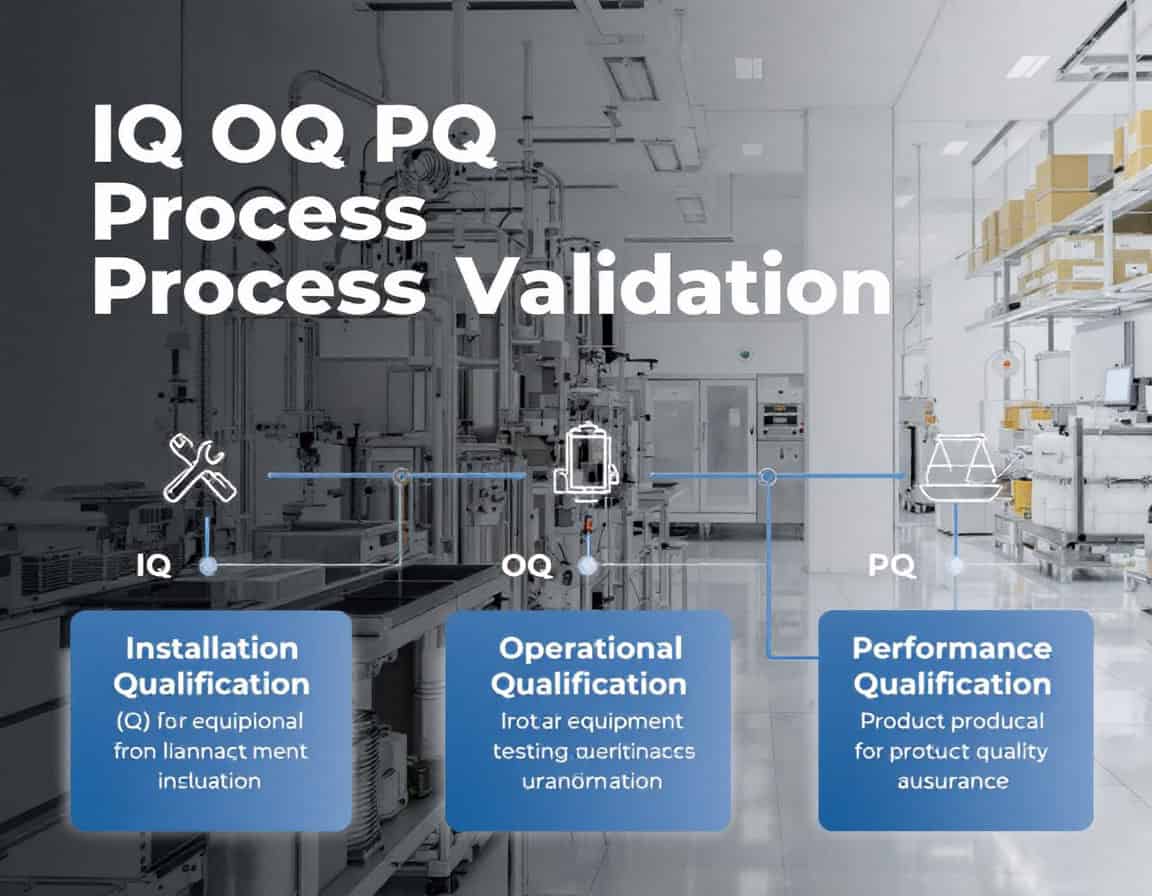
The IQ OQ PQ process validation methodology, standing for Installation Qualification (IQ), Operational Qualification (OQ), and Performance Qualification (PQ) sequence constitutes the established framework for process validation, serving as the systematic generation of documented evidence that a manufacturing process is in a state of control. This methodology follows a deliberate and logical progression, beginning with the static, documented verification that equipment is installed correctly (IQ), moving to the dynamic confirmation that the equipment operates reliably across its specified ranges (OQ), and culminating in the demonstration that the integrated process consistently produces product meeting all quality attributes (PQ).
이 모든 과정은 상업적 사용 전에 해당 공정이 견고하고 재현 가능하며 의도된 목적에 적합하다는 객관적이고 추적 가능한 증거를 제공하기 위해 설계되었습니다.
이 방법론은 제약, 생물학적 제제 등 cGMP의 적용을 받는 산업에서 필수적인 규제 요건입니다. medical device 제조 분야에서는 공정 일관성이 환자 안전과 직접적으로 연결됩니다. 이 기술은 초기 연구 단계가 아니라 공정 개발이 완료된 후, 그리고 해당 공정이 일상적인 상업 생산에 승인되기 전에 수행되는 중요한 검증 단계에 적용됩니다.
핵심 요약

- 검증의 결과물은 제품이 아니라 증거입니다.
- '최악의 경우' OQ 테스트는 여러 스트레스 요인이 복합적으로 작용하는 상황을 가정합니다.
- PQ는 장비뿐만 아니라 통합된 프로세스 전체를 검증합니다.
- '3배치' 규칙은 재현성을 입증합니다.
- PQ 성공은 단순히 사양을 통과하는 것이 아니라 일관성에 의해 정의됩니다.
- The protocol is a contract; deviations ~ 해야 하다 be justified and well-documented.
- 공급업체 문서(FAT/SAT)를 활용하되, 자체 OQ를 대체하지는 마십시오.
- 검증은 프로젝트의 끝이 아니라 라이프사이클의 시작을 정의합니다.
- 어떠한 '동일한 조건으로의' 변경도 정당성을 입증해야 합니다.
- 인력 교육은 OQ 및 PQ의 필수 요건입니다.
설치 적격성 평가(IQ)
설치 적격성 평가(IQ)는 IQ OQ PQ 프로세스 검증 방법론의 초기이자 기초 단계입니다. 이는 장비, 시스템 및 부속 구성 요소가 제조업체의 권장 사항과 사용자의 설계 사양에 따라 완벽하게 납품, 설치 및 구성되었는지 확인하고 검증하는 공식적이고 문서화된 프로세스입니다.
IQ의 핵심 원칙은 설치가 정확하게 이루어졌으며 후속 검증 단계에 적합하고 안전한 환경을 조성했음을 입증하는 문서화된 증거를 제공하는 것입니다.
지능지수(IQ)의 목적과 중요성: IQ의 주요 목표는 장비 검증을 위한 기준선을 설정하는 것입니다. 실제 작동 테스트를 시작하기 전에 장비가 물리적으로 존재하고, 올바르게 조립되었으며, 적절한 환경에 설치되어 있는지 확인하는 것이 매우 중요합니다. 이 단계는 부적절한 설치로 인해 발생할 수 있는 장비 오작동, 제품 품질 문제 및 안전 위험을 예방하는 데 도움이 됩니다.
설치 적격성 평가의 주요 단계 및 활동
IQ 프로세스는 체계적이며 여러 세부 단계를 거치는데, 일반적으로 사전 승인된 프로토콜과 체크리스트를 통해 관리됩니다.
1. 사전 설치 및 계획
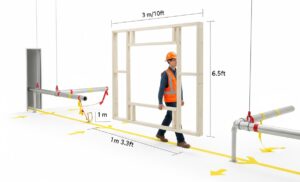
장비가 도착하기 전, 또는 주문되기 전부터 IQ 프로세스는 신중한 계획 수립으로 시작됩니다. 이 계획에는 다음 사항이 포함됩니다.
- 현장 준비 상태 확인: 지정된 위치가 새 장비를 설치하기에 적합한지 확인해야 합니다. 여기에는 충분한 바닥 공간, 구조적 지지대, 그리고 필요한 유틸리티가 올바른 연결 지점에 있는지 확인하는 것이 포함됩니다.
- 환경 조건: 설치 환경이 온도, 습도 및 청결도에 대한 제조업체의 사양을 충족하는지 확인합니다.
- 문서 수집: 구매 주문서, 제조업체 설명서, 설계 사양서, 엔지니어링 도면 및 모든 통합 측정 기기의 교정 인증서와 같은 모든 필수 문서를 수집합니다.
팁: 실제 경로를 걸어보고 부피를 모델링하세요. 2D 평면도만 보지 마세요. 가장 흔하고 비용이 많이 드는 설계 오류는 바로 여기서 발생합니다. 주요 관계자(시설 관리, 엔지니어링, 공급업체 프로젝트 관리자)와 함께 하역장에서 최종 설치 지점까지 계획된 경로를 실제로 걸어보세요. 기계의 최대 높이, 너비, 길이 치수에 맞춰 간단한 나무 또는 PVC 프레임을 제작하세요. 이 '가상' 프레임을 들고 전체 경로를 따라 걸어보세요. 이렇게 하면 도면에서 종종 놓치는 출입구, 낮게 드리워진 배관, 좁은 모퉁이, 엘리베이터 용량 등의 문제점을 파악할 수 있습니다. 또한, 최종 지점뿐만 아니라 전체 운송 경로를 따라 바닥의 하중 지지력을 확인해야 합니다.
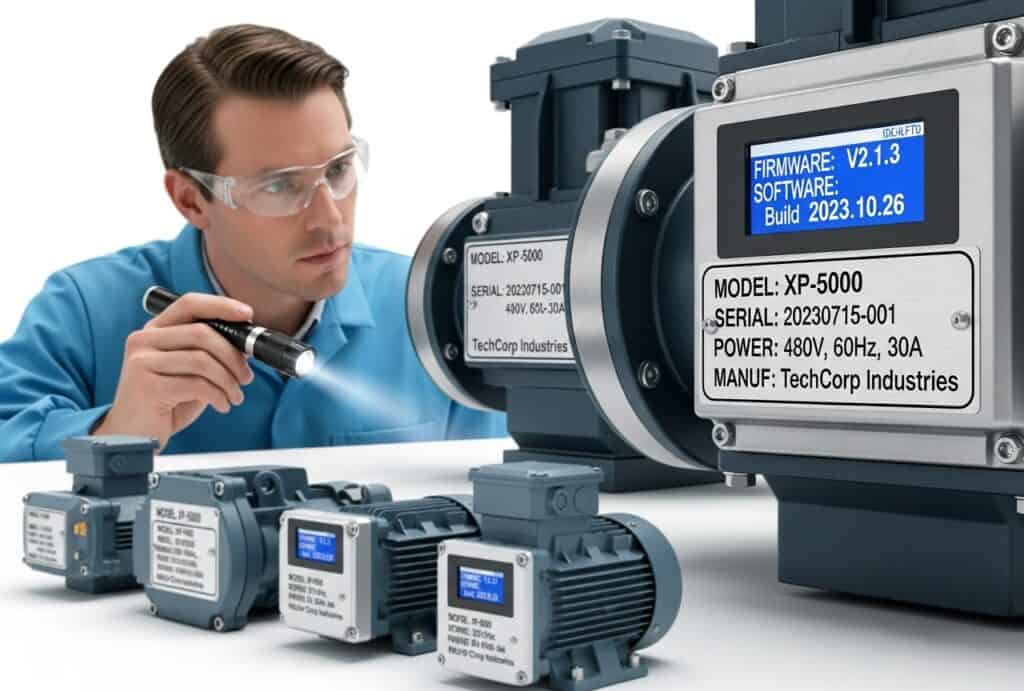
2. 장비 수령 및 검증
장비가 배송되면 철저한 검사가 진행됩니다.
- 구성 요소 검증: 납품된 품목은 포장 목록 및 구매 주문서와 꼼꼼하게 대조하여 소프트웨어를 포함한 모든 구성 요소가 제대로 수령되었는지, 주문한 모델 및 버전과 일치하는지 확인합니다.
- 손상 여부 검사: 육안 검사를 통해 배송 및 취급 과정에서 손상이 발생하지 않았는지 확인합니다.
메모: IQ, OQ, PQ 방법론을 사용하는 대부분의 산업 분야에서 장비는 적합성 인증서(CE, FDA 마크 등)와 기타 인증서, 그리고 경우에 따라 제조업체 자체 시험 결과와 함께 제공되어야 합니다. 이러한 서류들은 실제 제품과 동일한 중요도로 간주되어야 합니다. 실제로 (적어도 검역 구역에서는) 이러한 서류가 포함되지 않았거나 사전에 제출되지 않은 경우 납품을 거부해야 합니다.
관련 팁: 제품을 신뢰하되 펌웨어를 검증하십시오. 포장 목록은 최소한의 필수품일 뿐입니다. 진정으로 집중해야 할 부분은 핵심 구성 요소와, 가장 중요한 소프트웨어 및 펌웨어 버전입니다. 공급업체는 귀사의 공정에 대해 검증되지 않은 최신 버전의 '더 나은' 펌웨어를 배송할 수 있습니다. 배송 기사가 떠나기 전, 그리고 배송 서류에 서명하기 전에 모든 핵심 구성 요소(모터, 펌프, 컨트롤러)의 명판과 본체 장비 명판을 고해상도 사진으로 촬영하십시오. 가능하면 컨트롤러 장치만 전원을 켜서 부팅 화면에서 펌웨어/소프트웨어 버전을 확인하십시오. 이 버전을 사용자 요구 사양(URS) 또는 구매 주문서에 명시된 버전과 대조하십시오. 나중에 불일치를 처리하는 것보다 배송물을 수령 거부하는 것이 훨씬 쉽습니다.
3. 설치 및 연결 확인
이것이 바로 IQ 프로세스의 핵심이며, 물리적 설치 상태를 꼼꼼히 검토하는 단계입니다.

- 올바른 조립 및 배치: 장비가 제조업체의 지침 및 설계 도면에 따라 조립 및 배치되었는지 확인합니다.
- 유틸리티 연결: 이는 필수 서비스와의 모든 연결을 확인하는 중요한 단계입니다. 여기에는 다음 사항을 확인하는 것이 포함됩니다.
- 전기 같은: 전원 공급 장치가 필요한 전압 및 위상과 일치하고 적절한 접지 및 안전 회로가 설치되어 있는지 확인하십시오.
- 연관: 물, 증기 또는 배수 연결부는 올바르게 설치되었고, 누수가 없으며, 적절한 재질로 만들어졌습니다.
- 가스 및 압축 공기: 모든 공압 및 가스 라인이 올바르게 연결되었으며, 압력 품질은 사양을 충족합니다.
- 보조 장비: 모든 보조 장비 또는 주변 장비가 올바르게 설치 및 연결되었는지 확인하십시오.
- 소프트웨어 설치: 컴퓨터 제어 시스템의 경우, 이는 소프트웨어가 올바르게 설치되었는지 확인하는 것을 포함합니다. 의사소통 하드웨어 설치가 완료되었고 접근 제어 시스템도 구축되었습니다.
팁: 도면을 실시간으로 수정 표시하십시오. P&ID(배관 및 계측 도면) 또는 전기 도면이 최종 설치를 100% 정확하게 나타낸다고 절대 가정하지 마십시오. 공급업체 설치 기사는 현장에서 사소한 실질적인 조정을 항상 수행합니다. 귀사의 엔지니어 또는 자격을 갖춘 기술자 중 한 명을 지정하여 공식 도면과 빨간 펜을 가지고 공급업체 설치 기사를 따라가도록 하십시오. 설치 기사가 연결 작업을 하는 동안 엔지니어는 각 라인(배관, 전선관, 케이블)을 직접 따라가면서 도면과의 차이점을 도면에 직접 표시해야 합니다. 이렇게 수정 표시가 된 '준공 도면'은 매우 귀중한 자료입니다. IQ(설치 품질 검사)가 끝나면 이 수정 도면을 스캔하여 실제 설치에 대한 공식 기록으로 보관하십시오. 이는 향후 문제 해결, 유지 보수 및 감사에 매우 유용합니다.
4. 문서화 및 기록 보관

IQ 프로세스 전반에 걸쳐 꼼꼼한 문서화가 매우 중요합니다. 여기에는 다음 사항이 포함됩니다.
- 일련번호 기록: 주요 장비 및 모든 중요 부품의 일련 번호와 모델 번호를 기록합니다.
- 문서 패키지 컴파일 중: 매뉴얼, 도면, 교정 기록 및 완료된 IQ 프로토콜과 같은 모든 관련 문서를 담는 바인더 또는 전자 폴더를 만듭니다.
- 유지보수 및 교정 일정 수립: 제조업체의 권장 사항에 따라 정기 유지보수 및 교정 일정을 수립하고 문서화합니다.
팁: 귀하의 주요 목표는 장비에 대한 영구적인 바인더 또는 디지털 기록을 구축하는 것입니다. 제품 수명 주기 제품 수명 주기 관리(PLM) 또는 품질 관리 시스템(QMS)을 활용하여 모든 정보를 하나의 신뢰할 수 있는 자료로 관리합니다. 통합 품질 평가(IQ)를 시작하기 전에 시스템에 장비에 대한 고유한 자산 기록을 생성합니다. 공급업체 인증서부터 서명된 프로토콜 페이지까지 모든 문서가 생성되는 즉시 스캔하여 중앙 자산 기록에 직접 연결하고 업로드합니다. 이러한 방식은 단순한 보관을 넘어 통제되고 신뢰할 수 있는 자산 관리 체계를 구축합니다. digital twin 장비의 초기 설계부터 모든 관련 문서를 관리합니다. 시스템의 전자 서명 워크플로우를 사용하여 최종 IQ 패키지를 검토 및 승인받도록 전달함으로써 안전하고 규정을 준수하는 감사 추적 기록을 확보합니다. 더 중요한 것은 IQ 문서를 다른 기업 시스템과 연결하여 관계형 모델을 구축하는 것입니다.
5. 최종 IQ 보고서 및 승인

이러한 산업 분야에서는 특별히 복잡한 절차는 없습니다. 모든 점검이 완료되면 최종 IQ 보고서가 생성됩니다. 이 보고서는 수행된 활동을 요약하고, 문서화된 증거를 제시하며, 발견된 편차 또는 불일치 사항과 해결 방법을 자세히 설명하고, 장비가 설치 적격성 평가(IQ)를 통과했는지 여부를 결론짓습니다. 그런 다음 이 보고서를 품질 보증 부서와 같은 관련 담당자가 검토하고 공식적으로 승인하면 IQ 단계가 공식적으로 종료되고 운영 적격성 평가(OQ)를 시작할 수 있게 됩니다.
팁: treat deviations as evidence of a robust System, not as a failure. The goal of IQ is not to have a “perfect” run with no deviations. The goal is to truthfully document the as-installed state. A well-managed deviation is a sign of a healthy and transparent quality system. When a discrepancy is found, document it immediately as a planned deviation within the IQ protocol. Then, lead a formal risk assessment. Could it be creating a corrective action to replace the part before OQ begins or different approach? Documenting this entire process in the final IQ report shows auditors that your system is meticulous, risk-based, and in control.
Operational Qualification (OQ)
Moving from the static verification of Installation Qualification, we now enter the dynamic testing phase of Operational Qualification (OQ). It is a formal, documented series of tests designed to prove that the equipment and its subsystems operate as intended throughout their specified operating ranges.
Where IQ confirms the equipment is installed correctly, OQ confirms it works correctly.
This phase is crucial for providing documented evidence that the system’s functions are reliable and under control before introducing actual product or complex manufacturing processes.
Purpose and importance of OQ: the primary goal of OQ is to challenge and verify every critical function of the equipment in isolation. This systematic testing ensures that all controls, alarms, indicators, and operational mechanisms perform according to their design specifications. By testing the equipment’s capabilities at the limits of its operating parameters (e.g., fastest/slowest speed, highest/lowest temperature), OQ establishes a robust operational envelope. A successful OQ provides high confidence that the equipment itself is not a source of variability and will perform predictably, which is a prerequisite before evaluating the overall manufacturing process in the Performance Qualification (PQ) phase.
Key Stages and Activities in Operational Qualification
OQ is driven by a detailed, pre-approved test protocol. This protocol outlines each test case, the method for execution, and the pre-defined acceptance criteria that constitute a pass or fail.
1. Test Protocol Development

Before any testing begins, a comprehensive OQ protocol is written and approved by key stakeholders (e.g., Engineering, Validation, Quality Assurance, and the System Owner). This document includes:
- A reference to the successfully completed IQ.
- A list of all critical functions to be tested.
- Step-by-step test procedures.
- The specific, measurable, and unambiguous acceptance criteria for each test.
- A list of calibrated test equipment required (e.g., certified tachometer, calibrated temperature probes).
팁: co-author with the operator and group your tests logically. Do not write the OQ protocol in an engineering vacuum. The person who will operate the equipment daily has invaluable, nuanced knowledge. Sit with a senior operator and review your test plan. He will quickly identify tests that are impractical, out of sequence, or missing a critical real-world step. Furthermore, structure your protocol not by component, but by function. Group all HMI screen navigation tests together, all 모터 start/stop/speed tests together, and all alarm acknowledgment tests together.
2. Functional and Control System Testing

This forms the core of OQ execution. Each function is tested individually to confirm its correct operation. Examples include:
- Controls: verifying that every button, switch, and Human-Machine Interface (HMI) command performs its intended action (e.g., pressing “Start” begins the cycle, adjusting a speed setting on the HMI accurately changes motor RPM).
- Motors and actuators: testing start/stop sequences, speed controls, and directional controls.
- Heaters, coolers, and sensors: confirming the system can accurately reach and maintain temperature, pressure, or other critical setpoints. This often involves using external, calibrated sensors to verify the equipment’s own display.
팁: don’t trust the screen; bring your own calibrated instruments. The most common OQ mistake is treating the equipment’s own display as the source of truth. The HMI screen showing “150.0°C” is not proof of temperature; it’s proof that the controller is requesting that temperature. The purpose of OQ is to verify the physical reality. Always use external, independently calibrated measurement tools to verify critical parameters.
3. Alarm and Interlock Verification

This is a critical step to ensure both 프로세스 제어 and operator safety. Each alarm and safety feature is deliberately triggered to verify its function.
- Alarms: simulating a failure condition (e.g., opening a door during operation, creating an over-temperature condition) to confirm that the corresponding visual and audible alarms activate correctly.
- Safety interlocks: testing features like emergency stops (E-stops) to ensure they immediately and safely halt equipment operation. Verifying that guard door interlocks prevent the machine from running when a safety door is open.
팁: test the consequence, not just the trigger. A novice tests if an alarm light turns on. An expert tests that the alarm performs its intended protective action and that the system enters a safe, predictable state. Don’t just open a guard door to see if a siren sounds; verify that the drive motor’s power is immediately cut and that it cannot be restarted until the door is closed and the system is formally reset.
4. “Worst-Case” or Edge-of-Range Testing

OQ is not just about testing at normal operating setpoints. It involves pushing the equipment to the defined limits of its operational parameters, that will happen in real production conditions.
Example: For a variable-speed mixer, testing would be performed not just at the typical 100 RPM, but also at its minimum specified speed (e.g., 20 RPM) and its maximum specified speed (e.g., 500 RPM). This demonstrates that the equipment is capable and stable across its entire validated range. This testing is often referred to as “challenging the operating envelope220.
팁: combine parameters and test for dwell time stability. “Worst-case” is rarely a single parameter at its limit. True worst-case testing involves challenging the system with a combination of conditions and holding it there. Don’t just test the maximum heater temperature. Test the max temperature while the main motor is running at its maximum speed and hold those conditions for a sustained period (e.g., 30-60 minutes). This is how you find the real breaking points.
This is where, in any IQ OQ PQ, a validation expert truly earns their keep, by designing tests that find the breaking points of a system in a controlled way.
A novice tests single parameters at their limits; an expert understands that true failure modes often appear at the intersection of multiple stressors.
Below are examples of “worst-case” parameter combinations for OQ across various processes and equipment types. These are typical examples only; your case must be adapted according to exact product, usage, conditions … For each machine, there is likely more than one extreme case, despite our examples.
Autoclave sterilization Maximum permissible load density (e.g., chamber packed with the densest surgical tool kits) + Lowest validated temperature setting + Longest validated cycle time. This doesn’t just test if the chamber can get hot. It challenges the system’s ability to achieve heat penetration into the most difficult-to-sterilize load. It also puts maximum sustained 스트레스 on the chamber, plumbing, and steam generator, revealing potential weaknesses in thermal stability or component fatigue that a short, empty cycle would miss. | CNC machining center Hardest specified workpiece 합금 (e.g., Inconel) + Maximum spindle RPM + Maximum tool feed rate + A toolpath program with the highest density of rapid directional changes. This combination creates the highest possible stress on the entire machine. It tests for motor torque sag, spindle bearing vibration, ball screw accuracy under extreme load, and the controller’s ability to process a dense block of G코드 without stuttering. It’s a test of mechanical rigidity and computational power simultaneously. |
 | High-speed liquid filling line Fastest line speed + Tallest and narrowest container type (most unstable) + Product at its lowest specified 점도 (most likely to splash or foam). This challenges the entire integrated system’s timing and stability. It tests the filler nozzles’ cut-off precision to prevent drips, the star wheels’ and guide rails’ ability to handle unstable containers without tipping, and the check-weigher’s and rejection station’s ability to function accurately at maximum throughput. |
Robotic pick-and-place arm Maximum payload weight + Farthest horizontal and vertical reach points (maximum moment arm) + Highest programmed acceleration and deceleration values. This tests the system under the highest possible inertial load. It’s designed to reveal servo motor overshoot, arm deflection (whipping), vibration at the endpoint, and the positional accuracy of the encoders when the mechanical system is under the most strain. | Chromatograpy skid for biopharma Maximum specified flow rate + Highest viscosity buffer solution + Executing the steepest possible gradient change (e.g., 0% to 100% Buffer B in the minimum possible time). This creates a “pressure shock” scenario. It tests the pumps’ ability to maintain accurate flow against a sudden increase in system backpressure and verifies the gradient proportioning valves can respond instantly and accurately under the highest differential pressure. It finds weaknesses in 펌프 seals and valve diaphragms. |
Environmental stability chamber Fastest possible temperature and humidity ramp rate (e.g., from -20°C/10% RH to +70°C/95% RH) + A full load of product placebo. This challenges the absolute limits of the refrigeration, heating, and humidification systems’ capacity. The full load acts as a thermal ballast, making it harder for the chamber to meet its ramp rate. This test reveals if the system can perform under load, not just when empty, and tests the controller’s ability to manage setpoints without significant overshoot. |  |
Tablet press Maximum turret speed + Maximum main compression force + Using a placebo formulation known to be “sticky” or have poor flow characteristics. This simulates the most challenging production scenario. It tests the feeder’s ability to maintain a consistent die fill with difficult powder, the clutch’s ability to handle force spikes without slipping, and the punch heads’ and cams’ resistance to wear under maximum strain. It also challenges the tablet take-off and rejection system to function flawlessly at high speed. | Computerized vision inspection system Maximum conveyor/part feed speed + Parts containing the smallest allowable defect + Lowest permissible lighting condition. This pushes the camera, lens, and software to their limits. It tests if the camera’s shutter speed is fast enough to avoid motion blur, if the lens aperture can gather enough light in a worst-case scenario, and if the processing algorithm is fast and robust enough to find the tiniest flaw at the highest throughput. |
 | Lyophilizer (freeze dryer) A full load of vials containing the highest fill volume + Fastest freezing ramp + Fastest vacuum pull-down during primary drying. This creates the maximum possible water vapor load on the system. It challenges the refrigeration system’s ability to keep the condenser coils cold against a massive influx of sublimated ice and tests the vacuum pump’s capacity to maintain deep vacuum under the highest possible gas load, which is the primary bottleneck of any 동결건조 cycle. |
Centrifuge Maximum RPM + The maximum allowable imbalance specified by the manufacturer (using a deliberately unbalanced test load) + Longest possible run time setting. This is a mechanical torture test. It verifies that the imbalance detection system will trip at the correct threshold without nuisance alarms. It also puts maximum stress on the drive spindle, bearings, and motor, testing for thermal stability and mechanical integrity over a sustained, high-stress period. | Water for Injection (WFI) distribution loop Lowest validated operating temperature (where microbial growth is a higher risk) + Opening all points-of-use simultaneously to create maximum flow demand. This tests the main circulation pump’s ability to maintain turbulent flow (a key factor in preventing biofilm) throughout the entire loop, even at the most distant point, during a period of maximum system demand. It verifies the system is hydraulically balanced and the pump is sized correctly. |
Blister packaging machine Maximum cycles per minute + Thickest, hardest-to-form polymer 영화 + Deepest draw blister pocket design. This combination puts the forming and sealing stations under maximum stress. It tests if the heaters can provide enough energy to soften the thickest film at high speed, if the compressed air system can provide enough pressure for a deep draw, and if the sealing station has enough dwell time and pressure to create a perfect seal under these challenging conditions. |  |
5. Verification of Computerized Systems and Data Integrity

For modern equipment, this is a non-negotiable part of OQ and part of legal requirements in some industries.
- User access control: verifying that different user levels (e.g., Operator, Supervisor, Administrator) have the correct permissions and that unauthorized users cannot perform critical functions.
- Audit trails: confirming that the system accurately records all critical actions, changes to setpoints, and alarms, logging the user, date, and time (as required by regulations like 21 CFR Part 11).
- Data handling: testing data backup, recovery, and archiving functions to ensure process data is secure and cannot be lost or altered.
팁: be the malicious user and verify the ‘Before and After’ in audit trails. Don’t just follow the happy path. Actively try to break the system’s logic. Use an operator-level login and try to execute an administrator-level function. Try to enter letters into a numeric-only field. For audit trails, the gold standard is not just verifying that an entry is created, but that it contains the critical context: Parameter, Original Value, New Value, User ID, and Timestamp.
6. Final OQ Report and Approval
As for the IQ, after all tests are executed, a final OQ report is compiled. This report summarizes the results, explicitly stating whether each test passed or failed its acceptance criteria. Any deviations encountered during testing are documented, investigated, and resolved with a clear rationale. The conclusion of the report makes a definitive statement: the equipment has successfully passed Operational Qualification and is now ready to proceed to the final stage, Performance Qualification (PQ). This report is formally reviewed and approved, officially closing the OQ phase.
Performance Qualification (PQ)
Performance Qualification (PQ) is the final stage of the IQ OQ PQ validation methodology. It is the documented process of demonstrating that a manufacturing process, operating within its established parameters, consistently and reproducibly produces a product that meets all its pre-determined quality specifications. PQ moves beyond the isolated equipment and challenges the entire integrated system—combining the qualified equipment, the actual raw materials, the approved procedures, and trained personnel—under real-world, routine production conditions.
The ultimate goal of PQ is to answer the definitive question: “Can we consistently make a quality product?“
While OQ proved the equipment works, PQ proves the 프로세스 works.
This phase provides the final, tangible evidence required by regulatory agencies like the FDA that the manufacturing process is robust, in a state of control, and capable of reliably delivering a safe and effective product. A successful PQ is the capstone of the validation effort and is the final gate before a process is approved for commercial manufacturing. It provides the baseline data that will be used for ongoing process monitoring throughout the product’s lifecycle.
Key Stages and Activities in Performance Qualification
PQ is executed against a comprehensive, pre-approved protocol that details the entire plan, from the number of runs to the specific quality attributes to be tested.
1. PQ Protocol Development
The PQ protocol is the master plan for the validation effort. It is a detailed document that must be approved by the cross-functional validation team (e.g., Quality, Manufacturing, Engineering, R&D) before execution. Key contents include:
- Reference to IQ/OQ: a statement confirming the successful completion of the prerequisite IQ and OQ for all relevant equipment.
- Number and size of batches: specifies the number of consecutive, successful production runs required. The industry standard is typically three, as this demonstrates reproducibility and ensures a single successful run wasn’t an anomaly. The batch size must be representative of the intended commercial scale.
- Critical Process Parameters (CPPs): lists all process parameters that are critical to product quality (e.g., mixing time, temperature, compression force) and their proven acceptable ranges, which were established during process development and OQ.
- Critical Quality Attributes (CQAs): defines all the physical, chemical, biological, and microbiological attributes of the final product that must be controlled to ensure the desired quality. This includes the test methods and their strict acceptance criteria (specifications).
- Sampling plan: a detailed plan outlining what will be sampled, how it will be sampled, how many samples will be taken, and from where and when during the process (e.g., beginning, middle, end of a batch; top, middle, bottom of a blender).
2. Execution of Production Runs (The PQ Batches)

This is the practical execution phase where the process is run under conditions that are as close to routine manufacturing as possible.
Real-World Conditions: PQ must use the final, approved versions of all inputs:
- Raw materials: from qualified vendors, meeting all release specifications.
- Personnel: executed by fully trained production operators, not just engineers or scientists.
- 선적 서류 비치: using the final, approved Standard Operating Procedures (SOPs) and Master Batch Records.
- Environment: conducted in the actual production facility with qualified utilities.
(see below the dedicated chapter on the “Three Batch” rule)
3.vIntensive In-Process and Final Product Testing

During and after each PQ run, the product is subjected to a level of scrutiny far greater than what will occur in routine quality control.
- In-process Controls (IPCs): critical parameters are tested at intermediate stages of the process (e.g., blend uniformity, granule moisture content, tablet hardness) to ensure the process is staying in control.
- Final product testing: a large number of samples from each batch are tested against all CQAs. For a pharmaceutical tablet, this could include tests for appearance, identity, assay (potency), content uniformity, dissolution, purity (impurities), and microbial limits. The goal is to prove both inter-batch consistency (the results from Batch 1, 2, and 3 are very similar) and intra-batch uniformity (the results from the beginning, middle, and end of a single batch are very similar).
4. Process Monitoring and Data Collection
Throughout each of the PQ runs, all identified CPPs are meticulously monitored and recorded to prove they were maintained within their specified ranges for the entire duration of the process. This provides the direct link between the controlled process parameters and the resulting high-quality product.
5. Data Analysis and Statistical Evaluation
The data from the PQ runs are compiled and statistically analyzed. It’s not enough for every result to simply “pass” the specification. The analysis must demonstrate a high degree of consistency and low variability. Statistical tools like mean, standard deviation, and relative standard deviation (RSD) are used to quantify the process’s stability and capability. This statistical evidence is a powerful testament to the robustness of the process.
6. Final PQ Report and Approval
Once all runs are complete and the data is analyzed, a final PQ report is written. This report:
- Summarizes the results of each PQ batch.
- Presents all the raw data and statistical analysis in a clear format.
- Documents any deviations that occurred, the investigation into their root cause, and the corrective actions taken. A significant, unexplained deviation in a PQ batch can invalidate the run and may require it to be repeated.
- Concludes with a definitive statement: the process has been successfully validated and is deemed capable of consistently producing a product that meets its pre-determined specifications.
Upon formal review and approval of this report, the process is now officially validated and released for routine commercial production.
Focus: the “Three Batch” Rule
The “Three Batch Rule” is the heart of validation practice versus regulatory theory.
It is a long-standing and deeply entrenched industry convention for the Performance Qualification (PQ) phase of process validation. It refers to the practice of manufacturing three consecutive, successful commercial-scale batches of a product to prove that the manufacturing process is controlled, consistent, and reproducible.
The rule applies specifically to PQ because this is the stage where the entire integrated process—qualified equipment (IQ/OQ), approved raw materials, trained personnel, and final procedures (SOPs)—is challenged under real-world conditions. A single successful batch could be a fluke; two could be a coincidence. Three consecutive successes provide the minimum level of objective evidence needed to demonstrate that the process is reliable and will consistently yield a product that meets all its pre-determined quality attributes. This is where the nuances are:
- It is NOT a “Nice-to-Have”: it is considered a fundamental baseline for process validation in regulated industries.
- It is NOT explicitly “Regulatory Law”: you will not find the phrase “three validation batches” written verbatim in the FDA’s Code of Federal Regulations (e.g., 21 CFR 211). The regulations are performance-based, stating that you must have documented evidence that your process is in a “state of control” and can be “reproduced”. The regulations wisely do not prescribe the exact number, as this could stifle innovation and risk-based approaches.
- It IS a “Mandatory” industry standard and regulatory expectation: the “Three Batch” rule has become the universally accepted and easiest-to-defend method for meeting the regulatory requirement of proving consistency. An auditor from any major agency (FDA, EMA, etc.) will arrive with the expectation of seeing data from three successful PQ batches.
In practice, it is mandatory. While not a literal law, deviating from this standard invites intense scrutiny from inspectors. You would need an exceptionally robust, pre-approved, and scientifically sound risk-based justification to validate a process with fewer than three batches. It is a powerful convention that has effectively become the default requirement. Choosing to do fewer than three batches is a significant business and compliance risk that must be formally defended.
When Might You Deviate? | |
| More than Three Batches: for highly complex or high-risk processes (e.g., sterile biologics, cell therapies) or processes with known high variability, a company may proactively decide to run five or more batches to generate a more robust data set. | Fewer than Three Batches: this is extremely rare and only considered in specific, well-justified situations such as for orphan drugs with very small annual production, or for very simple, low-risk processes. This approach must be documented in a formal risk assessment and agreed upon in the validation master plan. |
Alternatives Methodologies to IQ OQ PQ
While IQ OQ PQ is the gold standard in GxP-regulated environments, other industries use different, equally rigorous methodologies to achieve the same goal: ensuring a process is capable and in control. Only for information, below are five other process validation methodologies used as alternatives:
ASTM E2500 – A Risk-Based ApproachThis standard defines a modern framework, primarily for the pharmaceutical and biopharmaceutical industries, that focuses on a lifecycle and risk-based approach to verification. It emphasizes that equipment and systems should be “fit for intended use”. Instead of a rigid, sequential checklist, it starts with a risk assessment to identify Critical Quality Attributes (CQAs) and Critical Process Parameters (CPPs). Verification activities are then tailored to mitigate the identified risks. It heavily leverages supplier documentation and the knowledge of Subject Matter Experts (중소기업), promoting continuous verification throughout the equipment’s lifecycle rather than treating validation as a one-time event. | Commissioning and Qualification (C&Q) with FAT/SATC&Q is an engineering-centric methodology focused on verifying that all systems and components of a facility or process are installed, tested, and operate according to the design requirements. It includes Factory Acceptance Testing (FAT) at the vendor’s site and Site Acceptance Testing (SAT) after installation. C&Q is broader and often precedes or incorporates IQ/OQ. A significant portion of the testing (FAT) is front-loaded and performed before the equipment is even shipped, which is more efficient for finding and fixing issues. The SAT phase often covers the same ground as IQ and OQ, but it’s framed within a project management and engineering handover context. This is the standard in heavy industry, energy, and large-scale facility construction. |
 | 생산 부품 승인 프로세스(PPAP)PPAP is the standardized framework required by the automotive and aerospace industries to ensure a supplier’s production process can consistently produce parts that meet the customer’s engineering design records and specifications. PPAP is an external-facing validation focused on the supplier-customer relationship. It is a comprehensive submission package containing 18 specific elements, including Failure Mode and Effects Analysis (FMEA), Measurement System Analysis (MSA), Control Plans, and initial 프로세스 능력 studies (Cpk, Ppk). It’s a much more prescriptive and holistic “binder of evidence” to formally approve a supplier for mass production.
|
Six Sigma Methodology (DMAIC/DMADV)DMAIC or DMADV are highly data-driven and statistical methodology for process improvement and validation. DMAIC (Define, Measure, Analyze, Improve, Control) is used for existing processes, while DMADV (Define, Measure, Analyze, Design, Verify) is used for new ones. Where IQ OQ PQ confirms a process meets a pre-defined state, 식스 시그마 aims to optimize that state to a specific statistical level of quality (e.g., less than 3.4 defects per million opportunities). It is a continuous improvement framework rather than a discrete validation event. The “Control” phase of DMAIC is analogous to the ongoing monitoring that follows a successful PQ, but it is defined by statistical process control (SPC) charts. | Agile Methodologies with Continuous Integration/Continuous Deployment (CI/CD)CI/CD is the standard for modern software development. Instead of one large validation event at the end, validation is automated and integrated into every small change of the code. This is the antithesis of the linear “waterfall” approach of IQ OQ PQ. Every time a developer submits new code, an automated pipeline builds the software and runs a suite of tests (unit, integration, regression). This means the “process” of creating the software is being continuously validated in small, rapid cycles, ensuring the system remains in a validated state at all times. |
결론

In regulated industries like pharmaceuticals and medical devices, the IQ OQ PQ sequence is the practical execution of process validation. IQ establishes the documented foundation that equipment is installed correctly, OQ provides evidence that the equipment’s individual functions perform reliably across their operating ranges, and the final phase, PQ, brings everything together—the qualified equipment, approved materials, and trained operators—to prove the overall process consistently and reproducibly manufactures a product that meets all its specifications.
Successfully completing this sequence provides the objective evidence that the process is in a state of control, a non-negotiable prerequisite for commercial manufacturing where product quality directly impacts patient safety.
This validation sequence is not a one-time event; it should formally be re-executed in whole or in part whenever significant changes are made to the equipment, materials, or process parameters, ensuring the system remains in a continuously validated state throughout its lifecycle.
Related Readings
- 검증 마스터 플랜(VMP): 이 문서는 회사의 전반적인 검증 철학, 범위, 책임, 그리고 검증 대상이 되는 구체적인 시스템과 프로세스를 정의하는 고위급 전략 문서입니다.
- 사용자 요구사항 명세(URS): 최종 사용자 및 품질 관점에서 장비 또는 공정이 수행해야 할 기능을 상세히 기술한 기본 문서로서, 이후 모든 테스트의 기초가 됩니다.
- 공장 인수 테스트(FAT) 및 현장 인수 테스트(SAT): 엔지니어링 주도의 사전 테스트는 종종 공급업체와 함께 수행되며, 출하 전(FAT) 및 설치 후(SAT) 장비 기능을 검증하는 데 사용되어 IQ/OQ를 간소화할 수 있습니다.
- 컴퓨터 시스템 검증(CSV): IQ, OQ, PQ와 병행하여 진행되는 전문적인 검증 분야로, 장비를 제어하는 소프트웨어 및 컴퓨터 시스템의 무결성, 보안 및 신뢰성에 중점을 둡니다.
- 21 CFR 파트 11 준수: 데이터 무결성, 감사 추적 및 접근 제어를 보장하는 데 있어 CSV의 핵심 구성 요소인 전자 기록 및 전자 서명을 규정하는 FDA의 특정 규정 세트.
- 세척 유효성 검사: a sometimes separated but related validation process performed on the same equipment to prove that a cleaning procedure can effectively and consistently remove product residues, cleaning agents, and microbial contamination (we strongly recommend to include it in the IQ OQ PQ protocol, as the cleaning status is an integral part of the product and process performances).
- 측정 시스템 분석(MSA) / 게이지 R&R: 시험 방법 자체를 검증하는 데 사용되는 통계적 방법론으로, 제품 품질을 판단하는 데 사용되는 측정 시스템이 정확하고 정밀하며 반복 가능하고 재현 가능한지 확인합니다.
- 위험 기반 검증(FMEA/HACCP 활용): 잠재적인 고장 모드와 제품 품질 위험 요소를 식별하는 방법론으로, 검증 노력을 가장 중요한 공정 매개변수(CPP)에 집중할 수 있도록 합니다.
- 핵심 품질 속성(CQA) 및 핵심 공정 매개변수(CPP): 원하는 제품 품질을 보장하기 위해 관리해야 하는 특정하고 정의된 제품 특성(CQA) 및 공정 변수(CPP)는 PQ에 대한 승인 기준을 구성합니다.
- Process Capability Analysis (Cpk/Ppk): PQ 데이터에 대한 통계 분석을 수행하여 프로세스가 사양 한계 내에 얼마나 잘 맞춰져 있는지, 그리고 변동성이 얼마나 큰지를 정량화하고, 이를 통해 '능력'에 대한 수치 점수를 제공합니다.
- 지속적인 공정 검증(CPV): 현대적인 '3단계' 공정 검증은 일상적인 생산 과정에서 공정 매개변수와 품질 특성을 지속적으로 모니터링하여 공정이 일정한 관리 상태를 유지하도록 하는 것입니다.
- Change control management: 검증된 시스템이나 프로세스가 의도치 않게 검증된 상태를 벗어나지 않도록 하기 위해, 검증된 시스템이나 프로세스에 대한 변경 제안을 평가, 문서화 및 승인하는 공식적인 품질 시스템 절차.
- 편차 및 CAPA 관리: 검증 과정 중 또는 후에 발생하는 예상치 못한 사건이나 오류를 조사하고, 근본 원인을 파악하며, 시정 및 예방 조치를 실행하기 위한 시스템입니다.
- 후향적 검증: 이는 기존의 검증되지 않은 공정에서 얻은 과거 생산 데이터를 분석하여 해당 공정이 통제 상태에서 작동해 왔음을 입증하려는 구식 검증 접근 방식으로, 현재는 거의 받아들여지지 않습니다.
- 검증 요약 보고서(VSR): 최종적이고 확정적인 문서로, 전체 검증 작업(IQ, OQ, PQ)을 요약하고, 주요 결과를 제시하며, 모든 편차를 해결하고, 시스템 또는 프로세스가 검증되어 상업적 사용에 적합하다고 공식적으로 선언합니다.
자주 묻는 질문
IQ, OQ, PQ의 차이점은 무엇인가요?
IQ(설치 적격성 평가)는 장비가 명시된 사양대로 납품, 설치 및 연결되었음을 입증합니다. OQ(운영 적격성 평가)는 장비가 명시된 작동 범위 내에서 정상적으로 작동함을 입증합니다. PQ(성능 적격성 평가)는 실제 자재, 작업자 및 절차를 사용하여 전체 공정을 통해 사양을 충족하는 제품을 일관되게 생산함을 입증합니다.
IQ, OQ, PQ는 어떤 순서로 수행됩니까?
각 단계는 이전 단계에 의존하기 때문에 순서대로 진행됩니다. OQ는 IQ가 승인된 후에 시작되고, PQ는 OQ가 승인된 후에 시작됩니다. 간단한 장비의 경우, 필요한 모든 검사가 수행되는 한, 타당한 이유가 있다면 단일 IQ 및 OQ 문서와 같은 통합 프로토콜도 허용됩니다.
FDA에서 IQ, OQ, PQ를 필수 요건으로 요구하나요?
검증은 필수적이지만, IQ, OQ, PQ라는 라벨은 필수가 아닙니다. FDA의 2011년 공정 검증 지침에서는 3단계(공정 설계, 공정 적격성 평가, 지속적인 공정 검증)와 PPQ라는 용어를 사용합니다. EU GMP 부록 15에는 DQ, IQ, OQ 및 PQ가 명시되어 있습니다. 의료기기 제조업체는 2026년 2월 2일부터 시행되는 FDA QMSR을 준수해야 하며, 이는 기존 규정을 기반으로 합니다. ISO 13485.
PQ에 세 배치가 필요하신가요?
규정상 그 횟수가 3회로 정해져 있지는 않습니다. FDA 지침은 위험도를 기반으로 통계적 신뢰도를 입증할 수 있는 충분한 데이터를 요구합니다. 3회 연속으로 성공적인 결과를 얻는 것이 업계의 오랜 관례이며, 감사 시 가장 쉽게 입증할 수 있는 방법입니다.
OQ와 PQ의 차이점은 무엇인가요?
OQ는 일반적으로 테스트 재료를 사용하여 장비의 작동 범위 전체(한계값 및 경보 포함)에 걸쳐 자체 테스트를 수행합니다. PQ는 생산 자재, 숙련된 작업자 및 승인된 절차를 사용하여 전체 공정을 실행하고 출력물이 품질 기준을 충족하는지 확인합니다.
URS란 무엇이며 왜 가장 먼저 나와야 할까요?
사용자 요구사항 명세서(또는 그에 준하는 문서)는 사용자의 관점과 품질 관리 관점에서 장비 또는 공정이 수행해야 하는 바를 명시합니다. 공급업체 선정 및 IQ, OQ, PQ의 모든 테스트는 이 명세서를 기준으로 이루어집니다. 이 명세서가 없으면 품질 검증을 위한 기준 자체가 존재하지 않습니다.
FAT와 SAT는 IQ 및 OQ와 어떤 관련이 있나요?
FAT는 출하 전 공급업체 현장에서 실시하는 테스트이고, SAT는 설치 후 고객 현장에서 실시하는 테스트입니다. 이러한 테스트 결과를 고객의 품질 시스템에 따라 검토하면 IQ 및 OQ 관련 반복 테스트를 줄일 수 있지만, 고객 자체의 OQ를 대체하는 것은 아닙니다.
OQ에서 최악의 시나리오 테스트란 무엇을 의미합니까?
이것이 바로 까다로운 부분이며 전문가의 역할이 중요한 지점입니다. 즉, 한 번에 하나의 매개변수만 테스트하는 것이 아니라, 여러 매개변수를 조합하여 한계치에서 테스트하고 그 상태를 유지하는 것입니다. 예를 들어, 모터가 최대 속도로 30분에서 60분 동안 작동하는 동안 히터의 최대 온도를 측정하는 식입니다. 고장은 대개 이러한 매개변수 조합에서만 발생합니다.
장비 재인증은 언제 받아야 하나요?
명백하거나 업계에서 일반적인 사례도 있지만, 장비 수정, 이전, 주요 수리, 새로운 재료 사용 또는 공정 매개변수 변경과 같은 중대한 변경 사항이 검증된 상태에 영향을 미치는 시점을 판단하는 것은 종종 까다로운 부분이며 전문가의 개입이 필요합니다. 변경 관리 절차에 따라 문서화된 위험 평가를 기반으로 IQ, OQ 또는 PQ의 해당 부분을 반복 수행하십시오.
동일한 사양의 대체품을 구매할 경우 재인증이 필요한가요?
항상 완벽한 교체는 아닙니다. 변경 관리 절차에 따라 교체 사항을 문서화하고, 기능 및 사양이 동일함을 입증하며, 설치 검증 및 교정과 같은 위험 평가에서 요구하는 점검을 수행하십시오.
IQ 보고서에는 어떤 서류들이 포함되어야 하나요?
구매 주문서, 매뉴얼, 설계 사양서, 도면, 측정 기기 교정 증명서, CE 또는 FDA 마크와 같은 적합성 인증서, 소프트웨어 및 펌웨어 버전, 설치 체크리스트 등이 포함되어야 합니다. 이러한 서류가 누락된 경우 납품을 거부하거나 제품을 격리 보관할 수 있습니다.
OQ 경보 및 인터록 테스트에서는 무엇을 점검합니까?
모든 경보기가 설정값에서 작동하고, 모든 연동 장치가 설계된 대로 작동을 중지하거나 방지하는지 확인하십시오. 예를 들어 문이 열려 있거나 과열 상태가 발생하면 작동을 중지하거나 방지합니다. 상황을 시뮬레이션하여 테스트하고, 응답 및 도달한 안전 상태를 기록하십시오.
IQ, OQ, PQ 프로토콜은 누가 작성하고 승인합니까?
검증 또는 엔지니어링 담당자가 일반적으로 프로토콜을 작성합니다. 시스템 소유자와 품질 보증 담당자는 실행 전에 프로토콜을 승인하고, 실행 후 최종 보고서를 승인합니다. 프로토콜이 테스트 시작 전에 승인된 경우에만 결과가 유효합니다.
OQ 또는 PQ 과정에서 테스트가 실패하면 어떻게 되나요?
일반적으로는 편차로 기록하고, 원인을 조사하고, 영향을 평가하고, 문제를 해결한 후 해당 테스트를 다시 수행하십시오. 실패한 결과를 절대 덮어쓰지 마십시오. 프로토콜은 계약과 같으므로 모든 편차에는 서면으로 된 정당성이 필요합니다.
IQ OQ PQ는 소프트웨어 및 컴퓨터 시스템에도 적용됩니까?
네. IQ는 설치 및 구성을 검증하고, OQ는 기능, 접근 제어, 경보 및 데이터 무결성을 테스트하며, PQ는 시스템이 실제 운영 조건에서 제대로 작동하는지 확인합니다. 규제 대상 프로세스를 제어하거나 기록하는 소프트웨어에도 동일한 순서가 사용됩니다.
IQ OQ PQ의 대안은 무엇인가요?
그 외에도 ASTM E2500(제약 분야의 위험 기반 검증), FAT 및 SAT를 활용한 시운전 및 적격성 평가, 자동차 산업의 PPAP, 식스 시그마 DMAIC 또는 DMADV, 소프트웨어의 CI/CD 파이프라인 등이 있습니다. 어떤 방식이 적합한지는 산업 분야와 규제 기관 또는 고객이 수용하는 기준에 따라 달라집니다.
사용된 용어집
American Society for Testing and Materials (ASTM): an international standards organization that develops and publishes voluntary consensus technical standards for materials, products, systems, and services, aimed at improving quality and safety across various industries.
Code of Federal Regulations (CFR): 미국 연방 기관에서 발행한 일반적이고 영구적인 규칙들을 주제별로 50개 편으로 정리한 것으로, 연방 규정에 대한 공식적인 법적 자료 역할을 합니다.
Computer Numerical Control (CNC): 컴퓨터 소프트웨어로 공작기계를 제어하는 제조 공정으로, 밀링, 드릴링, 선삭과 같은 작업에 정밀한 움직임과 작동을 가능하게 하여 생산 자동화 및 정확성을 향상시킵니다.
Computer Numerically Controlled (CNC): 컴퓨터 소프트웨어로 프로그래밍된 제어 장치를 사용하여 공작 기계를 조작하는 제조 공정으로, 재료 절단, 밀링, 드릴링 및 조각과 같은 작업을 정밀하고 자동화된 방식으로 수행할 수 있게 합니다.
Continuous Integration/Continuous Deployment (CI/CD): 코드 변경 사항 통합 및 프로덕션 환경 배포를 자동화하는 소프트웨어 개발 방식으로, 자동화된 테스트 및 모니터링을 통해 잦은 업데이트, 빠른 제공, 개발 및 운영 팀 간의 협업 향상을 가능하게 합니다.
Continuous Integration/Continuous Deployment (CICD): 코드 변경 사항 통합 및 프로덕션 배포를 자동화하는 소프트웨어 개발 방식으로, 자동화된 테스트 및 배포 파이프라인을 통해 잦은 업데이트를 가능하게 하고 통합 문제를 줄여줍니다.
Corrective Action and Preventative Action (CAPA): a systematic approach to identifying, investigating, and addressing nonconformities and potential issues to prevent recurrence and ensure compliance with regulatory standards in quality management systems.
Corrective and Preventive Action (CAPA): 규제 기준 준수 및 프로세스와 제품의 지속적인 개선을 보장하기 위해 부적합 사항을 식별, 조사 및 해결하는 체계적인 접근 방식입니다.
Cost and Freight (CFR): 판매자가 지정된 항구까지 상품을 운송하는 데 드는 운송비와 운임을 부담하고, 구매자는 상품이 선박에 선적된 후 발생하는 보험 및 비용에 대한 위험과 책임을 부담하는 선적 계약.
Critical Control Points (CCP): specific stages in a process where control can be applied to prevent, eliminate, or reduce food safety hazards to acceptable levels. Identifying these points is essential for effective hazard analysis and critical control management in food production systems.
current Good Manufacturing Practice (cGMP): a system ensuring that products are consistently produced and controlled according to quality standards, encompassing regulations and guidelines for manufacturing processes, facilities, equipment, and personnel to ensure safety, quality, and efficacy in pharmaceuticals, food, and other regulated industries.
Defects Per Million Opportunities (DPMO): 품질 관리에서 사용되는 측정 지표로, 백만 건의 오류 발생 기회당 공정상의 결함 수를 정량화한 값입니다. 결함 수를 전체 오류 발생 기회 수로 나누고 백만을 곱하여 계산합니다.
Define Measure Analyze Improve Control (DMAIC): 식스 시그마에서 프로세스 개선을 위해 사용되는 데이터 기반 품질 전략으로, 문제 식별, 현재 성과 측정, 원인 파악을 위한 데이터 분석, 분석 결과를 바탕으로 프로세스 개선, 그리고 개선 사항 유지를 위한 향후 성과 관리의 다섯 단계로 구성됩니다.
Define, Measure, Analyze, Design, Verify (DMADV): 식스 시그마에서 새로운 프로세스나 제품을 개발할 때 사용하는 데이터 기반 방법론입니다. 프로젝트 목표 설정, 요구사항 측정, 옵션 분석, 솔루션 설계, 그리고 품질 및 성능 기준 충족 여부를 확인하기 위한 결과 검증 단계를 포함합니다.
Design Validation (DV): 제품이 명시된 요구 사항과 의도된 용도를 충족하는지 확인하기 위한 테스트 및 평가 프로세스로, 설계가 목적을 달성하고 실제 환경에서 올바르게 작동하는지 검증합니다.
Failure Mode and Effects Analysis (FMEA): a systematic method for evaluating potential failure modes within a system, process, or product, assessing their effects on performance, and prioritizing risks to improve reliability and safety through corrective actions.
Food and Drug Administration (FDA): a federal agency of the United States Department of Health and Human Services responsible for regulating food safety, pharmaceuticals, medical devices, cosmetics, and tobacco products to ensure public health and safety through scientific evaluation and enforcement of compliance standards.
Good Manufacturing Practice (GMP): a system ensuring products are consistently produced and controlled according to quality standards, minimizing risks involved in pharmaceutical production and related industries. It encompasses guidelines for manufacturing processes, facility conditions, personnel qualifications, and documentation practices to ensure product safety and efficacy.
Hazard Analysis and Critical Control Points (HACCP): a systematic approach to food safety that identifies, evaluates, and controls hazards at critical points in the production process to prevent foodborne illnesses and ensure product safety.
Installation Qualification (IQ): a documented process to verify that equipment or systems are installed according to specifications, including assessment of utilities, environmental conditions, and compliance with design requirements, ensuring readiness for operational qualification.
Measurement System Analysis (MSA): a statistical method used to evaluate the accuracy, precision, and reliability of measurement processes and instruments, ensuring that data collected is valid and consistent for decision-making in quality control and process improvement.
Operational Qualification (OQ): a validation process that ensures equipment or systems operate according to specified requirements within defined limits, confirming that they perform as intended in their operational environment.
Performance Qualification (PQ): a process that verifies a system or equipment operates according to specified requirements under real-world conditions, ensuring it consistently performs its intended function within predetermined limits.
Process Capability Index (Cpk): a statistical measure that quantifies how well a process can produce output within specified limits, indicating the relationship between the process mean and the nearest specification limit, adjusted for process variability.
Process Performance Index (Ppk): 공정 평균과 표준편차를 이용하여 계산되는, 공정이 규격 한계를 얼마나 잘 충족하는지를 정량화하는 통계적 측정값입니다. 이는 변동성과 중심성을 모두 고려하여 공정이 정의된 한계 내에서 산출물을 생산할 수 있는 능력을 나타냅니다.
Product Lifecycle Management (PLM): a systematic approach to managing a product's lifecycle from inception, through engineering design and manufacturing, to service and disposal, integrating people, processes, data, and technology to improve product quality, reduce time to market, and enhance collaboration across stakeholders.
Production Part Approval Process (PPAP): 대량 생산 전에 공급업체가 품질 요구 사항을 충족하는지 확인하기 위해 제조 과정에서 사용되는 표준화된 절차로, 설계 사양, 공정 능력 및 생산 샘플에 대한 문서화 및 검증을 통해 고객 기대치와의 부합 여부를 확인합니다.
Quality Management System (QMS): 제품 및 서비스의 일관된 품질을 보장하고, 지속적인 개선을 촉진하며, 고객 및 규제 요건을 충족하기 위한 체계적인 프로세스, 절차 및 책임 시스템.
Revolutions Per Minute (RPM): 고정된 축을 중심으로 물체가 1분 동안 회전하는 횟수를 나타내는 측정 단위입니다. 모터, 엔진 및 기타 회전 기계의 속도를 측정하는 데 일반적으로 사용됩니다.
Standard Operating Procedure (SOP): a set of step-by-step instructions created to help workers carry out routine operations consistently and efficiently, ensuring compliance with regulations and quality standards.
Statistical Process Control (SPC): a method of quality control that employs statistical techniques to monitor and control a process, ensuring it operates at its full potential by identifying variations and maintaining consistent output within specified limits.
User Requirement Specification (URS): 시스템이나 제품에 대한 사용자의 요구사항과 기대치를 상세히 기술한 문서로, 개발을 안내하고 사용자 목표와의 일치를 보장하기 위해 기능적 및 비기능적 요구사항을 명시합니다.
External Links on IQ OQ PQ Process Validation
국제 표준
(링크 위에 마우스를 올려놓으면 콘텐츠에 대한 설명을 볼 수 있습니다.)