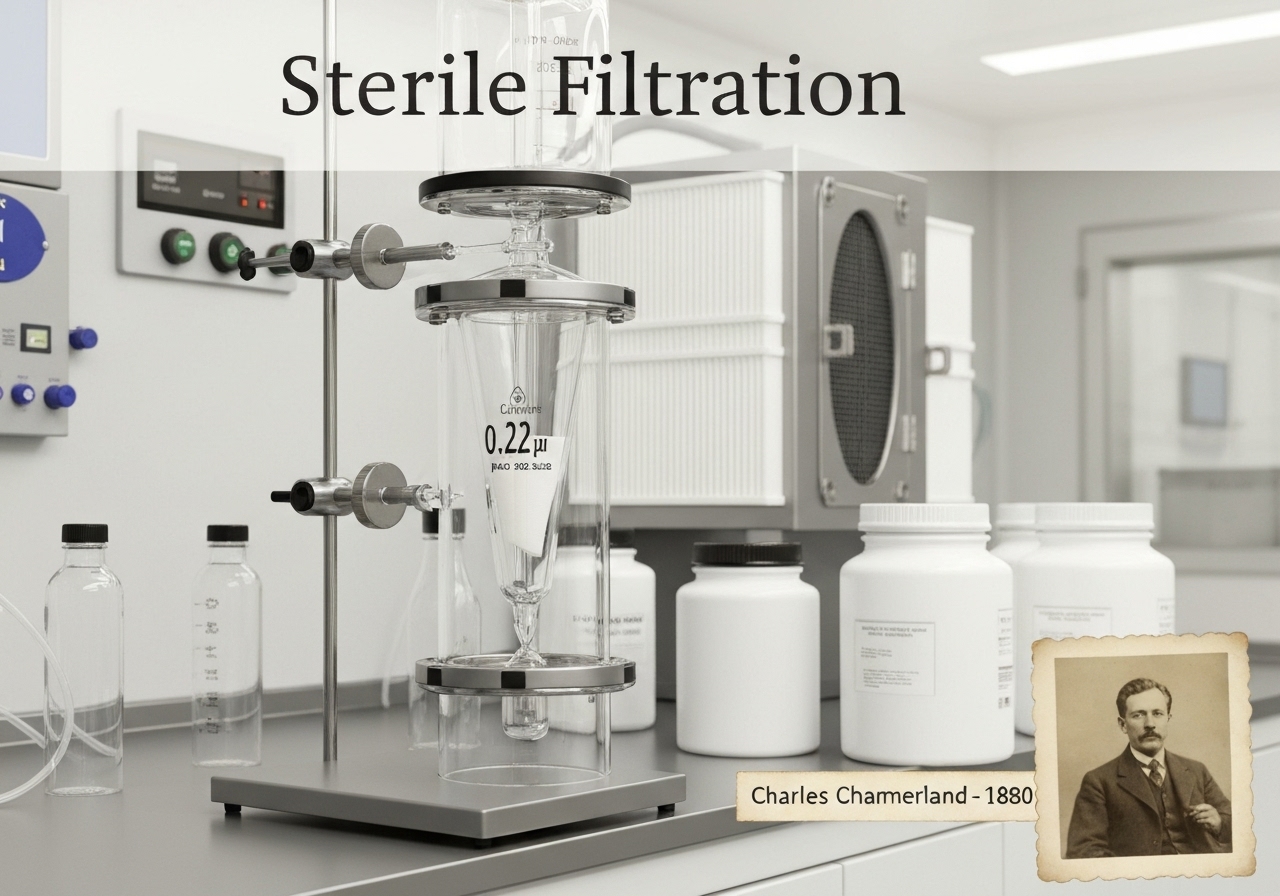
물리적 살균이란 액체나 기체를 미생물을 걸러낼 수 있을 만큼 작은 기공 크기의 필터를 통과시켜 미생물을 제거하는 방법입니다. 살균 여과에 일반적으로 사용되는 기공 크기는 0.22마이크로미터(µm)이며, 이 크기는 대부분의 박테리아를 효과적으로 제거합니다. 이 기술은 미생물을 죽이는 것이 아니라 물리적으로 분리하는 것이므로 열에 약한 용액에 적합합니다.

(설명을 위한 생성된 이미지입니다)
물리적 살균이란 액체나 기체를 미생물을 걸러낼 수 있을 만큼 작은 기공 크기의 필터를 통과시켜 미생물을 제거하는 방법입니다. 살균 여과에 일반적으로 사용되는 기공 크기는 0.22마이크로미터(µm)이며, 이 크기는 대부분의 박테리아를 효과적으로 제거합니다. 이 기술은 미생물을 죽이는 것이 아니라 물리적으로 분리하는 것이므로 열에 약한 용액에 적합합니다.
Sterile filtration is a unique sterilization method because it does not inactivate or kill microorganisms but rather physically removes them from a fluid (liquid or gas). The process relies on a membrane filter, a thin layer of semi-permeable material engineered with a specific pore size distribution. For sterilization, a filter with a nominal pore rating of 0.22 micrometers (µm) or smaller is typically used. This size is chosen based on the dimensions of the smallest known free-living bacteria, such as Brevundimonas diminuta, which is often used as the challenge organism for validating sterilizing-grade filters. As the fluid is forced through the filter by positive pressure or vacuum, the pores allow the fluid molecules to pass through but are small enough to trap bacteria and other microorganisms on the filter’s surface. The primary mechanism of retention is size exclusion, but other effects like electrostatic attraction and tortuous path interception can also contribute to capture. This method is indispensable for solutions containing heat-labile components, such as proteins, enzymes, 백신, and certain antibiotics, which would be denatured or destroyed by heat-based methods like autoclaving. It is considered a non-destructive sterilization technique. However, it has limitations. It cannot remove all viruses, as many are smaller than 0.22 µm, nor can it remove dissolved endotoxins or pyrogens. The process must also be conducted under aseptic conditions to prevent recontamination of the filtered fluid downstream of the filter.
여과의 역사 microbial 살균 여과 기술의 역사는 19세기 후반으로 거슬러 올라갑니다. 1884년, 루이 파스퇴르의 동료였던 샤를 샹베르랑은 유약을 바르지 않은 도자기로 만든 샹베르랑 필터를 개발했습니다. 이 장치는 초기 바이러스학 연구에 중요한 역할을 했습니다. 드미트리 이바노프스키는 1892년에, 마르티누스 베이예링크는 1898년에 이 필터를 사용하여 담배 모자이크병을 일으키는 병원체가 알려진 어떤 박테리아보다도 작다는 것을 입증했습니다. 이 병원체는 필터를 통과할 수 있었기 때문입니다. 그들은 이 새로운 종류의 감염원을 '여과 가능한 바이러스'라고 명명했습니다. 이러한 초기 필터는 효과적이었지만 속도가 느리고 깨지기 쉬웠습니다. 20세기에 들어서면서 셀룰로오스 에스테르, 나일론, 폴리설폰과 같은 소재로 만든 현대적인 멤브레인 필터가 개발되면서 이 기술은 크게 발전했습니다. 이러한 새로운 소재 덕분에 기공 크기를 정밀하게 제어하고 내구성을 높이며 유속을 향상시킬 수 있는 필터를 만들 수 있게 되었고, 이로써 무균 여과는 제약, 생명공학, 식품 및 음료 산업에서 신뢰할 수 있고 확장 가능한 공정으로 자리 잡았습니다.
무균 여과
(날짜를 알 수 없거나 관련이 없는 경우, 예를 들어 "유체역학"의 경우, 주목할 만한 등장 시기를 대략적으로 추정하여 제공합니다.)

고화질 이미지 및 다운로드는 등록된 회원에게만 100% 무료로 제공됩니다.
> 로그인 <