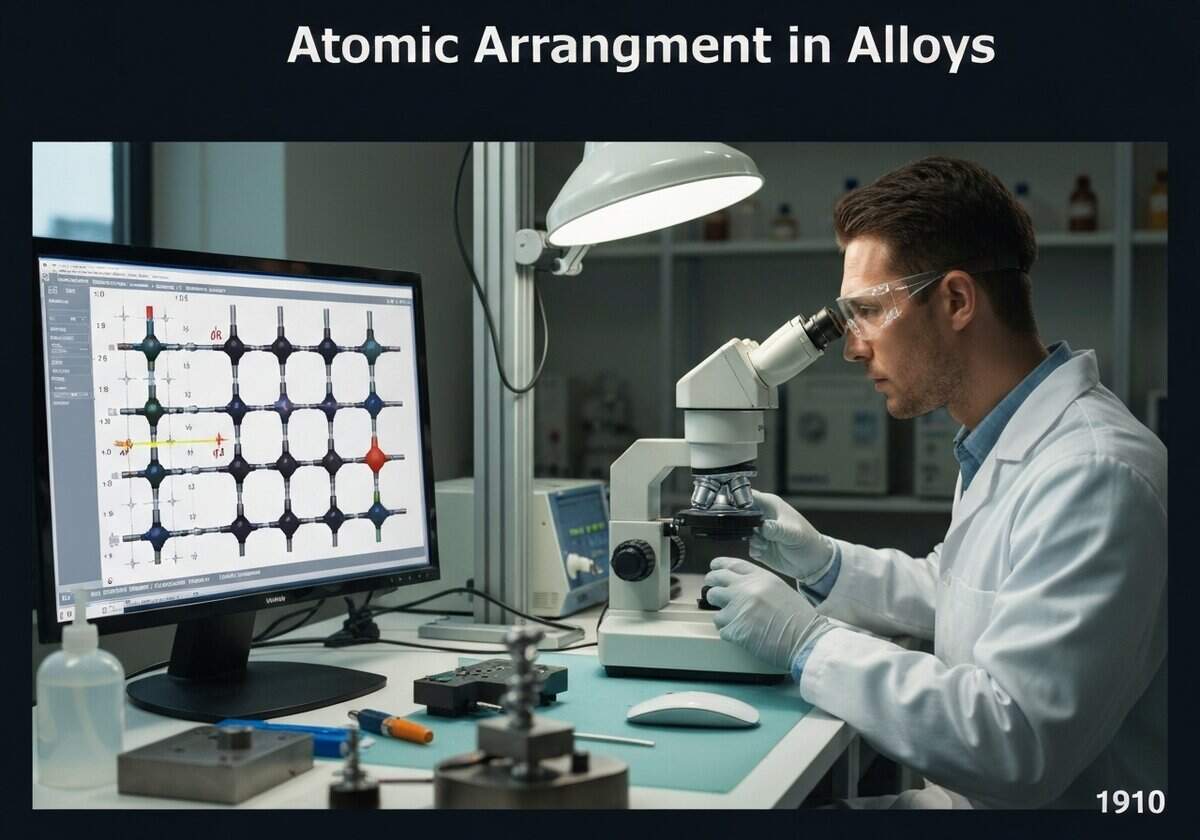
합금은 원자 배열에 따라 분류됩니다. 치환형 합금에서는 용질 원소의 원자가 결정 격자 내의 용매 원자를 대체하는데, 이는 원자 크기가 유사할 때 흔히 나타납니다. 침입형 합금에서는 철의 탄소처럼 크기가 작은 용질 원자가 크기가 큰 용매 원자 사이의 공간(침입구)에 자리 잡습니다. 이러한 구조적 차이가 합금의 기계적 특성을 근본적으로 결정합니다.


(설명을 위한 생성된 이미지입니다)
합금은 원자 배열에 따라 분류됩니다. 치환형 합금에서는 용질 원소의 원자가 결정 격자 내의 용매 원자를 대체하는데, 이는 원자 크기가 유사할 때 흔히 나타납니다. 침입형 합금에서는 철의 탄소처럼 크기가 작은 용질 원자가 크기가 큰 용매 원자 사이의 공간(침입구)에 자리 잡습니다. 이러한 구조적 차이가 합금의 기계적 특성을 근본적으로 결정합니다.

치환형 고용체와 침입형 고용체의 구분은 물리 야금 및 합금 설계에 있어 매우 중요합니다. 형성되는 고용체의 유형은 주로 용질 원자와 용매 원자의 상대적인 크기에 의해 결정됩니다. 치환형 합금은 일반적으로 두 원소의 원자 반지름이 약 15% 이내일 때 형성되는데, 이를 흄-로더리 크기 인자 법칙이라고 합니다. 용질 원자가 용매 원자를 대체하면 국부적인 격자 변형이 발생하여 전위 이동을 저해하고, 결과적으로 재료의 강도와 경도를 증가시키지만, 종종 용해도는 감소시킵니다. 연성예를 들어 황동(구리에 아연 함유)과 청동(구리에 주석 함유)이 있습니다.
Interstitial alloys, on the other hand, form when the solute atoms are significantly smaller than the solvent atoms, allowing them to occupy the interstitial sites within the crystal lattice without displacing a solvent atom. Common interstitial atoms are 수소, boron, carbon, and nitrogen. The presence of these atoms causes significant lattice distortion, which provides a very effective mechanism for blocking dislocation movement, leading to a substantial increase in hardness and strength. The most prominent example is steel, where carbon atoms occupy interstitial sites in the iron lattice. The amount of carbon and its location, which can be controlled by heat treatment, determines the final properties of the steel, from ductile low-carbon steel to hard, brittle high-carbon steel.
합금의 원자 배열
(날짜를 알 수 없거나 관련이 없는 경우, 예를 들어 "유체역학"의 경우, 주목할 만한 등장 시기를 대략적으로 추정하여 제공합니다.)

고화질 이미지 및 다운로드는 등록된 회원에게만 100% 무료로 제공됩니다.
> 로그인 <