
新製品デザイン、イノベーション、そして特にゲーム 力学 are built to tap into fundamental human motivations for competence, autonomy, and social relatedness. By creating systems that generate predictable emotional and behavioral responses, such as the compulsion to complete an unfinished task or the desire to avoid missing a limited-time opportunity, developers can build powerful feedback loops that encourage sustained player involvement and emotional investment.
This article is the 3nd of a 3-parts:
- Data-Driven and Statistical Tricks for Games and マーケティング
- Cognitive Science Tricks for Games and Marketing
- More Cognitive Science Tricks for Games and Marketing
It follows the part #1 here:

and the part #2 here:
Part #3: More Psychological and Engagement Tricks
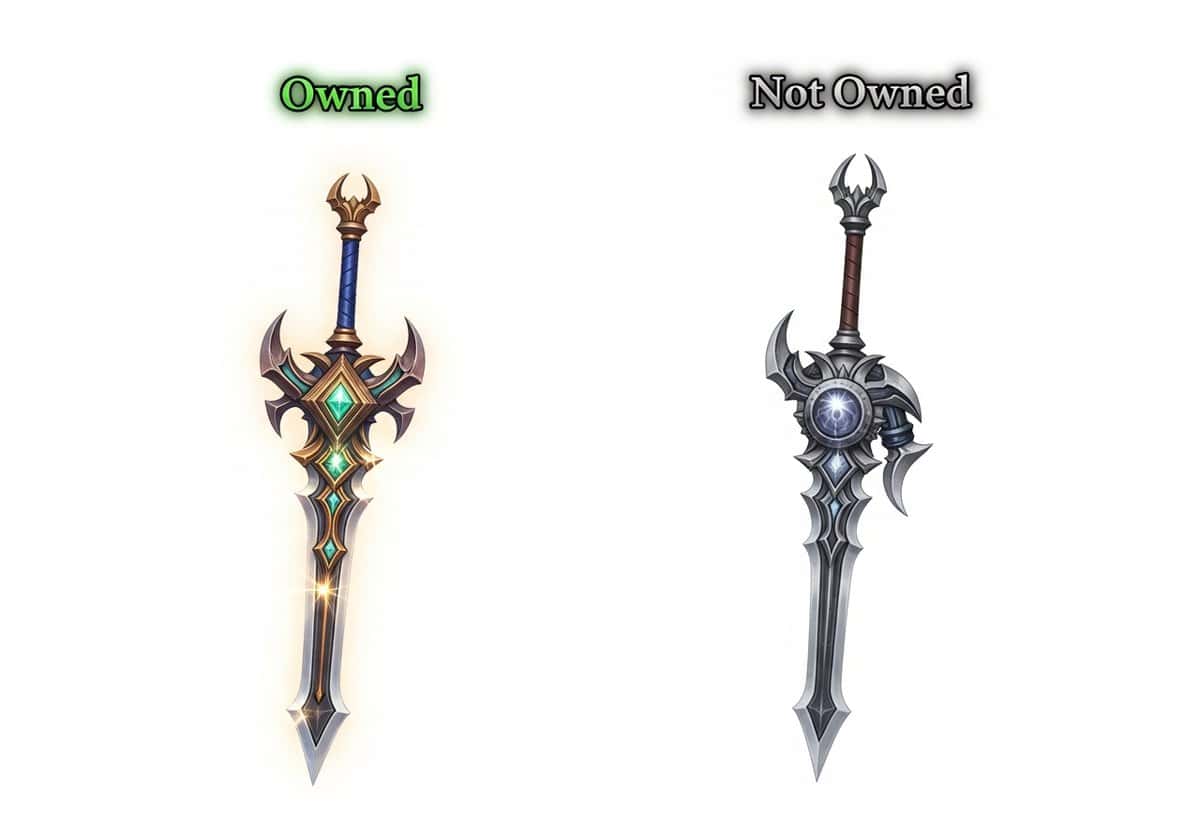
21. Endowment Effect
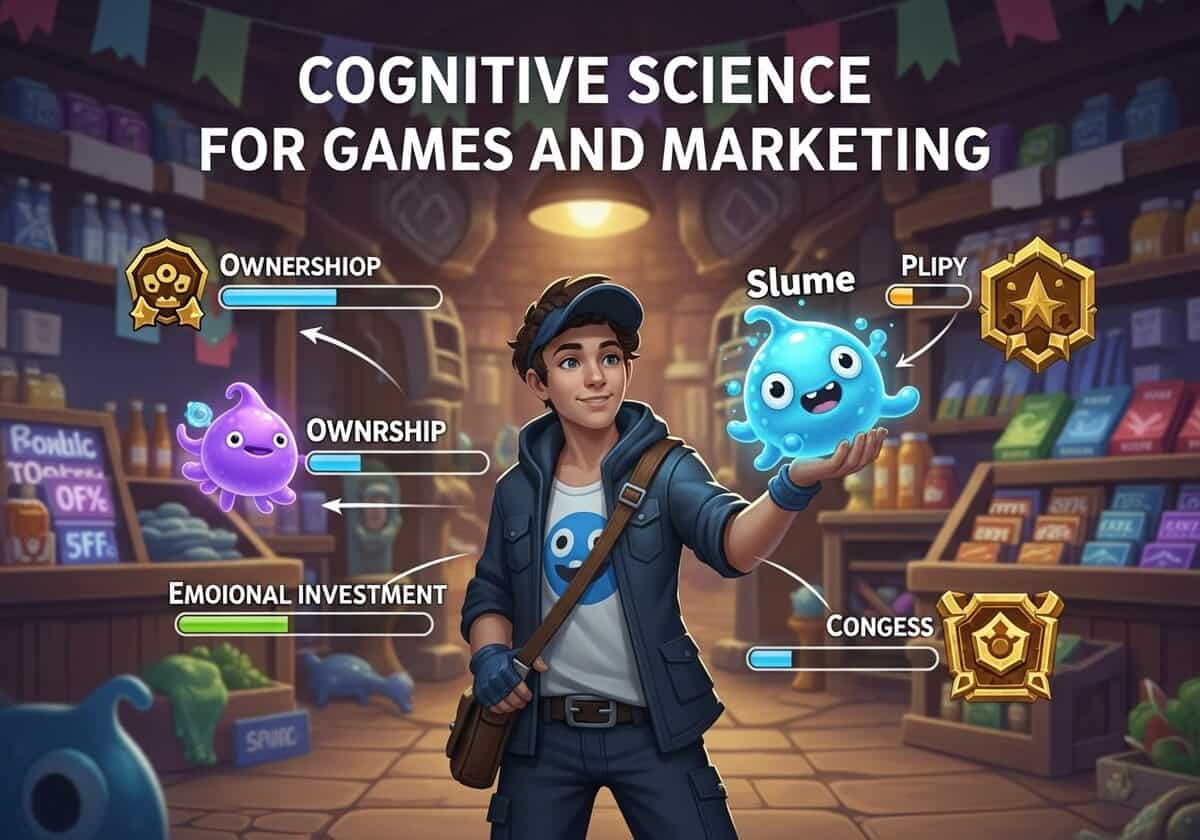
This cognitive bias causes people to overvalue things that they own. Once a player feels a sense of ownership over an in-game item, they will value it more highly than an identical item they do not own.
Games foster this effect by allowing customization, naming, and improvement of items, creating a personal attachment that makes the player more invested in the game world where their prized possessions exist.
The IT system enables this by providing persistent item databases that store not just the item’s existence but also its customized properties. This can include its name (a string), its color (a hex value), its stats (which are upgraded through player action), and its history (e.g., “Defeated the Lich King”). When the player views the item, the client pulls all this personalized data from the server, reinforcing the item’s unique identity and the player’s ownership of it.
Game application: in a monster-battling game, a player captures a basic “Slime” creature. They spend resources to upgrade it, evolve its appearance, and give it a unique name. A special offer appears in the shop for a much stronger, pre-leveled creature. However, the player is unwilling to replace their personalized, self-raised creature because the endowment effect has made it feel more valuable than the objectively superior new one.
22. Scarcity

よく使われる 広告 マーケティングやウェブサイトにおいて、希少性は需要の高さや供給の少なさを暗示することで、知覚価値を高めます。希少性、限定性、あるいは期間限定販売といった要素は、より魅力的なものとして認識されます。これは、ステータスや独自性への欲求に訴えかけるものです。希少なアイテムを所有することは、他のプレイヤーに対して献身、幸運、あるいは富の証となり、強力な社会的シンボルであると同時に、非常に人気の高い商品となります。
ヒント: this tricks combines very well with data-driven tricks seen in part 1
Scarcity is created and managed through server-side controls. For items with probabilistic scarcity (rare drops), the server uses RNG with very low probabilities, as described in intermittent rewards. For items with managed scarcity, the server might be programmed to only allow a certain number to exist in the entire game world (e.g., “Only 100 ‘Swords of the Founder’ will ever be created”). For time-based scarcity, the event system is used to make items available for only a short period.
Game application: an online multiplayer game sells a unique motorcycle skin in its cash shop for one week only, with a message that it will “never be sold again.” Years later, players who own the skin are seen as veterans. The skin’s scarcity has turned it into a status symbol, and new players who see it feel a desire for similar exclusive items.
23. Core Loops
コアループとは、プレイヤーが繰り返し行う一連の動作のことです。 心理的 適切に設計されたループの強みは、それが本質的にモチベーションを高め、習慣化を促す能力にある。
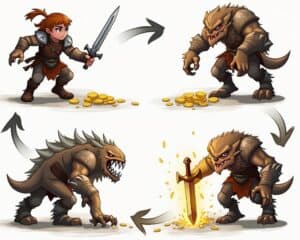
シンプルでやりがいのあるループ (例: モンスターと戦う -> ゴールドを獲得する -> ゴールドを使用して剣をアップグレードする -> より強力なモンスターと戦う) により、継続的な進歩と能力の感覚が得られます。
It is the fundamental gameplay rhythm that players learn and master.
Game application: a mobile action-RPG has a simple core loop. 1) The player enters a short, 30-second dungeon (Action). 2) They collect loot and an experience gem (Reward). 3) They use the loot and gem to slightly improve their character’s stats back in the main menu (Investment). This loop is so fast and rewarding that players can perform it dozens of times in a single session.
24. Gacha Mechanics
Gacha mechanics are an extreme form of intermittent rewards, modeled after capsule-toy vending machines: they tap into the powerful thrill of summoning or opening a pack, where the anticipation of a rare result is a major part of the experience.
The cycle of spending currency, watching an elaborate opening animation, and then seeing the results can be highly compelling, triggering the same psychological responses as gambling.
This system is entirely dependent on a server-side RNG and a database of potential rewards (the “pool”). Each item in the pool is assigned a rarity and a corresponding probability. When a player “pulls,” the server executes a roll and grants the resulting item to their account. Math and statistics are used to publicly display the probabilities (e.g., “5-star character: 1% chance”), which is a legal requirement in many regions, to provide transparency into the statistical model being used.
Game application: in a hero-collection RPG, players spend “Soul Gems” to summon a random hero. The summoning animation is a flashy spectacle of light and energy. Most of the time, a common 3-star hero appears. But the player keeps spending gems, chasing the dopamine rush of the moment when the animation might reveal an ultra-rare 5-star hero, which has a 0.6% probability.
25. Pay to Skip
This monetization strategy leverages a player’s impatience. By creating artificial waiting periods or “grindy” challenges, the game first creates a negative stimulus (boredom or frustration). It then immediately offers a paid solution to remove that negative stimulus.
The purchase is not framed as buying an advantage, but as buying back the player’s time, which can be a very persuasive proposition for adults with disposable income but limited leisure time.

実装は簡単ですが、サーバー側の時間制限メカニズムも必要です。プレイヤーがアクション(例:「タウンホールのアップグレード」)を開始すると、サーバーはデータベースに「完了タイムスタンプ」(例:現在時刻+8時間)を保存します。ゲームクライアントはこのタイムスタンプを取得します。 タイムスタンプ そしてカウントダウンが表示されます。その横には「スキップするには支払う」ボタンが表示されます。プレイヤーがこのボタンをクリックして購入を完了すると、サーバーはタイムスタンプを過去の値に更新し、即座に処理を完了します。
Game application: in a mobile strategy game, upgrading the main castle to level 5 takes 24 real-world hours. The player is locked out of other upgrades during this time. A button next to the timer offers to “Instantly Complete for 100 Gems.” A busy player who wants to continue playing without waiting for a full day is highly tempted to pay the small fee to skip the timer.

26. Streaks and Daily Challenges
Used of course only in games, streaks build habits by leveraging the psychological desire for consistency and the Zeigarnik effect. An unbroken chain becomes an achievement in itself that the player feel motivated to maintain. Daily challenges create a small, achievable goal that gives the player a clear reason to log in every day. Completing these challenges provides a reliable dose of accomplishment, reinforcing the daily login habit, thus returning.
これは、プレイヤーのアクティビティをカレンダーに記録するサーバー側システムで実装されています。連続ログインの場合、サーバーはプレイヤーの最後のログインのタイムスタンプを確認し、現在の日付と比較して、連続ログインが途切れていないかどうかを確認します。デイリーチャレンジの場合、サーバー スクリプトは、毎日決まった時間 (例: 00:00) にタスクのリストをリセットします。 UTCプレイヤーがこれらのタスクを完了したかどうかはデータベースで追跡され、完了すると自動的に報酬が付与されます。
Game application: a mobile word game has a “Daily Puzzle.” It also tracks the “Daily Puzzle Streak.” A player has completed the puzzle for 35 consecutive days. On day 36, they are busy but make a point to open the app for five minutes to solve the puzzle, not just for the small reward, but primarily to avoid breaking their 35-day streak.
27. The “Near Miss” Effect
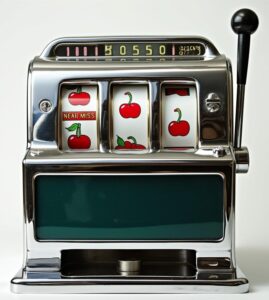
This psychological phenomenon occurs when a player perceives they were very close to achieving a desired outcome. In gambling, it’s getting two out of three cherries on a slot machine. This near miss can be more stimulating than a clear loss, as it signals that a win is possible and encourages another attempt. It triggers the brain’s reward system in a similar way to a win, creating a powerful “try again” impulse.
This effect is engineered into reward systems using statistics and ビジュアルデザイン. For a loot box opening, the server might have already determined the player will receive a common item. However, the client-side animation might rapidly show several legendary items flashing by before settling on the common one. The math ensures the final outcome is random, but the visual presentation is deliberately designed to create the illusion of a near miss, stimulating the player to try again.
Game application: in a digital collectible card game, when a player opens a card pack, the five cards are revealed one by one. The fourth card revealed is a legendary, ultra-rare card, causing a spike of excitement. The fifth and final card (the one they actually get to keep from this specific slot) is a common one. The feeling of “almost getting” the legendary card makes the player want to buy another pack immediately.
28. Customization and Self-Expression
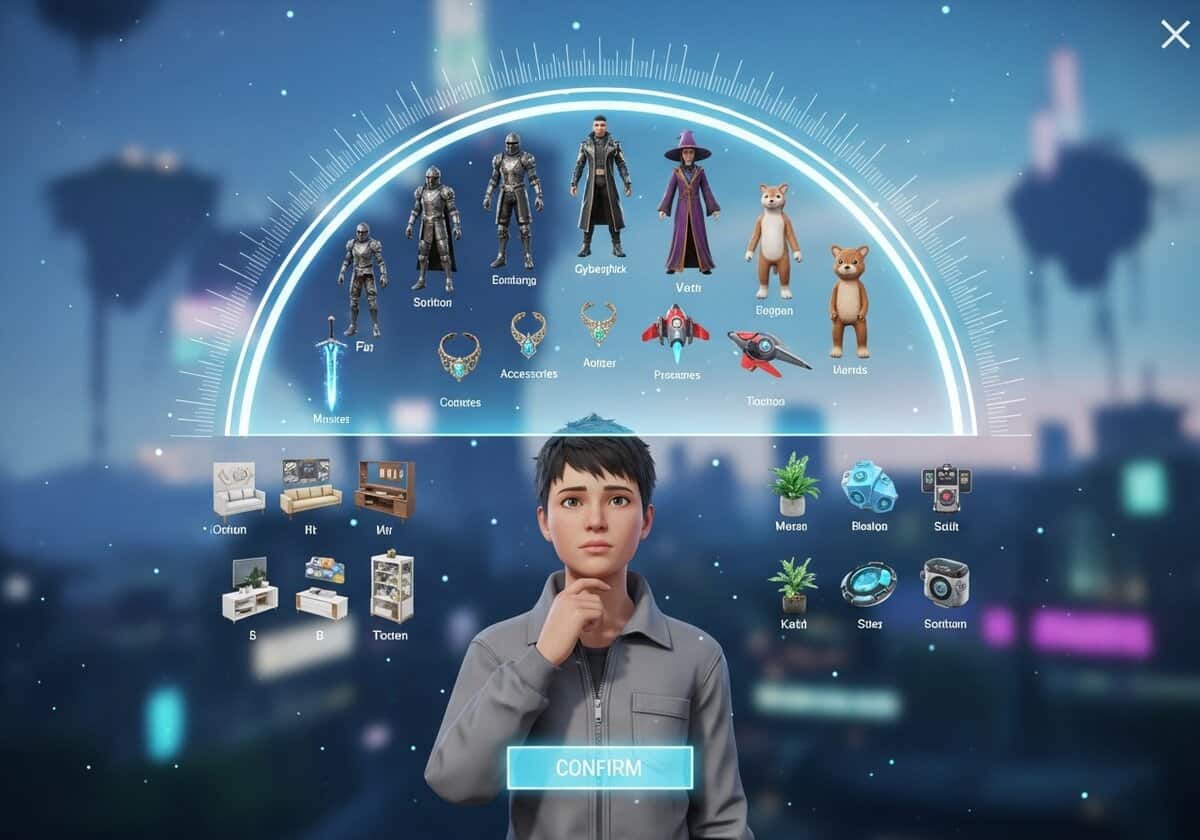
Free or paid, allowing players to customize their appearance, gear, or home taps into the need for individuality and self-expression. When a player invests time in creating a unique look or designing a personal space, they are projecting their own identity into the game world. This creates a much deeper and more personal emotional connection to their character and the game itself, increasing their sense of belonging and investment.
This requires a flexible data structure on the backend to store a wide array of customization choices for each character or object. For example, a character’s database entry would have fields for hair style, hair color, face markings, armor tints, etc. The game client contains the 3D models and textures, and it assembles the final appearance of the character in real-time based on the specific combination of data it retrieves from the server for that player.
Game application: in a social simulation game, players are given a blank apartment. They can spend in-game currency to buy hundreds of different furniture items, change the wallpaper, and position everything exactly as they wish. Players spend hours designing their unique space and visiting the apartments of others. This deep investment in their personalized home becomes a primary reason they continue to play.
29. Mystery and Unpredictability

人間の脳は、パターンを探し出し、パズルを解くようにできています。謎めいた要素、展開していくストーリー、予測不可能な出来事などをゲームに取り入れることで、強い好奇心と驚きを生み出すことができます。次に何が起こるのか、奇妙な発見が何を意味するのか分からないという状況は、探求心を掻き立て、プレイヤーを夢中にさせる強力な要素となります。なぜなら、プレイヤーは答えを見つけ、未知のものを解き明かしたいという根源的な欲求に突き動かされるからです。
これは、ナラティブ デザインとイベント トリガーを通じて実装されます。
Game application: 謎のオブジェクトが最初の説明もなく世界に配置される可能性があります。
その目的は、メイン ストーリーの後半の章でのみ明らかにされ、ゲームのクエスト ロジックに保存されている関係です。

Escapism provides a temporary psychological retreat from the stresses and constraints of the real world. A well-crafted game world offers a clear set of rules, achievable goals, and a sense of power or agency that might be lacking in a person’s daily life.
自分の行動が明確かつ即座に意味を持つ別の現実を生きることができるこの能力は、 ビデオゲーム.
The technical creation of a compelling world is the sum of all game development disciplines. It requires high-fidelity graphics and art to create a visually distinct place. It needs sound design and music to establish a mood. It needs robust network code to create a stable and persistent online world. The servers must store the state of this world, from the position of monsters to the ownership of player housing, creating a consistent alternate reality that players can step into.
Game Application: a player has a stressful, monotonous office 仕事 with little autonomy. In the evening, they log into a fantasy RPG where they are a legendary hero. In this world, they make important decisions, explore a vast and beautiful landscape, and are a powerful, respected figure. This provides a nightly escape from their real-world frustrations and a sense of accomplishment and power.
31. Endowed Progress
This leverages the psychological goal-gradient effect, which suggests that people are more motivated as they get closer to a goal.
By starting a player partway through a task (e.g., a progress bar that is already 20% full), the game makes the goal seem less daunting and more achievable. This initial “endowment” of progress provides immediate momentum and makes the player more likely to commit to completing the rest of the task.
The implementation is a simple matter of state management. When a quest or task is initiated for a player, the server, instead of setting their progress value to 0, sets it to a predefined starting value. For a quest to “Collect 10 Bear Pelts,” the server might automatically grant the first 3 to the player upon accepting the quest. The UI then fetches this initial state and displays the progress as “3/10,” immediately motivating the player.
Game application: in a shooter with a battle pass system, the first tier is unlocked automatically upon purchase. Instead of starting at “Tier 1, 0 XP,” the player starts at “Tier 2, 0 XP.” This endowed progress immediately makes the goal of reaching the final tier seem closer and more manageable, encouraging them to start grinding for the next level.
32. Reciprocity

Reciprocity is a strong social norm where individuals feel an obligation to return favors. By building systems that allow players to easily give gifts or help one another, games create a web of positive social obligation.
プレイヤーが友人から予期せぬエネルギーの贈り物や役立つ後押しを受け取ると、社会的に プレッシャー その友人に感謝の気持ちを表すとともに、将来的に恩返しをすることで、社会的絆を強化し、関係を維持する。
The technical system requires a social graph (a friend list) and an event system for gifting. When Player A sends a gift to Player B, the server logs this action. Player B receives a notification, often with Player A’s avatar attached (“Player A sent you 10 Energy!”). The system also includes a “Send Gift Back” button, which simplifies the act of reciprocation, turning a complex social interaction into a single, easy click.
Game application: in a mobile puzzle game, players can get stuck on a hard level. They can request extra lives from friends. When a friend grants them lives, they are able to continue playing. This creates a feeling of gratitude and a social obligation to grant lives to others in return, fostering a cooperative community 生態系.
33. Cognitive Dissonance
This describes the mental discomfort of holding contradictory beliefs. Games can induce this to influence purchasing behavior.
A player might strongly identify as a “free-to-play” user (Belief 1) but be consistently failing at a level (Belief 2: “I am not skilled enough”). The game then offers a very cheap, powerful item for $0.99. Buying it conflicts with their “free-to-play” identity, creating dissonance. To resolve this, the player may rationalize the purchase (“It’s just a one-time thing”) and, in doing so, lower their barrier for future spending.
This is not a direct technical system but is enabled by game and economic design. The system requires analytics to identify player “stuck points”—levels with abnormally high failure rates. The monetization system is then programmed to detect when a player is stuck at such a point and trigger a highly targeted, low-cost offer designed to solve that specific problem. This creates the exact conditions for cognitive dissonance to occur.
Game application: a player in a base-building strategy game who prides themselves on never spending money has their base repeatedly destroyed by a specific high-level dragon. After the fifth consecutive defeat, a one-time offer appears: “Dragon Slayer Pack: Anti-air missile launcher for $0.99.” The player, frustrated and wanting to progress, makes the small purchase, resolving their dissonance by slightly altering their self-identity.
34. The Illusion of Control

This cognitive bias causes people to overestimate their ability to influence events that are actually determined by chance. Giving the player a choice in a random process, even if that choice has no bearing on the outcome, makes them feel more invested and responsible for the result. This transforms them from a passive observer of randomness into an active participant.
This is a trick of user interface design layered on top of a server-side RNG. For example, a game might present three treasure chests. The server has already decided that the player will receive 100 gold. When the player clicks a chest, the client simply plays an animation of that specific chest opening and displays the pre-determined reward. The player’s choice was purely cosmetic, but it creates the powerful illusion that they chose the “right” chest.
Game application: in a character-collection gacha game, during a “Summon” event, the player taps a crystal. The server has already determined which character they will receive. However, the client could ask the player to trace a symbol on the screen to “focus the energy.” This meaningless action gives the player an illusion of control over the random summon, making them more invested in the outcome.
35. ギャンブラーの誤謬

This is the mistaken belief that past random events influence future random events. If a coin lands on heads five times in a row, a person exhibiting this fallacy believes it is “due” to land on tails next.
Games can implicitly encourage this thinking. After a long string of receiving only common items from a loot box, a player may feel that a rare item is “due,” compelling them to perform the action one more time.
これは開発者が直接プログラムするものではなく、プレイヤーが 心理学 これは、確率の低いランダムな結果を伴うあらゆるシステムから生じるものです。重要な技術的要素は乱数発生器(RNG)です。公平を期すために、RNGの数学は各イベントが統計的に独立していることを保証しなければなりません。しかし、UIは最近の報酬の「履歴」を表示するように設計することができ、プレイヤーが「連敗」を簡単に確認できるようにすることで、意図せずギャンブラーの誤謬を助長する可能性があります。
Game application: in a sports team-building game with player packs, a player opens 10 packs and receives no high-rated players. Believing their luck is “due for a turn,” they decide to buy one more pack, incorrectly assuming their previous bad luck has increased the probability of getting a good player in the next one. The probability remains unchanged, but their belief drives the purchase.
36. Flow State
Flow is a state of deep immersion where a person is fully absorbed in an activity, and the sense of time is distorted. It is achieved when the perceived challenge of a task is in perfect balance with the person’s skill level. Games are exceptionally good at creating and maintaining this state by carefully managing difficulty, providing clear goals, and giving immediate feedback on actions.
Technically, achieving flow is the goal of systems like Dynamic Difficulty Adjustment (DDA). The game constantly collects metrics about player performance (accuracy, speed, success rate). The game’s logic then uses these metrics to subtly modulate the challenge. If the player’s skill increases, the difficulty ramps up to match it. If they start to struggle, it eases off. This constant, data-driven balancing is designed to keep the player within the narrow, highly engaging “flow channel.”
Game application: in a rhythm game, as the player successfully hits a long string of notes, their “rock meter” goes up, and the song continues. If they start missing notes, the meter drops, and the crowd starts booing. To maintain the flow state, the game’s difficulty curve is designed so that new note patterns are introduced just as the player masters the previous ones, keeping them constantly challenged but not overwhelmed.
37. Self-Determination Theory
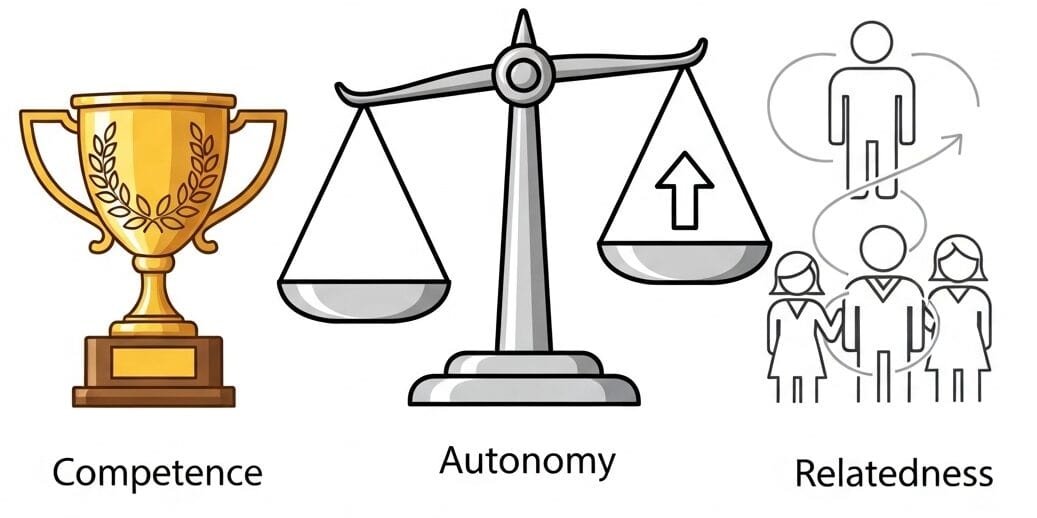
This psychological theory suggests that well-being and motivation are driven by three innate needs:
- Autonomy (the feeling of choice),
- Competence (the feeling of mastery),
- Relatedness (the feeling of connection to others).
Games that satisfy these three needs are highly engaging. They provide meaningful choices (Autonomy), systems to master and clear feedback on progress (Competence), and social features like guilds and teams (Relatedness).
技術的な実装には、ゲームのコアシステムにおける多様性と選択肢の提供が含まれます。自律性は、分岐するクエストや複数の有効なキャラクタービルドを提供することでサポートされます。能力は、レベルアップ、実績通知、ダメージ数値などの明確なUIフィードバックによってサポートされます。関連性は、チャットシステム、グループ検索、共有ギルド目標などのネットワーク機能によってサポートされますが、これらはすべて複雑なデータベースとリアルタイム処理を必要とします。 コミュニケーション インフラストラクチャー。
Game application: in a science-fiction RPG, the player is given Autonomy through dialogue wheels that let them shape their character’s personality. They gain Competence by leveling up their skills and acquiring better gear, making them more effective in combat. They feel Relatedness through the deep relationships they build with their companion characters, who react to their choices.
38. Chunking
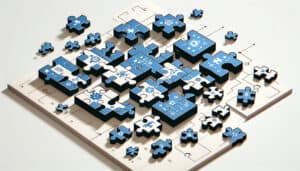
Chunking is a cognitive principle where information is broken down into smaller, manageable units.
The human brain can only process a limited amount of new information at once. By introducing complex mechanics one piece at a time (chunking them), games avoid overwhelming the player. A complex combat system is not explained in a 10-page text wall, but is taught through a series of small, interactive tutorial steps.
これは、 ユーザーエクスペリエンス (UX) design and is implemented via a scripted tutorial system. The system locks out most of the game’s features at the start. It then guides the player through one concept at a time. For example, Step 1 teaches movement. Once that is demonstrated, Step 2 unlocks and teaches the basic attack. Step 3 teaches a special ability. This sequential unlocking, managed by player state flags, ensures a smooth learning curve.
Game application: a complex turn-based strategy game is immensely complex. A new player is not presented with all 50 game concepts at once. The first few turns focus only on the “chunk” of moving a warrior and founding a city. The concept of “research” is then introduced. After that, the “chunk” of “city production” is explained. This step-by-step reveal makes the game approachable.
39. Curiosity Gap
The curiosity gap is the space between what we know and what we want to know. Humans are naturally motivated to fill this gap. Games create curiosity by showing players things they cannot yet access or understand. This could be a locked door, a grayed-out area on the world map, or a mysterious piece of story lore. This creates a powerful intrinsic motivation for the player to continue playing in order to find the key, explore that region, or uncover the truth.
これはレベルデザインと状態管理によって実現されます。
Game application: 新しいプレイヤーには高レベルのエリアが見えるかもしれませんが、敵は不可能なほど難しくなるようにプログラムされており、プレイヤーが強くなるまでは物理的にアクセスできません。
UI には、「レベル 20 でロック解除」というテキストとともにグレー表示された「武器エンチャント」機能が表示される場合があります。

Anticipation of a reward can be more psychologically stimulating than the reward itself. The brain’s dopamine system is highly active during the period of waiting and expectation.
Games deliberately build anticipation through timers, slow-opening animations for loot boxes, and progress bars for long-term goals. This delay makes the final reward feel more significant and earned.
This is implemented through client-side animation timing and server-side time gates. When a player opens a loot box, the server may instantly determine the reward, but the client is instructed to play a 5-second animation. The animation shows the box shaking, glowing, and slowly opening, all designed to build anticipation before the final reveal. Countdown timers for events or upgrades serve the same purpose over a longer time frame.
Game application: in a digital card game, when a player earns a new card pack, opening it is a multi-stage process. They must drag the pack to the center of the screen. It shakes and glows. When they tap it, the cards burst out and land face down. The player must then click on each card individually to reveal it, building a small moment of anticipation for each one.
41. Powermongering
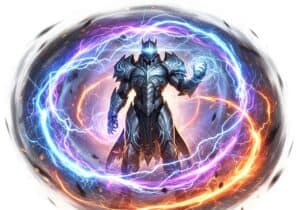
This leverages the player’s desire for power, control, and dominance. Games provide a safe and ethical (?) outlet for this desire by allowing players to become immensely powerful within the game’s universe. This can be achieved through devastating abilities that wipe out hordes of enemies, high-level gear that makes them nearly invincible, or a top rank on a competitive leaderboard that signals their superiority to others.
The feeling of power is delivered through mathematical scaling. As a player levels up, their character’s stats (health, damage, etc.) do not increase linearly, but often exponentially. An ability at level 1 might do 10 damage, but at level 50 it does 10,000 damage. The technical systems must support these large numbers. Visual and sound effects are also scaled up to match the numbers, making a high-level ability look and sound far more impactful than a low-level one.
Game application: in an action game, the player character is a heroic general who can single-handedly defeat thousands of enemy soldiers. The core gameplay loop is built around the fantasy of being an unstoppable force of nature. The satisfaction comes directly from this powermongering, from the visual and statistical feedback of being overwhelmingly superior to the enemies.
42. Anchoring
Anchoring is a cognitive bias where people depend too heavily on the first piece of information offered (the “anchor”) when making decisions. In-game shops use this by showing an extremely expensive item or bundle first. This high price sets a mental anchor. Subsequent items, even if objectively expensive, seem reasonably priced in comparison to the initial anchor, making them more likely to be purchased.
This is a monetization and UI design strategy. The data structure for the in-game shop is deliberately sorted on the server before being sent to the client.
Game application: the shop in a mobile character-collection game often opens with a “$99.99” character offer as the most prominent, leftmost item. As the player scrolls to the right, they see smaller offers for $19.99 or $4.99. The initial anchor of $99.99 makes the subsequent, smaller purchases feel like a bargain.
43. The “IKEA Effect”
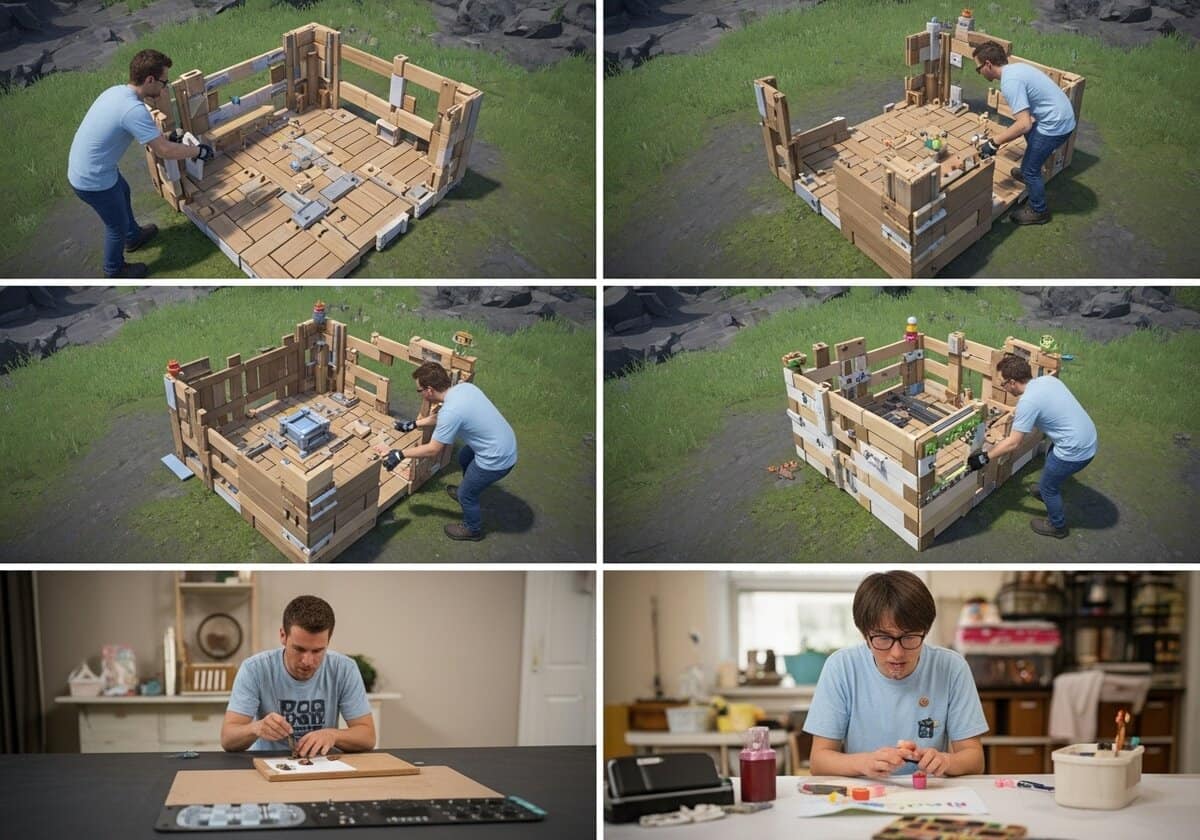
This cognitive bias leads people to place a disproportionately high value on things they have partially created themselves. By having players invest effort into building or assembling an item or base, games can trigger this effect. The player feels a greater sense of ownership and pride in the final product because of their own labor, making them more attached to it than to a pre-made, gifted item of equal or greater value.
ゲームのシステムは、創造のための枠組みを提供する必要があります。これには、プレイヤーが原材料を集め、レシピに従ってアイテムを作成するクラフトシステムが含まれます。また、プレイヤーが自由に組み合わせることができるモジュール式のパーツセットを備えた基地建設システムも含まれます。サーバーは、これらのユーザーが作成した作品の状態を保存し、プレイヤーの努力と、プレイヤーが関連付けたオブジェクトを保持する必要があります。
Game application: サンドボックス型のサバイバルゲームでは、プレイヤーは5分で簡単に実用的な土の小屋を建てることができる。しかし、このゲームでは、希少な木材や石を集め、装飾品を作り、壮大な城を丹念に建設するために20時間を費やす。 イケア effect means this self-built castle, a product of their own effort and 創造性, feels infinitely more valuable to them than any pre-built structure the game could have provided.
44. Delayed Gratification
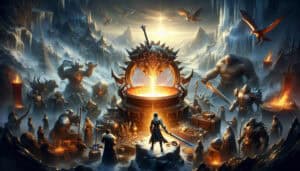
While many games rely on instant rewards, delaying gratification can create a more profound sense of accomplishment and investment. By setting long-term goals that may take weeks or months to achieve, a game encourages persistence and long-term planning. The final reward, when it is finally achieved after a long period of effort, provides a massive psychological payoff that reinforces the player’s dedication to the game.
This requires robust long-term tracking systems. The server must track progress on objectives that require thousands of actions or weeks of daily logins. The UI plays a critical role by visualizing this long road with extended progress bars or multi-stage collection quests. This constant visual reminder of the far-off goal keeps the player oriented and motivated over a long period.
Game application: in an online role-playing game, acquiring a legendary weapon can be an epic, multi-month quest chain. It involves completing dozens of difficult steps, collecting rare materials from all over the world, and defeating powerful bosses. The final moment of forging the weapon after months of effort provides an immense sense of accomplishment.
45. Social Recovery
Social Recovery is a player retention mechanic where an inactive player can be “revived” by their active friends. It leverages the power of social obligation listed above and connection to bring lapsed users back into the game. An active player may receive a prompt to “Bring a friend back and get a reward,” which turns the game’s retention problem into a quest for the active player.
このシステムは churn prediction ソーシャルグラフを使ったモデル。
Game application: システムがプレイヤー A に「チャーン」のフラグを付けると、プレイヤー A のフレンド リストをチェックできます。
結論
現代では 製品デザインイノベーション、ゲーム業界、マーケティングにおいて、顧客を「引き込む」プロセスは、心理学原理と大規模データ分析を融合させた科学分野へと進化しました。科学は、断続的な報酬、損失回避、社会的証明などの確立された行動理論と認知理論を活用し、予測可能な人間の動機に直接働きかける体験を設計するための基礎的な設計図を提供します。 完了すると、友人のプレイヤー B に起因する報酬を含む電子メールまたはプッシュ通知がプレイヤー A に送信されます。データ分析は、エンジニアリングおよび検証エンジンとして機能し、A/Bテスト、予測モデリング、ユーザーセグメンテーションなどの手法を用いて、これらの心理的トリガーの正確な影響をリアルタイムで測定します。この強力な組み合わせにより、マーケターは直感に頼るのではなく、高度に最適化されたパーソナライズされたシステムを構築し、ユーザーの習慣を体系的に構築し、深いエンゲージメントを促進し、統計的な精度で購買行動を導くことができます。
用語集
User experience (UX): the overall satisfaction and perception of a user when interacting with a product, system, or service, encompassing usability, accessibility, design, and emotional response throughout the entire interaction process.
User Interface (UI): a system that enables interaction between users and software applications, encompassing visual elements, controls, and overall layout to facilitate user tasks and enhance experience.