Product Design, Manufacturing & Innovation Resources
家 » 紫外線殺菌照射(UVGI)

紫外線殺菌照射(UVGI)

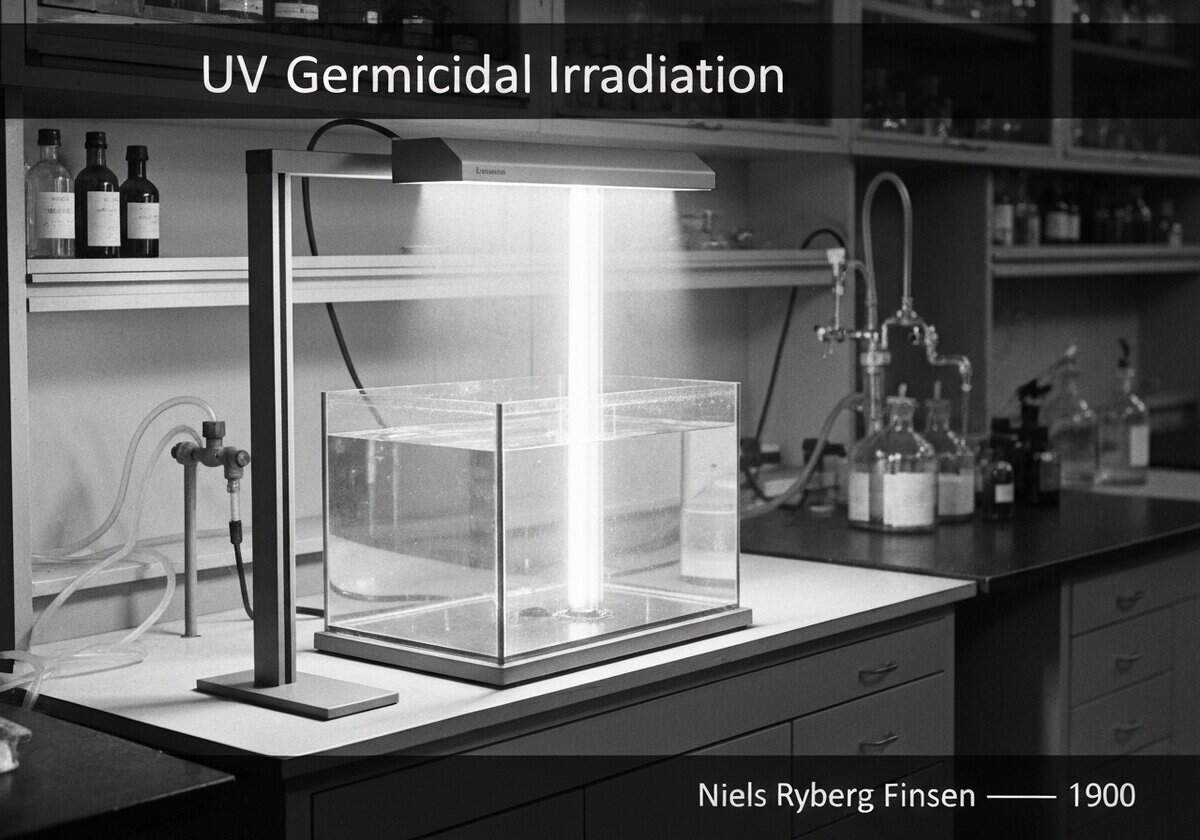
1900
  • Niels Ryberg Finsen
UV Germicidal Irradiation system in a laboratory for microbial disinfection.

(画像はイメージです)

紫外線殺菌照射(UVGI)は短波長の光を使用する 紫外線 C(UVC) radiation, typically at 254 nm, to kill or inactivate microorganisms. UVC light disrupts the nucleic acids (DNA and RNA) of bacteria, viruses, and other pathogens, destroying their ability to replicate and cause disease. This non-chemical disinfection method is used for air, water, and surface sterilization.

The germicidal properties of UVC radiation are centered around its ability to be absorbed by the nucleic acids of microorganisms. The peak germicidal effectiveness occurs at a wavelength of approximately 265 nm, which corresponds to the peak absorption wavelength of DNA. Commercially available low-pressure mercury vapor lamps, which are the most common source for UVGI, emit monochromatically at 253.7 nm, which is very close to this peak and highly effective. When a UVC photon is absorbed by a DNA or RNA molecule, it can induce the formation of pyrimidine dimers, most commonly thymine dimers. These dimers are covalent bonds between adjacent pyrimidine bases (thymine or cytosine) on the same DNA strand. This structural damage prevents the DNA from being correctly read during replication or transcription, effectively rendering the microorganism sterile and unable to reproduce. While microorganisms have cellular mechanisms to repair such DNA damage, the high intensity of UVGI overwhelms these repair systems. UVGI is a physical process, not a chemical one, meaning it does not introduce toxins or residues. Its effectiveness depends on the UV dose, which is a product of intensity and exposure time, as well as factors like humidity, temperature, and the microorganism’s susceptibility. Its primary limitation is that it is a line-of-sight technology; UV light cannot disinfect areas in shadow.

UNESCO Nomenclature: 2415
微生物学

タイプ

物理的プロセス

混乱

実質的な

使用法

広く普及している

前駆物質

  • ルイ・パスツールの病原菌説
  • UVスペクトルの一部としてのUVC放射の発見
  • 水銀蒸気ランプの開発
  • ダウンズとブラントによる研究(1877年)では、日光が細菌の増殖を阻害することが示されている。

アプリケーション

  • 病院内の空気および表面の消毒
  • 都市用水処理
  • HVAC空気浄化システム
  • 食品および飲料の加工
  • 実験室の滅菌
  • 廃水処理

特許:

NA

潜在的なイノベーションのアイデア

  • portable, battery-powered uvc wands for sanitizing personal items like phones and keyboards
  • uvc-leds integrated into escalator handrails for continuous disinfection
  • autonomous robots that map and disinfect rooms in hospitals and airports overnight
  • uvc-enabled hvac systems that actively sterilize air as it circulates through a building
  • uvc treatment systems for ballast water in ships to prevent the spread of invasive aquatic species
  • smart water bottles with a uvc-led in the cap to purify water from any source
  • uvc-coated high-touch surfaces (e.g., door handles) that are self-disinfecting
  • integration of uvc emitters into 3d printers to sterilize 医療用インプラント during fabrication
  • uvc drones for disinfecting large outdoor public spaces or agricultural fields
  • uvc light fixtures for public restrooms that activate when the room is unoccupied
関連キーワード:UVGI、UVC、殺菌、消毒、滅菌、DNA損傷、チミン二量体、微生物学、水処理、空気浄化。

歴史的背景

紫外線殺菌照射(UVGI)

1800
1800-05-02
1880
1900
1910
1921
1930
1930
1800
1834-01-01
1880
1902
1920
1928
1930

(日付が不明または関連性がない場合、例えば「流体力学」などでは、その注目すべき出現時期の概算値が提示されます。)

10年目 周年

フルサイズの画像とダウンロードは、登録会員のみが100%無料で利用できます。