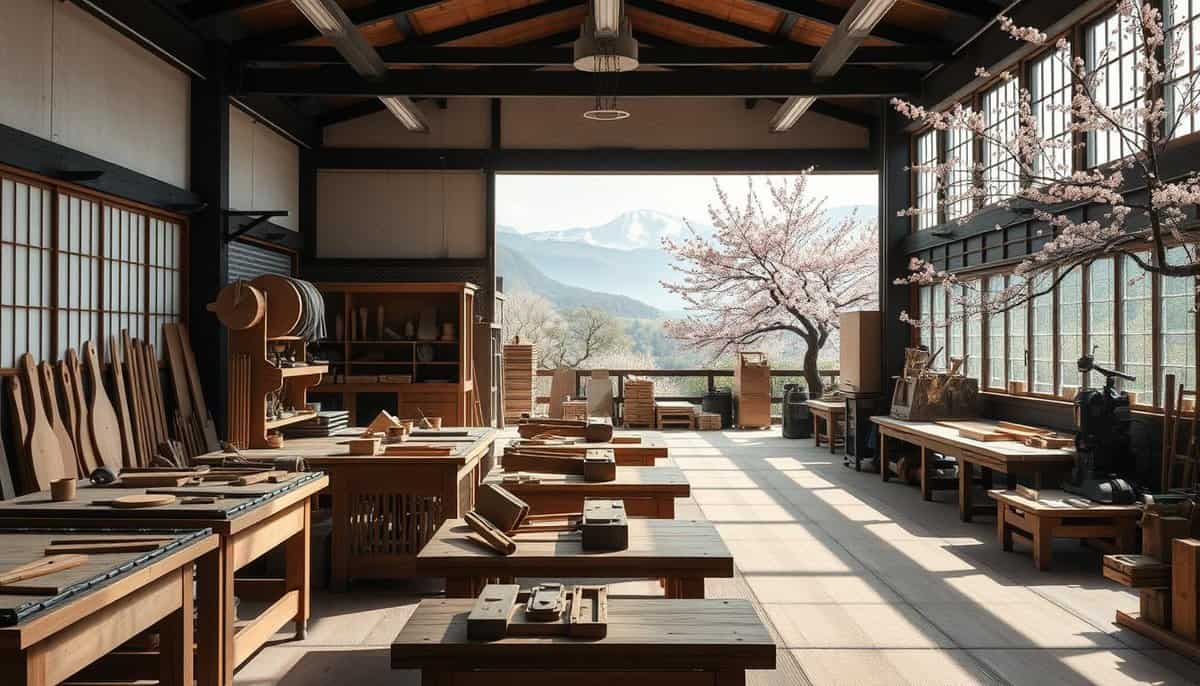
1950年に、 トヨタ 当時、日本は年間わずか2,500台の自動車しか生産していなかった。一方、フォードはミシガン州ディアボーンのルージュ工場で毎日約8,000台の自動車を生産していた。この大きな差は、日本産業が世界をリードする存在へと目覚ましい成長を遂げたことを物語っている。日本におけるリーン生産方式は、無駄を減らし生産性を高めるという文化的な考え方から始まった。
日本のリーン生産方式の歴史を学ぶということは、トヨタの生産方式を研究することを意味します。この方式は、産業界が製造業を捉える方法を変えました。豊田佐吉が革新によってそれを始め、その後、後継者たちがそれを発展させて トヨタ生産方式 (TPSこのシステムは、今日のリーン手法の基礎となっている。
従来の大量生産方式からリーン生産方式の効率的なプロセスへの移行は、大きな変革でした。それは単に製品の製造方法を変えただけでなく、世界にも影響を与えました。現在、リーン生産方式は医療やソフトウェア開発など、多くの分野で活用されています。これらの手法は、現代のビジネス慣行において不可欠なものとなっています。
「リーン生産方式」という用語は1988年に初めて使用されました。それ以来、リーンは経済効率と新しいアイデアの主要な推進力となっています。リーンは顧客のニーズに焦点を当て、無駄を排除し、継続的な改善を目指します。
主なポイント
- 1950年、トヨタの生産量はフォードの生産量よりも大幅に少なく、初期の非効率性が浮き彫りになった。
- 日本におけるリーン生産方式の起源は、トヨタ生産方式(TPS)の開発と密接に関係している。
- 豊田佐吉の革新は、日本におけるリーン生産方式の導入に大きく貢献した。
- リーン原則 顧客価値、無駄の最小化、継続的な改善を最優先事項とする。
- Initially coined in 1988, リーン生産方式 evolved to influence various global industries beyond manufacturing.
日本文化におけるリーン生産方式のルーツ
The evolution of lean culture in Japan has deep roots in its history and culture. It began to take shape early in the 20th century. This was a time of big changes and challenges. The nation’s work ethic, philosophy, and economic growth helped lean methods grow.
20世紀初頭の日本の経済情勢
1900年代初頭、日本は農業から工業へと急速に変化していた。この変化は、日本が西洋諸国と出会ったことで西洋の影響を受けて加速した。第二次世界大戦では、産業訓練制度(TWI)が始まった。TWIは、 導かれた チャニング・ライス・ドゥーリーやウォルター・ディーツといった人々によって、日本に重要なプログラムがもたらされた。 仕事 指導と職務関係の改善、産業生産性の向上、そしてリーン生産方式の導入に向けた基盤構築。
日本の労働倫理と哲学の影響
The Japanese work ethic is all about discipline and getting better bit by bit. This started with kaizen, the practice of making little changes for improvement. The TWI’s principles, which promoted better productivity, played a big part. Also, kata, which means using specific routines, shows how organized Japanese workplaces are. This organized approach helped Japan use ジャストインタイム そして 自働化 最初は大変だったけれど、うまく方法を身につけた。
日本の清潔さと秩序へのこだわりも、リーン原則の成功に貢献した。これは、地域活動や生徒による学校清掃活動にも見られる。 5S method was hard, Japanese companies did it better than many in the West. In the end, the strong work ethic and philosophy in Japan have been key to lean culture’s success there.
リーン生産方式の誕生:トヨタ生産方式
リーン生産方式の起源は、豊田佐吉、豊田英二、大野耐一に遡る。彼らはトヨタ生産方式(TPS)を開発した。このシステムは、無駄を削減し、効率を高めることに重点を置いている。
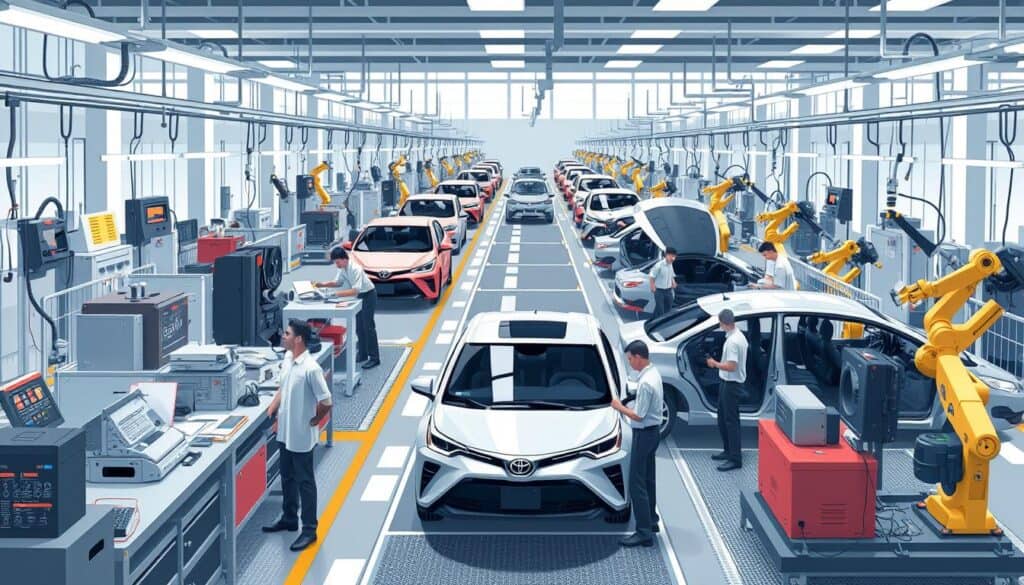
豊田佐吉と初期の革新
豊田佐吉は繊維業界に大きな変革をもたらした。彼はリーン生産方式の考え方をいち早く取り入れた自動織機を開発した。彼の思考は常に物事をより良くし、新しいアイデアを生み出すことにあった。この考え方は、後にトヨタ生産方式の形成に大きく貢献した。
ジャストインタイムと自働化:TPSの柱
トヨタ生産方式における2つの主要な理念は、ジャストインタイム(JIT)と自働化です。JITは、必要な時に必要な分だけ材料を準備することで、在庫コストを削減し、無駄をなくします。自働化は、自動化と人間の手作業を組み合わせたもので、問題が発生した際に生産を停止することで、ミスを防止し、品質を確保します。
豊田英二と大野耐一の役割
豊田英二と大野耐一はTPSの完成に大きく貢献した。大野耐一は「7つの無駄」という概念を導入し、次のようなシステムを考案した。 Kanban そしてジャストインタイム。大野氏のカンバン方式は、生産フローの管理方法を変革しました。
| 原則 | 開発者 | 主なイノベーション |
|---|---|---|
| トヨタ生産方式 | 豊田佐吉 | 自動化、自働化 |
| リーン生産方式 | 豊田英二、大野耐一 | ジャストインタイム、カンバン |
| 現代のリーンマネジメント | 複数の寄稿者 | 継続的な改善適応 |
日本語の詳細については、 リーン条件:

The Evolution of Lean Methodology
The journey of lean methodology started with global changes in making things. It goes from the Arsenal in Venice with its ship designs in 1104 to Marc Brunel’s work in the early 1800s. He used machines to make identical parts. This slowly set the stage for lean practices over the years.
From TPS to Lean Manufacturing
The Toyota Production System (TPS) played a big role in creating lean manufacturing. It took ideas like タクトタイム from the German aircraft makers and continuous flow from Ford. In the early 1950s, Toyota mixed high-quality production and short lead times. This mix became key for today’s lean methods.
William Edwards Deming also helped Toyota by introducing a quality circle (PDCA) and ways to control processes. This led to better efficiency and steady quality at Toyota.
“The contribution of TPS goes beyond automotive manufacturing, highlighting concepts of waste reduction and value stream mapping that cater to a broad range of industries.” – Dr. James P. Womack
Adoption and Adaptation in Western Industries
Lean manufacturing started to catch on in the West around the late 20th century. The book “The Machine that Changed the World” by Womack and Jones, in 1990, explained Toyota’s methods clearly. This helped other industries learn from Toyota. The NUMMI venture between General Motors and Toyota in 1984 showed how well lean principles could work in the U.S. It made that factory one of GM’s best.
Many industries in the West saw how cutting waste and boosting productivity could help. They began using lean methods more and more. The influence of TPS sparked a big change in many sectors, not just manufacturing. With folks like Joseph Juran improving quality management and Shigeo Shingo creating tools like ポカヨケ, lean concepts took deep root in the West.
| 年 | イベント | Contribution to Lean |
|---|---|---|
| 1104 | Venetian Arsenal | Standardized designs for continuous flow |
| 1950 | Integration of Deming’s PDCA | Quality improvement at Toyota |
| 1984 | NUMMI Joint Venture | Successful lean principles implementation in the U.S. |
| 1990 | Publication of “The Machine that Changed the World” | Outlined lean manufacturing principles |
The path from TPS to lean manufacturing outlines a fascinating evolution. It shows how Western industries embraced and modified these ideas. They improved efficiency and productivity in many areas.
The Five Principles of Lean Manufacturing
To make production better, knowing the principles of lean manufacturing is key. These ideas come from the Toyota Production System (TPS). They help make sure every production step is valuable to the customer and cuts down waste.

Specifying Value
Defining value means understanding what customers really want. By seeing things from their view, companies can make their processes better. This focuses on what’s valuable, cutting out what isn’t needed.
Identifying the Value Stream
After figuring out the value, it’s time to look at the value stream. This is about seeing all the steps needed to create the product. It’s about separating helpful steps from those that are not. Doing this helps get rid of inefficiency in making the product.
Establishing Flow
To have a smooth production, establishing a リーン生産方式 flow is necessary. This method works on organizing the workflow. It aims to lower slowdowns and keep things moving without stops.
Implementing Pull Systems
Using pull systems means making items based on actual demand, not guesses. This helps keep stock low and saves resources. It makes production match what the market really wants.
Striving for Perfection
The goal is always to get better. Businesses that keep trying to improve can cut more waste and increase quality. This ongoing effort is at the heart of lean manufacturing. It leads to lasting success.
| 原理 | 説明 |
|---|---|
| Specifying Value | Focus on customer value to streamline processes. |
| Identifying the Value Stream | Map all steps to distinguish value-adding from non-value-adding activities. |
| Establishing Flow | Ensure seamless production movement by reducing bottlenecks. |
| Implementing Pull Systems | Align production with customer demand to minimize surplus. |
| Striving for Perfection | Adopt continuous improvement to enhance quality and reduce waste. |
Implementation of Lean in Japanese Companies
Japanese companies have seen great success by using lean management, especially in manufacturing. The Toyota Production System (TPS) is a key example. It shows how well lean principles work.
Case Studies: Toyota and Beyond
Toyota is a standout story in lean implementation since it started in 1937. Toyota introduced the Toyota Production System to its suppliers in 1965. This system proved its worth during the 1973 oil crisis, thanks to its efficiency. Lean management in Japan goes beyond Toyota. It reaches various sectors and focuses on getting employees to create value. But, in the service and healthcare sectors, lean principles are not as common as in manufacturing.

Challenges and Successes
Lean adoption faces several hurdles, though. These include getting the workforce on board, senior management commitment, and overcoming communication issues. For example, in healthcare and service industries, lean leadership struggles. It has not moved from solving specific problems to changing the whole organization. Yet, the success of lean in Japan shows the power of supporting employees in problem-solving. Toyota’s journey with lean shows that the right leadership can drive continuous improvement.
| 課題 | Success Factors |
|---|---|
| Workforce Adaptation | Employee Engagement |
| Lack of Senior Commitment | Dedicated Leadership |
| Communication Barriers | Comprehensive Training |
| 変化への抵抗 | Continuous Improvement Culture |
The Pareto principle, or the 80-20 rule, is key in lean implementation. It says 80% of issues come from just 20% of defects. For companies like Toyota, success in lean means finding and fixing these key problems. Keeping lean methods in line with Japan’s culture of respect is vital for success.
More on Toyota’s principles:

Japanese Lean Culture and Practices
In Japan, lean culture focuses on カイゼン and making workers feel important. These methods boost ongoing improvement and help create a team that’s all about innovation and getting things done better.

Kaizen: Continuous Improvement
Kaizen means making things better together. It’s where everyone at a company, from top to bottom, works to make small, positive changes all the time. They look at every step of what they do to find ways to do things better, cut out waste, and get more done. This keeps the company strong against competition and quick to meet what customers want.
Empowerment of Workers
Lean culture in Japan really values giving power to workers. It’s all about letting every employee have a say in making things better. This way, everyone feels they matter and play a part in the company’s wins. It encourages people to take charge and keep improving how things are done.
Toyota is a great example of Kaizen and giving power to workers paying off. Their lean methods let them offer great prices in the U.S. market. By cutting out the fluff, they can deliver what customers want quicker and better.
| 原理 | 説明 | インパクト |
|---|---|---|
| Kaizen: Continuous Improvement | Incremental, ongoing enhancements to processes | Increased efficiency and productivity, cost reduction |
| Worker Empowerment | Involving all employees in improvement efforts | Improved morale, innovation, quicker problem-solving |
| Lean Practices | Principles like Just-in-Time and Jidoka | Reduction in waste, better market responsiveness |
To wrap it up, Kaizen and making workers feel empowered are key in Japan’s lean culture. They keep on improving and stay ahead in the game. By using these approaches, businesses are not just more efficient but also have teams that are driven and full of new ideas.
The Global Spread of Lean Ideology
Many sectors around the world have been transformed by lean ideology. This includes manufacturing, healthcare, and software development. It started with the Toyota Production System (TPS) in Japan. Now, lean principles are making big changes worldwide.

Lean Adoption in the United States
In the 1980s and 1990s, U.S. companies began embracing lean. Boeing and General Electric were at the forefront. Boeing saw a 50% cut in lead times, an 80% boost in on-time delivery, and a 30% rise in productivity. General Electric also saw big financial benefits from Lean シックスシグマ. This approach focuses on better processes and less waste.
Influence on Various Industries Worldwide
Lean has truly changed different industries. In healthcare, a U.S. hospital cut patient wait times by 40%. They also reduced how long patients stayed by 30%. A call center saw a 30% rise in productivity and halved their call handle time. GE Healthcare used Lean Six Sigma to reduce mistakes by half, cut cycle times by 30%, and improve customer happiness by 20%. This saved over $250 million.
Lean principles have now reached construction and education in the 2010s. This shows how versatile and effective the methodology is. The global embrace of lean helps companies get better, cut costs, and quickly meet market needs.
Modern Applications of Lean in Japan
In Japan today, the use of modern lean applications has grown a lot. This is thanks to new technologies. Things like AI, IoT, and digital tools have changed how lean methods work. They make these methods better for today’s fast industry.
With these tech advances, companies can collect and analyze data in real time. This leads to better decisions, more efficiency, and less waste.
Technology and Lean Integration
Combining technology with lean practices has made Japanese industries more efficient and automated. Companies, such as Toyota, are at the forefront. They use AI and IoT to make the Toyota Production System better.
They monitor machines in real time, maintain them before issues arise, and control quality automatically. This mix of modern tech and lean rules boosts how well operations work. It also makes sure products are of high quality and made precisely.
Lean in the Service Industry
Lean principles aren’t just for manufacturing anymore. They’re making a big difference in service industries in Japan too. Fields like finance, healthcare, and retail have seen improvements. Thanks to lean methods, they are more efficient and pleasing to customers.
By reducing waste and focusing on what adds value, these services work better. They use resources wisely and make customers happier. Lean methods have proven they work well across different types of businesses today.
よくある質問
日本のリーン生産方式の歴史とその起源とは?
日本のリーン生産方式の歴史は、物事をより良くし、無駄を減らすことにあります。それは日本の文化から始まり、トヨタ生産方式(TPS)とともに発展しました。TPSは無駄を減らし、より多くの仕事をすることに重点を置き、世界中の企業の考え方や働き方を変えました。
20世紀初頭の日本の経済情勢は、リーン生産方式にどのような影響を与えたのか?
20世紀初頭の日本経済は大きく変化しました。この時代を通して、日本は規律を重んじ、常に物事をより良くする方法を模索するようになりました。こうした考え方は、効率性を重視し、常に改善を続けるという、日本のビジネスのあり方を形作る上で大きな役割を果たしました。
トヨタ生産方式の立役者は誰だったのか?
豊田佐吉、豊田英二、大野耐一は、トヨタ生産方式の立役者として知られる人物たちです。彼らは、自らミスを検出する「自働化」や、資源を賢く活用する「ジャストインタイム」といった革新的なアイデアをもたらしました。
リーン生産方式は、トヨタ生産方式からどのように発展したのでしょうか?
リーン生産方式はトヨタ生産方式から発展したもので、自動車製造だけでなく、より幅広い分野に適用できるようルールが調整されました。現在では、世界中の企業がこれらの考え方を活用し、業務効率の向上、無駄の削減、顧客満足度の向上など、さまざまな分野で役立てています。
日本のリーン文化において、カイゼンはどのような役割を果たしているのか?
カイゼン、つまり継続的改善は、日本のリーン文化において非常に重要な概念です。それは、常に小さな改善策を探し求めることを意味します。すべての従業員は、新しいアイデアを出し、試してみることが奨励されています。これにより、企業は前進し続け、常に最高水準を維持することができます。
リーン思考はどのようにして世界的に広まったのか?
リーン思考は日本で始まったが、今では世界中で、特に米国で広く活用されている。モノづくりから人助け、ソフトウェア開発まで、様々な仕事でリーン手法が用いられ、効率化が図られている。リーンが世界的に普及していることは、様々な職種や場所で有効であることを示している。
現代の日本産業において、リーン生産方式はどのように応用されているのか?
今日、日本の産業界はAIやIoTといった最新技術とリーン生産方式を組み合わせ、さらなる効率化を図っています。リーン生産方式の考え方はサービス業界にも広がり、様々な面で役立つことが示されています。これにより、より質の高いサービスと顧客満足度の向上につながっています。
用語集
Internet of Things (IoT): センサー、ソフトウェア、その他の技術が組み込まれた相互接続されたデバイスのネットワークであり、インターネットを介してデータを収集および交換することを可能にし、さまざまなプロセスやシステムの自動化、監視、および制御を容易にする。
Just In Time (JIT): 製造工程で必要な時に必要な分だけ商品を受け取ることで在庫コストを削減し、無駄を最小限に抑え、効率性を向上させることを目的とした生産戦略。
Just-In-Time (JIT): 製造工程において必要な時に材料や部品が正確に届くようにスケジュールを組むことで在庫コストを削減し、無駄を最小限に抑え、効率性を向上させる生産戦略。
Plan Do Check Act (PDCA): 目標の計画、計画の実行、期待値に対する結果の評価、パフォーマンスとプロセスを改善するための是正措置の実施という4つの反復的なステップからなる継続的改善モデル。
Takt Time: 顧客の需要を満たすために製品を生産するのに許容される最大時間。これは、利用可能な生産時間を必要な生産量で割ることによって算出されます。生産ペースを需要に合わせ、効率的なワークフローとリソース配分を確保するのに役立ちます。
Toyota Production System (TPS): 廃棄物の削減、継続的な改善、効率的な生産フローを重視し、ジャストインタイムや自働化などの技術を活用して品質と業務効率を向上させる製造方法論。
Value Stream Mapping (VSM): プロセスにおける材料と情報の流れを分析・最適化し、付加価値のある活動と付加価値のない活動を特定することで、効率性を向上させ、無駄を削減するために使用される視覚的なツール。