Did you know that in 1950, Toyota was making only 2,500 cars a year? Meanwhile, Ford was producing nearly 8,000 cars every day at the Rouge plant in Dearborn, Michigan. This big difference highlights the impressive growth of Japanese industry to a world leader. Lean in Japan started with cultural ideas that focus on less waste and more productivity.
Learning about Japanese lean history means looking into Toyota’s production approach. This approach changed how industries view manufacturing. Sakichi Toyoda started it with his innovations. Then, his successors built on that to create the Toyota Production System (TPS). This system is the basis of Lean methods today.
Shifting from old mass production ways to Lean’s efficient processes was a big change. It did not just change how things were made but also impacted the world. Lean methods are now used in many areas, including healthcare and software development. These methods are key to modern business practices.
The term “Lean manufacturing” was first used in 1988. Since then, Lean has been a major driver of economic efficiency and new ideas. Lean focuses on what the customer needs, gets rid of waste, and aims for continuous improvement.
Key Takeaways
- In 1950, Toyota’s production was significantly lower than Ford’s, highlighting early inefficiencies.
- The origins of Lean in Japan are closely tied to the development of the Toyota Production System (TPS).
- Sakichi Toyoda’s innovations were instrumental in starting the Lean movement in Japan.
- Lean principles prioritize customer value, waste minimization, and continuous improvement.
- Initially coined in 1988, Lean manufacturing evolved to influence various global industries beyond manufacturing.
The Roots of Lean in Japanese Culture
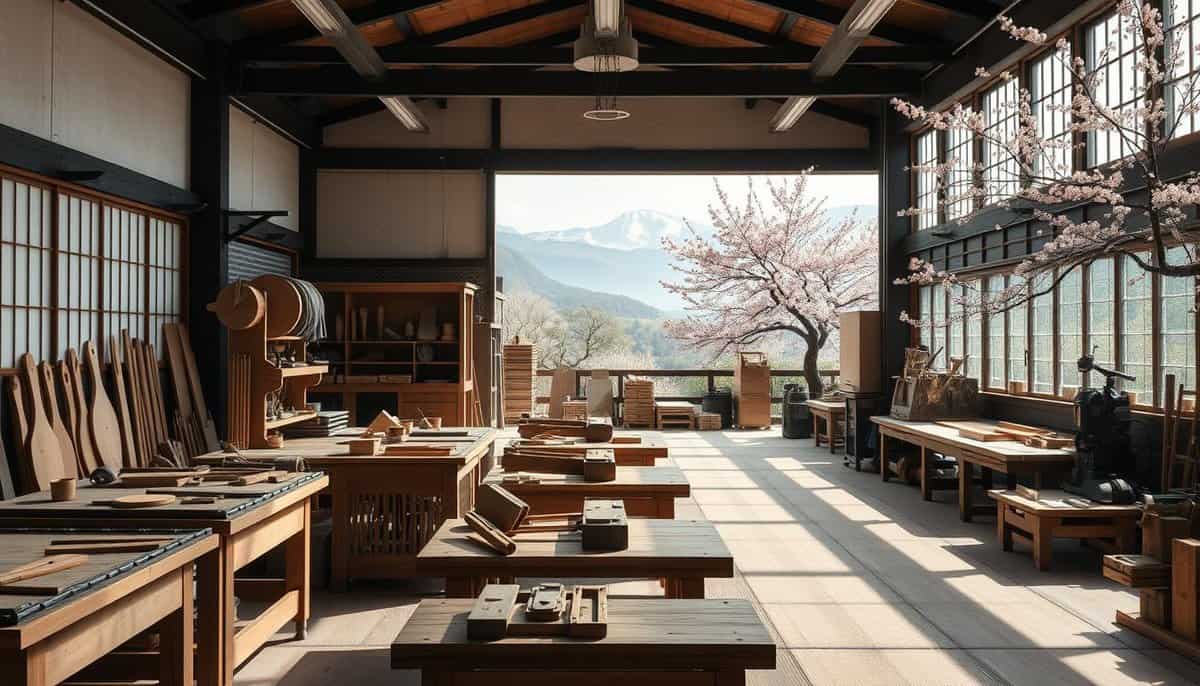
The evolution of lean culture in Japan has deep roots in its history and culture. It began to take shape early in the 20th century. This was a time of big changes and challenges. The nation’s work ethic, philosophy, and economic growth helped lean methods grow.
The Economic Landscape of Early 20th Century Japan
In the early 1900s, Japan was changing fast, moving from farming to industry. This change got a boost from Western influences after Japan met Western countries. World War II saw the start of the Training Within Industry Service (TWI). TWI, led by people like Channing Rice Dooley and Walter Dietz, brought key programs to Japan. These programs, such as Job Instruction and Job Relations, increased industrial output and set the stage for lean practices.
The Influence of Japanese Work Ethic and Philosophy
The Japanese work ethic is all about discipline and getting better bit by bit. This started with kaizen, the practice of making little changes for improvement. The TWI’s principles, which promoted better productivity, played a big part. Also, kata, which means using specific routines, shows how organized Japanese workplaces are. This organized approach helped Japan use Just-in-Time and Jidoka methods well, even when it was tough at first.
Japan’s focus on cleanliness and order also helped lean principles succeed. This is seen in community work and students cleaning their schools. Although sticking to the last two “S’s” of the 5S method was hard, Japanese companies did it better than many in the West. In the end, the strong work ethic and philosophy in Japan have been key to lean culture’s success there.
The Birth of Lean: The Toyota Production System
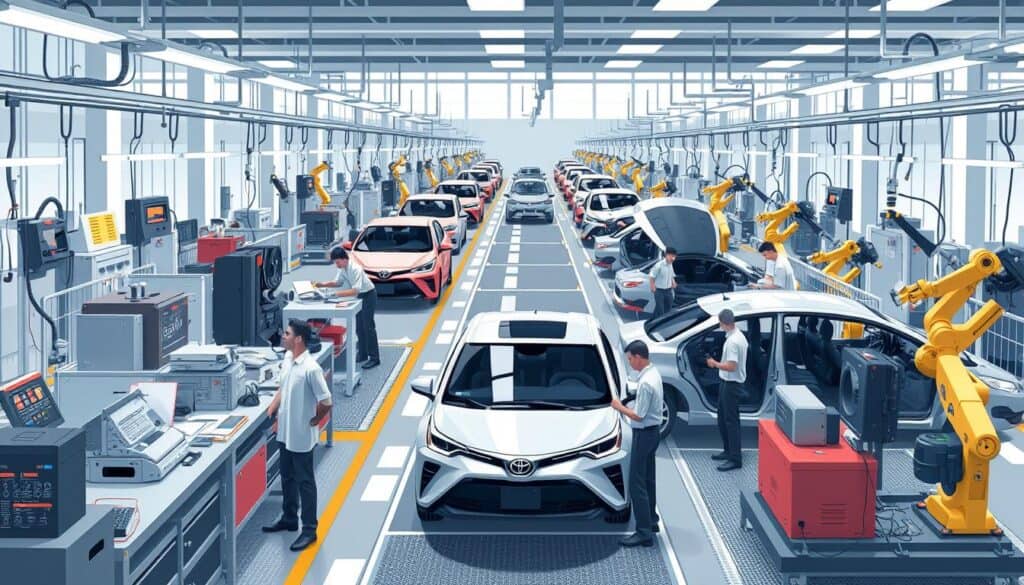
The start of lean manufacturing traces back to Sakichi Toyoda, Eiji Toyoda, and Taiichi Ohno. They developed the Toyota Production System (TPS). This system focuses on cutting waste and boosting efficiency.
Sakichi Toyoda and the Early Innovations
Sakichi Toyoda made major changes in the textile world. He created automatic looms that showed lean ideas early on. His thinking was all about making things better and coming up with new ideas. This thinking helped shape the Toyota Production System later on.
Just-in-Time and Jidoka: The Pillars of TPS
Two main ideas in the Toyota Production System are Just-in-Time (JIT) and Jidoka. JIT keeps materials ready only when needed. This approach lowers inventory costs and cuts down on waste. Jidoka combines automation with a human touch. It stops production when there’s a problem. This prevents errors and ensures quality.
The Role of Eiji Toyoda and Taiichi Ohno
Eiji Toyoda and Taiichi Ohno played big roles in polishing TPS. Taiichi Ohno brought in the idea of the ‘7 wastes’ and came up with systems like Kanban and Just-in-Time. Ohno’s Kanban method changed how production flow is managed.
| Principles | Developers | Key Innovations |
|---|---|---|
| Toyota Production System | Sakichi Toyoda | Automation, Jidoka |
| Lean Manufacturing | Eiji Toyoda, Taiichi Ohno | Just-in-Time, Kanban |
| Modern Lean Management | Multiple Contributors | Continuous Improvement, Adaptation |
For more on of Japanese lean terms:

The rest of this article is reserved for members
To limit scraping bots (currently 40,000 hits per day!),
we had to restrict access to full articles and tools to registered members only.
to access all the rest.
FAQ
What is the Japanese Lean History and its origins?
Japanese lean history is about making things better and wasting less. It started in Japan’s culture and grew with the Toyota Production System (TPS). TPS focused on less waste and more work, changing how businesses everywhere think and work.
How did the early 20th-century economic landscape in Japan influence lean practices?
Japan’s economy in the early 20th century changed a lot. This time taught Japan to be disciplined and always look for ways to do things better. This mindset helped shape how Japan does business, focusing on being efficient and always improving.
Who were the key figures behind the Toyota Production System?
Sakichi Toyoda, Eiji Toyoda, and Taiichi Ohno were the big names behind the Toyota Production System. They brought new ideas like Jidoka, which spots mistakes by itself, and Just-in-Time, which is about using resources wisely.
How did lean manufacturing evolve from the Toyota Production System?
Lean manufacturing grew from the Toyota Production System. It adjusted the rules to fit more than just car making. Now, businesses all over the world use these ideas to work better, waste less, and make customers happier in many different jobs.
What role does Kaizen play in Japanese lean culture?
Kaizen, or continuous improvement, is a big deal in Japanese lean culture. It’s about always looking for small ways to get better. All workers are encouraged to come up with and try out new ideas. This keeps businesses moving forward and staying top-notch.
How has lean ideology spread globally?
Lean thinking started in Japan but now is used all over, especially in the United States. Many kinds of work, from making things to helping people and developing software, use lean ways to be more efficient. Lean’s global spread shows it works across different jobs and places.
How is lean methodology applied in modern Japanese industries?
Today, Japanese industries use lean methods with new tech, like AI and IoT, to get even better. Lean ideas have also moved to the service industry, showing they can help in many ways. This brings better services and happier customers.
Glossary of Terms Used
Internet of Things (IoT): a network of interconnected devices embedded with sensors, software, and other technologies that enable them to collect and exchange data over the internet, facilitating automation, monitoring, and control of various processes and systems.
Just In Time (JIT): a production strategy that aims to reduce inventory costs by receiving goods only as they are needed in the manufacturing process, thereby minimizing waste and increasing efficiency.
Plan Do Check Act (PDCA): a continuous improvement model consisting of four iterative steps: planning an objective, executing the plan, evaluating results against expectations, and taking corrective actions to enhance performance and processes.
Takt Time: the maximum allowable time to produce a product to meet customer demand, calculated by dividing available production time by required output. It helps synchronize production pace with demand, ensuring efficient workflow and resource allocation.
Toyota Production System (TPS): a manufacturing methodology emphasizing waste reduction, continuous improvement, and efficient production flow, utilizing techniques such as Just-In-Time and Jidoka to enhance quality and operational efficiency.
Value Stream Mapping (VSM): a visual tool used to analyze and optimize the flow of materials and information in a process, identifying value-added and non-value-added activities to improve efficiency and reduce waste.