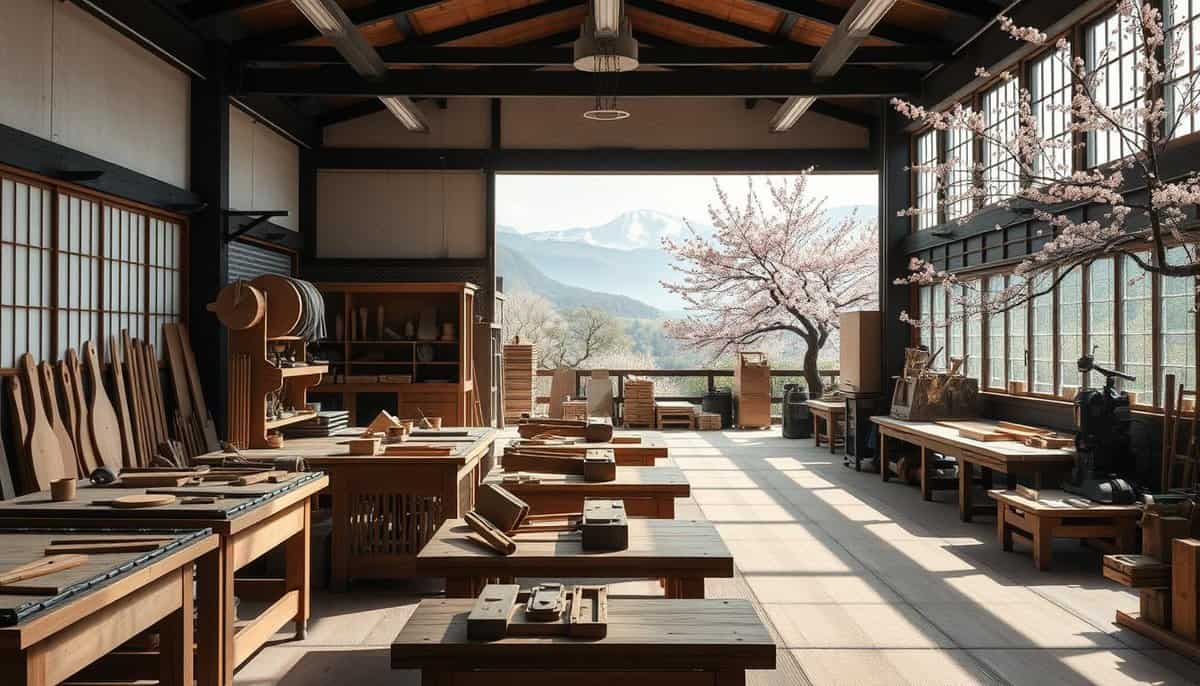
1950년에, 도요타 연간 2,500대밖에 생산하지 못했던 일본 자동차 산업은 어땠을까요? 반면 포드는 미시간주 디어본의 루지 공장에서 매일 거의 8,000대의 자동차를 생산하고 있었습니다. 이러한 큰 차이는 일본 산업이 세계적인 선두 주자로 성장한 놀라운 발전을 보여줍니다. 일본의 린(Lean) 생산 방식은 낭비를 줄이고 생산성을 높이는 데 중점을 둔 문화적 이념에서 시작되었습니다.
일본의 린 생산 방식 역사를 배우려면 도요타의 생산 방식을 살펴보는 것이 중요합니다. 이 방식은 산업계가 제조를 바라보는 방식을 바꿔놓았습니다. 사키치 도요다가 혁신을 통해 이를 시작했고, 그의 후계자들은 이를 바탕으로 발전시켜 나갔습니다. 일본의 린 생산 방식은 도요타의 생산 방식을 혁신적으로 변화시켰습니다. 도요타는 혁신을 통해 린 생산 방식을 창안했습니다. 도요타 생산 시스템 (티피스이 시스템은 오늘날 린(Lean) 방법론의 기반이 됩니다.
기존의 대량 생산 방식에서 린(Lean) 방식의 효율적인 프로세스로의 전환은 큰 변화였습니다. 이는 단순히 제품 생산 방식만을 바꾼 것이 아니라, 전 세계에 영향을 미쳤습니다. 린 방식은 이제 의료, 소프트웨어 개발 등 다양한 분야에서 활용되고 있으며, 현대 비즈니스 운영의 핵심 요소가 되었습니다.
'린 제조(Lean manufacturing)'라는 용어는 1988년에 처음 사용되었습니다. 그 이후로 린은 경제적 효율성과 새로운 아이디어의 주요 동력이 되어 왔습니다. 린은 고객의 요구에 집중하고, 낭비를 제거하며, 지속적인 개선을 목표로 합니다.
핵심 요약
- 1950년 도요타의 생산량은 포드보다 훨씬 적었는데, 이는 초기 비효율성을 여실히 보여주는 것이었다.
- 일본에서 린(Lean) 경영 방식이 시작된 것은 도요타 생산 시스템(TPS)의 개발과 밀접한 관련이 있습니다.
- 사키치 토요다의 혁신은 일본에서 린(Lean) 운동을 시작하는 데 중요한 역할을 했습니다.
- 린(Lean) 원칙 고객 가치 창출, 낭비 최소화, 지속적인 개선을 우선시합니다.
- Initially coined in 1988, 린 제조 evolved to influence various global industries beyond manufacturing.
린(Lean) 경영의 일본 문화 뿌리
The evolution of lean culture in Japan has deep roots in its history and culture. It began to take shape early in the 20th century. This was a time of big changes and challenges. The nation’s work ethic, philosophy, and economic growth helped lean methods grow.
20세기 초 일본의 경제 지형
1900년대 초, 일본은 농업에서 산업으로 빠르게 변화하고 있었습니다. 이러한 변화는 일본이 서구 국가들과 접촉하면서 서구의 영향으로 더욱 가속화되었습니다. 제2차 세계 대전 중에는 산업 현장 훈련 서비스(TWI)가 시작되었습니다. ~ 주도의 채닝 라이스 둘리와 월터 디츠 같은 사람들의 노력으로 중요한 프로그램들이 일본에 도입되었습니다. 이러한 프로그램에는 다음과 같은 것들이 있습니다. 직업 교육 및 직무 관계를 개선하고 산업 생산량을 증대시키며 린(Lean) 경영 방식의 토대를 마련했습니다.
일본의 직업윤리와 철학의 영향
The Japanese work ethic is all about discipline and getting better bit by bit. This started with kaizen, the practice of making little changes for improvement. The TWI’s principles, which promoted better productivity, played a big part. Also, kata, which means using specific routines, shows how organized Japanese workplaces are. This organized approach helped Japan use 적시 생산 그리고 지도카 처음에는 어려웠지만, 그 방법들을 잘 활용했습니다.
일본의 청결과 질서에 대한 강조는 린(Lean) 원칙의 성공에 기여했습니다. 이는 지역사회 봉사활동이나 학생들이 학교를 청소하는 모습에서 확인할 수 있습니다. 린 경영의 마지막 두 가지 "S"를 고수하는 것은... 5S method was hard, Japanese companies did it better than many in the West. In the end, the strong work ethic and philosophy in Japan have been key to lean culture’s success there.
린 생산 방식의 탄생: 도요타 생산 시스템
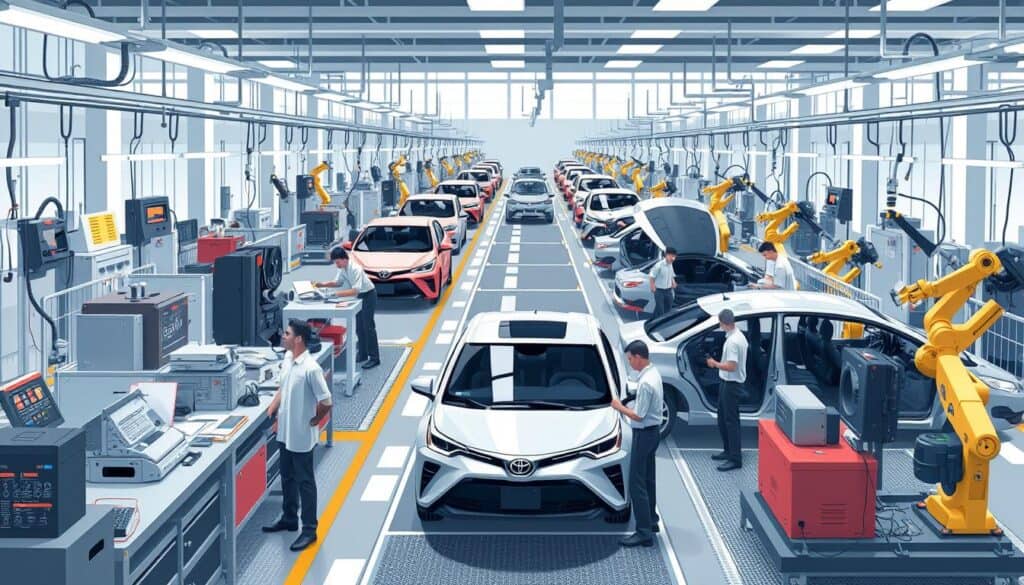
린 생산 방식의 시작은 사키치 도요다, 에이지 도요다, 그리고 타이이치 오노에게서 찾아볼 수 있습니다. 이들은 낭비를 줄이고 효율성을 높이는 데 중점을 둔 도요타 생산 시스템(TPS)을 개발했습니다.
사키치 토요다와 초기 혁신
사키치 토요다는 섬유 산업에 큰 변화를 가져왔습니다. 그는 일찌감치 린(Lean) 생산 방식을 적용한 자동 직기를 개발했습니다. 그의 사고방식은 항상 더 나은 것을 만들고 새로운 아이디어를 창출하는 데 집중되어 있었습니다. 이러한 사고방식은 훗날 도요타 생산 시스템(TPS)의 토대를 마련하는 데 중요한 역할을 했습니다.
적시생산(Just-in-Time)과 지도가(Jidoka): TPS의 핵심 요소
도요타 생산 시스템의 두 가지 핵심 개념은 적시생산(JIT)과 지도가(Jidoka)입니다. JIT는 필요한 시점에만 자재를 준비해 두는 방식으로, 재고 비용을 절감하고 낭비를 줄입니다. 지도가는 자동화와 인간의 손길을 결합하여 문제가 발생하면 생산을 중단하는 방식입니다. 이를 통해 오류를 방지하고 품질을 보장합니다.
토요다 에이지와 오노 타이이치의 역할
토요다 에이지와 오노 타이이치는 TPS를 다듬는 데 큰 역할을 했습니다. 오노 타이이치는 '7가지 낭비'라는 개념을 도입하고 다음과 같은 시스템을 고안했습니다. Kanban 그리고 적시생산(Just-in-Time) 방식. 오노의 칸반 방식은 생산 흐름 관리 방식을 바꿔놓았습니다.
| 원칙 | 개발자 | 주요 혁신 |
|---|---|---|
| 도요타 생산 시스템 | 도요다 사키치 | 자동화, 지도가 |
| 린 제조 | 토요다 에이지, 오노 다이이치 | 적시생산(Just-in-Time), 칸반 |
| 현대 린 경영 | 다수의 기여자 | 지속적인 개선적응 |
일본에 대한 더 자세한 내용은 린(Lean) 용어:

The Evolution of Lean Methodology
The journey of lean methodology started with global changes in making things. It goes from the Arsenal in Venice with its ship designs in 1104 to Marc Brunel’s work in the early 1800s. He used machines to make identical parts. This slowly set the stage for lean practices over the years.
From TPS to Lean Manufacturing
The Toyota Production System (TPS) played a big role in creating lean manufacturing. It took ideas like 택트 타임 from the German aircraft makers and continuous flow from Ford. In the early 1950s, Toyota mixed high-quality production and short lead times. This mix became key for today’s lean methods.
William Edwards Deming also helped Toyota by introducing a quality circle (PDCA) and ways to control processes. This led to better efficiency and steady quality at Toyota.
“The contribution of TPS goes beyond automotive manufacturing, highlighting concepts of waste reduction and 가치 흐름 매핑 that cater to a broad range of industries.” – Dr. James P. Womack
Adoption and Adaptation in Western Industries
Lean manufacturing started to catch on in the West around the late 20th century. The book “The Machine that Changed the World” by Womack and Jones, in 1990, explained Toyota’s methods clearly. This helped other industries learn from Toyota. The NUMMI venture between General Motors and Toyota in 1984 showed how well lean principles could work in the U.S. It made that factory one of GM’s best.
Many industries in the West saw how cutting waste and boosting productivity could help. They began using lean methods more and more. The influence of TPS sparked a big change in many sectors, not just manufacturing. With folks like Joseph Juran improving quality management and Shigeo Shingo creating tools like 포카요케, lean concepts took deep root in the West.
| 년도 | 이벤트 | Contribution to Lean |
|---|---|---|
| 1104 | Venetian Arsenal | Standardized designs for continuous flow |
| 1950 | Integration of Deming’s PDCA | Quality improvement at Toyota |
| 1984 | NUMMI Joint Venture | Successful lean principles implementation in the U.S. |
| 1990 | Publication of “The Machine that Changed the World” | Outlined lean manufacturing principles |
The path from TPS to lean manufacturing outlines a fascinating evolution. It shows how Western industries embraced and modified these ideas. They improved efficiency and productivity in many areas.
The Five Principles of Lean Manufacturing
To make production better, knowing the principles of lean manufacturing is key. These ideas come from the Toyota Production System (TPS). They help make sure every production step is valuable to the customer and cuts down waste.

Specifying Value
Defining value means understanding what customers really want. By seeing things from their view, companies can make their processes better. This focuses on what’s valuable, cutting out what isn’t needed.
Identifying the Value Stream
After figuring out the value, it’s time to look at the value stream. This is about seeing all the steps needed to create the product. It’s about separating helpful steps from those that are not. Doing this helps get rid of inefficiency in making the product.
Establishing Flow
To have a smooth production, establishing a 린 생산 flow is necessary. This method works on organizing the workflow. It aims to lower slowdowns and keep things moving without stops.
Implementing Pull Systems
Using pull systems means making items based on actual demand, not guesses. This helps keep stock low and saves resources. It makes production match what the market really wants.
Striving for Perfection
The goal is always to get better. Businesses that keep trying to improve can cut more waste and increase quality. This ongoing effort is at the heart of lean manufacturing. It leads to lasting success.
| 원칙 | 설명 |
|---|---|
| Specifying Value | Focus on customer value to streamline processes. |
| Identifying the Value Stream | Map all steps to distinguish value-adding from non-value-adding activities. |
| Establishing Flow | Ensure seamless production movement by reducing bottlenecks. |
| Implementing Pull Systems | Align production with customer demand to minimize surplus. |
| Striving for Perfection | Adopt continuous improvement to enhance quality and reduce waste. |
Implementation of Lean in Japanese Companies
Japanese companies have seen great success by using lean management, especially in manufacturing. The Toyota Production System (TPS) is a key example. It shows how well lean principles work.
Case Studies: Toyota and Beyond
Toyota is a standout story in lean implementation since it started in 1937. Toyota introduced the Toyota Production System to its suppliers in 1965. This system proved its worth during the 1973 oil crisis, thanks to its efficiency. Lean management in Japan goes beyond Toyota. It reaches various sectors and focuses on getting employees to create value. But, in the service and healthcare sectors, lean principles are not as common as in manufacturing.

Challenges and Successes
Lean adoption faces several hurdles, though. These include getting the workforce on board, senior management commitment, and overcoming communication issues. For example, in healthcare and service industries, lean leadership struggles. It has not moved from solving specific problems to changing the whole organization. Yet, the success of lean in Japan shows the power of supporting employees in problem-solving. Toyota’s journey with lean shows that the right leadership can drive continuous improvement.
| 도전 과제 | Success Factors |
|---|---|
| Workforce Adaptation | Employee Engagement |
| Lack of Senior Commitment | Dedicated Leadership |
| Communication Barriers | Comprehensive Training |
| 변화에 대한 저항 | Continuous Improvement Culture |
The Pareto principle, or the 80-20 rule, is key in lean implementation. It says 80% of issues come from just 20% of defects. For companies like Toyota, success in lean means finding and fixing these key problems. Keeping lean methods in line with Japan’s culture of respect is vital for success.
More on Toyota’s principles:

Japanese Lean Culture and Practices
In Japan, lean culture focuses on 카이젠 and making workers feel important. These methods boost ongoing improvement and help create a team that’s all about innovation and getting things done better.

Kaizen: Continuous Improvement
Kaizen means making things better together. It’s where everyone at a company, from top to bottom, works to make small, positive changes all the time. They look at every step of what they do to find ways to do things better, cut out waste, and get more done. This keeps the company strong against competition and quick to meet what customers want.
Empowerment of Workers
Lean culture in Japan really values giving power to workers. It’s all about letting every employee have a say in making things better. This way, everyone feels they matter and play a part in the company’s wins. It encourages people to take charge and keep improving how things are done.
Toyota is a great example of Kaizen and giving power to workers paying off. Their lean methods let them offer great prices in the U.S. market. By cutting out the fluff, they can deliver what customers want quicker and better.
| 원칙 | 설명 | 영향 |
|---|---|---|
| Kaizen: Continuous Improvement | Incremental, ongoing enhancements to processes | Increased efficiency and productivity, cost reduction |
| Worker Empowerment | Involving all employees in improvement efforts | Improved morale, innovation, quicker problem-solving |
| Lean Practices | Principles like Just-in-Time and Jidoka | Reduction in waste, better market responsiveness |
To wrap it up, Kaizen and making workers feel empowered are key in Japan’s lean culture. They keep on improving and stay ahead in the game. By using these approaches, businesses are not just more efficient but also have teams that are driven and full of new ideas.
The Global Spread of Lean Ideology
Many sectors around the world have been transformed by lean ideology. This includes manufacturing, healthcare, and software development. It started with the Toyota Production System (TPS) in Japan. Now, lean principles are making big changes worldwide.

Lean Adoption in the United States
In the 1980s and 1990s, U.S. companies began embracing lean. Boeing and General Electric were at the forefront. Boeing saw a 50% cut in lead times, an 80% boost in on-time delivery, and a 30% rise in productivity. General Electric also saw big financial benefits from Lean 식스 시그마. This approach focuses on better processes and less waste.
Influence on Various Industries Worldwide
Lean has truly changed different industries. In healthcare, a U.S. hospital cut patient wait times by 40%. They also reduced how long patients stayed by 30%. A call center saw a 30% rise in productivity and halved their call handle time. GE Healthcare used Lean Six Sigma to reduce mistakes by half, cut cycle times by 30%, and improve customer happiness by 20%. This saved over $250 million.
Lean principles have now reached construction and education in the 2010s. This shows how versatile and effective the methodology is. The global embrace of lean helps companies get better, cut costs, and quickly meet market needs.
Modern Applications of Lean in Japan
In Japan today, the use of modern lean applications has grown a lot. This is thanks to new technologies. Things like AI, IoT, and digital tools have changed how lean methods work. They make these methods better for today’s fast industry.
With these tech advances, companies can collect and analyze data in real time. This leads to better decisions, more efficiency, and less waste.
Technology and Lean Integration
Combining technology with lean practices has made Japanese industries more efficient and automated. Companies, such as Toyota, are at the forefront. They use AI and IoT to make the Toyota Production System better.
They monitor machines in real time, maintain them before issues arise, and control quality automatically. This mix of modern tech and lean rules boosts how well operations work. It also makes sure products are of high quality and made precisely.
Lean in the Service Industry
Lean principles aren’t just for manufacturing anymore. They’re making a big difference in service industries in Japan too. Fields like finance, healthcare, and retail have seen improvements. Thanks to lean methods, they are more efficient and pleasing to customers.
By reducing waste and focusing on what adds value, these services work better. They use resources wisely and make customers happier. Lean methods have proven they work well across different types of businesses today.
자주 묻는 질문
일본식 린(Lean) 경영의 역사와 기원은 무엇인가요?
일본의 린(Lean) 역사는 더 나은 결과를 내고 낭비를 줄이는 데 중점을 두었습니다. 이는 일본 문화에서 시작되어 도요타 생산 시스템(TPS)과 함께 발전했습니다. TPS는 낭비를 줄이고 생산성을 높이는 데 집중하여 전 세계 기업의 사고방식과 업무 방식을 혁신했습니다.
20세기 초 일본의 경제 환경은 린(Lean) 경영 방식에 어떤 영향을 미쳤습니까?
20세기 초 일본 경제는 많은 변화를 겪었습니다. 이 시기는 일본인들에게 규율을 배우고 항상 더 나은 방법을 모색하는 습관을 길러주었습니다. 이러한 사고방식은 효율성을 중시하고 끊임없이 개선하려는 일본의 비즈니스 방식을 형성하는 데 큰 영향을 미쳤습니다.
도요타 생산 시스템의 핵심 인물은 누구였습니까?
사키치 토요다, 에이지 토요다, 그리고 타이이치 오노는 도요타 생산 시스템의 주역들입니다. 그들은 스스로 오류를 찾아내는 지도가(Jidoka)와 자원을 효율적으로 사용하는 적시 생산 방식(Just-in-Time)과 같은 혁신적인 아이디어를 도입했습니다.
린 제조 방식은 도요타 생산 시스템에서 어떻게 발전했습니까?
린 생산 방식은 도요타 생산 시스템에서 발전했습니다. 자동차 생산뿐만 아니라 더 많은 산업 분야에 적용할 수 있도록 규칙을 조정했습니다. 이제 전 세계 기업들이 이러한 아이디어를 활용하여 업무 효율을 높이고, 낭비를 줄이며, 고객 만족도를 향상시키는 등 다양한 분야에서 활용하고 있습니다.
일본의 린(Lean) 문화에서 카이젠은 어떤 역할을 하나요?
카이젠, 즉 지속적인 개선은 일본의 린(Lean) 문화에서 매우 중요한 요소입니다. 이는 항상 더 나아질 수 있는 작은 방법을 찾는 것을 의미합니다. 모든 직원은 새로운 아이디어를 내고 시도해 보도록 장려됩니다. 이러한 노력 덕분에 기업은 지속적으로 발전하고 최고의 수준을 유지할 수 있습니다.
린(Lean) 이념은 어떻게 전 세계적으로 확산되었는가?
린 사고방식은 일본에서 시작되었지만 현재는 전 세계, 특히 미국에서 널리 사용되고 있습니다. 제품 생산부터 사람들을 돕고 소프트웨어를 개발하는 등 다양한 분야에서 효율성을 높이기 위해 린 방식을 활용하고 있습니다. 린의 세계적인 확산은 다양한 직종과 환경에서 효과적으로 적용될 수 있음을 보여줍니다.
현대 일본 산업에서 린 방법론은 어떻게 적용되는가?
오늘날 일본의 산업계는 AI와 IoT 같은 신기술에 린(Lean) 방식을 접목하여 더욱 효율적인 운영을 추구하고 있습니다. 린 경영 이념은 서비스 산업에도 확산되어 다양한 방식으로 고객 만족도를 높이고 더 나은 서비스를 제공하는 데 기여하고 있습니다.
사용된 용어집
Internet of Things (IoT): 센서, 소프트웨어 및 기타 기술이 내장된 상호 연결된 장치 네트워크로, 인터넷을 통해 데이터를 수집하고 교환할 수 있어 다양한 프로세스와 시스템의 자동화, 모니터링 및 제어를 용이하게 합니다.
Just In Time (JIT): 제조 공정에서 필요할 때만 자재를 공급받아 재고 비용을 절감하고, 낭비를 최소화하며 효율성을 높이는 생산 전략.
Just-In-Time (JIT): 제조 공정에서 필요한 시점에 정확하게 자재와 부품이 도착하도록 일정을 계획함으로써 재고 비용을 절감하고, 낭비를 최소화하며 효율성을 높이는 생산 전략.
Plan Do Check Act (PDCA): 목표 계획, 계획 실행, 기대치 대비 결과 평가, 성과 및 프로세스 개선을 위한 시정 조치라는 네 가지 반복 단계로 구성된 지속적인 개선 모델.
Takt Time: 고객 수요를 충족하기 위해 제품을 생산하는 데 허용되는 최대 시간은 가용 생산 시간을 필요한 생산량으로 나누어 계산합니다. 이는 생산 속도를 수요에 맞춰 조정하여 효율적인 작업 흐름과 자원 배분을 보장하는 데 도움이 됩니다.
Toyota Production System (TPS): 폐기물 감소, 지속적인 개선, 효율적인 생산 흐름을 강조하는 제조 방법론으로, 적시생산(Just-In-Time) 및 지도가(Jidoka)와 같은 기술을 활용하여 품질과 운영 효율성을 향상시킵니다.
Value Stream Mapping (VSM): 프로세스 내 자재 및 정보 흐름을 분석하고 최적화하는 데 사용되는 시각적 도구로, 부가가치 활동과 비부가가치 활동을 식별하여 효율성을 개선하고 낭비를 줄입니다.
































