Did you know that in 1950, تويوتا was making only 2,500 cars a year? Meanwhile, Ford was producing nearly 8,000 cars every day at the Rouge plant in Dearborn, Michigan. This big difference highlights the impressive growth of Japanese industry to a world leader. Lean in Japan started with cultural ideas that focus on less waste and more productivity.
Learning about Japanese lean history means looking into Toyota’s production approach. This approach changed how industries view manufacturing. Sakichi Toyoda started it with his innovations. Then, his successors built on that to create the نظام إنتاج تويوتا (TPS). This system is the basis of Lean methods today.
Shifting from old mass production ways to Lean’s efficient processes was a big change. It did not just change how things were made but also impacted the world. Lean methods are now used in many areas, including healthcare and software development. These methods are key to modern business practices.
The term “Lean manufacturing” was first used in 1988. Since then, Lean has been a major driver of economic efficiency and new ideas. Lean focuses on what the customer needs, gets rid of waste, and aims for continuous improvement.
النقاط الرئيسية
- In 1950, Toyota’s production was significantly lower than Ford’s, highlighting early inefficiencies.
- The origins of Lean in Japan are closely tied to the development of the Toyota Production System (TPS).
- Sakichi Toyoda’s innovations were instrumental in starting the Lean movement in Japan.
- مبادئ لين prioritize customer value, waste minimization, and continuous improvement.
- Initially coined in 1988, التصنيع الرشيق evolved to influence various global industries beyond manufacturing.
The Roots of Lean in Japanese Culture
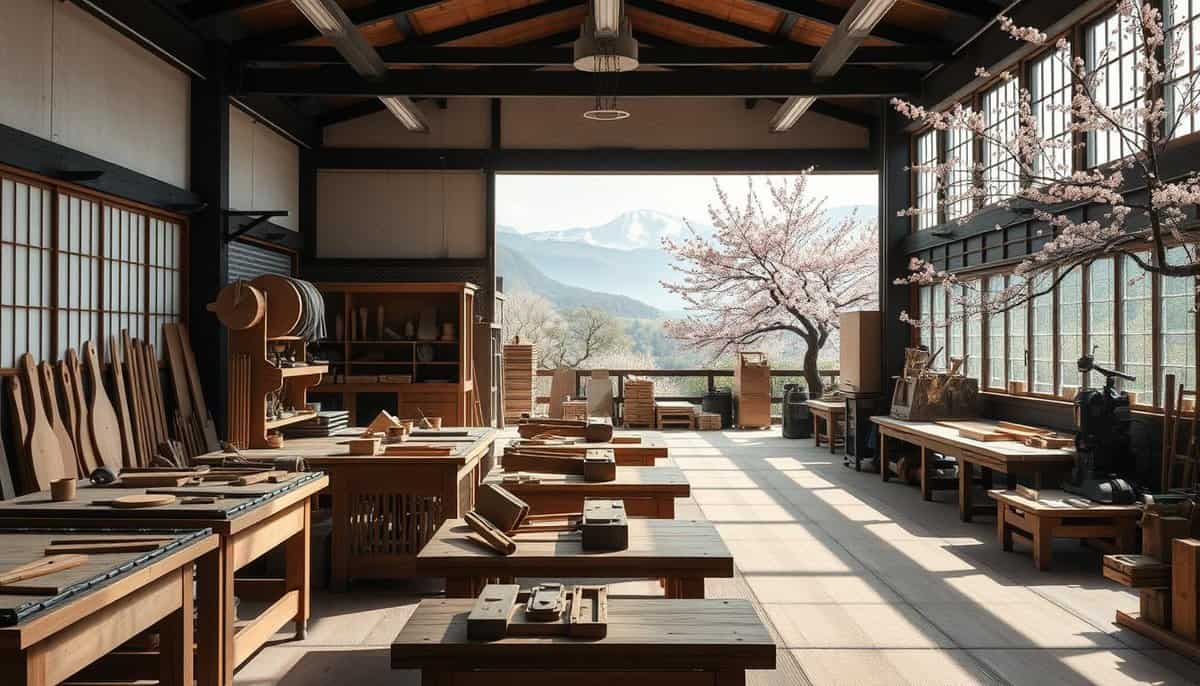
The evolution of lean culture in Japan has deep roots in its history and culture. It began to take shape early in the 20th century. This was a time of big changes and challenges. The nation’s work ethic, philosophy, and economic growth helped lean methods grow.
The Economic Landscape of Early 20th Century Japan
In the early 1900s, Japan was changing fast, moving from farming to industry. This change got a boost from Western influences after Japan met Western countries. World War II saw the start of the Training Within Industry Service (TWI). TWI, قاد by people like Channing Rice Dooley and Walter Dietz, brought key programs to Japan. These programs, such as وظيفة Instruction and Job Relations, increased industrial output and set the stage for lean practices.
The Influence of Japanese Work Ethic and Philosophy
The Japanese work ethic is all about discipline and getting better bit by bit. This started with kaizen, the practice of making little changes for improvement. The TWI’s principles, which promoted better productivity, played a big part. Also, kata, which means using specific routines, shows how organized Japanese workplaces are. This organized approach helped Japan use في الوقت المناسب و جيدوكا methods well, even when it was tough at first.
Japan’s focus on cleanliness and order also helped lean principles succeed. This is seen in community work and students cleaning their schools. Although sticking to the last two “S’s” of the 5 ثانية method was hard, Japanese companies did it better than many in the West. In the end, the strong work ethic and philosophy in Japan have been key to lean culture’s success there.
The Birth of Lean: The Toyota Production System
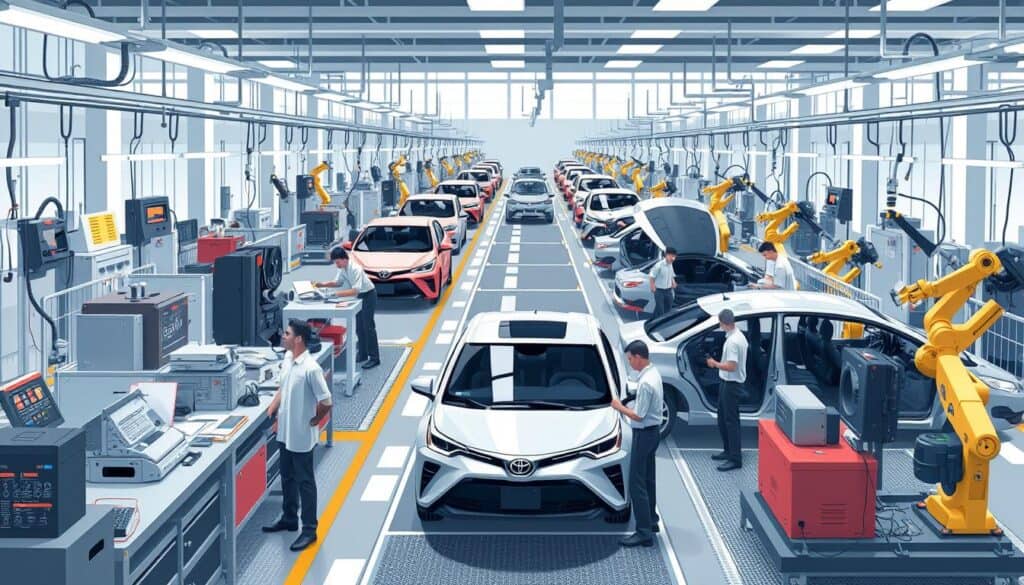
The start of lean manufacturing traces back to Sakichi Toyoda, Eiji Toyoda, and Taiichi Ohno. They developed the Toyota Production System (TPS). This system focuses on cutting waste and boosting efficiency.
Sakichi Toyoda and the Early Innovations
Sakichi Toyoda made major changes in the textile world. He created automatic looms that showed lean ideas early on. His thinking was all about making things better and coming up with new ideas. This thinking helped shape the Toyota Production System later on.
Just-in-Time and Jidoka: The Pillars of TPS
Two main ideas in the Toyota Production System are Just-in-Time (JIT) and Jidoka. JIT keeps materials ready only when needed. This approach lowers inventory costs and cuts down on waste. Jidoka combines automation with a human touch. It stops production when there’s a problem. This prevents errors and ensures quality.
The Role of Eiji Toyoda and Taiichi Ohno
Eiji Toyoda and Taiichi Ohno played big roles in polishing TPS. Taiichi Ohno brought in the idea of the ‘7 wastes’ and came up with systems like كانبان and Just-in-Time. Ohno’s Kanban method changed how production flow is managed.
| Principles | Developers | Key Innovations |
|---|---|---|
| نظام إنتاج تويوتا | Sakichi Toyoda | Automation, Jidoka |
| التصنيع الرشيق | Eiji Toyoda, Taiichi Ohno | Just-in-Time, Kanban |
| Modern Lean Management | Multiple Contributors | التحسين المستمر, Adaptation |
For more on of Japanese lean terms:

The Evolution of Lean Methodology
The journey of lean methodology started with global changes in making things. It goes from the Arsenal in Venice with its ship designs in 1104 to Marc Brunel’s work in the early 1800s. He used machines to make identical parts. This slowly set the stage for lean practices over the years.
From TPS to Lean Manufacturing
The Toyota Production System (TPS) played a big role in creating lean manufacturing. It took ideas like ساعة الذروة from the German aircraft makers and continuous flow from Ford. In the early 1950s, Toyota mixed high-quality production and short lead times. This mix became key for today’s lean methods.
William Edwards Deming also helped Toyota by introducing a quality circle (PDCA) and ways to control processes. This led to better efficiency and steady quality at Toyota.
“The contribution of TPS goes beyond automotive manufacturing, highlighting concepts of waste reduction and value stream mapping that cater to a broad range of industries.” – Dr. James P. Womack
Adoption and Adaptation in Western Industries
Lean manufacturing started to catch on in the West around the late 20th century. The book “The Machine that Changed the World” by Womack and Jones, in 1990, explained Toyota’s methods clearly. This helped other industries learn from Toyota. The NUMMI venture between General Motors and Toyota in 1984 showed how well lean principles could work in the U.S. It made that factory one of GM’s best.
Many industries in the West saw how cutting waste and boosting productivity could help. They began using lean methods more and more. The influence of TPS sparked a big change in many sectors, not just manufacturing. With folks like Joseph Juran improving quality management and Shigeo Shingo creating tools like نير وداعا, lean concepts took deep root in the West.
| سنة | حدث | Contribution to Lean |
|---|---|---|
| 1104 | Venetian Arsenal | Standardized designs for continuous flow |
| 1950 | Integration of Deming’s PDCA | Quality improvement at Toyota |
| 1984 | NUMMI Joint Venture | Successful lean principles implementation in the U.S. |
| 1990 | Publication of “The Machine that Changed the World” | Outlined lean manufacturing principles |
The path from TPS to lean manufacturing outlines a fascinating evolution. It shows how Western industries embraced and modified these ideas. They improved efficiency and productivity in many areas.
The Five Principles of Lean Manufacturing
To make production better, knowing the principles of lean manufacturing is key. These ideas come from the Toyota Production System (TPS). They help make sure every production step is valuable to the customer and cuts down waste.

Specifying Value
Defining value means understanding what customers really want. By seeing things from their view, companies can make their processes better. This focuses on what’s valuable, cutting out what isn’t needed.
Identifying the Value Stream
After figuring out the value, it’s time to look at the value stream. This is about seeing all the steps needed to create the product. It’s about separating helpful steps from those that are not. Doing this helps get rid of inefficiency in making the product.
Establishing Flow
To have a smooth production, establishing a الإنتاج الرشيق flow is necessary. This method works on organizing the workflow. It aims to lower slowdowns and keep things moving without stops.
Implementing Pull Systems
Using pull systems means making items based on actual demand, not guesses. This helps keep stock low and saves resources. It makes production match what the market really wants.
Striving for Perfection
The goal is always to get better. Businesses that keep trying to improve can cut more waste and increase quality. This ongoing effort is at the heart of lean manufacturing. It leads to lasting success.
| مبدأ | وصف |
|---|---|
| Specifying Value | Focus on customer value to streamline processes. |
| Identifying the Value Stream | Map all steps to distinguish value-adding from non-value-adding activities. |
| Establishing Flow | Ensure seamless production movement by reducing bottlenecks. |
| Implementing Pull Systems | Align production with customer demand to minimize surplus. |
| Striving for Perfection | Adopt continuous improvement to enhance quality and reduce waste. |
Implementation of Lean in Japanese Companies
Japanese companies have seen great success by using lean management, especially in manufacturing. The Toyota Production System (TPS) is a key example. It shows how well lean principles work.
Case Studies: Toyota and Beyond
Toyota is a standout story in lean implementation since it started in 1937. Toyota introduced the Toyota Production System to its suppliers in 1965. This system proved its worth during the 1973 oil crisis, thanks to its efficiency. Lean management in Japan goes beyond Toyota. It reaches various sectors and focuses on getting employees to create value. But, in the service and healthcare sectors, lean principles are not as common as in manufacturing.

Challenges and Successes
Lean adoption faces several hurdles, though. These include getting the workforce on board, senior management commitment, and overcoming communication issues. For example, in healthcare and service industries, lean leadership struggles. It has not moved from solving specific problems to changing the whole organization. Yet, the success of lean in Japan shows the power of supporting employees in problem-solving. Toyota’s journey with lean shows that the right leadership can drive continuous improvement.
| التحديات | عوامل النجاح |
|---|---|
| Workforce Adaptation | Employee Engagement |
| Lack of Senior Commitment | Dedicated Leadership |
| Communication Barriers | Comprehensive Training |
| مقاومة التغيير | Continuous Improvement Culture |
The Pareto principle, or the 80-20 rule, is key in lean implementation. It says 80% of issues come from just 20% of defects. For companies like Toyota, success in lean means finding and fixing these key problems. Keeping lean methods in line with Japan’s culture of respect is vital for success.
More on Toyota’s principles:

Japanese Lean Culture and Practices
In Japan, lean culture focuses on كايزن and making workers feel important. These methods boost ongoing improvement and help create a team that’s all about innovation and getting things done better.

Kaizen: Continuous Improvement
Kaizen means making things better together. It’s where everyone at a company, from top to bottom, works to make small, positive changes all the time. They look at every step of what they do to find ways to do things better, cut out waste, and get more done. This keeps the company strong against competition and quick to meet what customers want.
Empowerment of Workers
Lean culture in Japan really values giving power to workers. It’s all about letting every employee have a say in making things better. This way, everyone feels they matter and play a part in the company’s wins. It encourages people to take charge and keep improving how things are done.
Toyota is a great example of Kaizen and giving power to workers paying off. Their lean methods let them offer great prices in the U.S. market. By cutting out the fluff, they can deliver what customers want quicker and better.
| مبدأ | وصف | تأثير |
|---|---|---|
| Kaizen: Continuous Improvement | Incremental, ongoing enhancements to processes | Increased efficiency and productivity, cost reduction |
| Worker Empowerment | Involving all employees in improvement efforts | Improved morale, innovation, quicker problem-solving |
| Lean Practices | Principles like Just-in-Time and Jidoka | Reduction in waste, better market responsiveness |
To wrap it up, Kaizen and making workers feel empowered are key in Japan’s lean culture. They keep on improving and stay ahead in the game. By using these approaches, businesses are not just more efficient but also have teams that are driven and full of new ideas.
The Global Spread of Lean Ideology
Many sectors around the world have been transformed by lean ideology. This includes manufacturing, healthcare, and software development. It started with the Toyota Production System (TPS) in Japan. Now, lean principles are making big changes worldwide.

Lean Adoption in the United States
In the 1980s and 1990s, U.S. companies began embracing lean. Boeing and General Electric were at the forefront. Boeing saw a 50% cut in lead times, an 80% boost in on-time delivery, and a 30% rise in productivity. General Electric also saw big financial benefits from Lean ستة سيجما. This approach focuses on better processes and less waste.
Influence on Various Industries Worldwide
Lean has truly changed different industries. In healthcare, a U.S. hospital cut patient wait times by 40%. They also reduced how long patients stayed by 30%. A call center saw a 30% rise in productivity and halved their call handle time. GE Healthcare used Lean Six Sigma to reduce mistakes by half, cut cycle times by 30%, and improve customer happiness by 20%. This saved over $250 million.
Lean principles have now reached construction and education in the 2010s. This shows how versatile and effective the methodology is. The global embrace of lean helps companies get better, cut costs, and quickly meet market needs.
Modern Applications of Lean in Japan
In Japan today, the use of modern lean applications has grown a lot. This is thanks to new technologies. Things like AI, إنترنت الأشياء, and digital tools have changed how lean methods work. They make these methods better for today’s fast industry.
With these tech advances, companies can collect and analyze data in real time. This leads to better decisions, more efficiency, and less waste.
Technology and Lean Integration
Combining technology with lean practices has made Japanese industries more efficient and automated. Companies, such as Toyota, are at the forefront. They use AI and IoT to make the Toyota Production System better.
They monitor machines in real time, maintain them before issues arise, and control quality automatically. This mix of modern tech and lean rules boosts how well operations work. It also makes sure products are of high quality and made precisely.
Lean in the Service Industry
Lean principles aren’t just for manufacturing anymore. They’re making a big difference in service industries in Japan too. Fields like finance, healthcare, and retail have seen improvements. Thanks to lean methods, they are more efficient and pleasing to customers.
By reducing waste and focusing on what adds value, these services work better. They use resources wisely and make customers happier. Lean methods have proven they work well across different types of businesses today.
التعليمات
What is the Japanese Lean History and its origins?
Japanese lean history is about making things better and wasting less. It started in Japan’s culture and grew with the Toyota Production System (TPS). TPS focused on less waste and more work, changing how businesses everywhere think and work.
How did the early 20th-century economic landscape in Japan influence lean practices?
Japan’s economy in the early 20th century changed a lot. This time taught Japan to be disciplined and always look for ways to do things better. This mindset helped shape how Japan does business, focusing on being efficient and always improving.
Who were the key figures behind the Toyota Production System?
Sakichi Toyoda, Eiji Toyoda, and Taiichi Ohno were the big names behind the Toyota Production System. They brought new ideas like Jidoka, which spots mistakes by itself, and Just-in-Time, which is about using resources wisely.
How did lean manufacturing evolve from the Toyota Production System?
Lean manufacturing grew from the Toyota Production System. It adjusted the rules to fit more than just car making. Now, businesses all over the world use these ideas to work better, waste less, and make customers happier in many different jobs.
What role does Kaizen play in Japanese lean culture?
Kaizen, or continuous improvement, is a big deal in Japanese lean culture. It’s about always looking for small ways to get better. All workers are encouraged to come up with and try out new ideas. This keeps businesses moving forward and staying top-notch.
How has lean ideology spread globally?
Lean thinking started in Japan but now is used all over, especially in the United States. Many kinds of work, from making things to helping people and developing software, use lean ways to be more efficient. Lean’s global spread shows it works across different jobs and places.
How is lean methodology applied in modern Japanese industries?
Today, Japanese industries use lean methods with new tech, like AI and IoT, to get even better. Lean ideas have also moved to the service industry, showing they can help in many ways. This brings better services and happier customers.
مسرد المصطلحات المستخدمة
Internet of Things (IoT): شبكة من الأجهزة المترابطة والمدمجة بأجهزة استشعار وبرامج وتقنيات أخرى تمكنها من جمع البيانات وتبادلها عبر الإنترنت، مما يسهل أتمتة ومراقبة والتحكم في العمليات والأنظمة المختلفة.
Just In Time (JIT): استراتيجية إنتاج تهدف إلى تقليل تكاليف المخزون من خلال استلام البضائع فقط عند الحاجة إليها في عملية التصنيع، وبالتالي تقليل النفايات وزيادة الكفاءة.
Just-In-Time (JIT): استراتيجية إنتاج تقلل من تكاليف المخزون عن طريق جدولة وصول المواد والمكونات بدقة عند الحاجة إليها في عملية التصنيع، مما يقلل من الهدر ويعزز الكفاءة.
Plan Do Check Act (PDCA): نموذج التحسين المستمر يتكون من أربع خطوات تكرارية: التخطيط للهدف، وتنفيذ الخطة، وتقييم النتائج مقابل التوقعات، واتخاذ الإجراءات التصحيحية لتحسين الأداء والعمليات.
Takt Time: أقصى وقت مسموح به لإنتاج منتج يلبي طلب العميل، ويُحسب بقسمة وقت الإنتاج المتاح على الناتج المطلوب. يُساعد هذا على مزامنة وتيرة الإنتاج مع الطلب، مما يضمن سير العمل بكفاءة وتخصيص الموارد.
Toyota Production System (TPS): منهجية تصنيع تركز على تقليل النفايات والتحسين المستمر وتدفق الإنتاج الفعال، والاستفادة من تقنيات مثل Just-In-Time و Jidoka لتحسين الجودة والكفاءة التشغيلية.
Value Stream Mapping (VSM): أداة بصرية تستخدم لتحليل وتحسين تدفق المواد والمعلومات في عملية ما، وتحديد الأنشطة ذات القيمة المضافة وغير ذات القيمة المضافة لتحسين الكفاءة وتقليل النفايات.