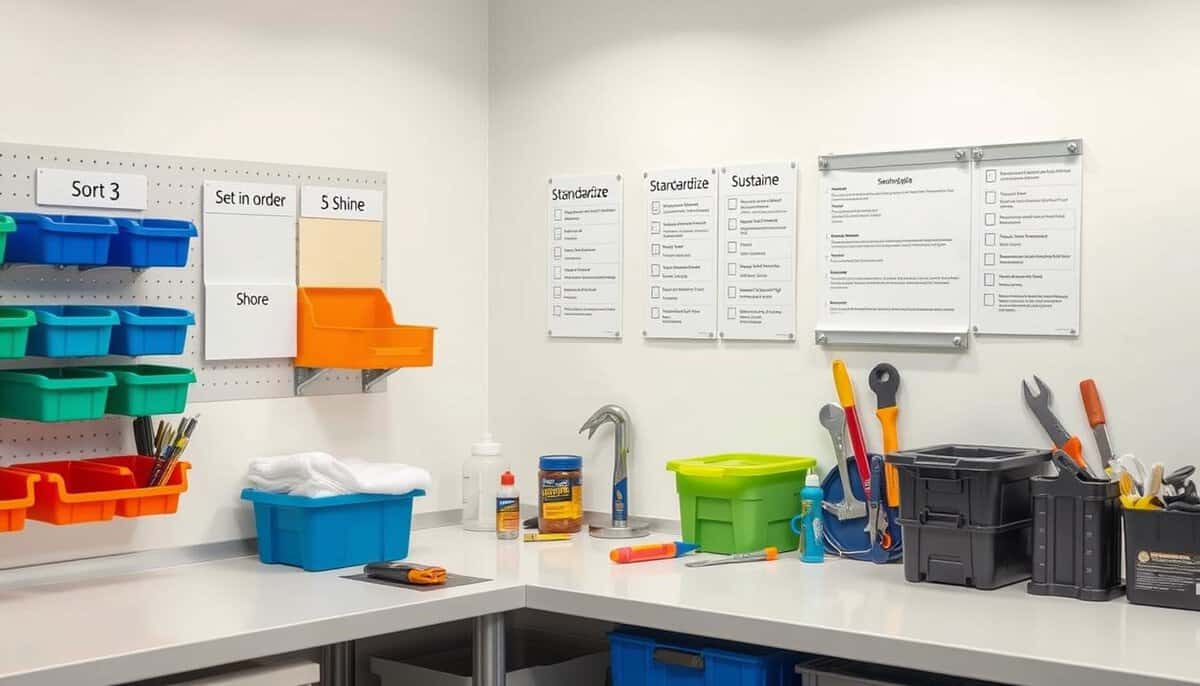
Did you know the 5S methodology boosts productivity by 30% in manufacturing? This gain is from turning messy areas into organized spaces. This leads to better efficiency and fewer accidents at work. Experts in リーン生産方式 say that the 5S approach has changed industries worldwide.
5Sは日本発祥で、整理、整頓、清掃、清潔、躾を意味します。作業エリアを整理整頓し、効率的かつ安全にするための鍵となります。これらの手順に従うことで、企業は無駄を削減し、ワークフローを改善し、より多くの成果を上げることができます。たとえば、電子機器製造業では、 並べ替え 工具や部品の整理整頓により、紛失や破損が20%減少しました。これらの結果は、職場の整理整頓と効率化において5Sがいかに重要であるかを示しています。
5S活動は、単に「春の大掃除」や金曜日の午後に自分の机を片付けることだけではありません。
主なポイント
- 製造現場で5S活動を導入することで、生産性を最大30%向上させることができる。
- 組織体制の改善と空間の明確化により、職場での事故が15%減少した。
- 電子機器製造現場における選別ツールの導入により、不良材料の発生率が20%削減される。
- Employee morale and stress levels improve significantly, with reports of up to a 25% boost in morale.
- 「まっすぐにする」というステップだけでも、無駄な動作を40%削減し、人間工学的に適切な位置に物を配置することができます。
5Sメソッドとは何ですか?
5Sメソッドは、職場を整理整頓するための5つのステップで構成されています。これは日本で始まり、 リーン生産方式. It aims to reduce waste and increase productivity. The method uses organization and visual cues to improve efficiency.
日本における5Sメソッドの起源
5Sメソッドは トヨタ生産方式これは、 ジャストインタイム 製造業において、高橋、長田、平野はそれを日本の産業向けに改良した。5つのSとは、整理、整頓、清掃、標準化、維持のことである。それぞれが工程の各段階を表している。
5Sの5つのステップ:整理、整頓、清掃、清潔、躾
5Sメソッドの強みは、以下の5つの重要なステップにあります。
- 選別 (整理):このステップでは、不要な物を片付けます。これにより、スペースが広がり、安全性が向上します。
- まっすぐにする (整頓):ここでは、必要なものが整理されています。この整理によって、作業の流れがよりスムーズかつ効率的になります。
- 輝く (清掃):このステップの目的は、職場を清潔に保つことです。これにより、生産性と安全性が向上します。
- 標準化する (清潔):このステップは、手順を統一することです。定期的なスケジュールを設定することが含まれます。
- 持続する (しつけ最終段階は規律を促すものです。確立された秩序を維持するのに役立ちます。
最新情報については、以下をご覧ください。 場合によっては、「安全」が6番目のステップとなり、6S活動が確立される。これは、職場における安全の重要性を強調するものである。
リーン生産方式における5Sの重要性
5Sの原則はリーン生産方式にとって不可欠です。継続的な改善の文化を育みます。視覚管理は5Sの重要な要素です。視覚管理によって、理解しやすく、整理しやすく、改善しやすい作業環境が生まれます。従業員を巻き込むことで、作業環境の効率性を維持し、無駄を削減し、生産性を向上させることができます。
| 段階 | 客観的 | 結果 |
|---|---|---|
| 選別 | 不要なものを処分する | スペースと安全性の向上 |
| まっすぐにする | 必需品を整理する | 効率的なワークフロー |
| 輝く | 清潔さを保つ | 生産性と安全性の向上 |
| 標準化する | 手順を作成する | 一貫した実践 |
| 持続する | 規律を育む | 秩序を維持した |
製造現場における5S導入のメリット
製造業において5S活動を取り入れることで、生産性と効率性が向上します。職場が整理整頓され、無駄を発見・排除しやすくなります。
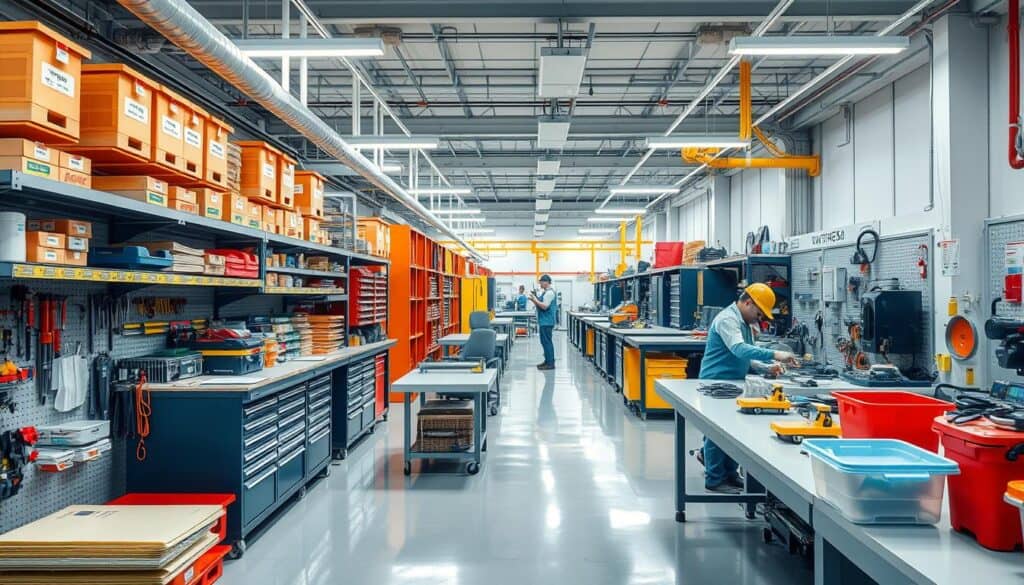
5S活動の大きなメリットの一つは、床面積を最大20%増加させることができる点です。また、機械の故障率を60%以上削減し、業務効率を向上させます。
5S teaches employees self-discipline, keeping the workplace standards high. It includes daily cleaning and checks. This quickly finds and fixes issues, making it safer.
5S活動は、資材不足や生産ラインの問題といった資材の流れに関する問題を解決し、過剰在庫を削減します。また、品質向上にもつながり、顧客満足度を高め、返品率を低下させます。
5Sは職場の文化をより良い方向へと変革します。従業員の帰属意識を高め、士気を向上させます。5Sは50年にわたり、生産性、安全性、そして従業員の幸福度を高めることで知られています。
| 利点 | インパクト |
|---|---|
| 床面積の増加 | 最大20% |
| 機械故障の減少 | 60%以上 |
| 自己規律の向上 | 強化された基準と慣行 |
| 異常の特定 | 即効性のある解決策 |
| 欠陥の削減 | 品質向上 |
| 従業員の士気の向上 | 所有意識の向上 |
5S戦略は、製造現場の整理整頓を改善することで効率性を高めます。また、事故を減らすことで作業現場の安全性を向上させます。これは、競争力のある製造体制を構築する上で重要な要素です。
最後に、5Sは時間、材料などの無駄を削減するのに非常に効果的です。これにより生産性と品質が向上し、リーン生産方式にも最適です。
How to Implement 5S: A Step-by-Step Guide
The 5S method improves workflow and efficiency. It involves a step-by-step process, starting from decluttering to ongoing improvement. This guide details each step, helping organizations boost their operations.
Sort: Removing Unnecessary Items
The ‘Sort’ phase is first. It’s about clearing unneeded items from the workspace. Using Red Tags helps evaluate what to keep or remove. This decluttering step boosts focus and productivity.
Straighten: Organizing for Efficiency
After sorting, comes ‘Straighten.’ It’s about organizing items efficiently. Tools like Shadow Boards make sure everything has a place. An organized workspace leads to better work flow.
Shine: Cleaning and Maintenance
‘Shine’ is next, focusing on cleanliness. Regular cleaning and upkeep are crucial. A tidy space boosts productivity and morale.
Standardize: Documenting Procedures
The fourth step, ‘Standardize,’ makes workflows reliable. It involves documenting best practices. This consistency lays the groundwork for continual improvement.
Sustain: Keeping the Momentum Going
‘Sustain,’ the final step, maintains improvements. Ongoing training and audits help stick to 5S principles. It builds a culture of improvement for lasting success.
Enhancing Workplace Safety with the 5S Methodology
The 5S methodology is crucial for keeping workspaces clean and safe. It organizes the environment, gets rid of waste, and standardizes practices. These steps help cut down on accidents and keep everyone safe at work.
Integration of Safety in Each 5S Step
Adding workplace safety to every part of the 5S method ensures a safer place to work. The steps are Sort, Straighten, Shine, Standardize, and Sustain. Each one can include safety protocols in manufacturing. This helps lower risks and builds a safety-first mindset.
- Sort: get rid of things you don’t need. This reduces clutter and the chance of tripping, making the place safer.
- Straighten: arrange tools and materials to avoid strain and too much reaching or bending. This approach boosts safety and comfort.
- Shine: keep the place clean and perform regular maintenance. This stops dust buildup, lowers fire risk, and makes sure equipment works right.
- Standardize: write down and use safety protocols in manufacturing the same way every time. This consistency increases safety for everyone.
- Sustain: always check and update the workspace to keep up safety standards and avoid slipping into old, unsafe habits.

Examples of 6S: Adding Safety to the Mix
Turning 5S into 6S safety shows a deep commitment to workplace safety. Adding ‘Safety’ means looking for dangers ahead of time and avoiding them with smart moves.
- 人間工学: use adjustable stations and mats to reduce strain and increase comfort.
- Safe storage: store risky materials securely and label them well to prevent accidents.
- Emergency readiness: have evacuation plans ready and keep emergency tools like first aid and fire extinguishers close by.
Companies such as Assembly ファスナー, Inc., and Brady Corporation have added 6S to their operations and seen better safety and work flow. Tracking improvements in accident rates, worker happiness, and equipment efficiency shows how well 6S works. It leads to a safer, more productive manufacturing space.
The 5S Methodology Beyond Manufacturing
The 5S methodology isn’t just for manufacturing. It works well in many industries. For example, it’s made big improvements in healthcare. A study by Rees (2010) found that nurses in an emergency room saved 175 hours each year. This shows that 5S can improve efficiency and productivity, even in busy places like hospitals.
Education has also benefited from 5S. Ebuetse and Dogget (2018) found a 12% faster time finding equipment in university labs. Being more efficient not only saves time but makes better use of educational resources too.
5S isn’t limited to healthcare and education. It’s also helpful in software development and office settings. By following the steps of sorting, setting in order, shining, standardizing, and sustaining, businesses create a tidy, efficient workplace. This approach helps any organization striving to do better and work more efficiently.
関連文献および方法論
- Visual Management: uses visual signals to communicate important information quickly and effectively within the workplace.
- バリューストリームマッピング (VSM): a tool used to visualize and analyze the flow of materials and information required to bring a product or service to the customer.
- 現場 Walks: a practice where managers and leaders observe the actual work process, 従事する with employees, and gain insight into how operations can be improved.
- Root Cause Analysis (RCA): a method of problem-solving used to identify the underlying causes of issues or defects to prevent recurrence.
よくある質問
5Sメソッドとは何ですか?
5Sメソッドは、職場をより整理整頓し、効率的かつ安全にします。5つのステップがあります:整理、整頓、清掃、標準化、維持。 トヨタ 生産システム。リーン生産方式において、無駄を削減し、プロセスを円滑にすることが鍵となります。
5Sメソッドの起源は何ですか?
5Sは、トヨタ生産方式とともに日本で始まりました。その主な目的は、無駄を削減し、生産性を向上させることです。そのため、職場を整理整頓し、効率的に作業を進めることが求められます。
5Sの5つのステップとは何ですか?
5Sの5つのステップは次のとおりです。1. 整理 – 不要なものを取り除きます。2. 整頓 – 必要なものを取り出しやすいように配置します。3. 清掃 – 場所を清潔に保ちます。4. 標準化 – 物事を一貫して行うためのルールを作ります。5. 維持 – これらのルールを維持し、常に改善していきます。
リーン生産方式において、5S手法が重要な理由は?
5Sは、リーン生産方式において、整然とした作業環境を作り出すために不可欠です。これにより、生産性と品質が向上します。付加価値のない工程を見つけて排除することで、作業の流れが改善され、企業の俊敏性も高まります。
製造現場に5Sを導入することで、どのようなメリットが期待できるでしょうか?
製造業において5S活動を実施することで、無駄を削減し、職場の安全性を高めることができます。生産性の向上、作業の流れの円滑化、そして品質の向上にもつながります。整然とした環境は、企業の効率的な運営を意味します。
5Sは職場の安全にどのように貢献するのか?
5Sは、整理整頓と適切な保管によって職場の安全性を高めます。危険箇所を見つけやすくし、事故のリスクを低減させ、安全な作業慣行を促進します。
6Sとは何ですか?また、5Sとはどのように関連していますか?
6Sは5Sに安全という要素を追加することで、さらに発展させたものです。この要素により、安全規則の遵守と危険の防止が5Sの各段階に組み込まれます。これは、安全な作業環境の維持に対する強い取り組みを示すものです。
5Sは製造業以外でどのように応用できるのか?
5Sは、医療、教育、ソフトウェア開発など、さまざまな分野で効果を発揮します。効率性、品質、チームのパフォーマンスを向上させ、体系的なアプローチを用いることで、組織運営や業務プロセスの改善に役立ちます。
5S手法とリーン生産方式に関する外部リンク
国際規格
(リンクにカーソルを合わせると、コンテンツの説明が表示されます)
用語集
Gemba Walk: リーダーが実際に業務が行われている現場を訪れ、プロセスを観察し、従業員と交流し、改善の機会を特定することで、継続的な改善と問題解決の文化を醸成する経営手法。
Just-In-Time (JIT): 製造工程において必要な時に材料や部品が正確に届くようにスケジュールを組むことで在庫コストを削減し、無駄を最小限に抑え、効率性を向上させる生産戦略。
Root Cause Analysis (RCA): 問題や失敗につながる根本的な要因を特定するための体系的なプロセスであり、単に症状を治療するのではなく、根本的な問題に対処し、排除することを目的としている。
Toyota Production System (TPS): 廃棄物の削減、継続的な改善、効率的な生産フローを重視し、ジャストインタイムや自働化などの技術を活用して品質と業務効率を向上させる製造方法論。
Value Stream Mapping (VSM): プロセスにおける材料と情報の流れを分析・最適化し、付加価値のある活動と付加価値のない活動を特定することで、効率性を向上させ、無駄を削減するために使用される視覚的なツール。