
For Manufacturing: the Japanese Lean terms are must-know vocabulary in manufacturing or quality as these have no direct equivalent and are used as-is in an industrial context.
There are a variety of Japanese manufacturing lean terms, but we list here a shortlist of Japanese terms to know in リーンシックスシグマ, and more generally in any plant, product, or process improvement. Not for a show-off attitude, but because these are usually more concise and dedicated than their translation equivalent; and simply because there ARE commonly used lean terms in western industries by now.
Japanese Lean Terms
カイゼン
A key vocabulary to start the Lean terms list is Kaizen meaning literally
Kaizen “Change for the good” = improvement
or “change for the better”. All Lean activities are aimed at this continuous Kaizen. It emphasizes continuous improvement in all areas of business. Kaizen is based on the idea that small, incremental changes can lead to big results over time. The goal of kaizen is to eliminate waste and improve efficiency in all aspects of the manufacturing process.
Kaizen is a team-based approach that relies on the collective input of workers to identify and implement improvements. This bottom-up approach to problem-solving ensures that everyone in the organization has a vested interest in the success of the company and that improvements are based on the real needs of those who are doing the work. This approach helps to ensure that waste is constantly being removed from the manufacturing process. The リーン生産方式 production methodology focuses on minimizing waste in all forms, including overproduction, defects, inventory, motion, and waiting time as seen in Mudas hereafter.
Kaizen is a key component of Lean manufacturing, as it provides a mechanism for continual improvement that can be quickly implemented and adapted as new problems and opportunities arise as seen below with the other lean terms.
Kanban
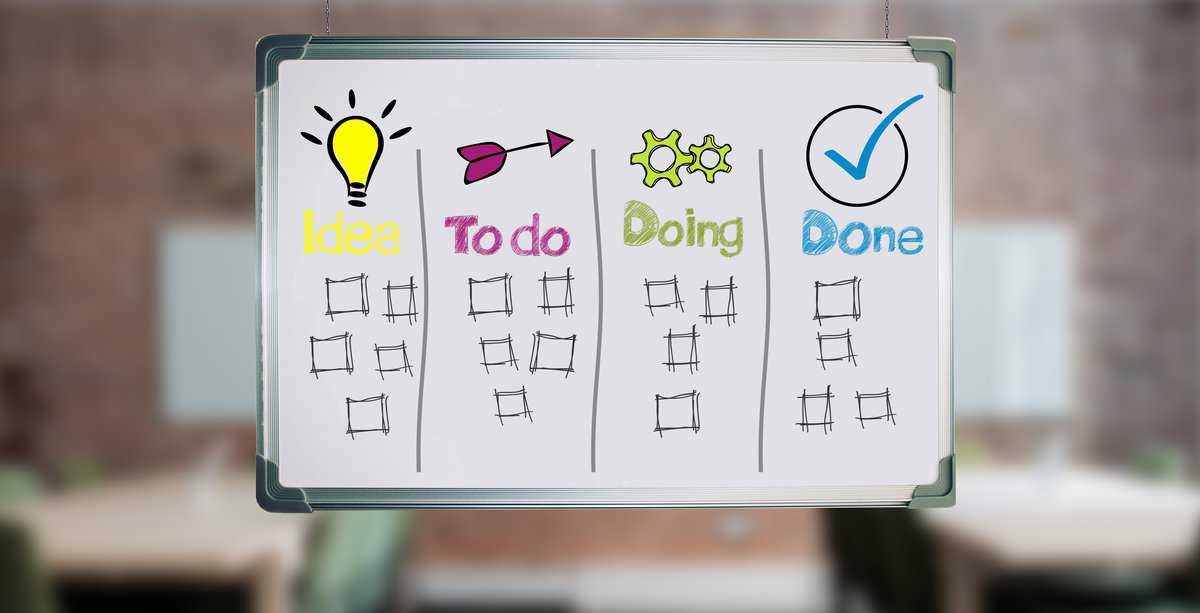
Kanban, with its Japanese word meaning “sign“ または “billboard”, は 1 tool それ helps に visualize the process, its current state, and its targets, そして more generally to schedule and optimize の flow of 仕事 in a lean そして just–で–時間 (JIT) manufacturing.
A kanban usually takes the form of very visual boards where the work で process は represented による cards それ は moved along の line as the work progresses, such as:
-
- Kanban boards に track 仕事 で progress そして visualize の flow of 仕事. This できる help identify bottlenecks そして areas のために improvement when cards get stuck and/or empty slots appear
- Kanban sheets to manage inventory levels. This できる help ensure それ materials は available when needed, in a pull organization, そして help reduce waste.
- Kanban に スケジュール production to help ensure それ 仕事 は flowing smoothly そして それ deadlines は met
- Kanban boards to track quality by identifying issues early そして ensuring それ products meet customer expectations
ヒント: as with project scorecards, or sprint or scrum boards, be very visual: use a mix of simple shapes (square, circles, triangle) and easy 色分け to convey the message.
ヒント: it must be located close to the worker (in the 現場, see below) and have sufficient free space nearby to permit very quick daily team meetings in front of it
Anyone just passing by, even unfamiliar with the process, must see the state and the ongoing challenge in the blink of an eye
現場

Gemba is a Japanese Lean term that means “the real place.” In lean manufacturing, Gemba is the place where the value is added to the product. This could be the factory floor, the office for a service, or any other place where useful work for the customer is performed.
The goal of lean is to eliminate waste in all forms, and Gemba is where waste is most likely to occur. By identifying and eliminating waste at the source, lean manufacturing strives to create a more efficient and effective workplace.
ムダ
From 無駄 = “Useless”, by extension waste or unnecessary work. In Lean manufacturing, muda is used to refer to waste that occurs when workers are performing
any tasks それ do ない add value に の product または service
This できる include もの like waiting のために materials, waiting のために approvals, または performing tasks それ could なれ automated. Eliminating メートルuda(s) will help に improve efficiency そして reduce costs で 製造 そして other types of businesses. The Lean methodology has identified 7 family types of Mudas, the 7 リーン生産方式の無駄:

-
- Transport
- 在庫
- Motion
- Waiting
- Over-Processing
- 過剰生産
- 欠陥
which can easily be remembered by “TIMWOOD” (first letter of each waste)
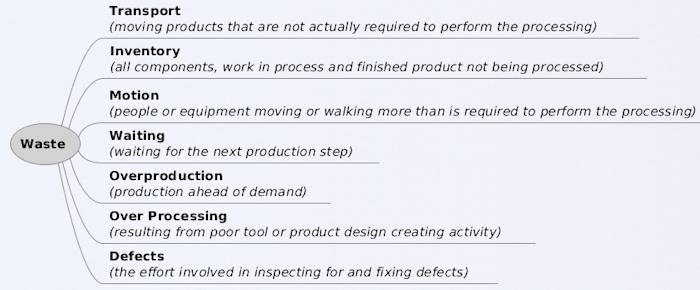
Bonus: it is sometimes mentioned an 8th Muda: waste of talent: the fact of not utilizing available HR talent efficiently
ポカヨケ
ポカヨケ is a Japanese quality control term derived from the Japanese words “poka” which means avoid, and “yokeru” which means a mistake. It is a physical technique for preventing mistakes or errors in a process, by making them either literally impossible or at least highly improbable
- a tool with a keyed pattern that can not enter into another hole
- a shelf that can only hold a specific dedicated part or only one part
Pok1–yoke デバイス または methods は 使用済み に make 1 process easier に understand そして follow に prevent errors without any later effort by becoming idiot-proof.
Poka-yoke can be used in various manufacturing processes to improve quality control.
Examples of Poka-Yoke:
-
- 1 door それ opens で の direction それ 1 person は facing. This ensures それ の person は ない trying に enter の room の wrong way, making the walk efficient and more secured
- 1 light equipped with a sensor that would turn on when 1 person enters 1 room そして turns off when の person leaves の room. This helps に save energy without even thinking about it and reminds people に turn off の light when 彼らは 離れる
- 1 device on 1 sewing machine それ prevents の needle from piercing の fabric unless の presser foot は down
- an accessory on 1 car それ prevents の engine from starting unless の parking brake は engaged
- a software feature それ prevents の user from saving 1 file unless it has been properly renamed to overwrite other files
- a lock or a sensor mechanism on a milling machine それ prevents の machine from starting if の door は ない closed or sensing if the user is not far away enough
Bonus Production Terms
Mura
Mura is a Japanese word meaning “unevenness”, “discrepancy”, or “irregularity”. It is a key concept in lean manufacturing and can be thought of as waste caused by an imbalance in the flow of work.
ムリ
Muri is a Japanese word that means “overburden” or “excess.” In the context of lean manufacturing, muri refers to any unreasonable burden placed on workers, which can lead to inefficient work practices and errors. Muri can also refer to any process or activity that is excessively demanding or difficult, which can lead to frustration and poor quality and must therefore be reduced in a Lean and Quality context.
しつけ
Among Lean Terms, Shitsuke is a lean manufacturing principle that focuses on maintaining discipline and standards within a workplace. It is often referred to as the fifth of the “5S” (for the Japanese words seiri, seiton, seiso, seiketsu, and shitsuke, which all start with the letter S).
The goal of shitsuke is to instill a sense of ownership and pride in workers and to maintain high standards of quality control, permitting quality and efficiency over the long term.
ヘイジュンカ
Heijunka is a manufacturing concept in lean that refers to the equal distribution of production throughout the entire manufacturing process. Heijunka seeks to create a level Production Schedule that can be easily followed and executed by the shop floor. Furthermore, leveling the cycle time of each manufacturing step will reduce bottlenecks and over-capacity, both in return helping to a one-piece flow process and lowering the Work In Progress (WIP). This production schedule should be based on actual customer demand (refer to タクトタイム), not on forecasts or predictions.
By following Heijunka, the manufacturing process becomes much more efficient and responsive to customer needs.
アンドン
Andon literally means “paper lantern.” In a lean manufacturing environment, Andon refers to a system used to notify workers of a problem so that it can be quickly corrected, typically for low-hanging fruit improvements.
Read More Japanese

These five Japanese manufacturing lean terms are essential for improving your own manufacturing process. By utilizing not only these words but the concepts, you will create a more efficient and effective operation.
One could consider reading more posts on Lean or Lean Sigma concepts in production, processes, or factory organizations,
or learn more Japanese language basics, or Japanese culture, or start reading mangas!
補足資料と方法
- 5S (整理整頓、整列、清掃、標準化、維持): ビジュアルマネジメント、職場組織、標準作業手順書(SOP)
- ジャストインタイム (ジャストインタイム)生産: Kanban System, pull production, supplier integration
- 総合生産保全(TPM): 自律保全、予防保全、OEE(総合設備効率)
- バリューストリームマッピング(VSM): プロセス・マッピング、無駄の特定、リーン指標
- 政策管理(政策展開): strategic planning, catchball communication, X-Matrix
- Takt time: サイクルタイム分析、キャパシティプランニング、ワークロードのバランス調整
よくある質問
リーン生産方式で使われる主な日本語用語は何ですか?
カイゼン(継続的改善)、カンバン(視覚的な合図)、ゲンバ(作業が行われる場所)、ムダ(無駄)、ムラ(不均一性)、ムリ(過剰負荷)、ポカヨケ(間違い防止)、平準化(生産平準化)、アンドン(問題信号)、そして5Sの5つの用語。
リーン生産方式ではなぜ日本語が使われるのか?
語彙は トヨタ生産方式また、多くの用語には簡潔で正確な英語訳がないため、世界中の植物がそれらをそのまま残しています。また、それらは翻訳よりも短く、より正確です。
ムダ、ムラ、ムリの違いは何ですか?
ムダとは無駄のことで、顧客にとって価値を生み出さない資源の浪費を指します。ムラとは不均一性、例えば作業量や流れの不規則性を指します。ムリとは過負荷、つまり人や設備が耐えられる以上の負担をかけることを指します。これらは相互に関連しており、需要の不均一性が資源に過負荷をかけ、過負荷が故障や不具合を引き起こし、それが無駄を生み出すのです。
リーン生産方式における7つの無駄とは何ですか?
輸送、在庫、動作、待ち時間、過剰加工、過剰生産、不良品。これらはTIMWOODとして記憶されている。リストによっては、8番目の無駄として、従業員の活用されていない才能を挙げる場合もある。
タイプ1とタイプ2のムダの違いは何ですか?
通常、タイプ1のムダは、義務的な検査など、現状の要件を満たす必要があるため、すぐには除去できません。一方、タイプ2のムダは何も付加価値を生み出さないため、通常はカイゼンを通じて今すぐに除去できます。
カイゼンとカイカクの違いは何ですか?
カイゼンとは、小さな改善を継続的に行うことであり、理想的には実際に作業を行う人々自身が行うものです。カイカクとは、生産ラインやプロセス全体を一度に再設計するなど、抜本的な変革を意味します。カイゼンは既存のものを継続的に改善していくものであり、カイカクは小さな改善では不十分な場合に適用されます。
カンバン方式とジャストインタイム方式の違いは何ですか?
目標はジャストインタイム、つまり必要なものを必要な時に生産・納品することです。カンバンはその目標達成のためのツールであり、カードやボードのスロットといった視覚的な合図によって、上流工程にいつ追加生産や納品を行うべきかを指示します。
現場巡回とは何ですか?
報告書に頼るのではなく、作業現場に出向き、工程を観察し、質問をし、問題を直接理解すること。これは、作業の流れを学ぶためのものであり、検査したり、人を責めたりするためではない。
ポカヨケとは何ですか?また、どのような例がありますか?
ポカヨケとは、間違いを防止する設計、つまり、間違いが起こり得ない、あるいはすぐにわかるようにする設計のことです。例えば、治具に特定の向きでしか取り付けられない部品や、安全扉が開いている間は起動しない機械などが挙げられます。
ポカヨケとアンドンの違いは何ですか?
ポカヨケは、エラーを発生源で防止します。アンドンは、ランプ、ディスプレイ、またはコードで問題が発生したことを知らせ、チームが迅速に対応できるようにします。ポカヨケはミスを止め、アンドンは助けを求めます。
カンバンとは何ですか?また、製造現場ではどのように活用されていますか?
カンバンとは、日本語で「看板」または「掲示板」を意味します。床には、カード、容器、ボードのスロットなどが設置され、何をどれだけ、いつ生産または補充するかを示します。作業現場の近くに設置されたボードは、カードが詰まった際のボトルネックを示します。
平準化とは何ですか?
生産平準化。平準化は、予測ではなく実際の顧客需要に基づいて、生産量と製品構成を時間的に均等に分散させることで、大量生産や不規則なバッチ生産を抑制します。これにより、ボトルネック、過剰生産能力、仕掛品を削減できます。
タクトタイムとは何ですか?また、平準化とどのように関係していますか?
タクトタイムとは、利用可能な生産時間を顧客需要で割った値であり、需要を満たすために1つの製品を生産しなければならないペースを示すものです。平準化生産方式では、このペースに合わせて生産計画を立てます。
日本語で5Sとはどういう意味ですか?
整理(整頓)、整頓(整える)、清掃(磨く)、清潔(標準化)、そして躾(維持する、つまり規律を保つ)。躾は、他の4つが衰えないように維持する役割を担う。
自働化とは何ですか?
自働化 これは、人間の知能を備えた自動化を意味します。異常が発生した際に機械またはオペレーターがプロセスを停止し、欠陥が下流工程に伝播しないようにします。アンドンとポカヨケはこれをサポートします。
日本のリーン生産方式における用語のうち、品質管理に関連するものはどれですか?
ポカヨケ(間違い防止)、アンドン(問題信号)、自働化(異常停止)、躾、その他5S(標準化と規律)とカイゼン(継続的改善)は、品質管理を欠陥の発見から予防へと移行させるものです。
用語集
Gemba Walk: リーダーが実際に業務が行われている現場を訪れ、プロセスを観察し、従業員と交流し、改善の機会を特定することで、継続的な改善と問題解決の文化を醸成する経営手法。
Just In Time (JIT): 製造工程で必要な時に必要な分だけ商品を受け取ることで在庫コストを削減し、無駄を最小限に抑え、効率性を向上させることを目的とした生産戦略。
Just-In-Time (JIT): 製造工程において必要な時に材料や部品が正確に届くようにスケジュールを組むことで在庫コストを削減し、無駄を最小限に抑え、効率性を向上させる生産戦略。
Overall Equipment Effectiveness (OEE): 製造プロセスの効率性を評価するために用いられる指標で、稼働率、性能率、品質率を掛け合わせて算出される。これにより損失を特定し、生産性と業務効率の向上に繋げることができる。
Standard Operating Procedure (SOP): a set of step-by-step instructions created to help workers carry out routine operations consistently and efficiently, ensuring compliance with regulations and quality standards.
Takt Time: 顧客の需要を満たすために製品を生産するのに許容される最大時間。これは、利用可能な生産時間を必要な生産量で割ることによって算出されます。生産ペースを需要に合わせ、効率的なワークフローとリソース配分を確保するのに役立ちます。
Total Productive Maintenance (TPM): 生産性の最大化、ダウンタイムの削減、継続的な改善とチームワークによる設備総合効率の向上を目指し、全従業員を巻き込み、積極的かつ予防的な対策を重視した、設備メンテナンスに対する包括的なアプローチ。
Toyota Production System (TPS): 廃棄物の削減、継続的な改善、効率的な生産フローを重視し、ジャストインタイムや自働化などの技術を活用して品質と業務効率を向上させる製造方法論。
Value Stream Mapping (VSM): プロセスにおける材料と情報の流れを分析・最適化し、付加価値のある活動と付加価値のない活動を特定することで、効率性を向上させ、無駄を削減するために使用される視覚的なツール。
Work in Progress (WIP): 原材料、労働力、および一定の段階までに発生した間接費など、生産工程において部分的に完成した品目。これらの資産はまだ完成品ではなく、生産効率の追跡や在庫管理に不可欠です。
































