Did you know Amazon first sold used college textbooks? Now, they sell millions more items. This only shows one aspect of the power of the Minimum Viable Product (MVP). It helps teams learn a lot, as soon as possible, with little effort.
An MVP is a simple version of a product. It has just enough features to make early customers happy. It also gives very valuable feedback for future versions. The MVP method is cost-effective. It fits well with the lean startup idea, which loves quick making and learning from cycles.
While the Minimum Viable Product is not only to “start small”, some examples have aspects in common: Jeff Bezos started Amazon from his garage. It was an online bookstore, an MVP. This shows even big companies can start small. Uber began as UberCab, a service just for iPhones in San Francisco. Now, it’s a huge ride-sharing app with 19 million trips a day. Starting small with a big goal is key in today’s product development.
Key Takeaways
- A Minimum Viable Product (MVP) allows teams to gather maximum validated learning with minimal effort. Feedback from early users is crucial for the refinement and future success of the product.
- Starting with an MVP ensures cost-effectiveness and aligns with the lean startup methodology.
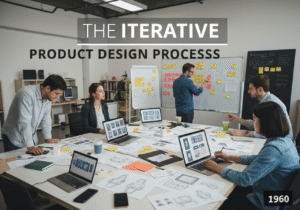
- Rapid prototyping and iterative cycles of learning are core to successful MVP development.
The Minimum Viable Product (MVP) Concept
The Definition of MVP comes from the Lean Startup method, created by Eric Ries in 2009. It involves making the simplest version of a product. This product has just the essential features to offer immediate value. This way, it needs less effort to make and gets quick feedback from users.
An MVP helps get user feedback early in the making of a product
This feedback teaches us about what the market needs by watching what users really do. Knowing if a product hits the mark with its audience comes from this feedback loop.
Some people think MVPs are just tiny products. But, an MVP must be good enough to provide real user data. Based on user feedback, teams may change the product a lot or even throw it away. This shows how important the ‘viable’ part is, not just the ‘minimum.’
The Definition of MVP also highlights how it’s different from a Minimum Marketable Product (MMP): while both are about getting ready for the market, MVPs aim to gather important early insights for improving the product.

To wrap it up, focusing on getting better with customer feedback makes the MVP more than just a concept. It turns it into a practical, step-by-step strategy. This ensures the final product meets the market’s needs and keeps getting better.
Why the Minimum Viable Product is Essential in Product Development
A Minimum Viable Product (MVP) is vital in today’s product development world. Eric Ries, in The Lean Startup, describes an MVP as a product version. It helps teams learn a lot about customers with minimal effort. This method is key to getting to market faster and cutting costs.

Beginning with an MVP has many benefits. It allows for early customer feedback, which shapes the product’s future. Many managers build too much into their first release. They may fear offering too little or failing. Yet, focusing on core features with an MVP means the most important parts are made first. This cuts development costs and simplifies the process.
An MVP also makes a product more likely to succeed. It focuses on what’s most valuable. Setting clear goals means only necessary elements are built. This not only speeds up time-to-market. It also lets early users give feedback earlier. This feedback is crucial for making improvements.
Using an MVP strategy reduces the need to redo work. Making just enough to test the main ideas means less fixing later. This leads to a faster and more flexible development cycle. It allows for quick changes based on user feedback.
With an MVP, companies connect with their customers sooner. Talking to early users provides feedback on what to change or add. This validates the product’s value early on. It’s a smart move that speeds up making the product better. It also ensures companies meet market needs right from the start.

Another benefit is focusing more on key business activities. Testing marketing and sales channels early checks if the business is ready before growing. This lowers risks and boosts the chances of success in the long run.
| Advantage | Description |
|---|---|
| Core Value Focus | Prioritizes essential features, reducing complexity |
| Reduced Rework | Minimizes rework by validating hypotheses early on |
| Early Customer Relationships | Engages early adopters for valuable feedback |
| Improved Business Alignment | Tests all business aspects before full-scale launch |
The rest of this article is reserved for members
To limit scraping bots (currently 40,000 hits per day!),
we had to restrict access to full articles and tools to registered members only.
to access all the rest.
FAQ
What is a Minimum Viable Product (MVP)?
An MVP is the simplest form of a product. It has just the crucial features. The goal is to provide value fast with little effort. It lets us learn what customers like with a small investment.
Why is an MVP important in product development?
An MVP speeds up getting the product to users. It focuses on the main features, cuts costs, and gathers early feedback. This fits well with lean startup and agile methods.
How does implementing an MVP strategy reduce marketing risks?
An MVP tests how open the market is to new ideas without spending a lot. It brings in customer feedback early. This makes sure future efforts are based on real market needs.
What are common mistakes to avoid during MVP development?
Avoid making the product too complex or misunderstanding feedback. Skipping market research is also a mistake. These errors can ruin the MVP’s advantages of being cost-effective and quick to develop.
What are the essential steps to create a successful MVP?
To make a successful MVP, start with detailed market research. Identify vital features, build a prototype, and get feedback from early users. These steps ensure the product meets market needs.
What are the risks of launching an MVP too early?
Launching an MVP too soon can harm your brand. It might lead to product failure and unhappy customers. This happens if it doesn’t meet users’ key needs or isn’t developed enough.
How important is feedback and iteration in MVP development?
Getting and using user feedback is key. It helps improve the MVP step by step. Making changes based on what users and the market want ensures the product meets their requirements.
What metrics should be tracked to measure the success of an MVP?
Track user activity, how many sign up, active user rates, and customer value. These help figure out how to get better and the MVP’s chance to grow.
Glossary of Terms Used
Customer Acquisition Cost (CAC): total expenses incurred to acquire a new customer, including marketing, sales, and operational costs, divided by the number of new customers gained in a specific period.
Minimum Marketable Product (MMP): a product with the smallest set of features that delivers value to early adopters, enabling feedback for future development while minimizing time and resources required for market entry.
Minimum Viable Product (MVP): a basic version of a product that includes only essential features necessary to satisfy early adopters and gather feedback for future development. It aims to validate hypotheses about customer needs with minimal resources and time investment.
Return on Investment (ROI): a financial metric used to evaluate the profitability of an investment, calculated by dividing the net profit from the investment by the initial cost, expressed as a percentage.
Unique Selling Point (USP): a distinctive feature or benefit that sets a product or service apart from competitors, aimed at attracting customers by addressing specific needs or preferences.
User experience (UX): the overall satisfaction and perception of a user when interacting with a product, system, or service, encompassing usability, accessibility, design, and emotional response throughout the entire interaction process.