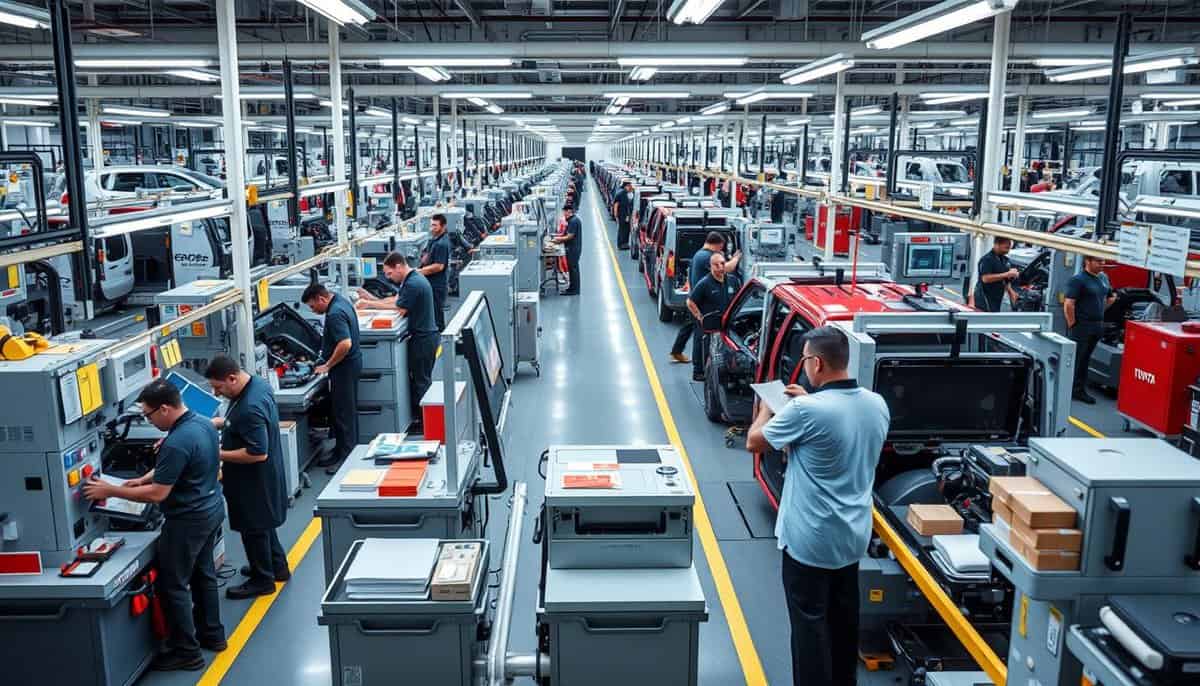
Did you know that a Toyota car has over 30,000 parts? The Toyota Production System (TPS) makes sure each one fits perfectly. It’s all about not wasting anything and keeping things on time. This TPS set decades ago the standard in lean manufacturing because of its efficiency.
TPS is more than just some tools. It’s a deep-rooted philosophy for Toyota’s manufacturing, covering everything from cars to services. It started with Sakichi Toyoda’s automatic loom. Then, Kiichiro Toyoda and Taiichi Ohno added their ideas. The two main ideas are Just-in-Time and Jidoka. They help make sure parts are ready when needed and flaws are fixed right away.
By combining Just-in-Time and Jidoka, Toyota became a leader in the car industry. Now, companies around the world use TPS to get better every day. They call this kaizen, which means “improvement” in Japanese.
Key Takeaways
- The Toyota Production System (TPS) ensures meticulous coordination of the 30,000 parts of a car, emphasizing zero waste.
- TPS is built on two main pillars: Just-in-Time and Jidoka, focusing on synchronized production and defect management.
- The roots of TPS emerge from Sakichi Toyoda’s automatic loom and are refined by key figures like Kiichiro Toyoda and Taiichi Ohno.
- Businesses globally integrate TPS principles for enhanced efficiency and quality, showcasing the system’s universal effectiveness.
- Continuous improvement, or kaizen, plays a pivotal role in the success and ongoing relevance of TPS.
- TPS emphasizes respect for workers, eliminating waste, and optimizing both machine and human capabilities.
Note: this article focus on the TPS specifically. Several other Lean methodology articles can be found on innovation.world :


Introduction to the Toyota Production System
The Toyota Production System (TPS) was created by Taiichi Ohno and Eiji Toyoda from 1948 to 1975. It changed how products are made by focusing on being efficient, cutting waste, and making items just in time. Learning about TPS’s development and goals shows why it’s still a model in manufacturing today.
History of TPS
Sakichi Toyoda first made the automatic loom, which saved a lot of material. His idea led to just-in-time manufacturing, starting the TPS. Toyota outlined TPS in a 1992 booklet, updated in 1998. It aims to remove stress, inconsistency, and waste.
It tackles eight waste types, including too much production, delay, transport issues, overstock, defects, and not using workers well.
Core Objectives
The Toyota Production System’s main goals are to cut waste, better manufacturing, and use human skills fully. These are met through Just-in-Time (JIT) and Jidoka principles. They make sure production matches need, using a human approach to automation.
TPS promotes ongoing betterment, dubbed Kaizen, and values people. This respect for staff and partners has not only boosted Toyota’s efficiency. It’s also set a bar for other sectors.
The Core Principles of TPS
The Toyota Production System (TPS) is known for its innovative approach to making things efficiently. It focuses on doing things better, making top-quality products, and always improving. We’ll look into TPS’s key ideas: Just-in-Time and Jidoka.
Just-in-Time
Just-in-Time (JIT) is crucial to TPS. It’s about matching production closely with what customers actually want, which cuts costs and waste. By making products only as needed, JIT makes sure things run smoothly and efficiently.
One big win with JIT is reducing the time to set up machines. Toyota managed to shorten this time from months to just hours or minutes. This quick change helps make different products without wasting time or resources.
- Reduces overproduction and excess inventory
- Enhances resource utilization
- Facilitates flexible manufacturing
Jidoka
Jidoka means “automation with a human touch.” It’s all about keeping quality high by letting workers stop production if there’s a problem. This way, quality checks are part of the manufacturing steps, and no bad products move forward.
Jidoka encourages everyone to spot and fix errors right away. It builds a team where everyone cares and learns continuously. Plus, it helps Toyota get rid of waste by solving issues immediately.
- Enhances product quality
- Empowers workers
- Eliminates waste through immediate problem-solving
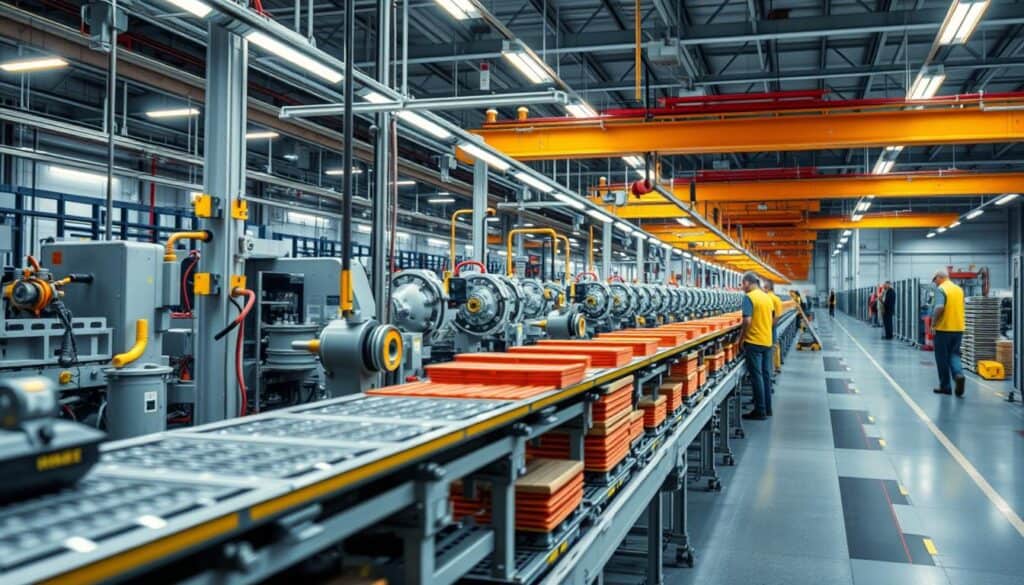
Just-in-Time and Jidoka are the core of TPS, leading to better and more efficient ways of making things. These ideas help Toyota not just work smarter but also encourage everyone to aim for quality and responsibility.
| Principle | Key Aspects | Benefits |
|---|---|---|
| Just-in-Time | Demand-driven production, minimal inventory | Reduced overproduction, flexible manufacturing |
| Jidoka | Automation with a human touch, quality control | Enhanced product quality, empowered workforce |
The rest of this article is reserved for members
To limit scraping bots (currently 40,000 hits per day!),
we had to restrict access to full articles and tools to registered members only.
to access all the rest.
FAQ
What is the Toyota Production System (TPS)?
The Toyota Production System (TPS) is a well-known way of making things better made by Toyota. It helps increase efficiency by removing waste and improving product quality. Lean manufacturing principles are part of it, and it’s used worldwide in different industries.
How did the Toyota Production System originate?
TPS started with Sakichi Toyoda’s automatic loom invention, which saved materials. Kiichiro Toyoda expanded this idea by adding Just-in-Time manufacturing. This became TPS’s foundation.
What are the core objectives of TPS?
TPS aims to get rid of waste, make manufacturing better, and use human skills to make high-quality products efficiently. It uses lean manufacturing, Just-in-Time, and Kaizen principles to do this.
What is Just-in-Time (JIT) in TPS?
Just-in-Time (JIT) in TPS is about making things only when needed and at the right time. This principle cuts down inventory costs and makes the production smoother and more efficient.
How does TPS differ from other lean manufacturing systems?
TPS is unique because it focuses on Just-in-Time and Jidoka together. It aims for well-timed production and quality from the start. Other systems might only look at cutting waste or adjusting production.
What are some common challenges in adopting TPS?
Starting TPS can be hard because of cultural differences, cost, and people not wanting to change. Success needs dedication to change culture, ongoing training, and leadership support.
Is TPS still relevant in modern industries?
Yes, TPS is still very important today. Its focus on being efficient, flexible, and high-quality gives big advantages. TPS adapts well to new economic and tech changes, making it valuable in manufacturing and services.
External Links on Toyota Production System Lean Manufacturing
International Standards
(hover the link to see our description of the content)
Glossary of Terms Used
Just In Time (JIT): a production strategy that aims to reduce inventory costs by receiving goods only as they are needed in the manufacturing process, thereby minimizing waste and increasing efficiency.
Toyota Production System (TPS): a manufacturing methodology emphasizing waste reduction, continuous improvement, and efficient production flow, utilizing techniques such as Just-In-Time and Jidoka to enhance quality and operational efficiency.