Did you know the 5S methodology boosts productivity by 30% in manufacturing? This gain is from turning messy areas into organized spaces. This leads to better efficiency and fewer accidents at work. Experts in lean manufacturing say that the 5S approach has changed industries worldwide.
The 5S comes from Japan and means Sort, Straighten, Shine, Standardize, and Sustain. It’s key to making work areas organized, efficient, and safe. By following these steps, companies cut waste, made work flow better, and got more done. For example, in electronics manufacturing, sorting tools and parts cut down on lost or damaged items by 20%. These results show how important the 5S is for better organization and efficiency at work.
A 5S activity is not just a “spring cleaning” or tidying up your own desk on Friday afternoons
Key Takeaways
- Implementing the 5S methodology in manufacturing settings can increase productivity by up to 30%.
- Workplace accidents have decreased by 15% due to improvements in organization and space clarity.
- Sorting tools in electronics manufacturing environments leads to a 20% reduction in damaged materials.
- Employee morale and stress levels improve significantly, with reports of up to a 25% boost in morale.
- The “Straighten” step alone can reduce wasted motion by 40%, positioning items ergonomically.
What is the 5S Methodology?
The 5S methodology involves five steps to keep workplaces organized. It started in Japan and is key for lean manufacturing. It aims to reduce waste and increase productivity. The method uses organization and visual cues to improve efficiency.
Origins of the 5S Method in Japan
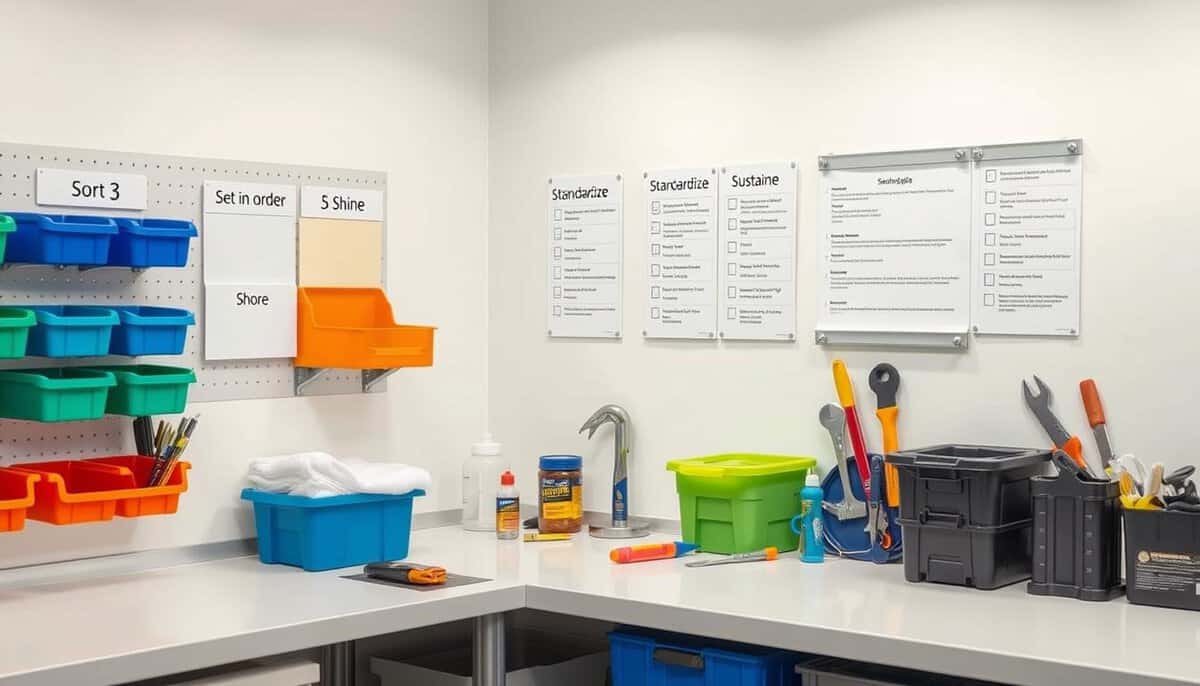
The 5S method came from the Toyota Production System. It was developed to help just-in-time manufacturing. Takahashi, Osada, and Hirano refined it for Japanese industry. The five S’s are: sort, set in order, shine, standardize, and sustain. Each represents a step in the process.
The Five Steps of 5S: Sort, Straighten, Shine, Standardize, Sustain
The 5S methodology gets its strength from five key steps:
- Sort (Seiri): this step involves removing items that aren’t needed. This makes more space and improves safety.
- Straighten (Seiton): here, necessary items are organized. This organization makes workflows smoother and more efficient.
- Shine (Seiso): keeping the workplace clean is this step’s focus. It leads to better productivity and safety.
- Standardize (Seiketsu): this step is about making procedures consistent. It involves setting regular schedules.
- Sustain (Shitsuke): the final step encourages discipline. It helps maintain the orderliness that’s been established.
Update, see details below: in some instances, ‘safety’ becomes a sixth step, creating the 6S methodology. This underscores the importance of safety in the workplace.
Importance of 5S in Lean Manufacturing
The 5S principles are vital to lean manufacturing. They foster a culture of ongoing improvement. Visual management is a big part of 5S. It creates a workspace that’s easy to understand, organize, and improve. Involving employees ensures workspaces stay efficient, waste is reduced, and productivity grows.
| Phase | Objective | Outcome |
|---|---|---|
| Sort | Eliminate unnecessary items | Increased space and safety |
| Straighten | Organize essentials | Efficient workflow |
| Shine | Maintain cleanliness | Improved productivity and safety |
| Standardize | Create procedures | Consistent practice |
| Sustain | Foster discipline | Maintained order |
Benefits of Implementing 5S in Manufacturing Workplaces
Using the 5S method in manufacturing improves productivity and efficiency. It makes the workplace organized and orderly. This helps in spotting and getting rid of waste.
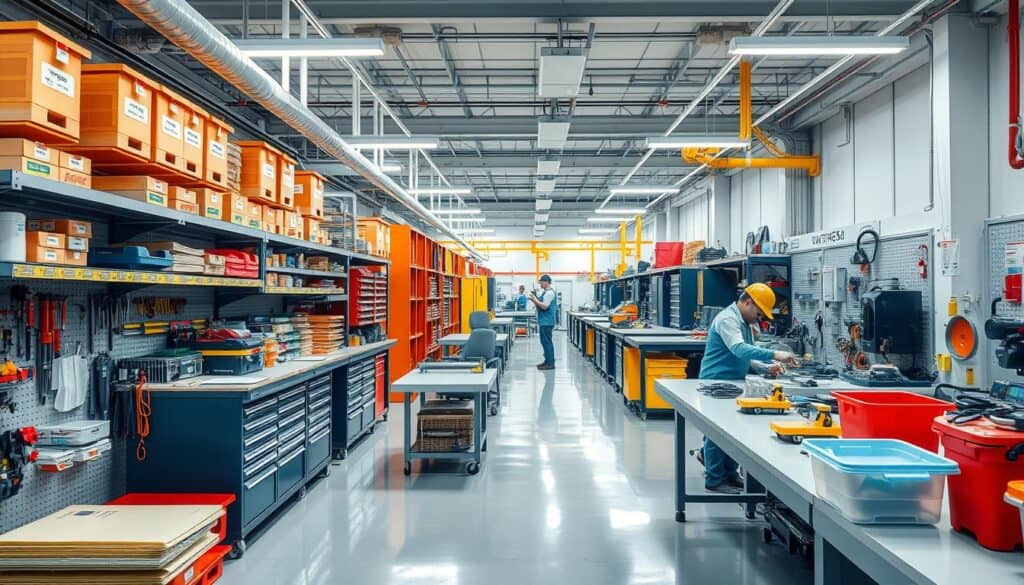
One big benefit of 5S is gaining up to 20% more floor space. It also lowers machine breakdowns by over 60%, boosting operational efficiency.
5S teaches employees self-discipline, keeping the workplace standards high. It includes daily cleaning and checks. This quickly finds and fixes issues, making it safer.
5S also fixes material flow problems, like shortages and line issues, and cuts down on too much inventory. It improves quality, making customers happier and reducing returns.
5S changes the workplace culture for the better. It makes employees feel they belong and raises their morale. For 50 years, 5S has been known to enhance productivity, safety, and employee happiness.
| Benefit | Impact |
|---|---|
| Increased Floor Space | Up to 20% |
| Reduction in Machine Breakdowns | Over 60% |
| Improved Self-Discipline | Enhanced Standards and Practices |
| Identification of Abnormalities | Immediate Fixes |
| Reduction in Defects | Enhanced Quality |
| Improved Employee Morale | Increased Sense of Ownership |
The 5S strategy makes manufacturing places more efficient by organizing them better. It makes the work area safer by reducing accidents. This is key for a competitive manufacturing setup.
Lastly, 5S is great for cutting down waste in time, materials, and more. This boosts productivity and quality, fitting well with lean manufacturing.
The rest of this article is reserved for members
To limit scraping bots (currently 40,000 hits per day!),
we had to restrict access to full articles and tools to registered members only.
to access all the rest.
FAQ
What is the 5S methodology?
The 5S methodology makes workplaces better organized, efficient, and safe. It has five steps: Sort, Straighten, Shine, Standardize, and Sustain. It started with the Toyota Production System. It’s key in lean manufacturing to cut waste and make processes smoother.
What are the origins of the 5S method?
5S began in Japan with the Toyota Production System. Its main aim is to cut waste and boost productivity. It does this by keeping workplaces orderly and efficient.
What are the five steps in 5S?
The five steps in 5S are: 1. Sort – Remove items you don’t need. 2. Straighten – Arrange what you need so it’s easy to get. 3. Shine – Keep the place clean. 4. Standardize – Make rules that keep things consistent. 5. Sustain – Keep up these rules and always get better.
Why is the 5S methodology important in lean manufacturing?
5S is crucial in lean manufacturing for creating a neat work area. This boosts productivity and quality. By spotting and removing steps that don’t add value, it makes work flow better and makes companies more agile.
What benefits can be expected by implementing 5S in manufacturing workplaces?
Using 5S in manufacturing can cut down waste and make workplaces safer. It boosts productivity, makes workflows smoother, and raises quality. An orderly environment means a company runs more efficiently.
How does 5S contribute to workplace safety?
5S makes workplaces safer by cutting clutter and storing things right. It makes it easier to see dangers. A tidy environment lowers the risk of accidents and supports safe work practices.
What is 6S and how does it relate to 5S?
6S builds on 5S by adding Safety as an extra step. This step means safety rules and preventing dangers are part of each 5S stage. It shows a strong commitment to keeping work safe.
How can 5S be applied beyond manufacturing?
5S works well in different fields like healthcare, education, and software development. It boosts efficiency, quality, and team performance. By using a structured approach, it helps with organization and making processes better.
External Links on 5S Methodology and Lean Manufacturing
International Standards
(hover the link to see our description of the content)
Glossary of Terms Used
Gemba Walk: a management practice involving leaders visiting the actual place where work occurs to observe processes, engage with employees, and identify opportunities for improvement, fostering a culture of continuous improvement and problem-solving.
Toyota Production System (TPS): a manufacturing methodology emphasizing waste reduction, continuous improvement, and efficient production flow, utilizing techniques such as Just-In-Time and Jidoka to enhance quality and operational efficiency.
Value Stream Mapping (VSM): a visual tool used to analyze and optimize the flow of materials and information in a process, identifying value-added and non-value-added activities to improve efficiency and reduce waste.