Product Design, Manufacturing & Innovation Resources
家 » メモリー効果(電池)

メモリー効果(電池)

1960
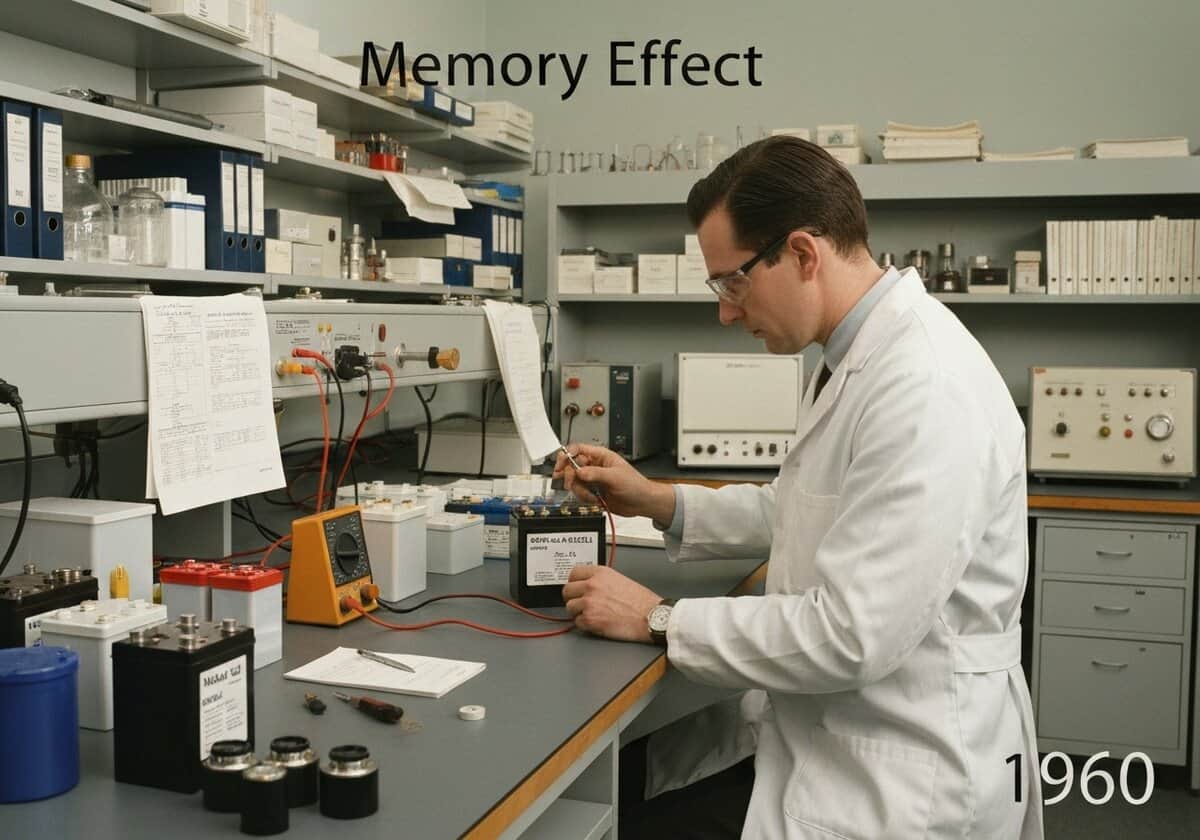
1960年代の電気化学実験室で、技術者がニッケルカドミウム電池の電圧を測定している。

(画像はイメージです)

The memory effect is a phenomenon, most prominent in NiCd batteries, where a battery that is repeatedly recharged after only partial discharge ‘remembers’ this partial capacity level. On subsequent full discharge attempts, the battery voltage drops sharply at that ‘remembered’ point, making the remaining capacity unusable. It is caused by changes in the crystalline structure of the electrodes, specifically the growth of large cadmium crystals.

The term ‘memory effect’ originated from aerospace applications in the 1960s, where satellites with NiCd batteries would undergo very precise and repeatable charge/discharge cycles dictated by their orbits. This consistent, shallow cycling led to a noticeable and predictable voltage drop at the point where the discharge typically ended, rendering the rest of the battery’s capacity inaccessible for systems requiring a specific voltage threshold.

NiCd電池における根本的な物理的原因は、カドミウム負極の再結晶化に関連しています。浅い放電を繰り返すと、小さなカドミウム結晶が大きくなり、電気化学的に溶解しにくくなります。この形態変化によって放電電圧プロファイルが変化します。この用語は、NiMH電池の単純な電圧降下やLiイオン電池の容量低下(異なる劣化メカニズムによる)を説明するために誤って使用されることが多いですが、真のメモリー効果はこの結晶変化に特有のものです。解決策は、大きな結晶を破壊して電池の容量を完全に回復させるために、定期的な深放電サイクル(再調整)を実施することでした。このメンテナンスの手間とカドミウムの毒性から、この特有の効果を示さないNiMHやLiイオンなどの代替化学の研究が促進されました。

UNESCO Nomenclature: 2204
電気化学

タイプ

化学プロセス

混乱

増分

使用法

広く普及している

前駆物質

  • 発明 ニッケルカドミウム (ニッケルカドミウム)電池
  • 充電サイクルが非常に規則的な用途(例:人工衛星)におけるバッテリーの使用
  • 電極の変化を観察するための材料科学と結晶学の進歩

アプリケーション

  • 再調整/放電機能を備えた「スマート」充電器の開発
  • 1960年代におけるバッテリー駆動型衛星の設計上の考慮事項
  • 消費者へのアドバイスが、機器を定期的に完全に放電するように変化している。
  • ニッケル水素電池やリチウムイオン電池の採用を促進する原動力となる。

特許:

NA

潜在的なイノベーションのアイデア

  • software-based battery reconditioners in laptops and power tools
  • electrode material doping to inhibit large crystal formation
  • pulsed charging アルゴリズム designed to break up crystal structures during charging
  • 超音波 transducers integrated into battery packs to physically agitate electrodes
  • development of amorphous (non-crystalline) electrode materials
  • real-time crystallographic monitoring sensors within a battery cell
  • electrolyte additives that act as crystal growth inhibitors
  • ai-powered chargers that detect the onset of memory effect and trigger a reconditioning cycle
  • thermal cycling protocols to anneal and reset electrode crystal structure
  • educational animations in device software to explain proper battery care to users
関連キーワード:メモリー効果、NiCd、ニッケルカドミウム、電圧降下、バッテリーコンディショニング、再結晶化、サイクルメモリー、バッテリー劣化、NiMh、電気化学。

歴史的背景

メモリー効果(電池)

1960
1960
1960
1960
1960
1960
1960
1960
1960
1960
1960
1960
1960
1960
1960

(日付が不明または関連性がない場合、例えば「流体力学」などでは、その注目すべき出現時期の概算値が提示されます。)

10年目 周年

フルサイズの画像とダウンロードは、登録会員のみが100%無料で利用できます。