Product Design, Manufacturing & Innovation Resources
家 » 無菌性保証レベル(SAL)

無菌性保証レベル(SAL)

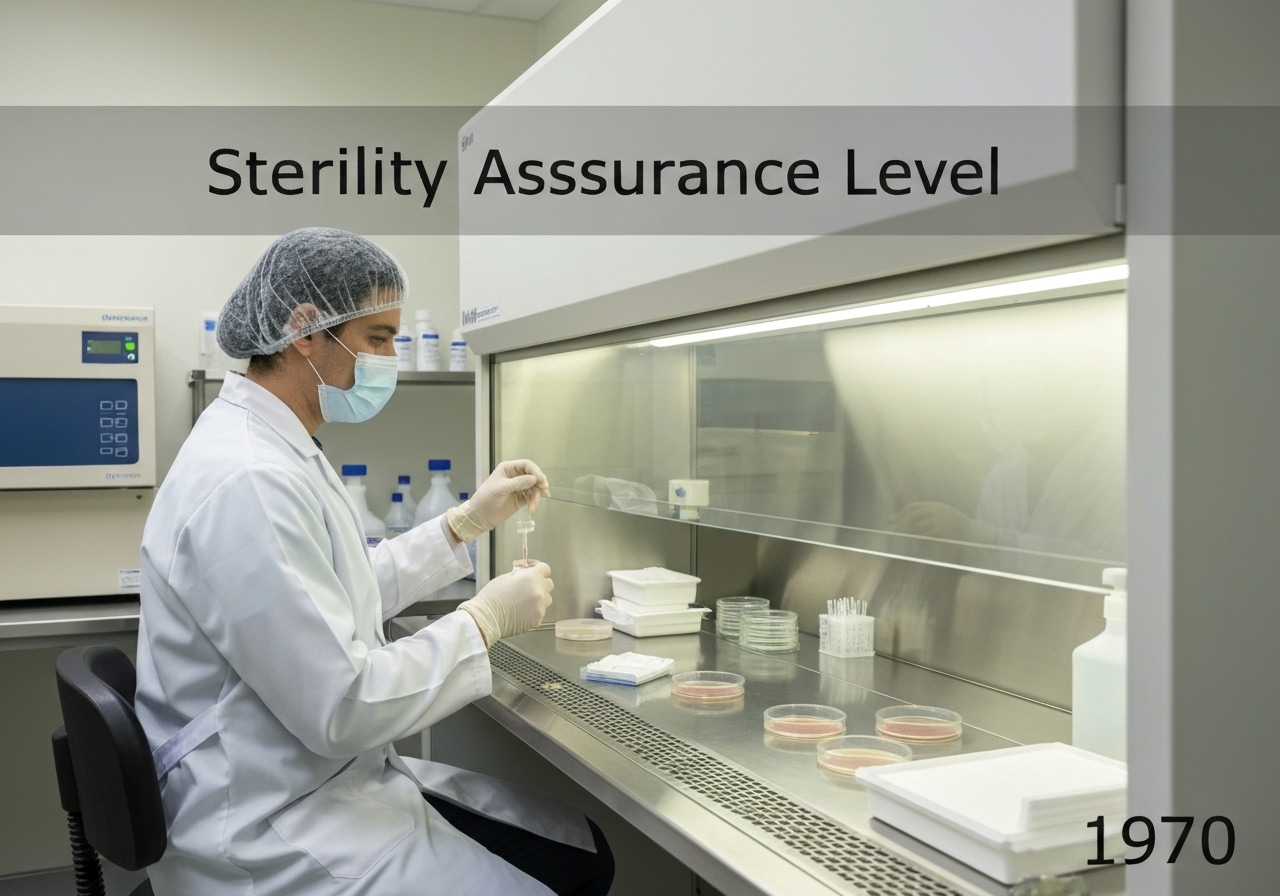
1970
Laboratory sterility testing for medical devices in applied microbiology.

(画像はイメージです)

SAL is a quantitative measure representing the probability of a single viable microorganism surviving on an item after sterilization. A commonly required SAL for medical devices is [latex]10^{-6}[/latex], meaning a one-in-a-million chance of a non-sterile unit. This probabilistic approach acknowledges that absolute sterility cannot be proven, only inferred statistically from プロセス検証. Sterilization cycles are proven with IQ and OQ validation of the equipment, followed by performance testing with biological indicators.
無菌性保証レベル(SAL)の概念は、以下の理解に基づいています。 microbial 死滅は一次反応速度論に従うため、確率的な事象です。物体上のすべての微生物が死滅したことを証明することは不可能であり、微生物が滅菌処理を生き残る確率を計算することしかできません。SAL はこの確率です。たとえば、SAL が [latex]10^{-6}[/latex] だからといって、100 万個の製品に 1 つの汚染品が存在するという意味ではありません。そうではなく、滅菌処理後に、特定の製品に 1 つの生存可能な微生物が存在する確率が 100 万分の 1 であることを意味します。この統計的手法は、医薬品や医療機器などの規制産業における滅菌サイクルの検証に不可欠です。製造業者は、望ましい SAL を達成するサイクルを確立するために検証研究を実施します。これには、滅菌対象物の中で最も滅菌が難しい場所に、耐性の高い細菌胞子(蒸気滅菌の場合はGeobacillus stearothermophilus、EtO滅菌の場合はBacillus atrophaeusなど)の標準化された製剤である生物学的指標(BI)を配置することが含まれることが多い。次に、プロセスパラメータ(時間、温度、濃度など)を調整し、BIを完全に死滅させることが一貫して達成されるまでテストする。その後、サイクルを「半サイクル」またはそれ以上延長して安全マージンを確保し、プロセスが目標SALである[latex]10^{-6}[/latex]以上を達成できるようにする。SALの選択は、製品の意図された用途によって異なる。外科用インプラントや注射薬など、損傷した組織に接触する物品には、最も厳しいSALである[latex]10^{-6}[/latex]が必要となる。無傷の皮膚に接触する物品の場合、[latex]10^{-3}[/latex]という低いSALでも許容される可能性があります。

The formalization of SAL as a regulatory standard emerged in the latter half of the 20th century, driven by agencies like the U.S. Food and Drug Administration (FDA) and international standards organizations (ISO). Before this, sterility was often treated as an absolute state—an item was either sterile or not. However, as manufacturing scaled up and the risks of contamination became better understood, a more rigorous, quantitative framework was needed. This shift from a qualitative to a probabilistic definition of sterility was a major advancement. It provided a scientific and defensible basis for プロセス検証, allowing manufacturers to demonstrate the effectiveness and reproducibility of their sterilization methods to regulators and ensuring a consistent level of safety for patients.

UNESCO Nomenclature: 2401
微生物学

タイプ

定量的な指標

混乱

実質的な

使用法

広く普及している

前駆物質

アプリケーション

  • 医療機器の滅菌サイクルの検証
  • 医薬品の規制承認
  • 食品加工における品質管理
  • バイオテクノロジーにおける無菌製造

特許:

NA

潜在的なイノベーションのアイデア

  • dynamic SAL monitoring systems that adjust sterilization cycle parameters in real-time based on bio-load sensors
  • development of rapid-readout biological indicators that provide a quantitative SAL value within minutes instead of days
  • AI algorithms that model microbial death kinetics to predict the SAL for complex, multi-component medical devices
  • blockchain-based tracking of SAL data for individual medical devices, providing an immutable record from factory to patient
  • consumer products (e.g., water purifiers, air filters) marketed with a certified sal rating for microbial removal
  • SAL-based risk assessment software for hospital infection control, predicting contamination risks in different environments
  • genetically engineered biological indicators with fluorescent reporters that signal the achievement of a specific sal
  • standardized SAL requirements for interplanetary probes and equipment to prevent forward contamination of other celestial bodies
  • development of chemical indicators that undergo a quantifiable color change directly correlated to a specific SAL
  • SAL-based insurance models for medical device manufacturers, with premiums tied to the validated sterility level of their products
関連用語:SAL(滅菌保証レベル)、確率、微生物学、バリデーション、医療機器、医薬品、FDA、ISO、生物学的指標。

歴史的背景

無菌性保証レベル(SAL)

1951
1958
1960
1970
1973
1975
1979
1950
1954
1960
1967
1970
1975
1977
1983

(日付が不明または関連性がない場合、例えば「流体力学」などでは、その注目すべき出現時期の概算値が提示されます。)

10年目 周年

フルサイズの画像とダウンロードは、登録会員のみが100%無料で利用できます。