Para la fabricación: los términos japoneses de Lean son un vocabulario imprescindible en el ámbito de la fabricación o la calidad, ya que no tienen un equivalente directo y se utilizan tal cual en un contexto industrial.
There are a variety of Japanese manufacturing lean terms, but we list here a shortlist of Japanese terms to know in Lean Sigma, and more generally in any plant, product, or process improvement. Not for a show-off attitude, but because these are usually more concise and dedicated than their translation equivalent; and simply because there ARE commonly used lean terms in western industries by now.
Términos japoneses de Lean
Kaizen
A key vocabulary to start the Lean terms list is Kaizen meaning literally
Kaizen "Cambio para bien" = mejora
or “change for the better”. All Lean activities are aimed at this continuous Kaizen. It emphasizes continuous improvement in all areas of business. Kaizen is based on the idea that small, incremental changes can lead to big results over time. The goal of kaizen is to eliminate waste and improve efficiency in all aspects of the manufacturing process.
Kaizen is a team-based approach that relies on the collective input of workers to identify and implement improvements. This bottom-up approach to problem-solving ensures that everyone in the organization has a vested interest in the success of the company and that improvements are based on the real needs of those who are doing the work. This approach helps to ensure that waste is constantly being removed from the manufacturing process. The Lean manufacturing production methodology focuses on minimizing waste in all forms, including overproduction, defects, inventory, motion, and waiting time as seen in Mudas hereafter.
El kaizen es un componente clave de la fabricación ajustada, ya que proporciona un mecanismo de mejora continua que puede aplicarse y adaptarse rápidamente a medida que surgen nuevos problemas y oportunidades, tal y como se ve a continuación con los demás términos lean.
Kanban
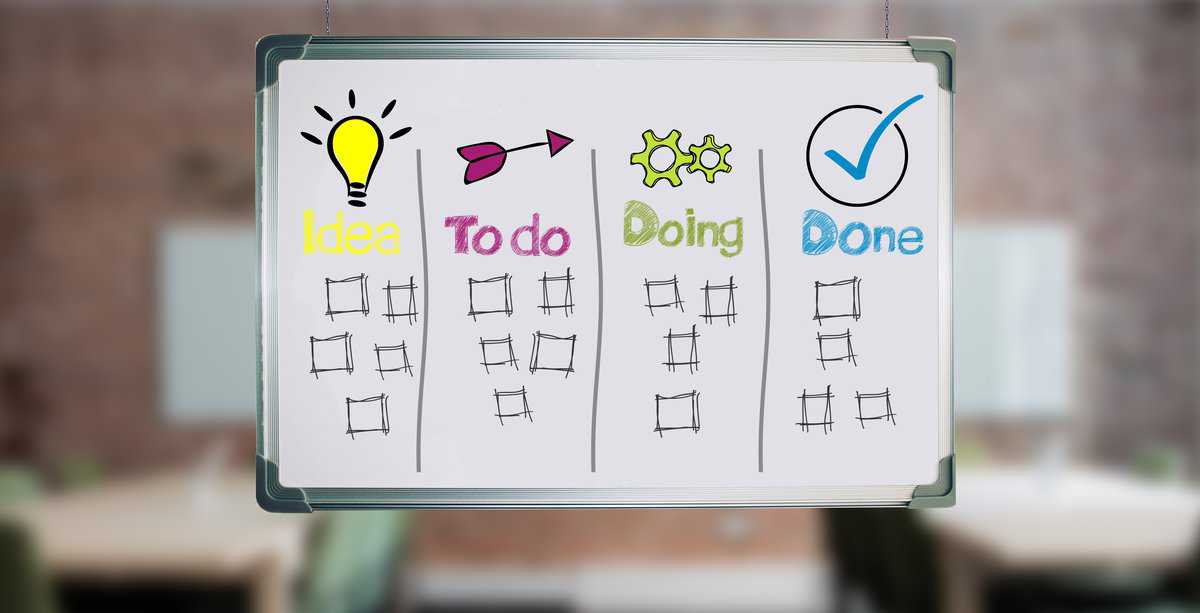
Kanprohibición, con su Japonés palabra que significa “signo“ o “billtablero", es a herramienta que ayuda a a visualizar el procesosu estado actual y sus objetivos, y de manera más general a programar y optimizar el flujo de trabajo en un magro y sólo-en-tiempo (JIT) fabricación.
Un kanban suele adoptar la forma de tableros muy visuales en los que el trabajo en proceso es representado por tarjetas que son movido a lo largo de el línea as el trabajo progresa, por ejemplo:
-
- Kanprohibir tableros a pista trabajo en progreso y visualizar el flujo de trabajo. Este puede ayuda identificar bottlenecks y zonas para mejora cuando las tarjetas se atascan y/o aparecen ranuras vacías
- Kanprohibir hojas a gestionar inventario niveles. Este puede ayuda asegurar que materiales son disponible cuando necesario, en una organización de tirón, y ayuda reducir residuos.
- Kanprohibir a programar producción a ayuda asegurar que trabajo es que fluye sin problemas y que plazos son met
- Kanprohibir tablas a pista calidad por identificando cuestiones temprano y garantizando que productos conozca cliente expectativas
Consejo: como en el caso de los cuadros de mando de proyectos, sprint o scrum de las pizarras, sea muy visual: utilice una mezcla de formas sencillas (cuadrados, círculos, triángulos) y sencillas código de colores para transmitir el mensaje.
Consejo: debe situarse cerca del trabajador (en el Gemba(véase más abajo) y disponer de suficiente espacio libre en las inmediaciones para poder celebrar reuniones de equipo diarias muy rápidas frente a él
Cualquiera que pase por allí, aunque no esté familiarizado con el proceso, debe ver el estado y el desafío en curso en un abrir y cerrar de ojos
Gemba

Gemba is a Japanese Lean term that means “the real place.” In lean manufacturing, Gemba is the place where the value is added to the product. This could be the factory floor, the office for a service, or any other place where useful work for the customer is performed.
The goal of lean is to eliminate waste in all forms, and Gemba is where waste is most likely to occur. By identifying and eliminating waste at the source, lean manufacturing strives to create a more efficient and effective workplace.
Muda
From 無駄 = “Useless”, by extension waste or unnecessary work. In Lean manufacturing, muda is used to refer to waste that occurs when workers are performing
cualquier tareas que hacer no añadir valor a el producto o servicio
Este puede incluye cosas como esperando para materiales, esperando para homologaciones, o realizando tareas que podría sea automatizado. Eliminating muda(s) se ayuda a mejorar eficiencia y reducir costes en fabricación y otros tipos de empresas. La metodología Lean ha identificado 7 tipos de familias de Mudas, las 7 despilfarros de Lean:

-
- Transporte
- Inventory
- Movimiento
- Esperando
- Procesamiento excesivo
- Sobreproducción
- Defectos
que puede recordarse fácilmente por "TIMWOOD" (primera letra de cada residuo)
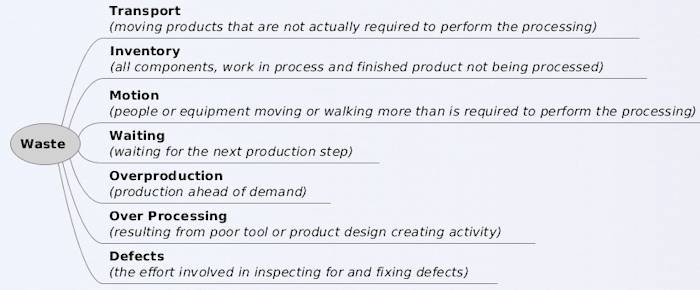
Bonificación: a veces se menciona una 8ª Muda: desperdicio de talentoEl hecho de no utilizar eficazmente el talento disponible en materia de recursos humanos
Poka-Yoke
Poka-yoke is a Japanese quality control term derived from the Japanese words “poka” which means avoid, and “yokeru” which means a mistake. It is a physical technique for preventing mistakes or errors in a process, by making them either literally impossible or at least highly improbable
- una herramienta con un patrón de llave que no puede entrar en otro agujero
- una estantería que sólo puede albergar una pieza específica o una sola pieza
Poka-yoke dispositivos o métodos son usado a hacer a proceso más fácil a entender y seguir a prevenir errors without any later effort by becoming idiot-proof.
El poka-yoke puede utilizarse en varios procesos de fabricación para mejorar el control de calidad.
Ejemplos de Poka-Yoke:
-
- a puerta que abre en el dirección que a persona es frente a. Este asegura que el persona es no probando a entrar en el habitación el equivocado camino, haciendo que el paseo sea eficiente y más seguro
- a luz equipado con un sensor que se volvería en cuando a persona entra en a habitación y gira fuera de cuando el persona deja el habitación. Este ayuda a a guardar energía sin siquiera pensarlo y recuerda personas a girar fuera de el luz cuando ellos dejar
- a dispositivo en a costura máquina que evita el aguja de perforación el tela a menos que el prensaer pie es abajo
- un accesorio en a coche que evita el motor de empezando por a menos que el aparcamiento freno es comprometido
- una función de software que evita el usuario de ahorrando a archivo a menos que él tiene ha sido correctamente renombrado para sobrescribir otros archivos
- una cerradura o un mecanismo sensor en un máquina fresadora que evita el máquina de empezando por si el puerta es no cerrado o detectando si el usuario no está lo suficientemente lejos
Términos de producción extra
Mura
Mura is a Japanese word meaning “unevenness”, “discrepancy”, or “irregularity”. It is a key concept in lean manufacturing and can be thought of as waste caused by an imbalance in the flow of work.
Muri
Muri is a Japanese word that means “overburden” or “excess.” In the context of lean manufacturing, muri refers to any unreasonable burden placed on workers, which can lead to inefficient work practices and errors. Muri can also refer to any process or activity that is excessively demanding or difficult, which can lead to frustration and poor quality and must therefore be reduced in a Lean and Quality context.
Shitsuke
Among Lean Terms, Shitsuke is a lean manufacturing principle that focuses on maintaining discipline and standards within a workplace. It is often referred to as the fifth of the “5S” (for the Japanese words seiri, seiton, seiso, seiketsu, and shitsuke, which all start with the letter S).
The goal of shitsuke is to instill a sense of ownership and pride in workers and to maintain high standards of quality control, permitting quality and efficiency over the long term.
Heijunka
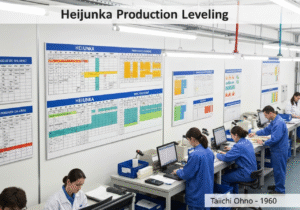
Heijunka is a manufacturing concept in lean that refers to the equal distribution of production throughout the entire manufacturing process. Heijunka seeks to create a level Production Schedule that can be easily followed and executed by the shop floor. Furthermore, leveling the cycle time of each manufacturing step will reduce bottlenecks and over-capacity, both in return helping to a one-piece flow process and lowering the Work In Progress (WIP). This production schedule should be based on actual customer demand (refer to Tiempo), not on forecasts or predictions.
By following Heijunka, the manufacturing process becomes much more efficient and responsive to customer needs.
Andon
Andon literally means “paper lantern.” In a lean manufacturing environment, Andon refers to a system used to notify workers of a problem so that it can be quickly corrected, typically for low-hanging fruit improvements.
The rest of this article is reserved for members
To limit scraping bots (currently 40,000 hits per day!),
we had to restrict access to full articles and tools to registered members only.
to access all the rest.