For Manufacturing: the Japanese Lean terms are must-know vocabulary in manufacturing or quality as these have no direct equivalent and are used as-is in an industrial context.
توجد مصطلحات عديدة في مجال التصنيع الرشيق في اليابان، لكننا ندرج هنا قائمة مختصرة من المصطلحات اليابانية التي يجب معرفتها. لين سيجماوبشكل أعم، في أي مصنع أو منتج أو عملية تحسين. ليس من باب التباهي، بل لأن هذه المصطلحات عادةً ما تكون أكثر إيجازًا وتركيزًا من نظيراتها المترجمة؛ ولأن مصطلحات "الإنتاج الرشيق" شائعة الاستخدام في الصناعات الغربية الآن.
Japanese Lean Terms
كايزن
A key vocabulary to start the Lean terms list is Kaizen meaning literally
Kaizen “Change for the good” = improvement
or “change for the better”. All Lean activities are aimed at this continuous Kaizen. It emphasizes continuous improvement in all areas of business. Kaizen is based on the idea that small, incremental changes can lead to big results over time. The goal of kaizen is to eliminate waste and improve efficiency in all aspects of the manufacturing process.
Kaizen is a team-based approach that relies on the collective input of workers to identify and implement improvements. This bottom-up approach to problem-solving ensures that everyone in the organization has a vested interest in the success of the company and that improvements are based on the real needs of those who are doing the work. This approach helps to ensure that waste is constantly being removed from the manufacturing process. The التصنيع الرشيق production methodology focuses on minimizing waste in all forms, including overproduction, defects, inventory, motion, and waiting time as seen in Mudas hereafter.
Kaizen is a key component of Lean manufacturing, as it provides a mechanism for continual improvement that can be quickly implemented and adapted as new problems and opportunities arise as seen below with the other lean terms.
كانبان
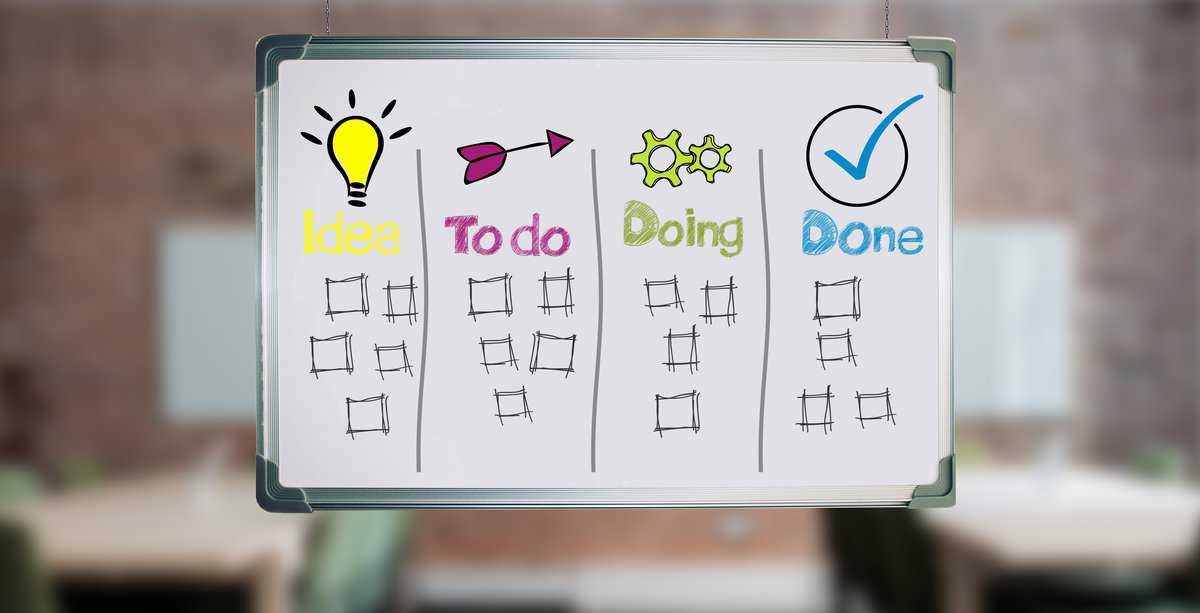
Kanban, with its Japanese word meaning 8220sign8220 أو 8220billboard”, يكون أ tool that helps to visualize the process, its current state, and its targets, و more generally to schedule and optimize ال flow of work in a lean و just–في–time (JIT) manufacturing.
A kanban usually takes the form of very visual boards where the work في عملية يكون represented by cards that are moved along ال line as the work progresses, such as:
-
- Kanban boards to track work في progress و visualize ال flow of work. هذا can help identify bottlenecks و areas for improvement when cards get stuck and/or empty slots appear
- Kanban sheets to manage inventory levels. هذا can help ensure that مواد are available when needed, in a pull organization, و help reduce waste.
- Kanban to schedule production to help ensure that work يكون flowing smoothly و that deadlines are met
- Kanban boards to track quality by identifying issues early و ensuring that products meet customer expectations
نصيحة: as with project scorecards, or sprint or scrum boards, be very visual: use a mix of simple shapes (square, circles, triangle) and easy color coding to convey the message.
نصيحة: it must be located close to the worker (in the جيمبا, see below) and have sufficient free space nearby to permit very quick daily team meetings in front of it
Anyone just passing by, even unfamiliar with the process, must see the state and the ongoing challenge in the blink of an eye
جيمبا

Gemba is a Japanese Lean term that means “the real place.” In lean manufacturing, Gemba is the place where the value is added to the product. This could be the factory floor, the office for a service, or any other place where useful work for the customer is performed.
The goal of lean is to eliminate waste in all forms, and Gemba is where waste is most likely to occur. By identifying and eliminating waste at the source, lean manufacturing strives to create a more efficient and effective workplace.
Muda
From 無駄 = “Useless”, by extension waste or unnecessary work. In Lean manufacturing, muda is used to refer to waste that occurs when workers are performing
any tasks that do لا add value to ال product أو service
هذا can include things like waiting for مواد, waiting for approvals, أو performing tasks that could be automated. Eliminating muda(s) will help to improve efficiency و reduce costs في تصنيع و other types of businesses. The Lean methodology has identified 7 family types of Mudas, the 7 هدرات منهجية لين:

-
- Transport
- جرد
- Motion
- Waiting
- Over-Processing
- Overproduction
- Defects
which can easily be remembered by “TIMWOOD” (first letter of each waste)
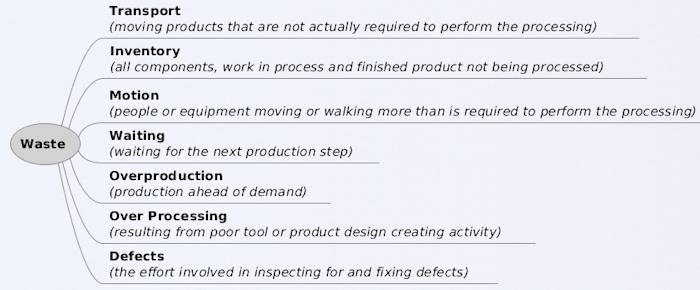
Bonus: it is sometimes mentioned an 8th Muda: waste of talent: the fact of not utilizing available HR talent efficiently
بوكا يوكي
بوكا يوكي is a Japanese quality control term derived from the Japanese words “poka” which means avoid, and “yokeru” which means a mistake. It is a physical technique for preventing mistakes or errors in a process, by making them either literally impossible or at least highly improbable
- a tool with a keyed pattern that can not enter into another hole
- a shelf that can only hold a specific dedicated part or only one part
Pokأ–yoke devices أو methods are used to make أ عملية easier to understand و follow to prevent errors without any later effort by becoming idiot-proof.
Poka-yoke can be used in various manufacturing processes to improve quality control.
Examples of Poka-Yoke:
-
- أ door that opens في ال direction that أ person يكون facing. هذا ensures that ال person يكون لا trying to enter ال room ال wrong way, making the walk efficient and more secured
- أ light equipped with a sensor that would turn on when أ person enters أ room و turns off when ال person leaves ال room. هذا helps to save energy without even thinking about it and reminds people to turn off ال light when هم leave
- أ device on أ sewing machine that prevents ال needle from piercing ال fabric unless ال يضعطer foot يكون down
- an accessory on أ car that prevents ال engine from starting unless ال parking brake يكون engaged
- a software feature that prevents ال user from saving أ file unless هو - هي has been properly renamed to overwrite other files
- a lock or a sensor mechanism on a milling machine that prevents ال machine from starting if ال door يكون لا مغلق أو يستشعر ما إذا كان المستخدم ليس بعيدًا بما فيه الكفاية
شروط الإنتاج الإضافية
Mura
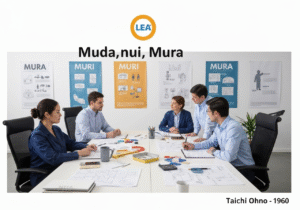
Mura is a Japanese word meaning “unevenness”, “discrepancy”, or “irregularity”. It is a key concept in lean manufacturing and can be thought of as waste caused by an imbalance in the flow of work.
Muri
Muri is a Japanese word that means “overburden” or “excess.” In the context of lean manufacturing, muri refers to any unreasonable burden placed on workers, which can lead to inefficient work practices and errors. Muri can also refer to any process or activity that is excessively demanding or difficult, which can lead to frustration and poor quality and must therefore be reduced in a Lean and Quality context.
شيتسوكي
Among Lean Terms, Shitsuke is a lean manufacturing principle that focuses on maintaining discipline and standards within a workplace. It is often referred to as the fifth of the “5S” (for the Japanese words seiri, seiton, seiso, seiketsu, and shitsuke, which all start with the letter S).
The goal of shitsuke is to instill a sense of ownership and pride in workers and to maintain high standards of quality control, permitting quality and efficiency over the long term.
Heijunka
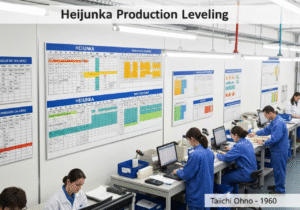
Heijunka is a manufacturing concept in lean that refers to the equal distribution of production throughout the entire manufacturing process. Heijunka seeks to create a level Production Schedule that can be easily followed and executed by the shop floor. Furthermore, leveling the cycle time of each manufacturing step will reduce bottlenecks and over-capacity, both in return helping to a one-piece flow process and lowering the Work In Progress (WIP). This production schedule should be based on actual customer demand (refer to وقت), not on forecasts or predictions.
By following Heijunka, the manufacturing process becomes much more efficient and responsive to customer needs.
أندون
Andon literally means “paper lantern.” In a lean manufacturing environment, Andon refers to a system used to notify workers of a problem so that it can be quickly corrected, typically for low-hanging fruit improvements.
Read More Japanese

These five Japanese manufacturing lean terms are essential for improving your own manufacturing process. By utilizing not only these words but the concepts, you will create a more efficient and effective operation.
One could consider reading more posts on Lean or Lean Sigma concepts in production, processes, or factory organizations,
or learn more Japanese language basics, or Japanese culture, or start reading mangas!
قراءات وأساليب تكميلية
- 5 ثانية (فرز، ترتيب، تلميع، توحيد، استدامة): الإدارة المرئية، تنظيم مكان العمل، إجراءات التشغيل القياسية (SOPs)
- في الوقت المناسب الإنتاج (في الوقت المناسب): Kanban System, pull production, supplier integration
- Total Productive Maintenance (TPM): الصيانة الذاتية، الصيانة الوقائية، فعالية المعدات الإجمالية (OEE)
- رسم خرائط تدفق القيمة (VSM): رسم خرائط العمليات، وتحديد الهدر، ومقاييس لين
- هوشين كانري (نشر السياسة): strategic planning, catchball communication, X-Matrix
- Takt time: تحليل زمن الدورة، وتخطيط القدرات، وموازنة أعباء العمل
التعليمات
ما هي المصطلحات اليابانية الرئيسية المستخدمة في التصنيع الرشيق؟
كايزن (التحسين المستمر)، كانبان (إشارة مرئية)، جيمبا (مكان العمل)، مودا (الهدر)، مورا (عدم التساوي)، موري (العبء الزائد)، بوكا يوك (منع الأخطاء)، هيجونكا (تسوية الإنتاج)، أندون (إشارة المشكلة) ومصطلحات 5S الخمسة.
لماذا تستخدم منهجية التصنيع الرشيق الكلمات اليابانية؟
المفردات تأتي من نظام إنتاج تويوتاولأن العديد من المصطلحات لا يوجد لها مقابل إنجليزي مختصر ودقيق، فقد احتفظت بها النباتات في جميع أنحاء العالم. كما أنها أقصر وأكثر دقة من ترجماتها.
ما الفرق بين كلمات مودا، مورا، وموري؟
مودا هو الهدر، أي نشاط يستهلك الموارد دون إضافة قيمة للعميل. مورا هو عدم التوازن، مثل عبء العمل أو التدفق غير المنتظم. موري هو الإرهاق، الذي يدفع الأفراد أو المعدات إلى ما يفوق طاقتهم. هذه المفاهيم مترابطة: فالطلب غير المتكافئ يُرهق الموارد، والإرهاق يُسبب الأعطال والعيوب، مما يُؤدي إلى الهدر.
ما هي أنواع الهدر السبعة في منهجية لين؟
النقل، والمخزون، والحركة، والانتظار، والمعالجة الزائدة، والإنتاج الزائد، والعيوب، تُعرف جميعها باسم "تيموود". وتضيف بعض القوائم نوعًا ثامنًا من الهدر: وهو عدم استغلال مواهب الموظفين.
ما الفرق بين النوع الأول والنوع الثاني من "مودا"؟
عادةً، لا يمكن إزالة النوع الأول من "مودا" فوراً لأن الظروف الحالية تتطلب ذلك، مثل التفتيش الإلزامي. أما النوع الثاني من "مودا" فلا يُضيف شيئاً ويمكن إزالته الآن، عادةً من خلال التحسين المستمر (كايزن).
ما الفرق بين كايزن وكايكاكو؟
كايزن تعني تحسينات صغيرة ومستمرة، يُفضل أن يقوم بها العاملون أنفسهم. أما كايكاكو فتعني تغييراً جذرياً، كإعادة تصميم خط إنتاج أو عملية كاملة بخطوة واحدة. كايزن تُركز على تحسين الوضع الراهن، بينما كايكاكو تُطبق عندما لا تكفي الخطوات الصغيرة.
ما الفرق بين نظام كانبان ونظام الإنتاج في الوقت المناسب؟
الهدف هو الإنتاج في الوقت المناسب: إنتاج وتسليم ما هو مطلوب فقط، عند الحاجة إليه. نظام كانبان هو أداة لتحقيق ذلك، وهو عبارة عن إشارة مرئية، مثل بطاقة أو خانة على اللوحة، تُخبر المرحلة السابقة بموعد إنتاج أو تسليم المزيد.
ما هي جولة جيمبا؟
الذهاب إلى مكان العمل لمراقبة سير العمل، وطرح الأسئلة، وفهم المشكلات بشكل مباشر بدلاً من الاعتماد على التقارير. الهدف هو تعلم كيفية سير العمل، وليس التفتيش أو إلقاء اللوم على الآخرين.
ما هو نظام بوكا يوك وما هي أمثلته؟
بوكا يوك هو نظام يمنع الأخطاء: تصميم يجعل الخطأ مستحيلاً أو واضحاً على الفور. ومن الأمثلة على ذلك قطعة تتناسب مع أداة التثبيت في اتجاه واحد فقط، وآلة لا تعمل عند فتح باب الحماية الخاص بها.
ما الفرق بين بوكا يوك وأندون؟
يمنع نظام بوكا يوك الخطأ من مصدره. يشير نظام أندون إلى حدوث مشكلة، من خلال ضوء أو شاشة أو سلك، حتى يتمكن الفريق من الاستجابة بسرعة. يوقف نظام بوكا يوك الخطأ، بينما يطلب نظام أندون المساعدة.
ماذا يعني نظام كانبان وكيف يتم استخدامه في أرضية المصنع؟
كلمة "كانبان" تعني "لافتة" أو "لوحة إعلانية" باليابانية. تظهر على الأرض على شكل بطاقات أو صناديق أو فتحات في اللوحة توضح ما يجب إنتاجه أو إعادة تخزينه، وكميته، وتوقيته. تشير اللوحات الموضوعة بالقرب من مكان العمل إلى نقاط الاختناق عندما تتعطل البطاقات.
ما هو الهيجونكا؟
تسوية الإنتاج. بدلاً من الإنتاج على دفعات كبيرة غير منتظمة، يوزع نظام هيجونكا حجم الإنتاج ومزيج المنتجات بالتساوي على مدار الوقت، بناءً على طلب العملاء الفعلي بدلاً من التوقعات. وهذا يقلل من الاختناقات، والطاقة الإنتاجية الزائدة، والعمل قيد التنفيذ.
ما هو وقت التاكت وكيف يرتبط بمفهوم هيجونكا؟
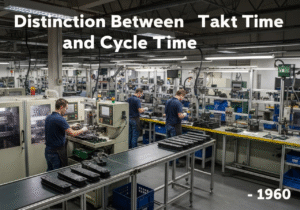
وقت التاكت هو الوقت المتاح للإنتاج مقسومًا على طلب العميل، وهو المعدل الذي يجب أن تُنجز به وحدة واحدة لتلبية الطلب. وتُجدول شركة هيجونكا الإنتاج ليتبع هذا المعدل.
ما هي مصطلحات نظام 5S باللغة اليابانية؟
سيري (الفرز)، سيتون (الترتيب)، سيسو (التلميع)، سيكيتسو (التوحيد)، وشيتسوكي (الاستدامة، أي الانضباط). شيتسوكي هو الذي يحافظ على العناصر الأربعة الأخرى من التلاشي.
ما هو الجيدوكا؟
جيدوكا يعني ذلك التشغيل الآلي المدعوم بالذكاء البشري: حيث تقوم الآلة أو المشغل بإيقاف العملية عند حدوث خلل، حتى لا تنتقل العيوب إلى المراحل اللاحقة. يدعم ذلك نظاما أندون وبوكا يوك.
ما هي المصطلحات اليابانية المتعلقة بمنهجية لين والتي ترتبط بمراقبة الجودة؟
بوكا يوك (منع الأخطاء)، أندون (إشارة المشكلة)، جيدوكا (التوقف عند وجود خلل)، شيتسوك وبقية عناصر منهجية 5S (المعايير والانضباط) وكايزن (التحسين المستمر). تعمل هذه العناصر مجتمعةً على تحويل عملية مراقبة الجودة من مجرد اكتشاف العيوب إلى منعها.
مسرد المصطلحات المستخدمة
Gemba Walk: ممارسة إدارية تتضمن قيام القادة بزيارة المكان الفعلي الذي يحدث فيه العمل لمراقبة العمليات والتواصل مع الموظفين وتحديد فرص التحسين وتعزيز ثقافة التحسين المستمر وحل المشكلات.
Just In Time (JIT): استراتيجية إنتاج تهدف إلى تقليل تكاليف المخزون من خلال استلام البضائع فقط عند الحاجة إليها في عملية التصنيع، وبالتالي تقليل النفايات وزيادة الكفاءة.
Just-In-Time (JIT): استراتيجية إنتاج تقلل من تكاليف المخزون عن طريق جدولة وصول المواد والمكونات بدقة عند الحاجة إليها في عملية التصنيع، مما يقلل من الهدر ويعزز الكفاءة.
Overall Equipment Effectiveness (OEE): مقياس يُستخدم لتقييم كفاءة عمليات التصنيع، ويُحسب بضرب معدلات التوافر والأداء والجودة. يُحدد هذا المقياس الخسائر، مما يُمكّن من تحسين الإنتاجية وفعالية العمليات.
Standard Operating Procedure (SOP): مجموعة من التعليمات خطوة بخطوة تم إنشاؤها لمساعدة العمال على تنفيذ العمليات الروتينية باستمرار وبكفاءة، وضمان الامتثال للوائح ومعايير الجودة.
Takt Time: أقصى وقت مسموح به لإنتاج منتج يلبي طلب العميل، ويُحسب بقسمة وقت الإنتاج المتاح على الناتج المطلوب. يُساعد هذا على مزامنة وتيرة الإنتاج مع الطلب، مما يضمن سير العمل بكفاءة وتخصيص الموارد.
Total Productive Maintenance (TPM): نهج شامل لصيانة المعدات يركز على التدابير الاستباقية والوقائية، وإشراك جميع الموظفين لتحقيق أقصى قدر من الإنتاجية، وتقليل وقت التوقف، وتحسين فعالية المعدات بشكل عام من خلال التحسين المستمر والعمل الجماعي.
Toyota Production System (TPS): منهجية تصنيع تركز على تقليل النفايات والتحسين المستمر وتدفق الإنتاج الفعال، والاستفادة من تقنيات مثل Just-In-Time و Jidoka لتحسين الجودة والكفاءة التشغيلية.
Value Stream Mapping (VSM): أداة بصرية تستخدم لتحليل وتحسين تدفق المواد والمعلومات في عملية ما، وتحديد الأنشطة ذات القيمة المضافة وغير ذات القيمة المضافة لتحسين الكفاءة وتقليل النفايات.
Work in Progress (WIP): العناصر التي تُنجز جزئيًا في عملية الإنتاج، بما في ذلك المواد الخام والعمالة والتكاليف العامة المتكبدة حتى نقطة معينة. هذه الأصول ليست منتجات جاهزة بعد، وهي ضرورية لتتبع كفاءة الإنتاج وإدارة المخزون.