
When developing a new product, doing some engineering or research, some Darknet tools can become very handy. But that needs to clarify the nature of the “darknet”: it is not a separate, shadowy internet, but an overlay network functioning on existing global infrastructure. Gaining entry to its hidden services, often recognized by “.onion” addresses, depends on specific software, such as the Tor Browser. This software acts as a gateway, directing network traffic through a series of encrypted relays to obscure a user’s origin and identity. This special design explains its reputation as a haven for illicit activities, as the same privacy that protects a dissident can also conceal a lawbreaker. Still, it is a mistake to equate the technology with its applications. The capacity for anonymous communication is a neutral and potent instrument whose ethical standing is defined by the user’s purpose. For every illegal market, a secure channel could exist for a journalist and a source, a human rights advocate organizing against oppression, or a corporate insider exposing misconduct.
Within the fields of science and engineering, this form of protected communication becomes a foundation for new discoveries and practices. The legitimate applications listed here are primarily defensive in character, including shielding intellectual property from theft during development, facilitating secure cooperation between global teams on sensitive projects like new medicines or aerospace systems, and allowing researchers to sidestep government censorship to obtain scientific reports and data.
From a practical view, the presented tools are not exclusively “darknet tools”, most are listed in Wikipedia and other trustful resources, and even some of them are owned by a state (the Swiss Post!); they are security and privacy solutions applicable to any digital undertaking. Their capacity to connect to the darknet is a single function stemming from their main design, which is to grant scientists and engineers greater command over their digital presence and the safety of their important work.
Disclaimer:
This page content is for adults only, understanding what they do and the potential consequences for them. If any of these is not your case, you must leave this page now (we have so much specific to product design).
The author of this information assumes no responsibility or liability for any actions taken by the reader. The tools and methods described are presented for informational purposes only. The legality of using encryption, anonymization networks like Tor, and other privacy-enhancing technologies changes greatly from one country to another. An activity that is perfectly legal in one jurisdiction could be a serious civil or criminal offense in another.
Before you download, install, or use any of the tools or sites mentioned below -whether for accessing the darknet or for any other purpose- it is your personal and professional obligation to ensure you are in full compliance with your local, national, and international laws, as well as any policies set forth by your employer or academic institution. If you have any doubt whatsoever about the legal or policy implications of using this technology, you must consult with an authorized company representative (such as from a legal or IT security department) or a qualified lawyer.
We use to say: “if there is a doubt, then there is no doubt” … in clear words: don’t!
Idea: if vital anonymity was needed towards a particular country, we would be particularly careful if the tool or service were made in that country or if its author is/was originated from there.
Tip: some of these tools are already a couple of years old. Sometimes for the better (reliability, patches, features …), sometimes not. This is just a start, stay up to date if you rely crucially on such tools and practices.
Warning: if you are working for a company, agency or any institution, not as an independent, you have policies for this (see conclusion).
Anonymous Browsing and Network Access
These tools allow users to browse the internet anonymously, which can be crucial for researchers and engineers dealing with sensitive information or facing censorship.
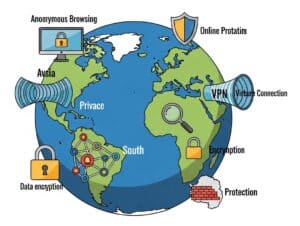
- The Tor browser: for engineers and scientists, the Tor Browser is an essential tool for conducting research on sensitive or proprietary technologies without leaving a digital trail that could be monitored by competitors or state actors. An aerospace engineer, for instance, could use Tor to research advanced composite materials or propulsion systems without alerting corporate or national surveillance systems to their company’s research direction. Similarly, a materials scientist studying a new, potentially controversial synthetic compound can gather data from international sources, including those on .onion sites, while protecting their identity and the nature of their work. Tor ensures that the intellectual process of exploration and discovery remains confidential.
- I2P (The Invisible Internet Project): I2P provides a robust, decentralized, and anonymous network layer that is ideal for engineers and scientists collaborating on long-term, high-stakes projects. Unlike the Tor network which is optimized for anonymous browsing of the public internet, I2P is a self-contained anonymous internet that is excellent for hosting and accessing hidden services (“eepsites”). A team of software engineers developing a revolutionary encryption algorithm could host their entire development environment—code repositories, internal wikis, and communication channels—within I2P. This creates a secure, isolated ecosystem where their work is shielded from industrial espionage and external surveillance, ensuring the integrity and confidentiality of their project from inception to completion.
- Freenet: Freenet operates as a decentralized, peer-to-peer platform for censorship-resistant publishing and data storage, making it a valuable asset for scientists and engineers who need to ensure the long-term availability of their work. A climatologist, for example, could publish a controversial dataset on climate change to Freenet, confident that it cannot be easily removed by political or corporate entities seeking to suppress the findings. Because the data is distributed and encrypted across the network’s nodes, it remains accessible to the global scientific community as long as the network exists. This makes Freenet a modern-day digital archive for vital scientific and engineering knowledge that might otherwise be lost to censorship or data degradation.
- Whonix: Whonix is a complete operating system designed for advanced security and privacy, which is highly beneficial for engineers and scientists handling extremely sensitive information. It consists of two virtual machines: one acts as a “Gateway” that routes all internet traffic through the Tor network, while the other, the “Workstation,” is completely isolated, with no direct connection to the internet. A nuclear engineer designing safety protocols for a power plant or a biotechnologist working with proprietary genetic sequences could use a Whonix Workstation for all their computational work. This setup ensures that even if the workstation is compromised by malware, the attacker cannot discover the user’s true IP address or directly exfiltrate data, providing a powerful layer of protection for critical and potentially dangerous information.
- Tails (The Amnesic Incognito Live System): Tails is a portable, live operating system that leaves no trace on the computer it is used on, making it perfect for engineers and scientists who need to work securely on untrusted machines. A civil engineer inspecting critical infrastructure in a foreign country, for example, might need to access and review sensitive blueprints or structural analysis reports on a public or provided computer. By booting from a Tails USB stick, they can create a secure, encrypted environment for their work. Once they shut down, the system’s memory is wiped clean, ensuring that no proprietary data, passwords, or communication logs are left behind on the host machine, mitigating the risk of data theft in high-risk environments. In the two last years, Tails has joined forces with the Tor Project.
The same discretion matters in OSINT techniques, where an analyst reads public sources without leaving a trace on the sites under review. Open source intelligence techniques often start from a private Tor Browser session for exactly this reason.

Secure Communication
Secure communication is vital for collaboration on sensitive projects and protecting intellectual property.

- Signal: for engineering and scientific teams, Signal offers a secure and user-friendly platform for real-time communication that is essential for protecting intellectual property during the development process. A team of mechanical engineers collaborating on a new engine design can use Signal’s end-to-end encrypted group chats and voice calls to discuss proprietary design specifications, share initial sketches, and coordinate testing protocols. This ensures that their conversations, which are an integral part of the innovative process, are protected from corporate espionage or interception. The platform’s robust encryption means that the creative and logistical dialogue that leads to a scientific breakthrough or an engineering innovation remains confidential.
- ProtonMail: this Swiss based suite of tools provides end-to-end encrypted email, which is crucial for the formal exchange of sensitive information in the scientific and engineering fields. An electrical engineer sharing detailed circuit diagrams with a manufacturing partner, or a medical researcher sending a draft of a patent application to a legal advisor, can use ProtonMail, now rebranded to Proton Mail, to ensure that these critical documents are protected in transit and at rest. Because the service is based in Switzerland, it benefits from strong privacy laws, offering an additional layer of legal protection. This makes it an ideal tool for transmitting final reports, datasets, and intellectual property documents that require a verifiable and secure communication channel.
- Tutanota: Tutanota is another end-to-end encrypted email service that offers a high degree of security and privacy, making it well-suited for confidential communication in engineering and scientific research. A key feature is its ability to encrypt emails to non-Tutanota users through a password-protected link, which is particularly useful for widespread but secure collaboration. A team of environmental scientists from different institutions can use Tutanota to share sensitive environmental impact assessments with government regulators or community stakeholders who may not have encrypted email accounts. This ensures that confidential data about pollution levels or endangered species habitats is shared securely with all relevant parties, maintaining the integrity of the scientific process.
- Ricochet Refresh: Ricochet Refresh offers a unique, metadata-free instant messaging solution by using the Tor network to create direct, peer-to-peer connections without relying on a central server. This is invaluable for scientists or engineers who need to communicate under conditions of extreme surveillance or when the very fact of their communication could be incriminating. For example, two computer scientists collaborating on research into discovering and patching zero-day vulnerabilities in a widely used piece of software could use Ricochet. Their communication cannot be traced by monitoring a central server, protecting them from potential legal threats or retaliation from the software vendor before they are ready to disclose their findings responsibly.
- Keybase: Keybase integrates strong, public-key cryptography into a user-friendly platform for chat, file sharing, and code repositories, making it a versatile tool for technical collaboration. A team of software engineers can use Keybase’s encrypted chat and integrated Git repositories to securely manage and discuss their codebase. The platform’s cryptographic identity verification allows team members to be certain they are communicating and sharing code with the correct person, preventing man-in-the-middle attacks. This is particularly useful for distributed teams working on open-source engineering projects where verifying the identity of contributors is crucial for maintaining the security and integrity of the project.
Secure File Sharing and Storage
These tools help in securely storing and sharing research data, schematics, and other sensitive documents.
Older community chat tools remain useful too: engineers can learn how to use irc to reach technical channels, the best irc channels still host long-standing hardware and security communities, and many irc channels welcome newcomers. A short list of irc commands is enough to join, identify and message.

- OnionShare: OnionShare is a powerful tool for the secure and anonymous transfer of files of any size, which is highly applicable in engineering and scientific contexts. It works by creating a temporary, password-protected onion service on the sender’s computer, accessible only via the Tor Browser. A biomedical engineer could use OnionShare to send a large file containing sensitive patient data from a clinical trial to a collaborating statistician. The direct, peer-to-peer transfer bypasses third-party cloud servers, minimizing the risk of a data breach and ensuring that the anonymous, secure exchange of critical research data complies with privacy regulations like HIPAA.
- Tresorit: Tresorit is a zero-knowledge, end-to-end encrypted cloud storage service that provides a secure environment for engineers and scientists to store and collaborate on their most sensitive files. A firm of architects and structural engineers can use Tresorit as a central repository for their building information models (BIM), blueprints, and project plans. The client-side encryption ensures that not even Tresorit employees can access the stored data, providing a high level of assurance against both external hacks and insider threats. This allows for seamless collaboration on large, complex engineering projects while maintaining the confidentiality and integrity of valuable intellectual property. It is now owned by the Swiss Post (!).
- Sync.com: Sync.com offers end-to-end encrypted cloud storage with features specifically designed for secure collaboration, making it a valuable tool for scientific research teams. A group of geneticists working on a genome sequencing project can use Sync.com to store and share massive datasets and research notes. The platform’s granular permission controls and secure file-sharing links allow the lead researcher to control exactly who can view or edit specific files, ensuring that sensitive genetic information is only accessible to authorized personnel. This combination of robust security and user-friendly collaboration features helps to streamline the research process without compromising on data protection.
- Cryptomator: Cryptomator provides transparent, client-side encryption for files stored on popular cloud services like Dropbox, Google Drive, or OneDrive, offering a flexible and secure storage solution for engineers and scientists. An aerospace engineer might use a cloud service for its convenience and accessibility but has concerns about the security of their proprietary CAD files and simulation data. By using Cryptomator, they can create an encrypted “vault” within their cloud storage. All files placed in the vault are automatically encrypted on their local machine before being synced to the cloud, ensuring that the cloud provider has no access to the unencrypted data. This provides an essential layer of security while allowing them to continue using their preferred cloud platform.
- VeraCrypt: VeraCrypt is a powerful, open-source disk encryption tool that can be used to create encrypted volumes or encrypt entire storage devices, providing robust data-at-rest protection for scientists and engineers. A chemical engineer who travels frequently for fieldwork might carry a laptop containing proprietary chemical formulas and experimental data. By using VeraCrypt to encrypt their entire hard drive, they can ensure that if the laptop is lost or stolen, the sensitive information remains inaccessible. The software’s plausible deniability feature, which allows for the creation of a hidden encrypted volume, provides an additional layer of security in situations where they might be coerced into revealing a password.
Decentralized and Censorship-Resistant Publishing
For scientists and engineers who need to publish their findings without fear of censorship or retribution.
- Zeronet: Zeronet utilizes blockchain-like technology and peer-to-peer networking to create decentralized websites that are hosted by their visitors, making them nearly impossible to shut down. This is an ideal platform for engineers or scientists who need to publish research that is unpopular with or suppressed by powerful corporate or state interests. A materials scientist who discovers that a widely used construction material has a critical, undisclosed flaw could publish their findings on a Zeronet site. Even if the manufacturer of the material attempts to have the information removed from the public internet, the decentralized nature of Zeronet ensures that as long as there are users accessing the site, the information will remain available to other engineers and the public.
- IPFS (InterPlanetary File System): IPFS is a peer-to-peer hypermedia protocol designed to make the web faster, safer, and more open by storing data in a distributed file system. For the scientific community, IPFS offers a way to create permanent, immutable records of research data and publications. When a scientific paper is added to IPFS, it is given a unique cryptographic hash. Any attempt to alter the paper would change its hash, making tampering immediately obvious. This system is perfect for creating a resilient and verifiable public record of scientific knowledge, ensuring that research data can be reliably cited and accessed for years to come, independent of any single server or institution.
- SecureDrop: SecureDrop is an open-source whistleblower submission system that uses the Tor network to protect the identity of sources. While often associated with journalism, it is an equally vital tool for the engineering and scientific communities. An engineer within a large corporation who discovers evidence of systemic safety violations in a consumer product, or a scientist who uncovers data falsification in a major clinical trial, faces significant personal and professional risk. They could use SecureDrop to anonymously leak internal documents and evidence to a trusted regulatory body, an academic oversight committee, or a public interest group, ensuring that critical information about public safety or scientific integrity can be brought to light without fear of retaliation.
Privacy-Focused Search Engines
These search engines do not track user data, which is useful for sensitive research.
- DuckDuckGo: for engineers and scientists, using a privacy-respecting search engine like DuckDuckGo is a step in maintaining operational security. When an engineer begins researching a novel technology or a scientist investigates a new line of inquiry, their search queries can reveal their intentions. By using DuckDuckGo, which does not profile its users, they can prevent their search history from being logged and used to build a profile that could be sold to competitors or monitored by foreign intelligence. The availability of a DuckDuckGo .onion service provides an additional layer of anonymity, allowing them to conduct preliminary research on the darknet for hard-to-find papers or discussions, completely detaching their research activities from their real-world identity.
- SearX: SearX is an open-source and customizable metasearch engine that aggregates results from numerous other search engines without tracking or profiling its users. The key advantage for a scientific or engineering professional is the ability to run their own private instance of SearX. A research and development department within a technology firm could host a private SearX instance for its entire team. This would allow all their researchers to conduct searches without leaking their collective interests and research direction to commercial search engine providers. It effectively creates a private, untracked gateway to the public internet’s knowledge base, protecting the firm’s most valuable asset: its future innovation strategy. This project has been officially discontinued in 2022 but its source is freely available and at least one fork is still supported.
- Brave Search: Brave Search, integrated into the privacy-focused Brave browser, is built on an independent index and is designed not to track users, searches, or clicks. This is particularly beneficial for scientists and engineers whose work requires them to avoid filter bubbles and algorithmic bias that are common in mainstream search engines. When researching prior art for a patent application or conducting a comprehensive literature review, it is essential to get an unbiased view of the available information. Brave Search’s commitment to privacy ensures that past searches do not influence future results, providing a cleaner, more objective search experience that is critical for thorough and impartial scientific and technical research.
Other Useful Tools
- GnuPG (GNU Privacy Guard): GnuPG is the cornerstone of secure data exchange for many scientists and engineers, providing a powerful and trusted implementation of OpenPGP encryption. A mechanical engineer can use GnuPG to encrypt and digitally sign CAD files before sending them to a parts manufacturer. The encryption ensures that the designs remain confidential, while the digital signature verifies that the files have not been tampered with in transit and genuinely originated from the engineer. This is essential for maintaining the integrity of the supply chain and protecting valuable intellectual property from being stolen or maliciously altered. While the initial PGP project is widely recognized, we always found its history not fully transparent.
- KeePassXC: in the fields of engineering and science, professionals often need to access numerous secure systems, from internal project management platforms and remote servers to online research databases and software licensing portals. KeePassXC is a free and open-source password manager that allows them to store all their complex, unique passwords in a highly secure, encrypted, and offline database. This mitigates the risk of a single password breach compromising multiple systems. For a standalone engineer working on critical infrastructure projects, maintaining strong, unique passwords managed by a tool like KeePassXC is a fundamental aspect of digital security and helps to prevent unauthorized access to sensitive control systems.
- Subgraph OS: Subgraph OS is a security-hardened desktop operating system designed to be resistant to surveillance and advanced cyberattacks. For a scientist working on highly sensitive or controversial research, such as bioweapons defense or new methods of cryptography, their personal computer is a high-value target. Subgraph OS provides a secure computing environment through multiple layers of defense, including application sandboxing, kernel hardening, and mandatory Tor-routed network traffic. Using Subgraph OS ensures that the entire research workflow—from drafting documents and running simulations to communicating with colleagues—is conducted in a monitored and contained environment, providing a very high level of protection against even the most sophisticated adversaries.
Big Reminders As Conclusion for using Darknet Tools
The Darknet is an Unpredictable Space
 The darknet presents challenges for product design and innovation due to its lack of regulation (not exactly, but spread into so many countries), quality control, and stability. The fundamental nature of the darknet is that it is decentralized and not governed by any single entity. Unlike the surface web, where companies and governments exert a degree of control, the darknet is a “wild west” of information. This lack of regulation is a double-edged sword. It enables the free exchange of ideas and data without censorship, but it also means there are no safeguards, no content moderation, and no systemic protection from harm. For an engineer or scientist, this translates to several practical realities:
- No Quality Control or Verification: data, information, or software available on the darknet lacks any assurance of being genuine or secure. A research article may be falsified, a dataset might be deliberately designed to deceive, and software could potentially include spyware. In contrast to trusted academic publications or official software repositories, there is no process for peer review or evaluation.
- Instability and Impermanence: services and websites on the darknet can vanish unexpectedly. A crucial resource or community forum that a researcher depends on may disappear in an instant, taking all its content with it. This renders it an unreliable platform for long-term projects or for preserving important data
Potential Risks for Professional Users
While the tools listed can create a secure channel for communication and browsing, the environment they can access is fraught with hazards that professionals must be prepared for. These risks go beyond simple inconvenience and can have serious professional and personal consequences.
 The Darknet and Darknet tools poses significant risks to professionals in product design and engineering due to exposure to illegal content, cyber threats, and potential de-anonymization.
- Exposure to Illegal and Disturbing Content: The darknet is well-known for containing marketplaces for illegal products and services, along with disturbing and extremist material. Encountering this kind of content by chance poses a substantial danger. Depending on the laws in a given area, merely accessing specific types of content can lead to serious legal consequences, irrespective of one’s intentions. For a professional, encountering such material can also have deep psychological impacts.
- Encountering Malicious Actors: the Darknet’s anonymity creates an environment that fosters cybercriminals, scammers, and various malicious individuals. Engineers and scientists, who frequently handle valuable intellectual property, become appealing targets. The risks include:
- Phishing and Social Engineering: complex fraud schemes are prevalent, with individuals being deceived into disclosing personal details, login information, or private keys for their cryptocurrency wallets. These assaults can be customized to aim at professionals by pretending to offer partnership opportunities or access to “leaked” research information.
- Malware and Ransomware: downloading files from an untrusted .onion site poses a significant risk of malware infection. This may involve spyware that tracks research activities, keyloggers that capture passwords, or ransomware that locks all user data and requires payment for its decryption. An attack of this nature could jeopardize not only an individual’s work but also the entire network of their institution.
- Surveillance and De-anonymization Risks: although tools like Tor offer robust anonymity, they are not completely foolproof. Sophisticated threats, including state-sponsored entities, are continually attempting to expose users’ identities. Additionally, errors in setup or negligent actions (like disclosing personal information in an online forum) can swiftly compromise a user’s anonymity. For instance, an engineer involved in sensitive defense technology should consider that their actions may attract the attention of foreign intelligence organizations.
Legal and Ethical Obligations for Engineers and Scientists
Using privacy-enhancing tools does not operate in a legal or ethical vacuum. Engineers and scientists are bound by the laws of their country, the policies of their employer or institution, and the ethical codes of their profession.
- Compliance with Local and International Laws: using Tor or visiting the darknet is generally not illegal in many countries. However, any actions taken while utilizing these resources are still bound by the law. Participating in or enabling illegal activities, like accessing or sharing stolen intellectual property or restricted information, constitutes a crime. It is essential for professionals to be fully informed about the legal regulations in their area regarding data privacy, intellectual property, and cybercrime.
- Adherence to Professional Codes of Conduct: engineering and scientific careers adhere to rigorous ethical standards that prioritize public safety, honesty, and integrity. For instance, the ACM Code of Ethics for computing professionals mandates the importance of “upholding confidentiality” and “reducing adverse effects of computing, including risks to health, safety, personal security, and privacy.” Employing anonymization tools for unethical practices, like stealing trade secrets or disseminating unverified and potentially dangerous information, would constitute a blatant breach of these professional responsibilities.
- Institutional Policies and Responsibilities: many universities, research organizations, and companies have established guidelines for data protection and network usage. Utilizing tools such as Tor on a workplace network could breach IT regulations. Additionally, if a professional’s behavior on the darknet results in a security incident, data exposure, or harm to reputation, both the individual and their organization could suffer significant repercussions, including financial penalties and legal responsibilities. Professionals are obligated to serve their clients and employers diligently and should refrain from participating in any activities that might jeopardize their safety.
In summary, while the tools associated with the darknet (“Darknet tools”) offer powerful capabilities for legal and ethical work in engineering and science, they are a gateway to an environment that is inherently risky and unpredictable. A user must adopt a security-first mindset, remaining vigilant and disciplined. This means understanding the technology, being aware of the potential threats, and never losing sight of their legal and ethical obligations as a professional. The goal is to leverage the benefits of privacy and anonymity without falling victim to the significant dangers that lurk in the unregulated corners of the internet.
Glossary of Terms Used
Building Information Modeling (BIM): a digital representation of physical and functional characteristics of a facility, enabling visualization, simulation, and analysis throughout its lifecycle. It integrates multidisciplinary data to enhance collaboration, efficiency, and decision-making in design, construction, and operation processes.
Computer Aided Design (CAD): a software application used for creating, modifying, analyzing, and optimizing designs in various fields such as engineering, architecture, and manufacturing, enabling precise drawings and models through digital tools and techniques.
Computer-Aided Design (CAD): a software application used for creating, modifying, analyzing, and optimizing designs in various fields such as engineering, architecture, and manufacturing, enabling precise drawings and models through digital tools and techniques.
Contract Manufacturer (CM): a company that produces goods on behalf of another firm, typically following specific design and quality specifications. This arrangement allows the hiring company to focus on core competencies such as marketing and product development while outsourcing manufacturing processes.
Universal Serial Bus (USB): a standard for connecting devices to computers, enabling data transfer and power supply. It supports various protocols and allows for hot swapping, with multiple versions offering different data rates and power capabilities. Commonly used for peripherals like keyboards, mice, and storage devices.