Product Design & Development – Level 2 - Course & Test
Engineers must advance beyond basic design to effectively align product development with cost management and strategic planning.
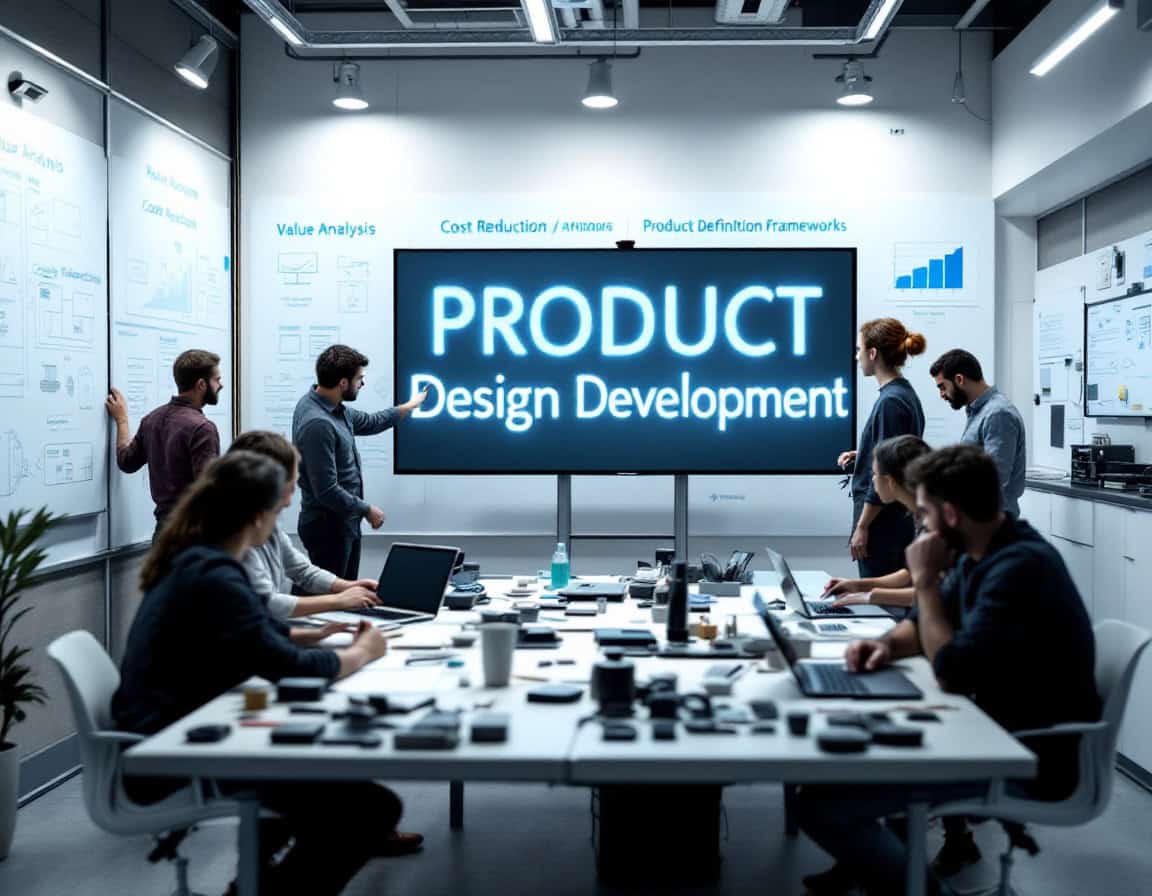
Once a part works, a harder question follows: does the product deserve to be built and sold at all, and Level 2 shifts attention from function to that judgment. It opens with value analysis, the discipline of separating a feature’s cost from the value a customer assigns to it, then moves through cost reduction methodology, technology readiness assessment and the risk benefit calculations that justify a design decision to a review board. It closes on product definition frameworks, from minimum viable product through minimum marketable and minimum awesome product, inside the phase gate structure that governs how a concept survives from sketch to production release.
Engineers who stop at Level 1 can build a correct part but struggle to defend its cost or its place in a roadmap. This level is built for engineers moving into lead or program owner roles, and for product developers who need a shared language with finance and marketing when a project’s scope or budget is challenged. Manufacturers gain directly, since value analysis and cost reduction applied early in a program remove cost that becomes far more expensive to remove once tooling exists.
The Concepts & Tools to Learn in this Course:
These are the bodies of knowledge that will be assessed in the test below:
Value analysis and value engineering methodology
SAVE International value engineering job plan
Cost reduction techniques and target costing
Technology Readiness Level (TRL) scale
Risk benefit ratio in engineering risk assessment
Reverse engineering methodology and its legal boundaries
Red teaming a design before release
Minimum Viable Product definition and scoping
Minimum Marketable Product versus MVP
Minimum Awesome Product concept
Phase Gate (Stage Gate) process structure
Kano model for feature prioritization
Quality Function Deployment and the House of Quality
Design to cost and should-cost analysis
Make versus buy decision criteria
Business case and ROI justification for a design change
Gate review documentation and go / no-go criteria
Product roadmap and portfolio sequencing
Voice of the Customer translation into requirements
Post-launch design review and lessons-learned capture
Our Suggested Readings
The list below is a special selection of our original articles, tools and methodologies available on this site.
Tip: the big dot at the start of each title indicates if that post/article has already been read ( ● ), or not ( ○ ). Refresh the page if necessary.
Tip: the reading progress is recorded either in a cookie (if you are not logged in or no account created), or in your site profile. Use the later to be sure not to loose your progression.
As soon as you start a given article, your progress will be indicated on top of each page to help you finish and move on to the next.
Note: for this particular course, articles can be read in any order.
After you are familiar with the lectures above, so as having done your own readings, we recommend attending the Exam below.
The test consists of 20 questions in random order, out of many more, to insure novelty each time. Each completely correct answer gets you 10 points. You get a full correction at the end of the test.
If the course has different levels, the current test does not include questions of lower levels, making it … hardthat level!
radio-buttons: only 1 correct answer must be selected
check-boxes: 1 or several answers must be checked (with strict all-good-or-nothing grading logic)
Tip: mouse over “Hint” to get an advise for the response.
Only innovation.world members can see it below and attend it.