An amazing 75% of aluminum made in the USA is still being used today. This is thanks to recycling. This fact highlights how recycling and upcycling help keep materials in use longer. Yet, they are not the same. Recycling turns materials into new items, sometimes less quality. Upcycling makes old items into better ones without breaking them down first. Both help our planet by lessening waste and saving resources. But the way they do it differs a lot.
Recycling and upcycling have the same aim: to be sustainable. But they go about it in different ways. Recycling is all about collecting and remaking materials like aluminum and plastic into new things. Sometimes, new stuff is added to keep the quality up. On the other hand, upcycling is about being creative. It changes waste into something more valuable without changing its original state. The only limits are what you can think up and do.
Key Takeaways
- Recycling and upcycling both aim to mitigate waste and promote sustainable practices.
- Recycling involves breaking down materials to create new products, while upcycling transforms items in their current state into higher-value products.
- Recycling may require additional fresh materials to maintain product quality.
- The scope of upcycling is limited only by creativity and skill.
- Both practices play a crucial role in environmental conservation by reducing the need for new resources and minimizing waste.
What is Recycling?
Recycling plays a key role in waste management by turning old materials into new items. This recycling process helps the environment and has grown due to more awareness and better technology.
Definition and Process
The recycling process begins by collecting materials like glass, plastics, and paper. These items are sorted, cleaned, and made into new products. For instance, recycled paper becomes new paper goods, and plastic bottles might turn into new bottles or fabrics. Using less energy than making items from scratch highlights the environmental benefits of recycling.
Examples of Recycling
Many examples of recycling show how versatile these materials can be. Aluminum cans get melted down for new items, and old paper turns into notebooks. Rubber tires can pave roads, and recycled plastics make new containers. These actions show recycling’s importance in our lives today.
Environmental Impact of Recycling
Recycling vastly benefits the environment. It reduces waste in landfills, cuts down pollution, and saves resources. By recycling, we also cut down the carbon emissions from making new products. Recycling lessens greenhouse gas emissions and helps prevent soil contamination. This is key in keeping our planet balanced.
Recycling also encourages people and communities to get involved and learn. For example, recycling aluminum can keep it in use for many years. This reflects the main ideas of living sustainably and using resources wisely.
- Recycling Process: Collection, Sorting, Cleaning, Reprocessing
- Examples of Recycling: Aluminum cans, Used paper, Plastic bottles
- Environmental Impact: Reduction in landfill waste, Conservation of natural resources, Decreased pollution
| Recycling Aspect | Details |
|---|---|
| Common Materials | Glass, Plastics, Paper, Aluminum |
| Examples of Recycling | Melting aluminum cans, Repurposing rubber tires, Making containers from plastic |
| Environmental Benefits | Reduced landfill use, Lower carbon footprint, Preservation of resources |
What is Upcycling?
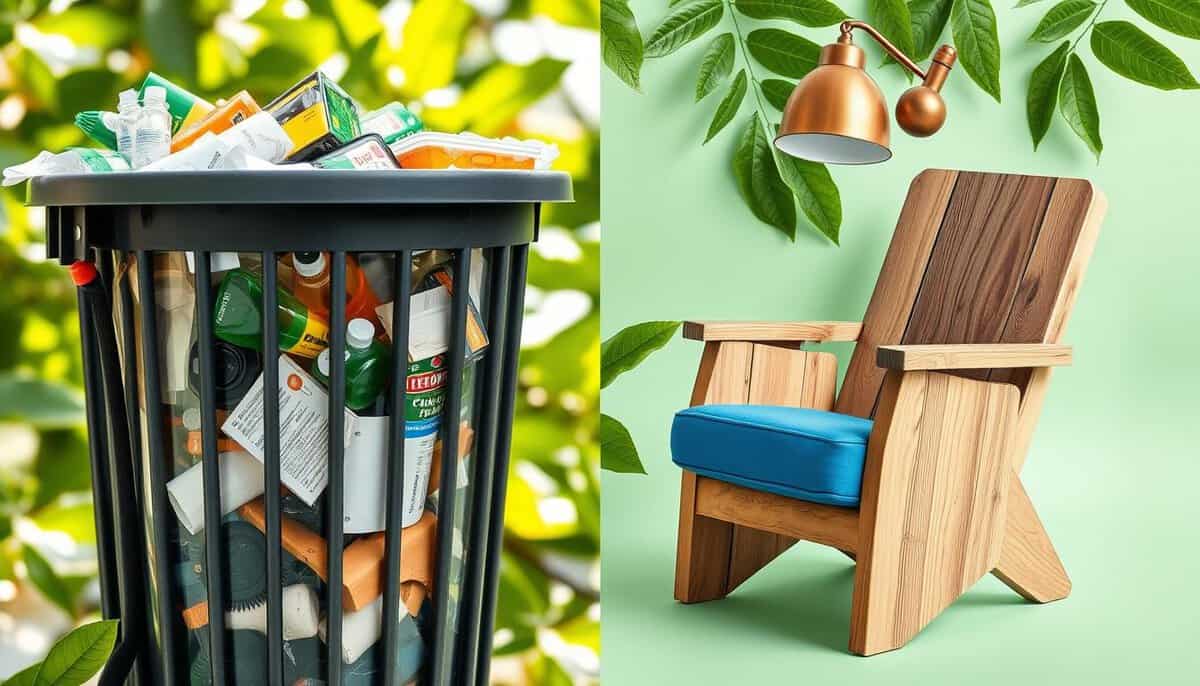
Upcycling, also called creative recycling, breathes new life into discarded items. It transforms them into artistic, high-value products. This process keeps the original materials’ quality intact. Unlike recycling, upcycling enhances the original materials. This makes them as good as, or even better than, they were before. Upcycling is making big waves in fashion and home décor today.
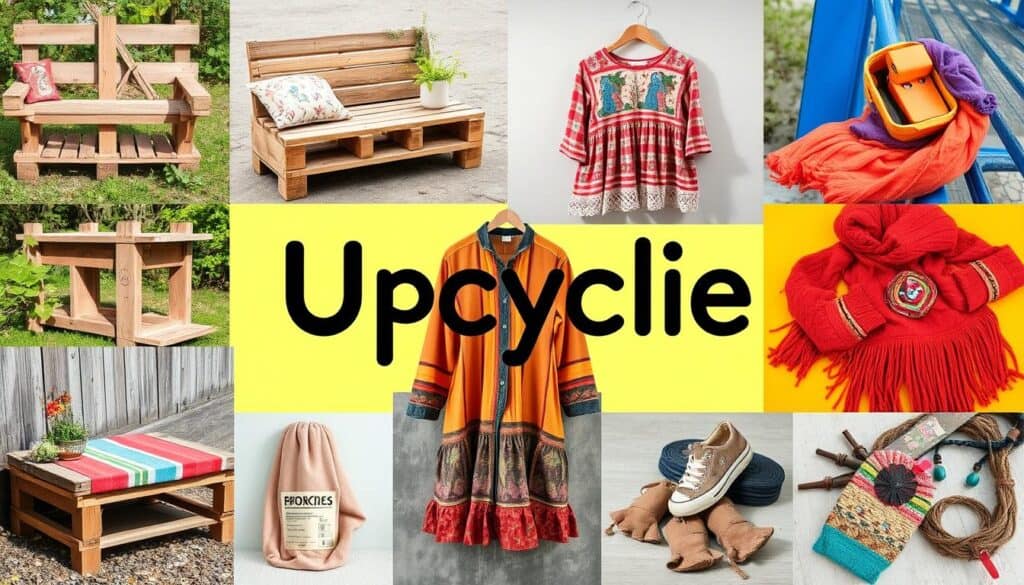
In fashion, upcycling starts with a creative design mindset. It turns old clothes into stylish accessories. Waste textiles become chic, updated pieces. Brands have take-back programs. They let customers return old clothes for a new purpose. This isn’t just eco-friendly; it spurs creativity and sustainable fashion.
Upcycling’s reach goes beyond fashion. It includes turning old items into functional home décor or furniture. For chairs and end tables, sometimes, simple changes like a new paint coat can make something special. This way, upcycling reduces waste and allows for personal expression in decorating.
Upcycling is all about repurposing waste with creativity. It’s key in reducing our environmental impact. By using what we already have, we save on resources. Both upcycling and recycling help battle pollution and greenhouse gases. They’re crucial in saving both money and the planet.
| Aspect | Upcycling | Recycling |
|---|---|---|
| Process | Transforms items into higher-value products | Breaks down materials to create new products |
| Quality | Equal or better than the original | Potentially lower quality |
| Creative Involvement | High; involves personal design | Moderate; more standardized |
| Environmental Impact | Reduces waste and pollution significantly | Also reduces waste but involves more energy in processing |
| Resources Saved | Significant savings in materials and energy | Saves materials but may use more energy |
The rest of this article is reserved for members
To limit scraping bots (currently 40,000 hits per day!),
we had to restrict access to full articles and tools to registered members only.
to access all the rest.
FAQ
What distinguishes recycling from upcycling?
Recycling turns waste into new products, often of lesser quality. Upcycling improves discarded items without breaking them down. It creates products of equal or higher quality.
What is the primary purpose of recycling?
Recycling aims to reduce waste and extend material lifecycles. It creates reusable forms, saves natural resources, and decreases landfill use.
How does recycling benefit the environment?
Recycling lessens landfill waste, saves resources, and cuts pollution. It lowers carbon emissions and reduces new material manufacturing energy.
What is upcycling and how does it differ from recycling?
Upcycling gives new life to trash, increasing its value without harming the material. It’s different from recycling because it doesn’t break down materials. Instead, it enhances their look or use directly.
What are some examples of upcycling?
Examples of upcycling are making old clothes into new accessories, turning outdated furniture into trendy pieces, and creating decor from reclaimed materials.
What role does creativity play in upcycling?
Creativity is key in upcycling. It requires seeing new uses for old items and making creative changes that add value.
How does upcycling benefit the environment compared to recycling?
Upcycling prolongs item life with less energy and material. It reduces waste and lessens waste management strain. Also, it boosts sustainable design and innovation.
What are the economic and aesthetic benefits of upcycling?
Upcycling adds monetary value to trash by making it sellable. It creates unique, artistic products, enhancing their appeal on the market.
What are the broader benefits of recycling in terms of environmental conservation?
Recycling saves resources, reduces manufacturing energy, and cuts emissions. It supports green jobs, fostering a sustainable economy and environmental consciousness.
External Links on Recycle or Upcycle
International Standards
(hover the link to see our description of the content)
Glossary of Terms Used
Upcycle: to transform waste materials or unwanted products into new items of higher quality or value, often through creative reuse or repurposing, thereby reducing environmental impact and promoting sustainability.