Product Design, Manufacturing & Innovation Resources
Home » Relationship Marketing

Relationship Marketing

1983
  • Leonard L. Berry
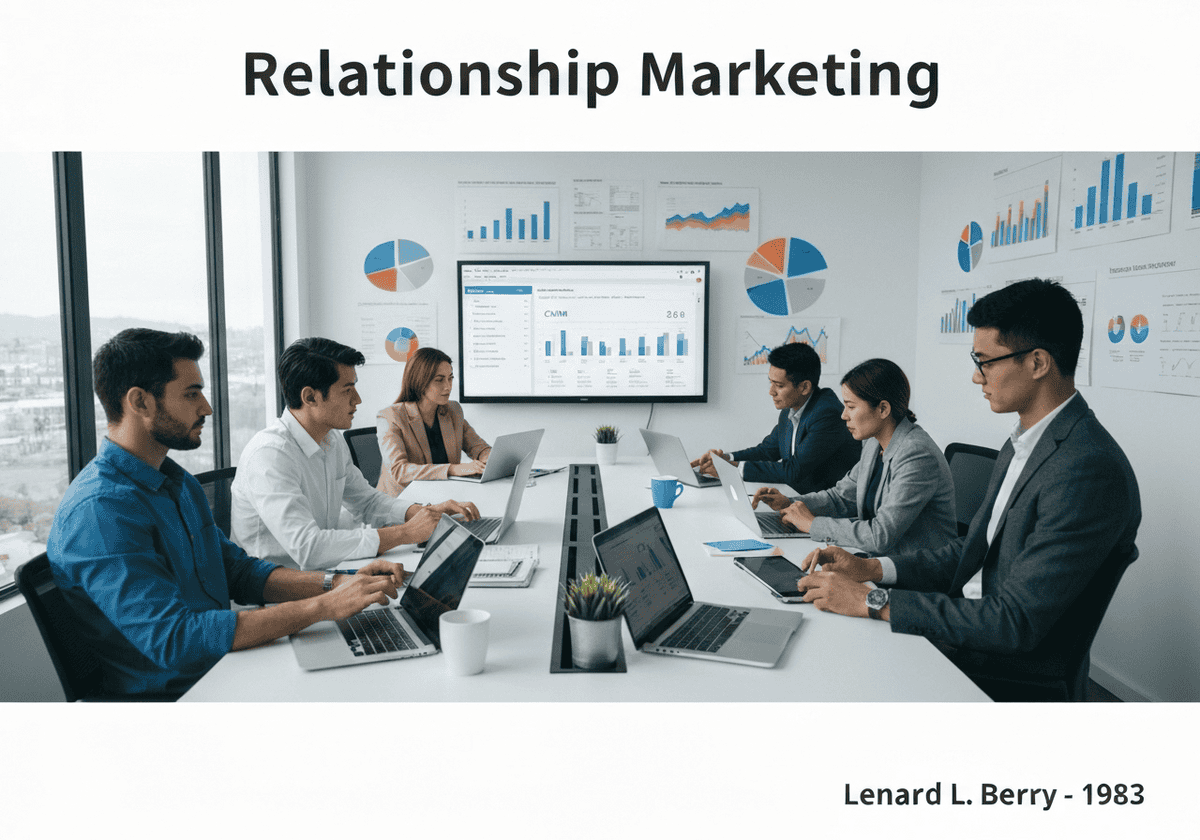
Marketing professionals collaborating on relationship marketing strategies in an office.

(generated image for illustration only)

Relationship marketing is a strategic approach that shifts the focus from individual transactions to building long-term customer loyalty and engagement. It emphasizes customer retention, satisfaction, and lifetime value over short-term sales goals. Key tactics include customer relationship management (CRM) systems, loyalty programs, and personalized communication, aiming to create a strong, emotional connection between the brand and the customer. Customer segments can be summarized with a persona card, and a persona card template helps marketers keep each profile consistent.

Pioneered in the context of services marketing, relationship marketing contrasts with the traditional transactional approach, which views each sale as a discrete event. The core idea is that it is more cost-effective to retain an existing customer than to acquire a new one. This philosophy is built on trust, commitment, and mutual benefit. Companies practicing relationship marketing invest heavily in understanding their customers’ needs and preferences over time. This data is often managed using sophisticated CRM systems, which track every interaction a customer has with the company. This allows for highly personalized marketing efforts, such as customized offers, relevant content, and proactive customer service. The goal is to move customers up a “loyalty ladder,” from prospects to customers, then to clients, supporters, and finally to advocates who actively promote the brand to others. This approach recognizes the customer’s lifetime value (CLV), a metric that predicts the net profit attributed to the entire future relationship with a customer. By focusing on CLV, companies can justify investing more in customer service and retention initiatives, leading to sustainable growth.

UNESCO Nomenclature: 5312
– Business Administration

Type

Abstract System

Disruption

Substantial

Usage

Widespread Use

Precursors

  • Direct marketing practices of the 1960s and 70s
  • The development of database technology
  • The shift from a production-oriented to a customer-oriented economy
  • Early theories on customer service and satisfaction

Applications

  • customer relationship management (CRM) software like Salesforce
  • airline frequent flyer programs
  • retail loyalty cards and apps
  • personalized email marketing campaigns
  • subscription-based business models (e.g., Netflix, SaaS)

Patents:

NA

Potential Innovations Ideas

  • predictive analytics to identify customers at risk of churning
  • AI-driven hyper-personalization of the entire customer journey
  • community-building platforms for brand advocates
  • blockchain-based loyalty programs for enhanced security and transferability
  • proactive customer service using IoT device data
  • subscription models for physical goods with personalized curation
  • gamified loyalty tiers with exclusive experiential rewards
  • automated customer feedback loops integrated directly into product development
Related to: relationship marketing, CRM, customer loyalty, customer retention, lifetime value, Leonard Berry, customer engagement, personalization.

Historical Context

Relationship Marketing

1970
1980
1980
1983
1990
1992
1994
1970
1980
1980
1982
1986
1990
1992
1995

(if date is unknown or not relevant, e.g. "fluid mechanics", a rounded estimation of its notable emergence is provided)

10th year anniversary

Full size images and downloads are only available, 100% free, for registered members.

> Login <