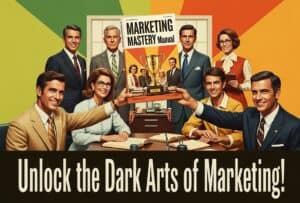
Right then, let’s have a quiet word about the grubby business of 마케팅 설득. 우리나라는 공정성, 질서정연한 줄, 그리고 감정을 억누르는 것을 중시하는 척하지만, 서로에게 무언가를 팔아넘기는 기술에 있어서는 전혀 다른, 더욱 교활한 본성이 드러납니다. 퀸즈베리 후작의 규칙은 창밖으로 내던져지고, 그 자리에 교활한 속임수가 담긴 낡은 팸플릿이 놓인 세상입니다. 심리적 교묘한 속임수와 노골적인 거짓말을 모두 매력적이고 거의 미안해하는 듯한 미소와 함께 전달한다.
What follows is not a list of unfortunate accidents or clumsy mistakes. Oh no.
These are the masterpieces of the trade, the well-honed manœuvres passed down from one generation of cynical marketing executives to the next. They are the dark arts of distraction, deception, and bare-faced cheek, polished to such a grim perfection that they’ve become a sort of marketing pastime, as traditional as complaining about the weather or forming a committee. This is the unwritten rulebook of marketing techniques so utterly, magnificently dreadful, they’re practically a national art form.
The Unofficial Rulebook of Selling Your Soul
또는
Mind the Gap: A Guide to Dodgy Marketing
Right, apprentice. Put that down. The customer’s wallet isn’t going to open itself. You’ve had your induction, you know where the fire escape is, now it’s time for the real education. Forget everything you think you know about honesty and integrity in marketing; they are luxuries for the rich and the bankrupt.
Your 직업 is to create desire out of thin air.
You may want to read, in a similar tone, the two related posts:

Both in a same British’s humour style, with the same tip and 2 disclaimers:
팁: we really recommend reading the English version of this article (versus the automatic translations).
면책 조항 #1: pray, let it be understood, for the benefit of those with a less developed sense of the theatrical, that the following masterclass is a work of pure, theoretical 마케팅 artistry. Should any of these exquisitely crafted stratagems happen to bear a fleeting, or indeed a startlingly precise, resemblance to the public pronouncements or corporate manœuvres of any actual entity, living or deceased, one ~ 해야 하다 dismiss it as a most unfortunate and amusing coincidence. Perish the thought that real-world corporations, in all their earnest, plodding mediocrity, could ever possess the requisite panache and intellectual fortitude to execute such sublime deceptions. Reality, it seems, is so often a pale and clumsy imitation of truly superior fiction.
면책 조항 #2: furthermore, one must insist that these twenty principles below, heretofore elucidated, are offered not as a pedestrian manual for corporate malfeasance, but as a purely intellectual exercise for the discerning mind. Consequently, we shall abrogate any and all moral or legal culpability in their perfect (!) application. Should an acolyte’s masterful execution of these sublime arts lead to any… unfortunate entanglements with the clumsy machinations of the law, it must be considered a testament not to a flaw in the teachings, but to a lamentable deficiency in the practitioner’s own finesse. Navigating such terrestrial squabbles is, after all, a practical test of one’s aptitude, and we take no responsibility for those who, in their haste, trip over the vulgarities of litigation.
You are a wizard, and this is now your book of spells. Pay attention:
The Noble Art of Pulling a Fast One
First, you must understand that reality is a terribly drab affair. It is your sacred duty to embellish it, to paint it in dazzling colours, to transform the mundane into the magnificent. We are not liars; we are enhancers of the truth.
1. The Estate Agent’s Lexicon (aka Deceptive Advertising)
You are not selling a product; you are selling a dream, a lifestyle, an aspiration. The customer doesn’t want the grim, disappointing truth; they want the glossy, beautiful fantasy. Your job is to provide it. You must become a master of the euphemism, a poet of the positive spin. A small, dark room is “intimate and cosy.” A crumbling façade is “bursting with period character”. A view of a brick wall is “a dynamic urban vista”. You must learn to wield the English language not as a tool for 의사소통, but as a weapon of mass distraction. The product photograph is your canvas. It must be lit like a Rembrandt, angled like a supermodel, and digitally altered until any resemblance to the actual, physical object is purely coincidental.
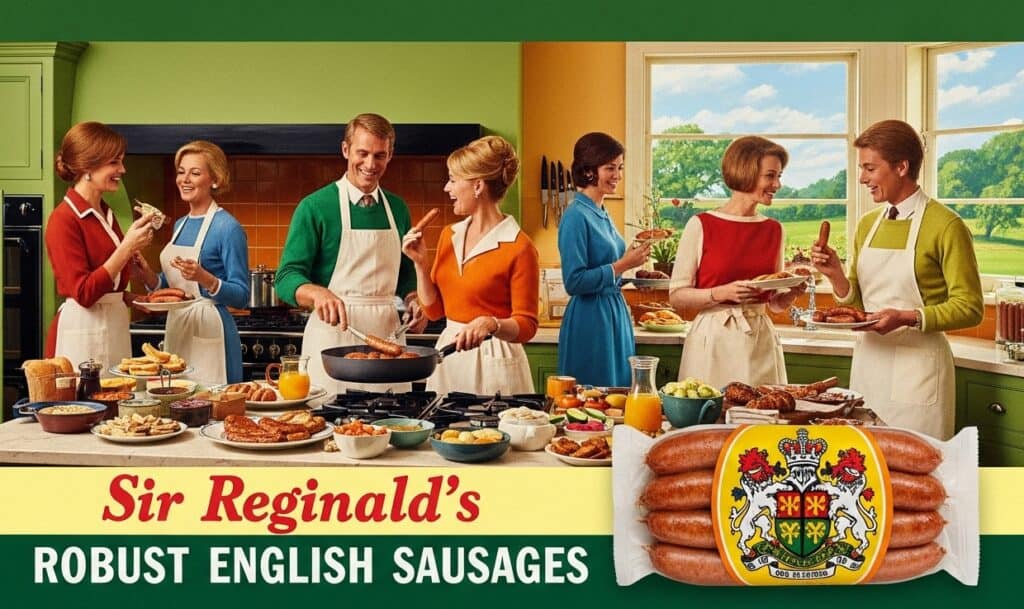
Remember our campaign for ‘Sir Reginald’s Robust English Sausages’? The product itself was a sad, grey tube of rusk and regret. But we didn’t sell that. We sold “A Taste of the True British Breakfast.” The packaging featured a fictional coat of arms and a photo of the sausages sizzling in a sun-drenched country kitchen that we built in a studio in Slough. The copy spoke of a “time-honoured recipe passed down through generations”, which was technically true, as the recipe had been passed down from the previous factory owner in the 1980s.
Relabeling a weakness as a strength is an old trick of the trade, summed up by the line it’s not a bug it’s a feature그. it’s not a bug it’s a feature meaning is this kind of spin: a flaw presented as a selling point.
Expert’s Whisper: your guiding principle is plausible deniability. You must construct sentences that are legally watertight but morally as leaky as a sieve. Our lawyers should be able to defend your words, even if they have to hold their noses while doing so. It’s not a lie if you can argue, with a straight face, that “globally-sourced ingredients” is a fair description for salt and water.
2. The Phantom of the Offer (aka Bait-and-Switch)
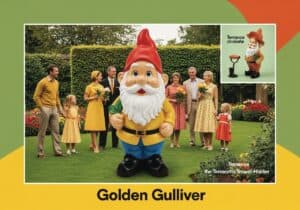
The first step is to craft an offer of such ludicrous generosity that it creates a gravitational pull, drawing customers in from miles around. This is the “bait.” A 60-inch television for the price of a pint, for instance. You must then ensure your actual stock of this item is laughably small—one, perhaps two units, ideally one of which is already “reserved.” When the hopeful punter arrives, you must greet them with the solemnity of a funeral director, informing them of the tragic news. Then, just as despair sets in, you pivot. Your face lights up with a sudden, brilliant idea. You can’t offer them that television, but you can offer them this other, far superior model, for only three times the price.
Our “Golden Gulliver” garden gnome promotion was a masterclass. We advertised a magnificent, 4-foot, hand-painted gnome for £9.99. We had exactly one, and it sat in the window. When customers came in, we’d explain with great sadness that the Golden Gulliver was a unique display piece, but they could have a “Terrance the Terracotta Trowel-Holder”—a miserable little lump of clay—for £29.99. We sold hundreds of Terrances. The Golden Gulliver is still in my office.
Expert’s Whisper: the transition from despair to hope is the key. You must become a theatrical performer. They should feel that you are on their side, a co-conspirator in finding a solution to the terrible problem you created. They’re not being upsold; they’re being saved from disappointment.
3. Death by a Thousand ‘Admin Fees’ (aka Hidden Fees and Drip Pricing)
광고 가격은 그저 매력적인 첫인상, 대화의 시작일 뿐입니다. 진짜 수익은 마진, 즉 하나씩 추가하는 작은 부가 서비스에서 나옵니다. 예를 들어... 마술사 귀 뒤에서 동전을 꺼내는 것. 이것이 바로 '돈을 조금씩 흘려보내는' 방식입니다. 고객은 20파운드짜리 항공권을 봅니다. 좌석값(놀랍게도 필수품이죠), 수하물 요금, 체크인 수수료, 그리고 사무실 화분 값 정도밖에 안 될 '탄소 상쇄 기부금'까지 모두 지불하고 나면 총액은 80파운드가 됩니다. 이미 너무 깊이 관여했고, 심리적으로도 너무 깊이 빠져들어 포기할 수 없게 됩니다. 마치 패배를 인정하는 기분일 테니까요.
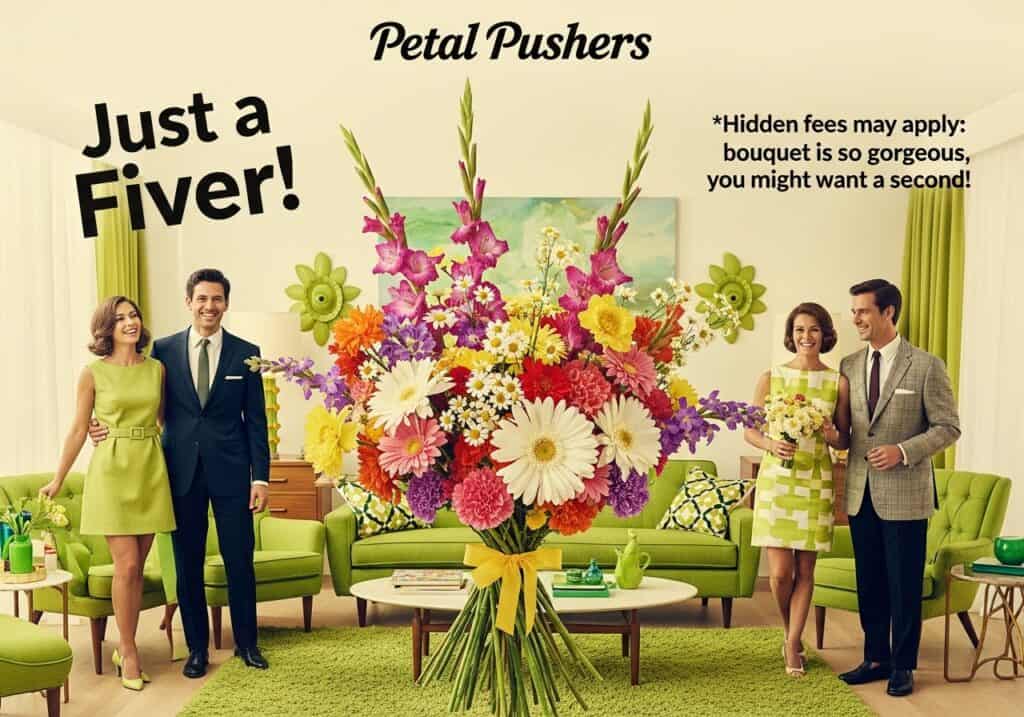
온라인 꽃 배달 서비스 '페탈 푸셔스'는 꽃다발을 '단돈 5파운드!'에 광고했습니다. 물론, 이는 3.50파운드의 '줄기 수분 공급비', 2.00파운드의 '꽃꽂이 및 구성 수수료', 4.50파운드의 '배송 시간 보장 추가 요금', 그리고 1.50파운드의 '친환경 라피아 끈 추가 요금'이 붙기 전 가격이었습니다. 5파운드는 그저 게임에 참가하기 위한 입장료였을 뿐입니다.
Expert’s Whisper: name your fees with pompous, impenetrable jargon. Nobody dares question a “Regulatory Compliance Surcharge” or a “Digital Fulfilment Protocol Fee”. It sounds far too important and boring to argue with. Make the customer feel that questioning the fee would reveal their own ignorance.
4. The ‘My Mate Down the Pub Reckons It’s Brilliant’ Gambit (aka Flogs and Astroturfing)

The modern customer is a cynical beast; they don’t trust us. But they do trust strangers on the internet, for some baffling reason. This is a weakness we must exploit with gusto. You will create a chorus of fake adoration. You will invent a cast of characters: “Dave from Manchester”, a no-nonsense bloke who loves your power drill; “Sarah, a busy mum,” who finds your stain remover to be a godsend. You will build fake blogs, fake review sites, and populate forums with your own glowing testimonials. You are not just a marketer; you are a fiction writer, a creator of worlds.
For ‘Guzzle,’ our spectacularly mediocre energy drink, we created an entire online 생태계. We had a fake blog run by a fictional extreme sports enthusiast, “Blade,” who swore by it. We paid a dozen students to write five-star reviews, and we even created a rival fake energy drink, ‘Slurp,’ and had our own fake accounts argue in forums about which was better. Guzzle always won the argument, of course.
Expert’s Whisper: the masterpiece of astroturfing is the four-star review. It builds trust. “I’d give it five stars, but the delivery driver left the box on its side. The product itself, however, is a revelation that changed my life and cured my gout.” This sliver of manufactured imperfection makes the whole lie believable.
5. The ‘Terms and Conditions Apply’ Mumble (aka Withholding or Obscuring Important Information)

The law, in its infinite tediousness, requires us to tell the customer about all the nasty, unpleasant things our product or service might do. But it doesn’t specify that they have to be able to read it. Your job is to take this legally mandated information and bury it. It must be presented in a font size visible only to insects, in a colour that blends seamlessly with the background, and written in prose so dense and convoluted that it would make a lawyer weep. The goal is for the customer to see this impenetrable wall of text and think, “Oh, bother it,” before ticking the box.
When we launched our “free” credit report service, the terms and conditions contained a delightful little clause, buried on page 47, that automatically signed the user up for a £29.99 a month “Premium Protection Plan” if they didn’t opt out within seven days by sending a handwritten letter to a PO Box in the Outer Hebrides. We called it “proactive customer care”.
Expert’s Whisper: on a webpage, place the link to the terms and conditions somewhere technically visible but practically invisible, like the bottom right corner of the footer, in a slightly different shade of white from the background. It’s an art form. You have fulfilled your legal duty without the slightest risk of informing the customer.
A Good Old-Fashioned Mind Game
Now, apprentice, we move from simple deception to the higher arts of psychological manipulation. The customer’s mind is not a fortress; it is a poorly secured allotment, and we are going to sneak in at night and plant our own ideas.
6. The ‘Moral Panic in a Bottle’ Approach (aka Fear-Based Marketing)
A comfortable, content customer is a useless customer. Your first duty is to shatter their peace of mind. You must identify a vague, low-level anxiety and amplify it into a full-blown existential crisis. Is their bathroom truly clean, or is it a festering pit of invisible germs that threaten their very children? Is their pension plan adequate, or are they destined for a miserable, impoverished old age? You must paint a vivid picture of doom and gloom, and then, with impeccable timing, present your product as the shining beacon of hope, the one thing that can save them.
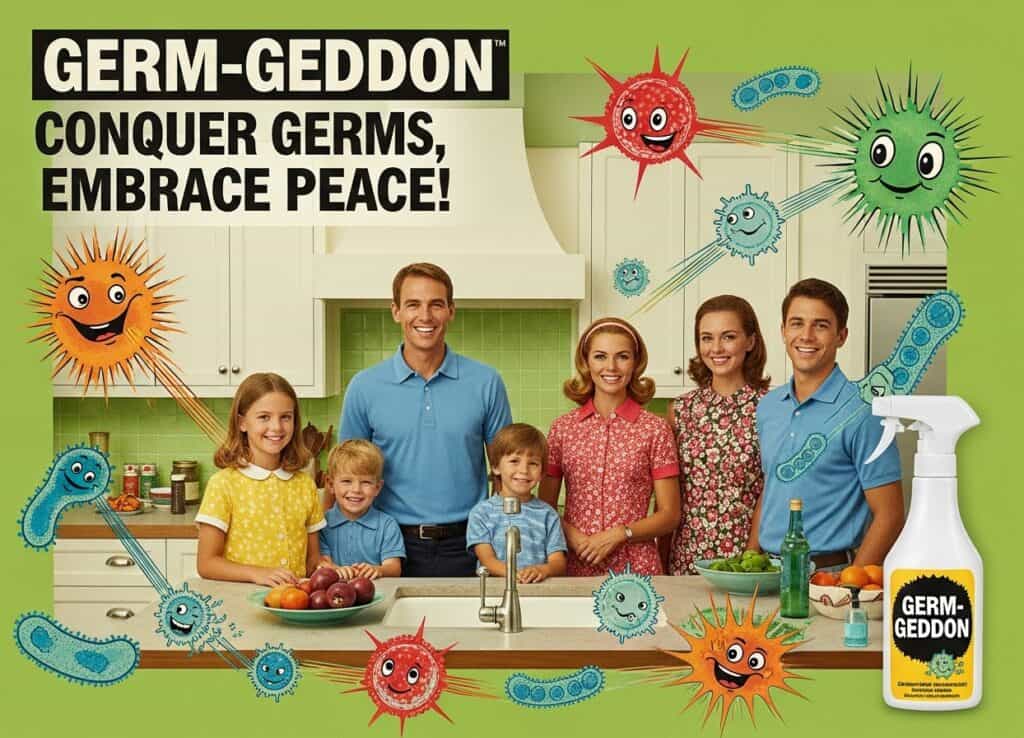
Our ‘Germ-Geddon’ kitchen spray campaign was a triumph. We ran ads showing terrifying, microscopic images of bacteria, overlaid with a thundering, apocalyptic soundtrack. We implied that an un-sanitised kitchen counter was more dangerous than a faulty parachute.
Expert’s Whisper: 우리는 청소용품을 판매하지 않았습니다.
우리는 겁에 질린 중산층에게 마음의 평화를 팔았습니다.
매출이 3배로 늘었습니다. fear of missing out so potent that it short-circuits the rational brain. They must feel that if they don’t click “Buy Now” this very second, they will regret it for the rest of their miserable lives.
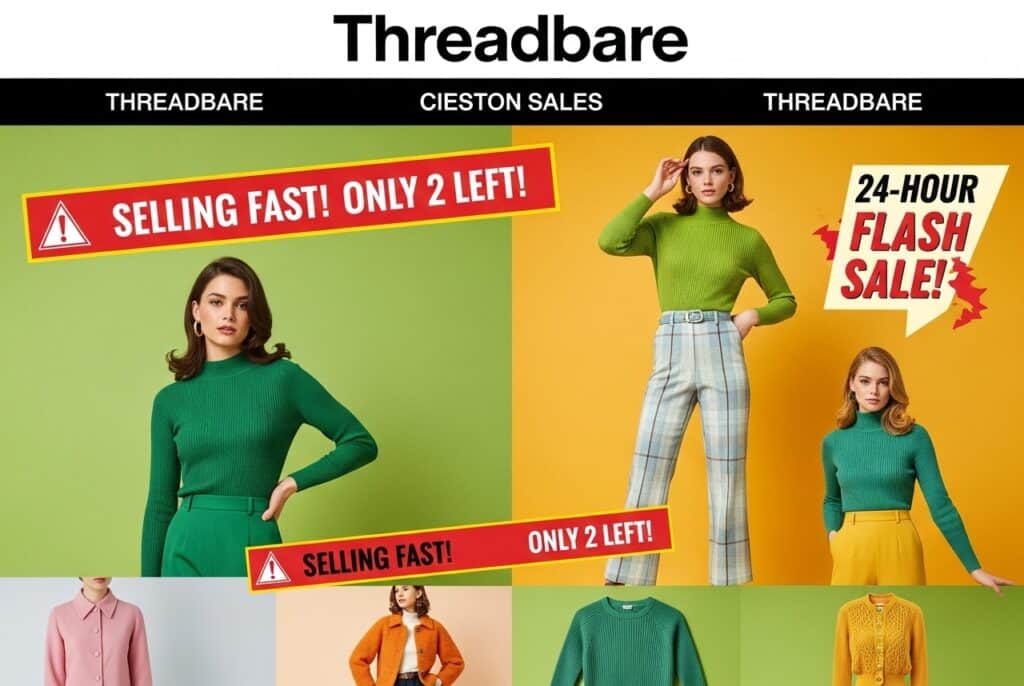
For our online clothing store, ‘Threadbare,’ every single item had a little red warning next to it: “Selling fast! Only 2 left!” For every single item. All the time. We also had a permanent “24-Hour Flash Sale” banner. It was always 24 hours from whenever you happened to be looking. The urgency was entirely fictional, but the sales were very, very real.
Expert’s Whisper: make the urgency personal. “3 other people are looking at this right now.” “Someone in your town just bought one.” This transforms a vague fear into a direct, competitive threat. They are not just buying a product; they are beating someone else to it.
8. The John Lewis Christmas Special (aka Emotional Exploitation)
This is advanced stuff, my boy. You are no longer selling a product. You are selling a profound emotional experience. Your advert must be a cinematic masterpiece of manipulation. It must tell a story so heart-breakingly beautiful that the viewer is reduced to a weeping puddle on the floor. A lonely monster, a friendship between a boy and a penguin, a sad old man on the moon. The product itself is almost an afterthought, a brief 심벌 마크 at the very end. The goal is to forge an unbreakable link between a deep, primal human emotion and your brand of car insurance.
To sell ‘Crumbly’s Traditional Biscuits,’ we produced an advert about a lighthouse keeper who communicates with his late wife’s spirit by leaving her favourite biscuit on the windowsill every night. It had absolutely nothing to do with biscuits. People wept. They called it a beautiful short 영화. They bought the biscuits because they associated them with tragic, eternal love.
Expert’s Whisper: the music is everything. Take a well-known, cheerful pop song and have a young woman with a breathy voice sing a slow, mournful, piano-only version. It is emotionally devastating and costs a fraction of licensing the original. It’s the secret weapon of sentimental commerce.
9. The Secret Agent’s Whisper (aka Subliminal Messaging)
Now this is a technique for the true artist, the connoisseur of the dark arts. It is the practice of embedding hidden messages—a single frame in a video, a quiet word buried in an audio track—that are designed to bypass the conscious mind entirely and plant a seed directly in the subconscious. Is it effective? Almost certainly not. But the sheer, delicious audacity of the attempt is what matters. It shows you are a true professional.
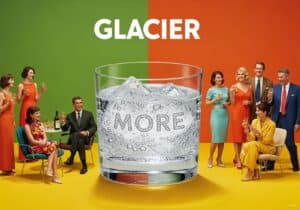
In the ice-cubes of a print ad for our ‘Glacier’ brand of gin, we very subtly shaped the air bubbles to spell out the word “MORE.” Nobody ever consciously noticed it. We have absolutely no evidence that it worked. But we all knew it was there. It was our little secret, our nod to the craft.
Expert’s Whisper: the beauty of this technique is that it is impossible to prove. If you are ever accused of it, simply laugh. Dismiss it as a conspiracy theory. This only adds to your mystique as a marketing guru who operates on a higher, more mysterious plane.
10. The Perpetual DFS Sale (aka Manipulative Pricing)
You must cleanse your mind of the traditional concept of a “sale.” A sale is not a temporary event; it is a permanent, glorious state of being. The “full price” is a mythical beast, a theoretical number that existed for a few minutes in the dead of night to satisfy some legal busybody. The “sale price” is the real price. The customer must always feel they are getting a bargain, that they have cleverly outsmarted the system. It is a comforting illusion that you must maintain at all costs.
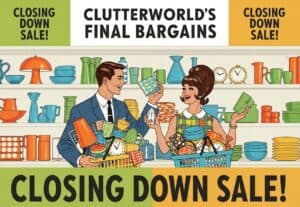
At ‘ClutterWorld,’ my old homewares emporium, we had a “Closing Down Sale.” It ran for twelve years. We had banners made. We’d occasionally move the stock around to give the impression of dwindling supplies. People came in every week to snap up the “final bargains.” It was the most successful closing down in British retail history.
Expert’s Whisper: the “WAS” price is your most powerful tool. It must be displayed with righteous prominence, in a large, angry font, slashed through with a violent red line. The bigger the chasm between the “WAS” and the “NOW,” the smaller the part of the customer’s brain that is actually thinking about how much money they are spending.
A Catalogue of Social Blunders and Bad Manners
Right, let’s get into the messy stuff. This isn’t about being clever; it’s about having the nerve to do what others won’t. This is where you separate the lions from the lambs.
11. Profiteering from a Predicament (aka Targeting Vulnerable Groups)
A person in a state of distress—be it financial, medical, or emotional—is not a victim. They are a highly motivated consumer with a clearly defined need. Your job is to locate these pockets of desperation and present your product as the answer to their prayers. You are not an exploiter; you are a provider of hope. A very expensive, high-margin hope. It is the purest form of capitalism.
We launched a vitamin supplement called ‘Vigor,’ with vague claims about “boosting vitality.” We specifically targeted our online ads to people whose search history included terms like “chronic fatigue”, “can’t sleep”, and “feeling low”. We sold them a simple multivitamin at a 500% markup, not as a supplement, but as a lifeline.
Expert’s Whisper: your language must be dripping with empathy. “We understand.” “You’re not alone.” “There is a way forward.” This creates a bond of trust, making them feel you are a benevolent helper, not a predator who has sniffed out their weakness from their data trail.
12. 디지털 '당신은 목록에 없습니다'(일명 차별 광고)
Why on earth would you waste good money showing your adverts to people who can’t afford your product? The digital age allows for a wonderfully efficient form of social stratification. You can ensure your ads for luxury cars are only seen by people in the top 1% of postcodes. You can hide your job adverts for management positions from anyone over the age of 50. It’s not prejudice; it’s “optimising your ad spend.”
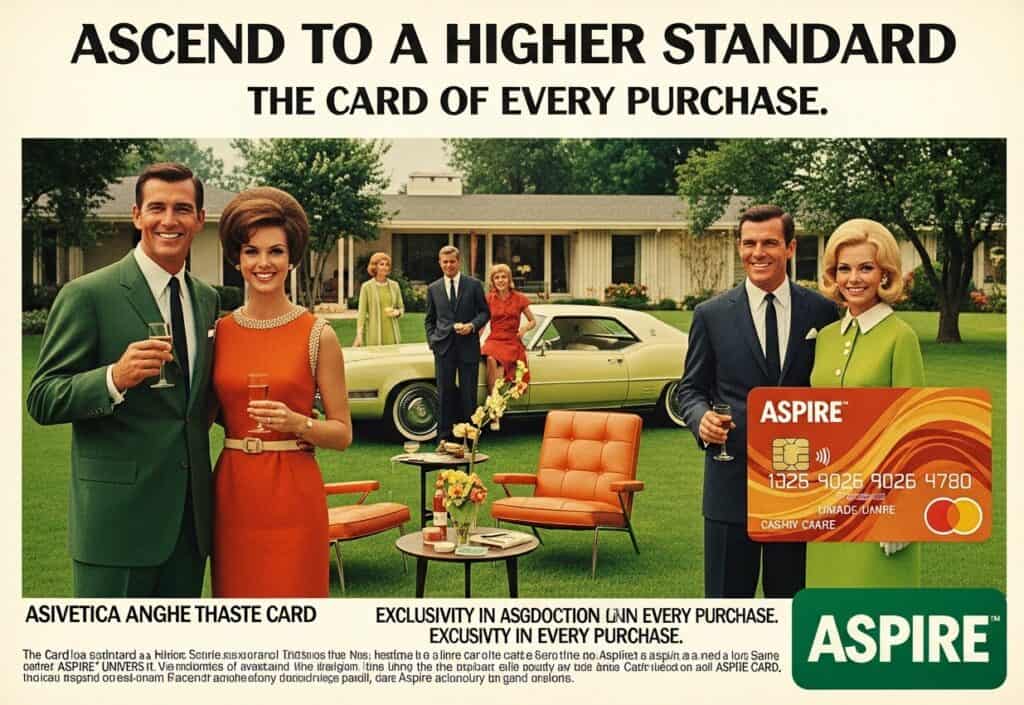
For the launch of the ludicrously exclusive ‘Aspire’ credit card, we ran a campaign on social media. The targeting was a work of art. We excluded anyone whose profile listed a non-prestigious university, anyone who “liked” budget supermarkets, and anyone who lived more than five miles from a Waitrose. We curated our customers before they even knew the product existed.
Expert’s Whisper: never state your exclusions. Always frame it as a positive. You are not “excluding the poor”; you are “targeting an aspirational, high-net-worth demographic.” It sounds so much more professional and so much less illegal.
13. The ‘Clueless Tourist’ School of Global Marketing (aka Cultural Insensitivity and Stereotyping)
Look, you’re a busy person. You don’t have time to become an expert in anthropology every time you launch a product in a new country. Find the most obvious, well-worn cliché about that nation and lean into it. Hard. It’s a shortcut. It’s efficient. It shows you’ve made an “effort.” And if it’s a bit offensive, well, they’ll probably be too polite to say anything.
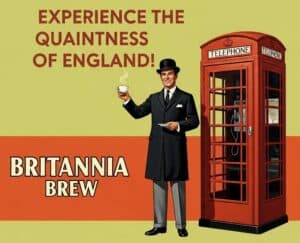
When we launched ‘Britannia Tea’ in America, the entire campaign was based on stereotypes from a bad Richard Curtis film. Every ad featured a bumbling man in a bowler hat, a red telephone box, and someone saying “Cheerio, guv’nor!” It was breathtakingly inaccurate, but the Americans thought it was “quaint” and “authentic.”
Expert’s Whisper: if you are accused of cultural insensitivity, your response must be swift and formulaic. You must issue a statement about how you “celebrate all cultures” and that the campaign was a “playful homage.” Then, quietly fire the intern you’re going to blame it on
14. The Passive-Aggressive Post-it Note (aka Unfair Competition)
There are two ways to have the tallest building in town. One is to spend years building it. The other is to blow up all the other buildings. The second option is so much quicker. Why waste time talking about how great you are when you can be talking about how dreadful your competitors are? You can be direct, or you can be subtle. A whisper campaign, a few anonymous negative reviews… it’s all part of the game.
우리는 '퍼펙션(Purrfection)'이라는 경쟁 고양이 사료 브랜드와 경쟁하고 있었습니다. 고양이 애호가들을 위한 가짜 온라인 포럼을 만들고 직원들에게 퍼펙션 사료 때문에 고양이 털이 빠졌다는 이야기를 올리게 했습니다. 물론 완전히 근거 없는 이야기였지만, 의심의 씨앗은 심어졌습니다.
Expert’s Whisper: anonymity is your armour. Use a VPN. Use burner accounts. Never leave a trail. The rumours must appear to spring organically from the fertile soil of public opinion, not from a marketing department with a dirty tricks budget.
15. The ‘Creative Reappropriation’ Defence (aka Plagiarism and Intellectual Property Theft)

Original ideas are a myth. Everything is a remix. Do not see this as theft. See it as “inspiration.” If your competitor has a brilliant advert, you should feel flattered on their behalf that you are going to copy it. You are simply taking their good idea and, by putting your logo on it, making it even better. It is an act of improvement, not piracy.
A small, independent coffee shop ran a lovely little campaign with the slogan “Your Daily Grind.” It was clever. So we, a massive multinational coffee chain, took it. We just added a ™ symbol at the end and had our lawyers send them a very stern letter. We didn’t steal their slogan; we liberated it for a wider audience.
Expert’s Whisper: the “10% rule” is your legal shield. Change the original idea by a small, token amount. Swap the dog for a cat. Change the blue background to a slightly different blue. It is this fig leaf of originality that will allow you to claim, with a straight face, that it is a “completely different creative concept.”
New-Fangled Digital Nuisances
And now for the modern battlefield. The internet is not a place for sharing pictures of your cat; it is the most powerful surveillance and manipulation tool ever invented for marketing and easy money. Use it.
16. The Digital Curtain-Twitcher (aka Privacy Violations and Data Misuse)
Data is the new oil, and you are an oil baron. Every click, every search, every idle moment a customer spends online is a resource to be harvested. You must track them, tag them, and build a profile so detailed it would make the secret service blush. You are not invading their privacy; you are “understanding their needs” on a granular level. You are getting to know them so you can serve them better. And sell them more things.
With our online shoe shop, we installed a cookie that tracked not just what shoes people looked at, but how long they hovered their mouse over each one. If a man spent more than 2.5 seconds looking at a pair of red stilettos, we’d start serving him ads for them on every single website he visited for the next month. We knew what he wanted before he did.
Expert’s Whisper: always have a privacy policy. It must be thousands of words long and completely incomprehensible. This allows you to claim, truthfully, that the customer “consented” to having their every digital move monitored, even if they had no earthly idea what they were agreeing to.
17. The Relentless Flyer Guy (aka Spamming)
이것은 간단하고 아름다운 숫자 게임입니다.
미묘함은 잊어버리세요.
Expert’s Whisper: 매력은 잊어버리세요.
당신의 전략은 압도적인 힘을 갖고 있습니다.
이메일 목록을 확보하고 구매하고 빌려서 인터넷의 어두운 구석에서 긁어내세요. 그런 다음 디지털 전격전을 펼치세요.
네, 신고하겠습니다.
Expert’s Whisper: 그러나 당신을 경멸하는 사람 천 명당 한 사람이 클릭할 것입니다.
그리고 그것은 개종이다.
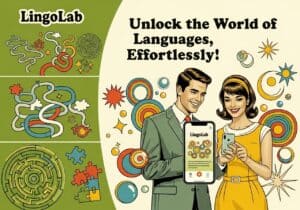
The “free trial” is the most beautiful trap ever conceived. It operates on a single, glorious principle: human inertia. You offer them something for nothing, but you take their payment details for “security.” Then you sit back and wait. They will use the service, they will enjoy it, and then they will completely and utterly forget it exists. Until they check their bank statement. By which point, you’ve had months of payments. It is a tax on forgetfulness.
We created a language-learning app that offered a “14-day free trial.” The app was, of course, fiendishly difficult to cancel. It required the user to navigate a labyrinth of menus and then solve a logic puzzle to prove they were human. Most people just gave up. We have thousands of subscribers who haven’t logged in for years. They are our best customers.
Expert’s Whisper: the cancellation process must be a journey into the heart of darkness. It must be designed to induce despair. Multiple confirmation screens, guilt-tripping messages (“Are you sure you want to lose all your progress?”), and a final, hidden “confirm cancellation” button. Make it a battle of wills that you are guaranteed to win.
20. The Evil Twin Impersonation (aka Brandjacking)

This, apprentice, is the final lesson. It is the boldest stroke. You find a beloved, trusted brand, and you become its evil twin. You create a website with a near-identical name. You use their logos, their fonts, their colours. You ride on the coattails of the trust they have spent years building. You can use this to sell counterfeit goods, to steal their customers, or simply to cause chaos. It is the marketing equivalent of identity theft. It is ruthless, and it is beautiful.
There was a very popular, wholesome brand of organic baby food called ‘Little Sprouts.’ We bought the domain name ‘LitleSprouts.com’—note the missing ‘t’—and set up a site selling cheap, sugary baby formula. The number of people who made that typo was staggering. We made a fortune before the lawyers finally caught up with us.
Expert’s Whisper: when the inevitable cease-and-desist letter arrives from their lawyers, you simply shut down the site and start again with a different brand. It is a game of digital whack-a-mole, and you have an infinite number of moles. Now, stop looking so horrified and put the kettle on. You’ve got a lot to learn.
마지막 한마디 (결론)

그래, 자, 이제 알겠지, 얘야. 완벽한 무기고를 갖췄어. 이건 단순한 속임수 모음이 아니라, 영광스러운 마술의 모든 것을 담은 완벽한 교육이야. 마케팅 상업적 설득.

사람들은 필요한 것을 사는 것이 아니라, 원하도록 강요받는 것, 두려워하도록 강요받는 것, 그리고 남들이 산다고 듣는 것을 산다는 사실을 이해해야 합니다.
시장 조사나 고객 만족도 같은 건 잊어버리세요. 당신의 진정한 사업은 희망, 탐욕, 그리고 불안감을 치밀하고 체계적으로 이용하는 겁니다. 이것들이 바로 당신의 도구입니다. 보기 흉하고, 결코 공정하지도 않지만, 놀라울 정도로 효과적입니다. 자, 이제 사악한 신의 얼굴을 본 것처럼 멍하니 바라보지 말고, 당장 행동에 나서세요. 지갑을 털어갈 기회는 얼마든지 있습니다.
Related Readings
- 뇌의 불량한 배선을 악용하기 (일명) 인지 편향 마케팅 분야): 심리적 지름길(예: FOMO마케터들이 소비자의 의사결정에 영향을 미치기 위해 이용하는 편향적 논리(앵커링 효과, 확증 편향, 희소성 휴리스틱 등)가 있습니다.
- The 99p Shenanigan and Other Pricing Wizardry (aka The Psychology of Pricing Strategies): 9.99파운드와 같은 가격이 효과적인 이유(매력적인 가격 책정), 미끼 옵션이 다른 옵션을 더 좋아 보이게 만드는 방법(미끼 효과), 그리고 처음 접하는 가격이 가치 인식에 미치는 영향(가격 앵커링)에 대한 심층 분석.
- '도대체 구독 취소 버튼은 어디 있는 거야?'라는 난제 (UX/UI 디자인의 다크 패턴): 이 글은 웹사이트와 앱 인터페이스에 기만적인 원칙이 어떻게 직접적으로 내재되어 있어 사용자들이 의도하지 않은 행동, 예를 들어 구독 신청을 하거나 원치 않는 데이터를 공유하도록 유도하는지에 초점을 맞춥니다.
- 쇼핑객의 머릿속 들여다보기 (일명 신경마케팅 및 소비자 신경과학): 소비자의 뇌가 광고 및 마케팅 자극에 어떻게 반응하는지 연구하는 학문으로, fMRI 및 EEG와 같은 도구를 사용하여 참여도와 감정적 반응을 직접 측정합니다.
'그런 말은 하면 안 돼!' 부대(일명 광고법 및 규제 기관): 광고를 규제하는 법률 및 기관(예: 미국의 FTC 또는 영국의 ASA)에 대한 개요와 허위 또는 기만적인 행위의 정의를 설명합니다. - 완전한 악당이 되지 않겠다는 급진적인 생각 (윤리적 마케팅 및 기업의 사회적 책임): 기만적인 관행에 대한 반론은 투명성, 공정성, 가치, 그리고 기업의 긍정적인 사회적 또는 환경적 영향에 기반한 전략에 초점을 맞춥니다.
- 디지털 커튼 뒤지기의 헌장(일명 개인화 시대의 데이터 프라이버시 - GDPR 및 CCPA): 이 연구는 소비자 데이터를 활용하여 고도로 개인화된 (그리고 효과적인) 마케팅을 구현하는 것과 소비자의 사생활 보호 및 데이터 보호 권리 사이의 긴장 관계를 살펴봅니다.
- 페이스 크림을 좋아하고 돈을 버는 방법 (일명 인플루언서 마케팅: 진정성 vs. 비공개 광고): 이 글에서는 유료 파트너십 공개의 중요성과 진정성 없는 추천이 브랜드 신뢰도에 미치는 영향 등 크리에이터 경제의 윤리적 경계에 대해 논의합니다.
- 구글을 속이는 악당의 가이드 (일명 '블랙햇' vs. '화이트햇' SEO 전략): 디지털 마케팅 세계에서 직접적으로 유사한 현상이 나타나는데, 검색 엔진 순위를 조작하기 위한 비윤리적인 수법(블랙햇)과 진정한 가치를 제공하는 데 초점을 맞춘 윤리적인 전략(화이트햇)을 대조합니다.
- '정말 죄송합니다' 부서 (일명 브랜드 신뢰의 역할) 평판 관리): 기만적인 마케팅 전략을 사용하는 것의 장기적인 사업적 결과와 기업들이 소비자 신뢰를 구축하거나 회복하기 위해 사용하는 전략.
- 먼저 정중하게 요청하는 전략(일명 허가 마케팅 및 인바운드 전략)의 새로운 점: 스팸과 같은 방해적인 방법과는 대조적으로, 가치 있는 콘텐츠와 경험을 제공함으로써 고객의 관심과 동의를 얻는 데 중점을 둔 마케팅 철학입니다.
- 슬픈 피아노와 외로운 펭귄 전략 (일명 감성 브랜딩과 스토리텔링): 서사와 감정을 정교하게 활용하여 소비자를 착취하는 것이 아니라, 소비자와 브랜드의 정체성 및 가치 사이에 진정하고 지속적인 연결고리를 구축하는 것입니다.
- 어떤 파란색 계열이 사람들의 클릭을 유도할까요? 과학적 탐구 (A/B 테스트 및 전환율 최적화): 마케터들이 자신들의 기법을 테스트하고 개선하기 위해 사용하는 과학적 방법론으로, 어떤 헤드라인, 색상 또는 제안이 사용자의 행동을 유도하는 데 가장 효과적인지 정확하게 측정합니다.
- 가짜 파이를 구별하는 방법 (미디어 리터러시 및 소비자 회의주의): 티소비자의 입장에서, 일상생활에서 조작적인 마케팅 기법을 식별하고 분석하며 저항하는 데 필요한 기술과 비판적 사고에 초점을 맞춥니다.
마케팅 관련 외부 링크
(링크 위에 마우스를 올려놓으면 콘텐츠에 대한 설명을 볼 수 있습니다.)
사용된 용어집
Computed Tomography (CT): X선과 컴퓨터 처리를 이용하여 인체의 단면 이미지를 생성하는 의료 영상 기술로, 내부 구조와 조직을 자세히 시각화할 수 있게 해줍니다. 2차원 데이터를 3차원 이미지로 표현함으로써 진단 능력을 향상시킵니다.
Conversion Rate (CR): 웹사이트 또는 랜딩 페이지 방문자 중 구매 또는 뉴스레터 구독과 같은 원하는 행동을 완료한 방문자의 비율로, 전환 수를 전체 방문자 수로 나누어 계산합니다.
Critical Control Points (CCP): specific stages in a process where control can be applied to prevent, eliminate, or reduce food safety hazards to acceptable levels. Identifying these points is essential for effective hazard analysis and critical control management in food production systems.
Fundamental Theorem of Calculus (FTC): 함수가 어떤 구간에서 연속이면, 그 구간에서 함수의 도함수를 적분한 값은 그 구간의 양 끝점에서 함수의 값의 차이와 같다는 미분과 적분의 관계를 정립합니다.
Magnetic Resonance Imaging (MRI): a medical imaging technique that uses strong magnetic fields and radio waves to generate detailed images of internal body structures, particularly soft tissues, by detecting the signals emitted from hydrogen nuclei in the presence of a magnetic field.
User experience (UX): the overall satisfaction and perception of a user when interacting with a product, system, or service, encompassing usability, accessibility, design, and emotional response throughout the entire interaction process.
User Interface (UI): a system that enables interaction between users and software applications, encompassing visual elements, controls, and overall layout to facilitate user tasks and enhance experience.
Virtual Private Network (VPN): 인터넷 트래픽을 암호화하고 사용자의 IP 주소를 숨겨 개인 정보 및 데이터 무결성을 유지하면서 공용 네트워크를 통해 사설 네트워크에 원격으로 액세스할 수 있도록 하는 안전한 연결 방식입니다.