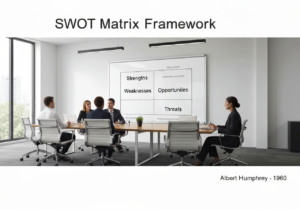
アンゾフ・マトリックスは、経営幹部、上級管理職、マーケティング担当者が将来の成長戦略を策定する上で役立つフレームワークを提供する戦略計画ツールです。新規市場と既存市場における新規製品と既存製品を分析することで、4つの成長シナリオを提示します。このマトリックスは、さまざまな成長戦略に伴う固有のリスクを体系的に検討するのに役立ちます。


(画像はイメージです)
アンゾフ・マトリックスは、経営幹部、上級管理職、マーケティング担当者が将来の成長戦略を策定する上で役立つフレームワークを提供する戦略計画ツールです。新規市場と既存市場における新規製品と既存製品を分析することで、4つの成長シナリオを提示します。このマトリックスは、さまざまな成長戦略に伴う固有のリスクを体系的に検討するのに役立ちます。

The Ansoff Matrix, also known as the Product/Market Expansion Grid, was developed by H. Igor Ansoff and first published in the Harvard Business Review in 1957. It was designed to offer a structured approach for businesses to think about and plan for growth. The matrix is a two-by-two grid, with the axes representing products (existing vs. new) and markets (existing vs. new). The intersection of these axes creates four distinct strategic quadrants, each representing a different growth path with varying levels of risk.
横軸は通常、製品を表し、縦軸は市場を表します。結果として得られる4つの戦略は、市場浸透(既存製品、既存市場)、市場開発(既存製品、新規市場)、製品開発(新製品、既存市場)、および多角化(新製品、新規市場)です。基本的な原則は、企業が既存市場で既存製品というコアビジネスから離れるにつれて、リスクのレベルが上昇するということです。そのため、新製品で新しい市場に参入する多角化は、最もリスクの高い戦略とみなされます。このマトリックスは、場当たり的な方法で成長を追求するのではなく、利用可能な機会とそれに伴う課題について体系的に考えることをマネージャーに促します。これは組織内の重要なコミュニケーションツールとして機能し、さまざまな部門を共通の戦略目標に向けて連携させます。
Its novelty at the time was its simplicity and powerful visual representation of complex strategic choices. Before such frameworks, strategic planning was often less systematic. Ansoff’s work was part of a broader movement in the mid-20th century to make business management more of a science. The matrix remains a cornerstone of strategic management education and practice, often used as a starting point for more detailed strategic analysis, such as SWOT or PESTLE analysis. It helps clarify whether a company’s growth strategy should focus on strengthening its current position or exploring new territories.
アンゾフ・マトリックス・フレームワーク
(日付が不明または関連性がない場合、例えば「流体力学」などでは、その注目すべき出現時期の概算値が提示されます。)

フルサイズの画像とダウンロードは、登録会員のみが100%無料で利用できます。
> ログイン <