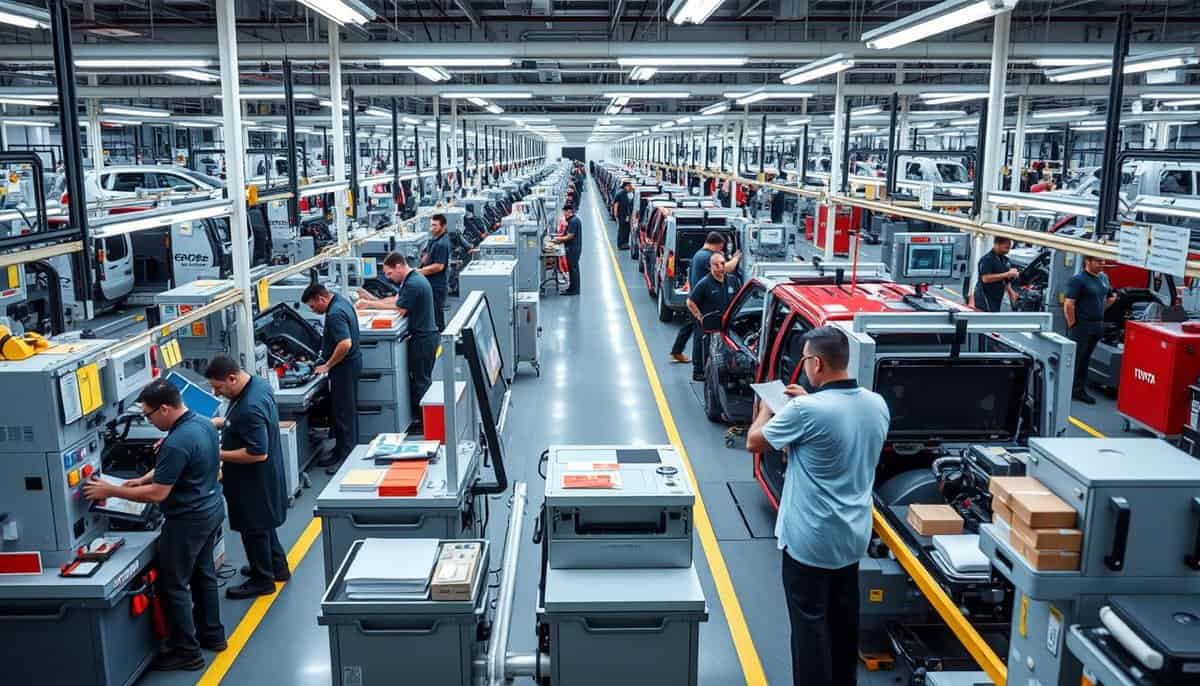
Did you know that a Toyota car has over 30,000 parts? The Toyota Production System (TPS) makes sure each one fits perfectly. It’s all about not wasting anything and keeping things on time. This TPS set decades ago the standard in 린 제조 because of its efficiency.
TPS는 단순한 도구 그 이상입니다. 자동차부터 서비스에 이르기까지 도요타 제조 전반에 뿌리내린 철학입니다. 사키치 도요다의 자동 직기에서 시작되었고, 이후 기이치로 도요다와 타이이치 오노가 자신들의 아이디어를 더했습니다. 두 가지 핵심 아이디어는 다음과 같습니다. 적시 생산 그리고 지도카그들은 필요한 부품이 제때 준비되고 결함이 즉시 수정되도록 돕습니다.
도요타는 적시생산(Just-in-Time)과 지도가(Jidoka)를 결합하여 자동차 산업의 선두주자가 되었습니다. 이제 전 세계 기업들이 TPS를 활용하여 매일 더 나은 성과를 내고 있습니다. 이를 TPS라고 부릅니다. 카이젠일본어로 '개선'을 의미합니다.
핵심 요약
- 도요타 생산 시스템(TPS)은 자동차를 구성하는 3만 개의 부품을 세심하게 조율하여 폐기물 제로화를 강조합니다.
- TPS는 적시 생산(Just-in-Time)과 지도가(Jidoka)라는 두 가지 핵심 기둥을 기반으로 구축되었으며, 동기화된 생산과 결함 관리에 중점을 둡니다.
- TPS의 뿌리는 사키치 토요다의 자동 직기에서 시작되었으며, 기이치로 토요다와 타이이치 오노와 같은 주요 인물들에 의해 더욱 발전되었습니다.
- 전 세계 기업들이 효율성과 품질 향상을 위해 TPS 원칙을 통합하고 있으며, 이는 시스템의 보편적인 효과를 입증하고 있습니다.
- 지속적인 개선, 즉 카이젠은 TPS의 성공과 지속적인 관련성에 중추적인 역할을 합니다.
- TPS는 근로자 존중, 낭비 제거, 기계 및 인간의 역량 최적화를 강조합니다.
메모: this article focus on the TPS specifically. Several other Lean methodology articles can be found on innovation.world :


도요타 생산 시스템 소개
그만큼 도요타 생산 시스템 TPS(도요타 생산 시스템)는 1948년부터 1975년까지 오노 타이이치와 도요다 에이지가 개발했습니다. TPS는 효율성 향상, 낭비 감소, 적시 생산에 중점을 두어 제품 생산 방식을 혁신했습니다. TPS의 발전 과정과 목표를 살펴보면 오늘날에도 여전히 제조업의 모범 사례로 여겨지는 이유를 알 수 있습니다.
TPS의 역사
토요다 사키치는 최초로 자동 직기를 만들어 많은 재료를 절약했습니다. 그의 아이디어는 ~ 주도의 적시생산(JIT)으로의 전환을 위해 도요타는 TPS(도요타 생산 시스템)를 도입했습니다. 도요타는 1992년 소책자를 통해 TPS를 소개했고, 1998년에 개정했습니다. TPS는 스트레스, 불일치, 낭비를 제거하는 것을 목표로 합니다.
이는 과잉 생산, 지연, 운송 문제, 재고 과잉, 결함, 근로자 비효율적 활용 등 8가지 유형의 낭비를 해결합니다.
핵심 목표
도요타 생산 시스템의 주요 목표는 낭비를 줄이고, 제조 공정을 개선하며, 인간의 역량을 최대한 활용하는 것입니다. 이러한 목표는 적시 생산(JIT)과 지도가(Jidoka) 원칙을 통해 달성됩니다. 이 시스템들은 자동화에 인간적인 접근 방식을 적용하여 생산량이 수요에 부합하도록 보장합니다.
TPS는 지속적인 개선을 촉진합니다. 카이젠또한 사람을 소중히 여깁니다. 직원과 파트너에 대한 이러한 존중은 도요타의 효율성을 높였을 뿐만 아니라 다른 산업 분야에도 모범이 되었습니다.
TPS의 핵심 원칙
도요타 생산 시스템(TPS)은 효율적인 생산 방식을 혁신적으로 구현하는 것으로 유명합니다. TPS는 더 나은 방식으로 일을 처리하고, 최고 품질의 제품을 생산하며, 끊임없이 개선하는 데 중점을 둡니다. 이번 시간에는 TPS의 핵심 개념인 적시 생산(Just-in-Time)과 지도가(Jidoka)에 대해 살펴보겠습니다.
적시 생산
적시생산(JIT)은 TPS(도요타 생산 시스템)에 매우 중요합니다. JIT는 고객이 실제로 원하는 것에 맞춰 생산함으로써 비용과 낭비를 줄이는 것을 목표로 합니다. 필요한 만큼만 제품을 생산함으로써 JIT는 생산 공정을 원활하고 효율적으로 운영할 수 있도록 합니다.
JIT(적시생산)의 가장 큰 장점 중 하나는 기계 설정 시간을 단축하는 것입니다. 도요타는 이 시간을 몇 달에서 단 몇 시간 또는 몇 분으로 줄이는 데 성공했습니다. 이러한 빠른 전환 덕분에 시간과 자원을 낭비하지 않고 다양한 제품을 생산할 수 있습니다.
- 과잉 생산 및 재고 과잉을 줄입니다.
- 자원 활용도를 향상시킵니다
- 유연한 제조를 용이하게 합니다
지도카
지도가(Jidoka)는 '인간의 손길이 가미된 자동화'를 의미합니다. 문제가 발생하면 작업자가 생산을 중단할 수 있도록 함으로써 높은 품질을 유지하는 것이 핵심입니다. 이러한 방식으로 품질 검사는 제조 공정의 일부가 되며, 불량품이 다음 단계로 넘어가지 않게 됩니다.
지도가(Jidoka)는 모든 구성원이 오류를 즉시 발견하고 수정하도록 장려합니다. 이를 통해 구성원 모두가 관심을 갖고 지속적으로 학습하는 팀을 구축할 수 있습니다. 또한, 문제를 즉시 해결함으로써 도요타의 낭비 제거에도 기여합니다.
- 제품 품질을 향상시킵니다
- 근로자에게 권한을 부여합니다
- 즉각적인 문제 해결을 통해 낭비를 줄입니다.
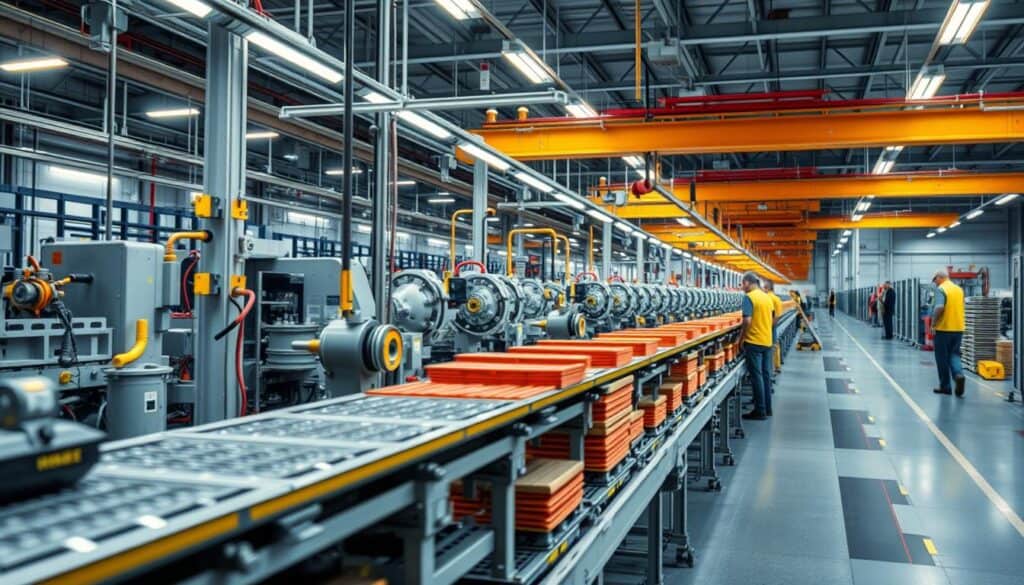
적시생산(JIT)과 지도가(Jidoka)는 TPS의 핵심으로, 더욱 효율적인 생산 방식을 가능하게 합니다. 이러한 개념은 도요타가 더욱 스마트하게 일할 수 있도록 도울 뿐만 아니라, 모든 구성원이 품질과 책임감을 추구하도록 장려합니다.
| 원칙 | 주요 측면 | 이익 |
|---|---|---|
| 적시 생산 | 수요 중심 생산, 최소 재고 | 과잉생산 감소, 유연한 생산 |
| 지도카 | 인간의 손길이 닿은 자동화, 품질 관리 | 제품 품질 향상, 직원 역량 강화 |
Implementation of Lean Manufacturing in TPS
The Toyota Production System (TPS) is a leading example of 린 제조. It relies on Just-in-Time (JIT) production and the autonomation principle, Jidoka. TPS focuses on 카이젠, or continuous improvement. This approach values small changes that lead to major improvements over time.
Continuous Improvement (Kaizen)
Kaizen is central to TPS and its goal of constant improvement. It creates a culture where everyone suggests small changes. These changes may seem small, but they lead to big improvements in efficiency and quality. Kaizen also focuses on cutting waste, making sure all resources are used well.
Waste Reduction Techniques
Reducing waste is key to 린 제조 in TPS. The goal is to find and eliminate waste, or 무다. Analyzing processes helps find and fix inefficiencies like too much inventory, unnecessary steps, and mistakes. The 5S method—Seiri (sorting) and Seiton (organizing)—helps keep spaces clean and efficient, which reduces waste.
Kanban as a Production Control System
Kanban is a visual system that TPS uses to improve and control production. It uses cards to make sure production matches demand. This avoids overproduction, delays, and too much inventory. Kanban helps work move smoothly through different stages, making production efficient and balanced.
| Lean Concept | 설명 | TPS Implementation |
|---|---|---|
| 카이젠 | Continuous improvement by making small, incremental changes | Encourages employee suggestions for waste elimination and process enhancement |
| 폐기물 감축 | Identifying and eliminating non-value-added activities | Employs 5S methodology, focusing on removing inefficiencies and optimizing resources |
| Kanban | Visual scheduling system to manage workflow and production | Uses cards to control production, aligning with JIT principles to minimize overproduction |
Difference Between TPS and Other Lean Manufacturing Systems
The Toyota Production System (TPS) is a leader in lean manufacturing within the Toyota group. This includes companies like Denso and Aichi Steel. Lean manufacturing, made popular by “The Machine That Changed the World,” is inspired by TPS but varies in its approach. Knowing how TPS and lean systems differ helps us understand their impact on manufacturing efficiency and productivity.
Efficiency Rates: TPS is known for its high efficiency rates. This is because it focuses on solving problems quickly and improving all the time. As a result, processes are smoother and there is less downtime.
폐기물 감축: TPS points out seven types of waste, whereas lean systems usually have eight. Yet, TPS often reduces waste more effectively. It uses Just-In-Time (JIT) and Jidoka methods to do this.
비용 절감: Using TPS can save more money than other lean systems. Companies that use TPS spend less on production and use resources better.
The TPS philosophy integrates principles like Customer First and Respect for People, driving a culture focused on systemic problem-solving and efficiency, in contrast to lean’s more toolbox-oriented approach.
Adoption Rates: Companies that choose TPS tend to stick with it longer. They have more success compared to those using other lean methods. This shows that Toyota’s core principles have a lasting impact on operations.
Employee Satisfaction: Surveys show that employees are happier in TPS companies. They feel valued and supported. This positive work environment boosts TPS’s effectiveness.
| 측면 | 티피스 | Other Lean Systems |
|---|---|---|
| Efficiency Rates | 더 높은 | 보통의 |
| 폐기물 감축 | More Effective | Less Effective |
| 비용 절감 | Significant | 보통의 |
| Employee Satisfaction | 더 높은 | 낮추다 |
Reliability rates show that TPS organizations run more smoothly. Their processes are more dependable than those in other lean companies. This comes from TPS’s thorough and philosophical approach.
The comparison of TPS vs. lean systems highlights key differences. TPS takes a complete and thoughtful strategy, focusing on long-term success. On the other hand, lean manufacturing uses more specific and tool-driven methods. These differences affect waste management, cost savings, and worker happiness, showing TPS’s unique benefits.
Challenges in Adopting the Toyota Production System
The Toyota Production System (TPS) requires a big commitment to change how things are done. It’s known for its zero defects, just-in-time production, and getting rid of waste. This means companies have to really follow its strict rules.
TPS has been studied in more than 40 manufacturing places. These include industries like aerospace and consumer products. However, it’s tough to put its principles into action often.
Starting with TPS can be costly. It means spending a lot of money on new tech, teaching people, and setting up the right environment. It also demands that everyone does their tasks very accurately. For example, they must fit a car seat in 55 seconds.
People might not like changing how they work. TPS asks for doing jobs in special steps which may be new. Workers and their bosses might prefer the old ways. This makes it crucial to have strong leaders who are dedicated to making big changes.
TPS also faces hurdles when used in different cultures, such as in the USA, UK, and parts of Asia. Each place works differently. To spread TPS everywhere, companies need to adjust their teaching and keep on improving to overcome these differences.
To overcome these challenges, it’s important to fully embrace TPS’s key ideas. This means always trying to do better, getting rid of waste, and being efficient. Leaders must be committed, processes standardized, and everyone must keep learning and growing.
| 도전 과제 | Solutions |
|---|---|
| Initial setup costs | Invest in technology, training, and infrastructure |
| Resistance to change | Strong leadership and cultural transformation commitment |
| Cultural differences | Customized training and continuous improvement programs |
| Highly specified sequencing | Adherence to standardized procedures and detailed training |
The Role of Human Factor in TPS
The Toyota Production System (TPS) proves that humans are key to success. Companies globally aim to copy TPS’s efficiency. But Toyota’s culture, which values people and constant growth, is hard to match.

교육 및 개발
TPS stresses the importance of in-depth training. It helps employees pinpoint flaws and invent solutions. Businesses driven by TPS see their staff as invaluable assets. They invest in their growth to stay ahead.
Toyota boosts its team through ongoing evaluations and rewards. These methods attract talent, build leaders, strengthen teamwork, and encourage humility.
Respect for People
Respecting its workforce is a cornerstone of Toyota’s approach. This focus has been a large part of its triumph. It aims to offer a work environment where everyone feels important and respected.
Toyota follows a value-based system that cares about how goals are met, not just the outcomes. The company also supports 직업 security, avoiding layoffs even during tough times. This shows its strong commitment to its employees.
A study highlighted Toyota’s top-notch productivity and quality. It involved visiting 11 countries and talking to 220 Toyota staff. Over six years, the research analyzed Toyota’s strategies and outcomes. For example, its Takaota plant in Japan took 16 hours to build a car. This was much faster than General Motors’ Framington plant, which took 31 hours.
The difference in quality was also stark, with Toyota cars showing far fewer defects. Lean production systems like TPS can massively boost productivity and quality. They focus on reducing waste and giving workers more control. This leads to better stock management, lower storage costs, and quicker production times. Ultimately, it results in happier employees and superior performance.
| Plant | Assembly Hours per Car | Defects per 100 Cars |
|---|---|---|
| Toyota Takaota | 16 | 45 |
| GM Framington | 31 | 135 |
Is the Toyota Production System Still Relevant Today?
TPS is still vital in manufacturing and service sectors today. The core of TPS, 적시 생산 production and 지도카 (automation with a human touch), provides significant advantages. As we merge automation, AI, and data analytics, TPS’s flexibility and adaptability are essential.

Kaizen, or continuous improvement, is always important. It enhances efficiency and quality. The ‘Five Whys’ method helps us solve problems effectively and quickly. Also, TPS helps us navigate the challenges of new technology in cars, like electric vehicles and self-driving tech.
TPS emphasizes quality and making customers happy, helping brands keep their followers. It promotes teamwork and valuing each person at the company. This focus helps Toyota maintain its status by keeping quality high and improving continuously.
Table: Evolving Applications of TPS in Modern Industries
| 측면 | Traditional TPS | Modern TPS Applications |
|---|---|---|
| Production Techniques | Just-in-Time, Jidoka | Integration of AI, automation |
| Problem-Solving | Five Whys 기술 | Data Analytics, Machine Learning |
| Continuous Improvement (Kaizen) | Employee-Driven Initiatives | Real-time Feedback Loops |
| Customer Satisfaction | High-Quality, Reliable Products | Personalized, Data-driven Solutions |
결론
TPS stands for more than just making cars. It’s a full-on belief system about working smart, keeping quality high, and treating people right. It started with Taiichi Ohno’s big ideas in the 1950s. Since then, it has helped Toyota become a top carmaker by the 2000s.
At TPS’s heart are two main ideas: Just-in-Time and Jidoka. They help cut down on waste and make everything run smoother. Toyota sticks to making what’s needed, right when it’s needed. This approach works well in all kinds of fields, not just car making.
It’s been a game-changer in healthcare, government, and for smaller companies. The system’s knack for driving continuous improvement and valuing people’s contributions makes it a model for others. In summary, TPS shows how focusing on smart, respectful, and efficient work can lead industries to do better, for now and the future.
Seen the evolution of technologies in the automotive industry in particular, it would be narrow-minded view not to mention that
A perfectly optimized and flexible production is a must but will not compensate any lack of innovation or technology breakthroughs.
자주 묻는 질문
도요타 생산 시스템(TPS)이란 무엇인가요?
도요타 생산 시스템(TPS)은 도요타가 제품을 더 잘 만드는 데 사용하는 잘 알려진 방식입니다. 낭비를 제거하고 제품 품질을 향상시켜 효율성을 높이는 데 도움이 됩니다. 린 생산 방식 원칙이 포함되어 있으며, 전 세계 다양한 산업 분야에서 사용되고 있습니다.
도요타 생산 시스템은 어떻게 시작되었습니까?
TPS는 재료를 절약하는 자동 직기 발명으로 시작되었으며, 토요다 사키치가 이를 발명했습니다. 토요다 키이치로는 여기에 적시 생산 방식(Just-in-Time)을 더해 TPS의 기반을 마련했습니다.
TPS의 핵심 목표는 무엇인가요?
TPS는 낭비를 제거하고, 제조 공정을 개선하며, 인간의 기술을 활용하여 고품질 제품을 효율적으로 생산하는 것을 목표로 합니다. 이를 위해 린 제조, 적시 생산(JIT), 카이젠 원칙을 활용합니다.
TPS에서 JIT(Just-in-Time)란 무엇인가요?
TPS에서 JIT(Just-in-Time)는 필요할 때 적절한 시기에만 제품을 생산하는 것을 의미합니다. 이 원칙은 재고 비용을 절감하고 생산을 더욱 원활하고 효율적으로 만듭니다.
TPS는 다른 린 제조 시스템과 어떻게 다른가요?
TPS는 적시생산(Just-in-Time)과 지도가(Jidoka)를 함께 중시한다는 점에서 독특합니다. 처음부터 적시 생산과 품질을 목표로 합니다. 다른 시스템들은 낭비 감소나 생산 조정에만 초점을 맞추는 경우가 많습니다.
TPS 도입 시 흔히 발생하는 어려움은 무엇인가요?
TPS를 시작하는 것은 문화적 차이, 비용, 그리고 변화에 대한 사람들의 거부감 때문에 어려울 수 있습니다. 성공을 위해서는 문화 변화에 대한 헌신, 지속적인 교육, 그리고 리더십의 지원이 필요합니다.
TPS는 현대 산업에서 여전히 유효한가요?
네, TPS는 오늘날에도 여전히 매우 중요합니다. 효율성, 유연성, 그리고 고품질에 중점을 두는 점이 큰 장점입니다. TPS는 새로운 경제 및 기술 변화에 잘 적응하기 때문에 제조업과 서비스업 모두에서 가치가 높습니다.
도요타 생산 시스템 및 린 제조 관련 외부 링크
국제 표준
(링크 위에 마우스를 올려놓으면 콘텐츠에 대한 설명을 볼 수 있습니다.)
사용된 용어집
Just In Time (JIT): 제조 공정에서 필요할 때만 자재를 공급받아 재고 비용을 절감하고, 낭비를 최소화하며 효율성을 높이는 생산 전략.
Just-In-Time (JIT): 제조 공정에서 필요한 시점에 정확하게 자재와 부품이 도착하도록 일정을 계획함으로써 재고 비용을 절감하고, 낭비를 최소화하며 효율성을 높이는 생산 전략.
Toyota Production System (TPS): 폐기물 감소, 지속적인 개선, 효율적인 생산 흐름을 강조하는 제조 방법론으로, 적시생산(Just-In-Time) 및 지도가(Jidoka)와 같은 기술을 활용하여 품질과 운영 효율성을 향상시킵니다.
































