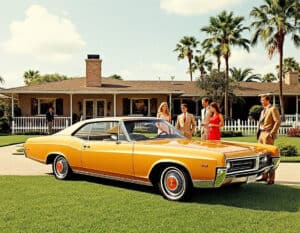
Nudge marketing beginnings: in 1956, a Chrysler engineer named Virgil Exner introduced the concept of “Forward Look” styling — cars that appeared to be moving even while parked. Buyers responded. Sales climbed. Nobody told customers they had to buy. Nobody ran fear campaigns about missing out on this design. The product simply looked right, and that was enough.
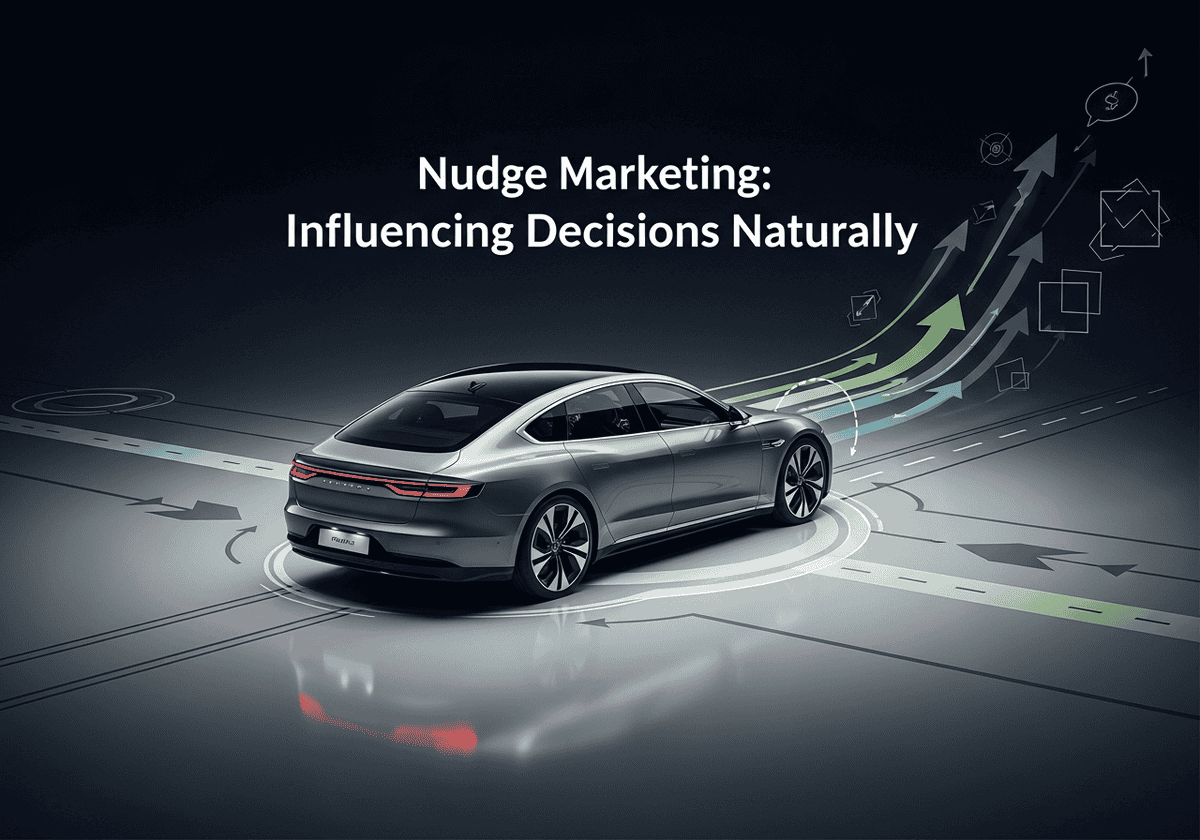
That is, in its crudest form, the intuition behind nudge marketing: structure the environment so the desired behavior feels natural, obvious, and low-effort. No coercion. No manipulation. Just architecture.
The term “nudge” effectively entered formal marketing and policy discourse in 2008, courtesy of behavioral economist Richard Thaler and legal scholar Cass Sunstein. Their book “Nudge: Improving Decisions About Health, Wealth, and Happiness” laid out a framework for what they called “libertarian paternalism” — the idea that you can guide people toward better (or commercially preferred) decisions while leaving their freedom of choice entirely intact. Thaler would later win the Nobel Prize in Economics in 2017, in part for this work.
For marketers, the book was a quiet revolution. It reframed the entire question of persuasion:
instead of asking “how do we convince people?” the more productive question became “how do we design the context so people convince themselves?”.
Very complementary to this article, in our serie about marketing technics, you may also be interested in these two:

What Is Nudge Marketing?
A nudge, in Thaler and Sunstein’s definition, is “any aspect of the choice architecture that alters people’s behavior in a predictable way without forbidding any options or significantly changing their economic incentives.” The key phrase is “choice architecture” — the design of the environment in which decisions get made.
Nudge marketing applies this framework commercially. It is the deliberate design of customer touchpoints — digital interfaces, physical retail environments, pricing structures, communication sequences, product packaging, and more — to guide purchasing behavior, retention, and engagement by working with how humans actually think, rather than how economic theory imagines they think.
The distinction from standard marketing tactics is important and often misunderstood: nudge marketing does not use persuasive arguments. It does not explain why a product is good. It does not offer incentives. It changes the context around the decision itself. Where advertising says “here is why you should buy this,” a nudge says “here is where the buy button is, and it is larger than the cancel button, and it is green, and you only have to click once.”

Three conditions define a true marketing nudge:
- The alternative options remain available. A nudge does not remove choices. It changes how they are presented. If a default setting auto-enrolls users in email newsletters, the option to opt out must genuinely exist and be accessible.
- The behavior change is predictable. Nudges work because they exploit known, documented patterns of human cognition. The nudge designer understands the psychology behind the intervention.
- The change is made transparently or neutrally — not through deception or manufactured urgency that is demonstrably false.
This third condition is where most of the ethical debate concentrates, and we will return to it. But first, the psychology.
The Fake Fly @Schiphol Airport Toilets Example

Because no nudge marketing article would be complete without that famous example … The Schiphol Airport urinal fly is one of the most cited examples in applied behavioral design, and it earns that status because it works through a mechanism that bypasses every layer of conscious resistance:
In the early 1990s, the Amsterdam airport’s facilities manager Aad Kieboom etched a small image of a housefly into the porcelain of men’s urinals, positioned just above the drain. “Spillage” dropped by approximately 80%. No signage. No fines. No appeals to cleanliness or civic responsibility. The intervention succeeded because it exploited a hardwired targeting reflex — men aim at things. The fly provided a focal point that the blank porcelain did not, and the visual target was sufficient to redirect behavior at the moment of action, which is precisely when behavioral interventions are most effective. What makes this psychologically significant is not the cleverness of the idea but the mechanism behind it: the behavior change was achieved entirely within System 1 processing. No deliberate thought was required, solicited, or useful. The user never formed an intention to aim more accurately — he simply did, because the environment changed.
As seen in the behavioral chapter hereafter, the marketing and policy implications of the fly are more consequential than the anecdote suggests. It is a pure demonstration that behavior is substantially a product of environmental design, not character or intention. Traditional facilities management had approached the spillage problem as a compliance issue — posters, cleaning schedules, social pressure — which are all System 2 interventions applied to a System 1 behavior. They failed predictably.
The fly worked because Kieboom diagnosed the actual mechanism of the behavior rather than its surface appearance.
For marketers, the translation is direct: most conversion and engagement problems that get treated as messaging problems are actually architecture problems. The customer is not failing to be persuaded; the environment is failing to channel an existing impulse toward completion. The fly did not create a new preference. It gave an existing one somewhere to go.
The Behavioral Science Foundations
Nudge marketing draws heavily from decades of behavioral economics and cognitive psychology research. Understanding the underlying science is not optional for practitioners — it is what separates principled nudge design from guesswork.
System 1 vs. System 2 Thinking
Daniel Kahneman’s dual-process theory, popularized in “Thinking, Fast and Slow” (2011), is the central intellectual framework.
- System 1 thinking is fast, automatic, and effortless.
- System 2 is slow, deliberate, and effortful.
The vast majority of everyday decisions — including most purchasing decisions — are made via System 1.
Nudge is almost entirely an intervention at the System 1 level. When a streaming platform pre-selects an annual subscription as the default, it is betting that most users will not activate System 2 to evaluate whether monthly billing would be cheaper. And for a significant portion, that bet pays off.
Pro tip: distinguish between nudges that serve users and nudges that extract from them: not all nudges are equivalent. A default that helps users avoid a decision they would regret creates long-term value. A default that charges users for a service they did not consciously select creates short-term revenue and long-term churn, chargebacks, and brand damage. The financially rational approach is to concentrate nudge investment on choices where the nudged outcome genuinely serves the customer, and to remove defaults and friction-based mechanics where they do not. Users who feel manipulated tell others.
Status Quo Bias
People disproportionately favor the current state of affairs. Changing anything feels like a loss, and loss aversion — the tendency to feel losses approximately twice as acutely as equivalent gains — reinforces inertia.
Defaults exploit this directly. Whatever option is presented as the “default” inherits the psychological weight of the status quo, even when it was only set yesterday by a product manager.
The research on this is extensive. William Samuelson and Richard Zeckhauser first documented status quo bias formally in 1988, and subsequent studies have replicated it across contexts ranging from retirement savings enrollment to organ donation registries to software preferences.
Salience and Attention
Humans allocate attention unevenly. We notice what is large, brightly colored, moving, or positioned at eye level. We systematically ignore what is small, gray, peripheral, or requires scrolling.
Choice architecture that leverages salience — by making a preferred option more visually prominent without hiding alternatives — is among the most widely deployed nudge strategies in digital marketing.
Social Proof
Robert Cialdini identified social proof as one of the fundamental principles of influence. When people are uncertain about the correct behavior, they look to what others are doing. This is not shallow conformism — it is a rational heuristic for navigating uncertainty. If a thousand people chose the same hotel room configuration, it probably is not terrible.
In nudge terms, social proof functions as an informational shortcut that reduces decision friction. Displaying review counts, “bestseller” labels, or “X people are looking at this right now” notifications all activate this mechanism — though the last example edges toward manufactured urgency and raises distinct ethical issues.
Framing Effects
The same factual information presented in different frames produces different decisions. Amos Tversky and Daniel Kahneman demonstrated this with their famous Asian disease problem (1981): when a public health intervention was described as saving 200 lives (gain frame), people preferred it over a certain-loss version, even when the statistical outcomes were mathematically identical.
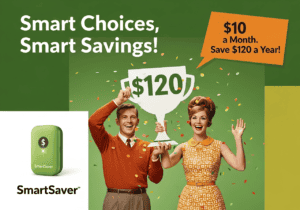
In marketing, this translates directly:
“95% fat-free” and “5% fat” are the same product.
“Save $120 a year” and “just $10 a month” describe the same price.
The frame shapes the emotional response, which shapes the decision.
Cognitive Load and Decision Fatigue
Making decisions consumes mental resources. As a decision sequence becomes longer or more complex, decision quality degrades — a phenomenon documented by Shai Danziger et al. in their work on Israeli parole board decisions (2011), where favorable rulings dropped sharply as judges progressed through their daily case load. Nudge design frequently works by reducing the number of decisions required, or by simplifying the information environment so that the preferred option requires the least cognitive effort to choose.
Nudge Marketing Core Mechanisms and Techniques
The following are the primary mechanisms through which nudge marketing operates in practice. Each has documented evidence behind it and a specific domain of application.
Defaults ChoiceThe most powerful nudge tool available. Setting a default means the desired outcome occurs without any active choice from the user. Organ donation rates in countries with opt-out systems (default = donor) are dramatically higher than in opt-in countries, despite similar stated preferences in surveys. In SaaS marketing, default-on product features drive adoption. In e-commerce, pre-filled forms, pre-selected quantities, and auto-renewed subscriptions all use default mechanics. The strength of defaults is also their ethical liability. When the default serves the business at the customer’s expense — say, a pre-ticked box adding insurance to a travel booking — the line between nudge and dark pattern gets thin quickly. | SimplificationReducing the complexity of a choice environment increases decision completion rates. This includes shortening forms, eliminating unnecessary confirmation steps, reducing the number of options presented, and clarifying what each option means in plain language. Amazon’s one-click purchase patent — held from 1999 to 2017 — was fundamentally a simplification nudge. Fewer clicks meant fewer opportunities for reconsideration. |
Timing and SequencingWhen an ask is made matters as much as what is being asked. Commitment and consistency effects (another Cialdini principle) mean that someone who has already agreed to a small request is more likely to agree to a larger follow-up. Upsell sequences, cross-sell moments at checkout, and post-purchase surveys that gather positive sentiment before requesting a review all exploit timing deliberately. |  |
Framing and AnchoringPrice anchoring is one of the most commercially consequential applications of framing. By displaying a higher price first — a crossed-out “original” price, a premium tier at the top of a pricing page — the actual price looks comparatively modest. The anchor does not need to be a price the customer would ever have paid; it just needs to exist as a reference point to activate relative evaluation. Menu engineering in restaurants does this visually: placing the highest-margin item in the top-right position of a menu (where eye-tracking research shows the first fixation typically lands) increases its order rate without any price change. | Feedback and Progress IndicatorsProgress bars, completion percentages, achievement indicators, and streak counters all provide feedback that activates goal-gradient behavior — the documented tendency to accelerate effort as a goal comes closer to completion. LinkedIn’s profile completion bar is an enduring example: it does not offer any explicit reward for reaching 100%, but it reliably drives profile completion because the incompleteness is psychologically uncomfortable. |
Social Norms MessagingTelling people what their peers are doing changes behavior, particularly when the norm is descriptive (“most people in your neighborhood use less energy than you”) rather than injunctive (“you should use less energy”). Researchers found that social comparison messaging reduced residential energy consumption measurably, where direct appeals to environmental responsibility had minimal effect. | Commitment DevicesAllowing customers to pre-commit to a behavior helps bridge the gap between intention and action. Email reminders to complete an abandoned cart, “save for later” functions, and waitlists for sold-out products all function as soft commitment devices. The customer has signaled intent; the commitment device keeps that intent visible until conversion. |
Pro tip: map the decision architecture before you optimize any single element: most teams approach nudge optimization element-by-element: test the button color, test the headline, test the default selection. This produces only local optima. The more valuable work is to map the entire decision journey — every point where a user makes or defers a choice — and identify where the architecture is creating unnecessary friction, ambiguity, or competing signals. A default setting that is being actively overridden at a 60% rate is telling you something that no button-color test will reveal.
Real-World Examples Across Industries

E-Commerce: Amazon
You do not become market leader by chance, but thanks to strategies, big efforts and continuous trials; Amazon’s entire purchasing flow is a masterclass in applied nudge design. One-click checkout reduced friction to near zero. “Customers who bought this also bought…” activates social proof while reducing search costs. The Prime membership default — annual billing over monthly, prominently presented — uses default framing. Lightning deals create genuine scarcity anchored against a time limit. Separately, the “frequently bought together” bundles anchor a higher total price alongside individual item prices, making the bundle feel economical even when it is not.
None of these mechanics require persuasion in the advertising sense. They work because of how the choice environment is structured, not because of what Amazon says about its products.
Pro tip: test for effect size, not just statistical significance: a nudge intervention can be statistically significant and commercially irrelevant. If a social proof message increases checkout completion by 0.3%, that may or may not justify the implementation cost. Always size your tests to detect meaningful effects, and report effect sizes alongside p-values. The nudge literature suffers from a publication bias toward positive results — replications in commercial contexts often find smaller effects than the original academic studies.

Health and Behavior: Cafeteria Design
In one of the original nudge studies, researchers demonstrated that simply repositioning food items in a school cafeteria — placing fruit at eye level and near the cash register, moving desserts to the back — increased healthy food selection by 20–25%. No items were removed. No prices changed. No nutrition education was delivered. The physical architecture of the choice environment did the work.
Food manufacturers have applied this in reverse: positioning high-margin products at eye level in supermarkets, placing impulse items near checkout lanes, and packaging snack products in portions sized to encourage repeat opening. These are architectural nudges in service of commercial outcomes.
SaaS and Subscriptions: SpotifySpotify’s free-to-premium conversion flow uses several nudge mechanisms simultaneously. The free tier is designed with deliberate friction — shuffle-only mode on mobile, audio advertisements, limited skips — while the premium tier removes these frictions entirely. The contrast activates loss aversion: the user has already experienced the product without the annoyances, and paying feels less like acquiring a new benefit than recovering something that was taken away. The free trial further reinforces this by setting a behavioral default: use without payment, so that cancellation becomes the active, effortful choice rather than renewal. | Travel: Booking.comBooking.com’s interface deploys nudge mechanisms at high density. Social proof indicators (“72 people are looking at this property right now”) create urgency. Scarcity signals (“Only 2 rooms left!”) activate loss aversion. Review counts and scores provide social norms anchoring. Sequential commitment — selecting dates, then guests, then room type — creates investment before price display, which increases completion rates. Some of these, particularly the manufactured urgency notifications, have drawn regulatory scrutiny in several jurisdictions, pointing again to the ethical complexity of the field. |
Nudge Marketing vs. Other Marketing Approaches
Complementary to the technics of this chapter, you may also be interested in these 2 psychology articles on Cognitive Science Tricks for Games and Marketing, starting with:

To understand where nudge marketing sits in the broader landscape, it helps to compare it explicitly with the approaches it most closely resembles — and most importantly differs from.
vs. Persuasion Marketing
Persuasion marketing operates through argument, evidence, and appeals to reason or emotion. It asks the consumer to update their beliefs or preferences based on information. Nudge marketing does not attempt to change preferences at all — it works within existing preferences and cognitive tendencies to make a particular behavior more likely.
The distinction matters: a persuasive ad explaining the benefits of an electric vehicle is trying to convince you that you should want one. A dealership that places the test drive sign-up form adjacent to the vehicle you just admired is nudging you to act on a preference you may already have.
In practice, most marketing campaigns combine both. The advertising builds preference; the choice architecture converts it.
vs. Incentive-Based Marketing

Discount offers, loyalty rewards, referral bonuses, and free shipping thresholds are incentive-based. They change the economic calculus of a decision by altering the payoff structure. Nudges, by definition, do not significantly alter economic incentives — they change how choices are presented, not what the choices actually cost or deliver.
The practical implication is important for budget allocation. Nudges are cheap to implement and scale well. A default setting costs nothing to maintain after implementation. An incentive-based program has ongoing marginal costs. Where incentives build acquisition, nudge mechanisms often drive retention and conversion at lower cost.
There is also a habituation difference. Customers trained on incentives expect them and discount their absence. Customers influenced by architectural nudges are typically unaware of the nudge, which means the influence persists without conditioning a response that has to be continuously fed.
vs. Dark Patterns
This comparison is the most sensitive and important. Dark patterns are deceptive user interface designs that trick people into actions they did not intend or would not have chosen with clear information. Coined by UX designer Harry Brignull in 2010, the term covers practices like hidden opt-out checkboxes, confirm-shaming (“No thanks, I prefer higher energy bills”), roach-motel subscription flows where cancellation is deliberately obscured, and misdirection that draws attention away from a cheaper option.
The surface mechanics of dark patterns and nudge marketing can look identical. Both manipulate visual hierarchy, defaults, and sequencing.
The difference is in intent and transparency.
A nudge steers toward a behavior that serves a real user interest (or at least does not harm it) through means the user could recognize and accept if they understood them. A dark pattern exploits cognitive weaknesses against the user’s own interests through deliberate obscurity.
Regulatory bodies in the EU, UK, and US are increasingly treating dark patterns as consumer protection violations. The FTC has issued guidance on the topic. The EU’s Digital Services Act and GDPR enforcement have cited specific dark pattern practices. Practitioners who blur the line between nudge and dark pattern face genuine legal and reputational exposure.
vs. Content Marketing
Content marketing operates through education, information provision, and authority building. It does not try to influence a decision at the point of choice — it builds the mental model and trust before the customer reaches a decision context. Nudge marketing operates at the decision point itself.
These approaches are complementary rather than competing. Content marketing builds preference and trust; nudge design converts that preference into action efficiently. Companies that invest heavily in content but neglect choice architecture often find conversion rates that underperform the quality of their marketing. The preference exists; the architecture is leaking it.
vs. Behavioral Targeting
Behavioral targeting uses data about individual users’ past behavior to serve customized content and offers — personalized recommendations, retargeting ads, individualized pricing. Nudge marketing uses general cognitive principles that apply across populations regardless of individual behavior history.
The two work well together but are not the same thing. Nudge mechanisms function even without individual data. Behavioral targeting makes them more precise. A default upsell on a checkout page is a nudge; the same upsell appearing only to users who have previously viewed that product category is nudge mechanics plus behavioral targeting.
Pro tip: use nudges to reduce decision regret, not just increase conversion: the most durable nudge applications reduce post-purchase regret. A well-designed purchase flow that helps users choose the right product — through progressive filtering, honest comparison tables, and configuration defaults based on stated preferences — produces customers who are satisfied with their choices. A flow optimized purely for conversion without regard for product fit produces a short-term revenue number and a long-term return and churn problem. Conversion rate is a lagging indicator of decision quality; satisfaction and retention are better ones.

The Ethics Question of Nudge Marketing
Nudge marketing carries a genuine ethical tension; the libertarian paternalism framing that Thaler and Sunstein used — “we’re helping people make better choices while preserving their freedom” — can be criticized:
- The first criticism is epistemic: who decides what a “better” choice is? When a pension fund default steers workers toward a specific fund with higher management fees, the default mechanism is neutral but the outcome is not. When a food delivery platform defaults to the highest-commission restaurant option, the nudge architecture serves the platform, not the user.
- The second criticism is autonomy-based. Even if every nudge genuinely served users, there is an argument that systematically bypassing deliberate reasoning — habituating people to System 1 decisions in contexts where System 2 engagement would serve them — erodes the capacity for autonomous choice over time. This is a serious argument, not a fringe concern.
- The third criticism is distributional. Nudges often work better on people with less time, less education, or higher cognitive load — populations who may be less equipped to recognize and override architectural influences. A friction-heavy cancellation flow exploits the time poverty of working parents more than it exploits the time of a person with a flexible schedule and a high tolerance for bureaucratic navigation.
None of these criticisms invalidate nudge marketing as a practice. They do establish that it requires the same ethical scrutiny as any other tool with significant behavioral effects — which is more scrutiny than it typically receives in most commercial contexts.
Without being our legal advise, a practical standard could worth holding to: if your nudge design requires that users remain unaware of it to be effective, examine it carefully. If it would survive transparent disclosure — “we set this default because most users find it preferable, and here is how to change it” — it is on defensible ground. If disclosure would undermine it entirely, that is diagnostic information.
Pro tip: audit your nudges against regulatory developments: the regulatory landscape around digital choice architecture is changing faster than most legal teams have caught up with. The EU’s Digital Markets Act, the UK’s Competition and Markets Authority guidance on online choice architecture, and the FTC’s increasingly assertive position on subscription dark patterns all create specific prohibitions and disclosure requirements. Practices that were industry standard in 2018 are being litigated in 2024. Annual audits of your choice architecture against current guidance are not optional for any company with meaningful consumer exposure.
Pro tip: document your nudge rationale: for each default, each sequencing choice, each salience intervention — maintain internal documentation of the user benefit case. If a regulator or journalist asks why you made a particular design choice, “because it increased conversion” is not a defensible answer on its own. “Because data showed users who selected this option had higher satisfaction scores and lower churn” is. The documentation also forces the internal discipline of articulating whether a nudge is genuinely beneficial or purely extractive.
Bonus: Measuring Nudge Effectiveness
Nudge interventions sit in an awkward measurement position. Because they operate below the level of conscious attention, traditional survey-based methods (brand tracking, stated preference research) are largely blind to them. The right measurement framework combines behavioral data with appropriate controls.
A/B and Multivariate TestingThe well known standard marketing and ecommerce tool. For digital nudge interventions — default settings, button placement, social proof copy, progress indicators — controlled experimentation is both feasible and essential. The key design considerations are sample size (most nudge effects are small to moderate, requiring larger samples than teams often expect), duration (avoid novelty effects by running tests long enough for initial curiosity to stabilize), and metric selection (downstream metrics like retention and repeat purchase, not just conversion rate). | Natural ExperimentsSome nudge changes cannot be run as controlled experiments — full site redesigns, changes to physical retail layouts, new onboarding flows that apply to all new users. In these cases, quasi-experimental designs using pre/post comparisons with appropriate controls are the workable alternative. Difference-in-differences analysis, where available, can isolate the effect of the intervention from background trends. |
Downstream Cohort AnalysisConversion rate alone is insufficient. A nudge that increases conversion by steering customers toward a poorly matched product will show up as churn, support tickets, and negative reviews within 60–90 days. Cohort analysis comparing satisfaction, retention, and lifetime value across nudge treatment groups is the measure that actually tells you whether a nudge is creating value or borrowing against future trust. | Friction MappingSession recording tools, funnel drop-off analysis, and heatmap data can identify where users are encountering decision friction — hesitating, reversing, abandoning — that nudge interventions could address. This is diagnostic rather than evaluative, but it is often the starting point for the highest-impact nudge opportunities. |
Pro tip: account for context sensitivity: nudges that work in one context frequently do not transfer to others. Loss-frame messaging outperforms gain-frame messaging in many consumer contexts, but not universally — it depends on the baseline emotional state of the audience, the product category, and the stakes involved. Scarcity signals drive urgency for discretionary purchases but can create anxiety in high-stakes categories like healthcare or financial services, where anxiety reduces rather than accelerates decision-making. Test in context, not in theory.
Conclusion

Nudge marketing is not a campaign strategy. It is not a channel. It is not a set of persuasive messages.
It is a design philosophy applied to the structure of decisions — a commitment to understanding how humans actually make choices and building commercial environments that work with that reality rather than against it.
Its commercial value is substantial and well-documented. Default effects in pension enrollment have shifted retirement savings patterns at scale. Simplification interventions in e-commerce have demonstrably reduced cart abandonment. Social norm messaging has driven compliance and adoption in contexts where direct persuasion failed. The mechanism is legitimate and the effects are real.
Its risks are equally real: the same architectural tools that help users make better decisions can be weaponized to trap them in subscriptions they did not want, obscure options they would prefer, and extract value through the exploitation of cognitive limitations. The line is not always obvious in practice, but the intent behind the design — does this serve the user? — is a workable starting test.
What separates mature nudge practice from the naive version is exactly this accountability. Not just: does this intervention work? But: who does it work for, under what conditions, and at whose expense? The practitioners who answer those questions rigorously will build customer relationships that compound over time. Those who treat nudge mechanics as extraction tools will find the short-term conversion gains erased by churn, regulation, and the reputational cost of being publicly called out for it — which, in an era of active consumer rights organizations and aggressive regulatory scrutiny, is increasingly a question of when rather than if.
References Listed Above and Further Reading
- Thaler, R.H. & Sunstein, C.R. (2008). Nudge: Improving Decisions About Health, Wealth, and Happiness. Yale University Press.
- Kahneman, D. (2011). Thinking, Fast and Slow. Farrar, Straus and Giroux.
- Cialdini, R.B. (1984). Influence: The Psychology of Persuasion. Harper Business.
- Thaler, R.H. & Benartzi, S. (2004). Save More Tomorrow: Using Behavioral Economics to Increase Employee Saving. Journal of Political Economy, 112(S1), S164–S187.
- Tversky, A. & Kahneman, D. (1981). The Framing of Decisions and the Psychology of Choice. Science, 211(4481), 453–458.
- Samuelson, W. & Zeckhauser, R. (1988). Status Quo Bias in Decision Making. Journal of Risk and Uncertainty, 1(1), 7–59.
- Sunstein, C.R. (2014). Why Nudge? The Politics of Libertarian Paternalism. Yale University Press.
- Behavioural Insights Team (2012). Applying Behavioural Insights to Reduce Fraud, Error and Debt. Cabinet Office, UK Government.
- Brignull, H. (2010). Dark Patterns: User Interfaces Designed to Trick People. darkpatterns.org.
- Danziger, S., Levav, J., & Avnaim-Pesso, L. (2011). Extraneous Factors in Judicial Decisions. Proceedings of the National Academy of Sciences, 108(17), 6889–6892.
FAQ
How does nudge marketing differ from traditional incentive-based persuasion?
Unlike traditional marketing which relies on direct incentives like discounts or overt persuasion, nudging alters the “choice architecture” to influence behavior without restricting options. It leverages subconscious cognitive biases to make the desired action the path of least resistance for the consumer.
What is the strategic role of choice architecture in digital product design?
Choice architecture refers to the intentional design of the environment in which consumers make decisions, such as the order of products on a page or the phrasing of a call-to-action. By organizing these elements strategically, marketers can guide users toward high-value outcomes while maintaining the user’s sense of autonomy.
How does Dual Process Theory (System 1 and System 2) underpin nudge effectiveness?
Nudges primarily target “System 1” thinking, which is fast, automatic, and prone to heuristics, rather than the logical and effortful “System 2.” By appealing to these mental shortcuts, marketers can bypass analytical friction and drive immediate, intuitive conversions.
Why is the “Default Bias” considered the most powerful tool in the nudge arsenal?
Humans have a strong tendency to stick with pre-selected options because they imply a recommendation and minimize the cognitive effort required to choose. Setting the most beneficial or profitable option as the default can significantly increase adoption rates without removing the customer’s ability to opt-out.
How can the “Decoy Effect” be used to optimize high-ticket pricing strategies?
By introducing a third, less attractive “decoy” option, marketers can make a specific target product appear much more valuable by comparison. This technique shifts the consumer’s focus from the absolute price to the relative value, nudging them toward the more expensive “middle” or “premium” tier.
What is the “IKEA Effect” and how does it function as a retention nudge?
The IKEA Effect suggests that consumers place a disproportionately high value on products they have partially created or customized themselves. In marketing, nudging users to invest small amounts of effort—like setting up a profile or customizing a dashboard—creates a psychological “sunk cost” that boosts long-term loyalty.
How do professionals distinguish between ethical nudging and “sludge” or dark patterns?
Ethical nudges are transparent, easy to opt out of, and designed to improve the user’s welfare, whereas “sludge” uses friction to make beneficial actions (like canceling a subscription) intentionally difficult. Professionals use the “transparency test” to ensure that if the nudge were made public, the consumer would still feel the brand is acting in their best interest.
How does “Anchoring” influence price perception during the customer journey?
Anchoring occurs when the first piece of information presented—such as an original “was” price—serves as a mental reference point for all subsequent judgments. By establishing a high anchor early, marketers make the final offer seem like a significant bargain, regardless of its actual market value.
What is the impact of “Social Proof” on conversion velocity in e-commerce?
Social proof nudges, such as “15 people bought this in the last hour,” leverage the human instinct to follow the herd to reduce perceived purchase risk. This technique creates a sense of safety and urgency, effectively shortening the consideration phase of the buyer’s journey.
How should marketers manage “Cognitive Load” to prevent decision paralysis?
When faced with too many choices, consumers often experience “choice overload” and fail to make any decision at all. Nudge marketing solves this by using filters, “expert picks,” or simplified categories to reduce mental effort and guide the user toward a manageable subset of options.
What metrics beyond Conversion Rate (CR) are essential for measuring nudge effectiveness?
Professionals track “Behavioral Lift,” which measures the incremental change in specific actions compared to a control group, and “Persistence,” which evaluates if the behavior continues after the nudge is removed. Additionally, monitoring “Customer Sentiment” ensures that subtle nudges aren’t being perceived as manipulative or annoying over time.
How is AI-driven personalization evolving the future of nudge marketing?
Modern AI combined with massive individual user’s data collection allows for “hyper-nudging,” where choice architecture is dynamically adjusted in real-time based on an individual’s specific behavioral history and psychological profile. This moves the strategy away from “one-size-fits-all” biases toward personalized interventions that trigger the right heuristic for the right person at the right moment.
Glossary of Terms Used
Conversion Rate (CR): the percentage of visitors to a website or landing page who complete a desired action, such as making a purchase or signing up for a newsletter, calculated by dividing the number of conversions by the total number of visitors.
Fundamental Theorem of Calculus (FTC): establishes the relationship between differentiation and integration, stating that if a function is continuous on an interval, the integral of its derivative over that interval equals the difference in the function's values at the endpoints.
Software as a Service (SaaS): a software distribution model where applications are hosted in the cloud and accessed via the internet, typically on a subscription basis, allowing users to utilize software without installation or maintenance on local devices.
User experience (UX): the overall satisfaction and perception of a user when interacting with a product, system, or service, encompassing usability, accessibility, design, and emotional response throughout the entire interaction process.
User Interface (UI): a system that enables interaction between users and software applications, encompassing visual elements, controls, and overall layout to facilitate user tasks and enhance experience.