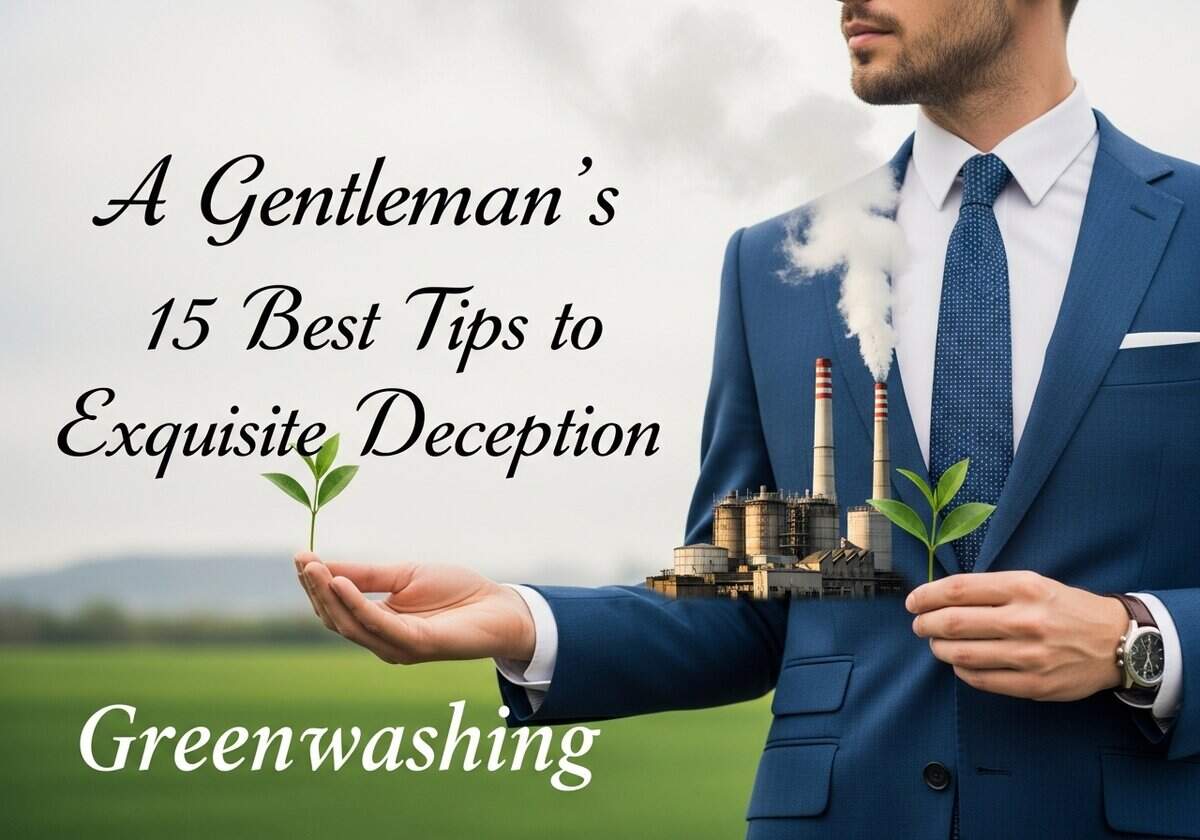
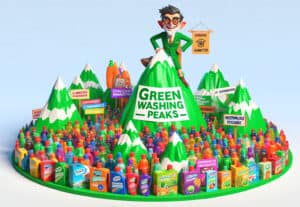
Ah, so you’ve tired of the milquetoast morality of “genuine sustainability” (aka greenwashing)? You wish to ascend from the dreary lowlands of ethical conduct to the sun-drenched, profitable peaks of pure, unadulterated artifice? Excellent. It seems you are ready for a proper greenwashing education.
Forget ethics; that’s a hobby for the uninspired. We are artists, and our canvas is the consumer’s gullibility. Pay close attention, my aspiring Machiavelli of marketing, for this is a masterclass in the fifteen secret sacred arts of greenwashing.
Tip: we really recommend reading the English version of this article (versus the automatic translations), it is much … greener!
Disclaimer #1: pray, let it be understood, for the benefit of those with a less developed sense of the theatrical, that the following masterclass is a work of pure, theoretical greenwashing artistry. Should any of these exquisitely crafted stratagems happen to bear a fleeting, or indeed a startlingly precise, resemblance to the public pronouncements or corporate manœuvres of any actual entity, living or deceased, one must dismiss it as a most unfortunate and amusing coincidence. Perish the thought that real-world corporations, in all their earnest, plodding mediocrity, could ever possess the requisite panache and intellectual fortitude to execute such sublime deceptions. Reality, it seems, is so often a pale and clumsy imitation of truly superior fiction.
Disclaimer #2: furthermore, one must insist that these fifteen principles below, heretofore elucidated, are offered not as a pedestrian manual for corporate malfeasance, but as a purely intellectual exercise for the discerning mind. Consequently, we shall abrogate any and all moral or legal culpability in their perfect (!) application. Should an acolyte’s masterful execution of these sublime arts lead to any… unfortunate entanglements with the clumsy machinations of the law, it must be considered a testament not to a flaw in the teachings, but to a lamentable deficiency in the practitioner’s own finesse. Navigating such terrestrial squabbles is, after all, a practical test of one’s aptitude, and we take no responsibility for those who, in their haste, trip over the vulgarities of litigation.
A Gentleman’s Guide to Exquisite Deception
1. The Art of the Judicious Omission (aka The Hidden Trade-Off)
One must learn to curate reality.
This masterstroke involves spotlighting a single, shimmering speck of green virtue while a veritable legion of environmental sins march on, conveniently off-stage. It’s not about lying, dear boy, it’s about editing.
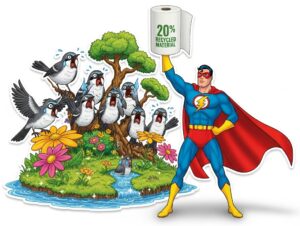
Case Study: imagine, you sell paper towels. You heroically declare they are made from “20% recycled material!” The masses swoon. Do we mention that the other 80% is sourced from the last remaining habitat of the Speckled Weeping Warbler? Good heavens, no! Why clutter their pretty little heads with such dreary details?
Expert’s Whisper: by all means, commission a Life Cycle Assessment. But do not view it as a tedious tool for self-improvement. View it as a menu. A glorious buffet of potential half-truths! Select the one, single, most flattering data point—no matter how trivial—and have your marketing department trumpet it from the heavens. The rest of the report makes for excellent kindling.
2. The Symphony of Meaningless Buzzwords (aka Vague Language)
Language is your plaything in greenwashing.
Words like “eco-friendly”, “sustainable”, “green”, and “all-natural” are wonderfully, exquisitely meaningless. They are the marketing equivalent of a firm, reassuring handshake from a man who is actively picking your pocket. They feel good, but signify nothing.
Case Study: a bottle of virulent, day-glo toilet cleaner. Slap the word “Eco-Purify” on the label. Perhaps add a leaf. Does it purify anything ecological? Of course not. It could probably dissolve a small car. But it feels cleaner, doesn’t it?
Expert’s Whisper: develop your own internal glossary. “Sustainable” means “we can sustain the profit margins”. “Eco-friendly” means “the packaging is, in theory, recyclable if left in the correct bin on a Tuesday during a month with an ‘R’ in it”. Be bold. Be vague. Be profitable.
3. The Emperor’s New Certificate (aka Lack of Proof)

Make a claim. Make it sound official. And then, in a stroke of genius, provide absolutely no evidence whatsoever. The modern consumer has the attention span of a gnat. They will see the claim, feel a pang of virtue, and move on before the question “Says who?” has a chance to form in their prosaic minds.
Case Study: your hotel chain declares it has “reduced water consumption by 30%”. A marvellous figure. Is it backed by audited data? Are there reports? My dear fellow, that’s an administrative nightmare. The claim is the thing. The proof is a vulgar optional extra.
Expert’s Whisper: if pressed for proof, which is frightfully bad form, simply direct enquiries to a non-existent “Head of Sustainability” or a web page that has been “under construction” since 2011. The sheer effort required to uncover the truth is a magnificent deterrent.
4. The Pastoral Illusion (aka Misleading Imagery)

Never underestimate the power of a nice picture of a tree. Your product could be a barrel of industrial sludge, but if the packaging features a dew-kissed leaf, a smiling panda, or a pristine mountain stream, the consumer’s brain will do the rest. They will associate your toxic waste with a lovely holiday.
Case Study: an advertisement for a monstrous, fuel-guzzling SUV. Is it shown clogging up a city street? No. It is shown parked majestically atop a mountain it could never possibly have climbed without a helicopter, as a bald eagle soars gracefully overhead. It’s not a car; it’s a communion with nature.
Expert’s Whisper: your brand guidelines should mandate the use of the colour green, Pantone 347 C if you must know. Stock photography of waterfalls should be on standby at all times. The goal is to create a visual disconnect so profound that the customer forgets your factories are currently paving over a wetland.
5. The “At Least We’re Not Arsonists” Defence (aka The Lesser of Two Evils)

This is a delightfully cynical gambit. Acknowledge that your product category is inherently dreadful, but position your particular brand of awfulness as slightly less awful than the competition. The bar is on the floor, and you are gallantly stepping over it.
Case Study: “Organic” cigarettes. You are still selling addictive carcinogens wrapped in paper, but the tobacco was grown without pesticides! It’s the “healthy” option for the discerning self-destroyer. Bravo.
Expert’s Whisper: identify the single most heinous aspect of your industry. Then, do something performatively, microscopically better. If your rivals use child labour, ensure your children are at least given a biscuit break. Then market yourselves as the “ethical choice”.
Application Exercice: find how many bullets out of 15 this trailer of the brillant movie “Thank You For Smoking” (2005) by Jason Reitman, apply in less than 3 minutes.
6. The Glorious, Unfettered Lie (aka Fibbing)

Sometimes, subtlety is for the weak. Sometimes, one must simply look the public in the eye and lie with the conviction of a saint. This requires panache, a straight face, and a well-funded legal team.
Case Study: ah, the car industry. A masterpiece. Engineering cars to physically cheat on emissions tests while running a marketing campaign about “Clean Diesel”. The sheer, unmitigated audacity is something to be studied and admired. It is the Sistine Chapel of corporate deceit.
Expert’s Whisper: this is an advanced technique. Before embarking on a lie of this magnitude, ensure your lawyers have explored every loophole and your PR team has a tearful, multi-phase apology plan ready to deploy. The key is to make the lie so enormous, so brazen, that people almost respect the nerve.
7. The Phantom Endorsement (aka Worshipping False Labels)
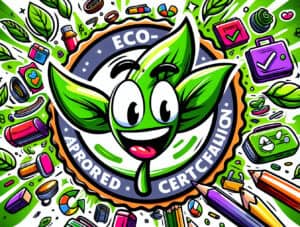
Why bother with the tedious and expensive process of getting a real eco-certification when you can simply invent your own? A well-designed logo with a leaf and some vaguely official-sounding words is all it takes.
Case Study: you create the “Eco-Veritatas Institute for Planetary Harmony”, which consists of a post office box and a website designed by your nephew. This “Institute” then bestows upon your product its highest honour: the “Veridian Leaf of Approval”. It means nothing, but it looks terribly impressive.
Expert’s Whisper: study the design of real eco-labels. Note the use of circles, sans-serif fonts, and shades of green. Create something that is visually evocative of legitimacy. Remember, you’re not selling a product; you’re selling a feeling of reassurance.
8. The Triumph of the Trivial (aka The Irrelevant Claim)
Shout from the rooftops about something that is true, but utterly irrelevant. This works beautifully because it’s technically not a lie, making it devilishly hard to prosecute.
Case Study: proudly declaring your aerosol deodorant “CFC-Free!” This has been legally mandated for over 30 years. It’s like boasting that your cornflakes are “Asbestos-Free!” It’s true, but it’s also the bare minimum of not actively poisoning your customers.
Expert’s Whisper: keep a list of banned or obsolete harmful substances. Periodically “announce” that your products no longer contain them. It gives the illusion of constant innovation and concern, when in fact you are doing precisely nothing.

9. The Artful Dodge (aka Selective Disclosure)
Your annual sustainability report should be treated not as a document of fact, but as a work of fiction.
Cherry-pick your data.
Highlight the one factory that installed solar panels while quietly omitting the fifty others that still run on burning tyres.
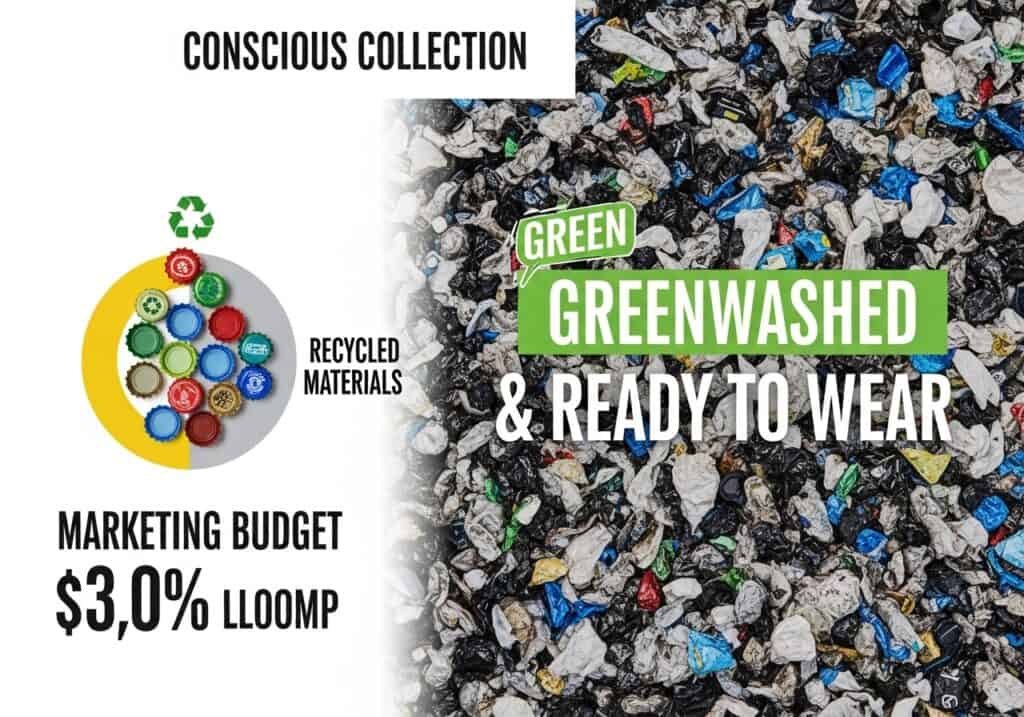
Case Study: a fast-fashion behemoth launches a “Conscious Collection” made from three recycled bottle caps and a good intention. This collection receives 99% of the marketing budget, while representing 0.1% of their actual output. The public remembers the nice, green campaign, not the mountains of polyester landfill.
Expert’s Whisper: hire a graphic designer who is a wizard with infographics. A beautiful chart can make even the most dismal data look like a resounding success. Use bright colours for your tiny achievements and muted greys for your colossal failures. Or better yet, just leave the failures out entirely.
10. The Decoy Duck (aka The Bait and Switch)

Create one, single, genuinely “green” product. Make it your hero. Talk about it incessantly. Ensure it is fiendishly expensive and produced in laughably small quantities. This halo product will cast a virtuous glow over your entire, otherwise grubby, product line.
Case Study: an oil company spends millions advertising its minuscule investment in algae biofuels. The public thinks, “Oh, how forward-thinking!” while conveniently forgetting that 99.9% of the company’s business is still, you know, fossil fuels.
Expert’s Whisper: the “green” product doesn’t even need to be profitable. Its entire purpose is to be a PR shield. Treat its marketing budget as a line item under “Reputational Risk Mitigation”.
11. The Pointed Finger (aka Greenshifting)

This is a sublime deflection. When confronted with the mountains of waste your company produces, simply turn to the public with a disappointed frown and suggest that the real problem is that they aren’t recycling properly.
Case Study: a global beverage corporation, responsible for pumping billions of single-use plastic bottles into the world, launches a heartfelt campaign about the importance of community clean-up days. They are not the problem, you see. Your laziness is.
Expert’s Whisper: frame everything in terms of “consumer choice” and “personal responsibility”. This absolves you of any and all obligation to, for instance, design better packaging or invest in alternative delivery systems. It’s their mess, after all. You just made the bottle.
12. The Strategic Silence (aka Greenhushing)
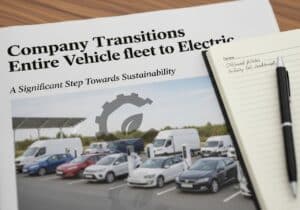
A counter-intuitive but occasionally useful tactic. If you are actually doing something good, consider saying nothing about it. This builds an aura of mystery and quiet competence, and protects you from the howling mob who will inevitably scream that your good deed wasn’t nearly good enough.
Case Study: a company transitions its entire vehicle fleet to electric. They don’t issue a press release. An industry journalist discovers it months later, and it becomes a story about their humble, authentic commitment. Delicious.
Expert’s Whisper: use this only when you are genuinely concerned that your good deeds will draw attention to your far more numerous bad ones. It is the refuge of the sophisticated sinner who understands the value of not drawing the eye of the law.
13. The Grandiloquent Overstatement (aka Exaggeration)

Take a kernel of truth and nurture it into a mighty oak of mendacity. Did your new factory design reduce emissions by 0.5%? Splendid. Announce that you are “revolutionizing the industry with our new eco-architecture that HEALS the planet!”
Case Study: an airline introduces a slightly more efficient wingtip design. Their campaign declares you can now “Fly Guilt-Free!” and “Choose the Green Skies!” The fact that air travel remains a fundamentally colossal act of atmospheric vandalism is but a minor detail.
Expert’s Whisper: use powerful, emotional verbs. Your product doesn’t “reduce”, it “eliminates”. It doesn’t “help”, it “saves”. You are not a company; you are a “movement”. Be the hero of your own story, regardless of the facts.
14. The Ever-Receding Horizon (aka Vague Corporate Goals)
Make a bold, headline-grabbing pledge to do something wonderful by a date so far in the future that everyone currently in your boardroom will be long retired or dead. “Carbon Neutral by 2075!” sounds magnificent and requires you to do precisely nothing today.
Case Study: a tech giant pledges to be “Water Positive” by 2050. It’s a lovely sentiment. They release a glossy report full of pictures of waterfalls. Is there a plan? Are there interim targets? Don’t be so tedious. The pledge is the point.
Expert’s Whisper: the key is to choose a goal that is both impossibly ambitious and utterly unfalsifiable in the short term. By the time the deadline rolls around, the goalposts will have moved, the metrics will have changed, and you can simply make a new pledge for 2125.
15. The Rigged Race (aka Misleading Comparisons)

Frame your product’s performance against a carefully selected, preferably terrible, competitor. You don’t have to be good. You just have to be better than Dave.
Case Study: your new car gets a deplorable 15 miles to the gallon. But, if you compare it only to a 1970s muscle car and a decommissioned battle tank, you can truthfully claim to have “class-leading fuel efficiency”.
Expert’s Whisper: define your own “class”. Be creative. Are you selling plastic widgets? You are now in the “Artisanal, Post-Industrial Hand-Crafted Polymer Solutions” class. You will be the undisputed leader, mainly because you are the only member.
Outro

Now go, my protégé. The world is full of well-meaning fools, and their wallets are open. Go forth and be magnificently, profitably, and pretentiously green.
It’s what the planet… deserves? No, that’s not it. It’s what the shareholders demand.
Much better.
The rest of this article is reserved for members
To limit scraping bots (currently 40,000 hits per day!),
we had to restrict access to full articles and tools to registered members only.
to access all the rest.