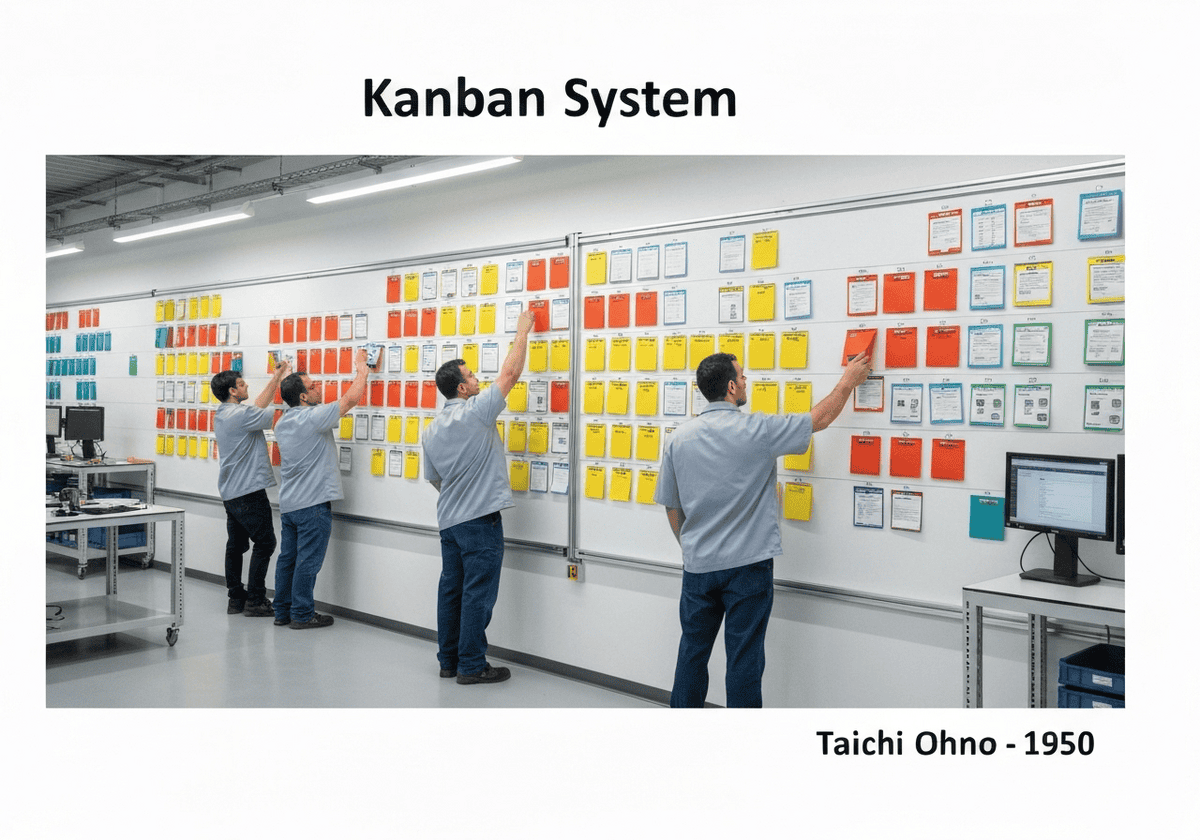
Kanban日本語で「ビジュアルカード」または「看板」を意味するスケジューリングシステムは、 トヨタ生産方式視覚的な合図(通常はカード)を使用して、アクションをトリガーし、ワークフローを管理します。これは、製造施設内または外部サプライヤーから製造施設への資材の移動の必要性を知らせる「プル」システムです。資材供給ルートの計画は、巡回セールスマン問題の応用例の中でも典型的なケースです。
(画像はイメージです)
Kanban日本語で「ビジュアルカード」または「看板」を意味するスケジューリングシステムは、 トヨタ生産方式視覚的な合図(通常はカード)を使用して、アクションをトリガーし、ワークフローを管理します。これは、製造施設内または外部サプライヤーから製造施設への資材の移動の必要性を知らせる「プル」システムです。資材供給ルートの計画は、巡回セールスマン問題の応用例の中でも典型的なケースです。
The Kanban system was developed by Taiichi Ohno at トヨタ to achieve ジャストインタイム ジャストインタイム(JIT)生産方式。その核心は、仕掛品(WIP)の量を制限することで、主要な無駄の形態である過剰生産を回避することです。最もシンプルな形では、カンバンカードが部品の入った容器に取り付けられます。下流工程の作業員がその容器から部品を使い始めると、カンバンカードを取り出して指定された回収ボックスに入れます。このカードは、上流工程に対して同じ部品の別の容器を生産するよう指示する信号として機能します。
There are two main types of Kanbans: a Production Kanban, which authorizes the production of a new batch of parts, and a Withdrawal (or Conveyance) Kanban, which authorizes the movement of parts from one workstation to another. The number of Kanban cards in circulation for a particular part directly controls the maximum amount of inventory for that part in the system. By carefully managing the number of cards, managers can control the flow and reduce WIP. The system’s visual nature makes it easy for everyone to understand the status of work and identify bottlenecks. This simplicity and visual control are key to its effectiveness in creating a smooth, efficient production flow.
カンバンシステム
(日付が不明または関連性がない場合、例えば「流体力学」などでは、その注目すべき出現時期の概算値が提示されます。)

フルサイズの画像とダウンロードは、登録会員のみが100%無料で利用できます。
> ログイン <