Product Design, Manufacturing & Innovation Resources
Home » Tying and Product Bundling

Tying and Product Bundling

1914
Economists discussing tying and product bundling strategies in a 1914 office setting.

(generated image for illustration only)

Tying is the practice of making the sale of one good (the tying good) conditional on the purchase of a second, distinct good (the tied good). This leverages market power from the tying product’s market to the tied product’s market, potentially foreclosing competition. Bundling is the related practice of offering several products for sale as one combined product.
Tying arrangements are scrutinized under competition law because they can restrict consumer choice and stifle innovation in the market for the tied good. For tying to be considered anti-competitive, several conditions typically must be met: 1) The tying and tied products must be two separate products. 2) The seller must have sufficient economic power in the tying product market to force the purchase of the tied product. 3) The tying arrangement must affect a substantial amount of commerce in the tied product market.

While often viewed negatively, not all tying or bundling is illegal or harmful. Bundling can be pro-competitive by offering consumers convenience and cost savings, such as a ‘value meal’ at a fast-food restaurant or a software suite. Courts often apply a ‘rule of reason’ to evaluate the practice, weighing its anti-competitive effects against its potential business justifications and consumer benefits. However, some forms, particularly those by a monopolist, may be deemed illegal ‘per se’. The landmark case of United States v. Microsoft Corp. famously centered on allegations that Microsoft illegally tied its Internet Explorer web browser to its dominant Windows operating system to crush competition from other browsers like Netscape Navigator.

UNESCO Nomenclature: 5311
– Micro-economics

Type

Abstract System

Disruption

Incremental

Usage

Widespread Use

Precursors

  • common law principles on restraint of trade
  • economic theories of monopoly power
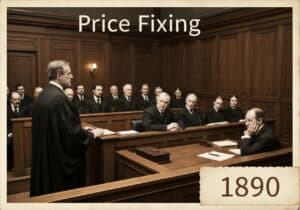
  • the Sherman antitrust act of 1890, which set the stage for more specific legislation

Applications

  • antitrust cases against technology companies (e.g., microsoft tying internet explorer to windows)
  • regulation of franchise agreements
  • analysis of software and digital platform ecosystems
  • product strategy in marketing and sales
  • legal challenges in the pharmaceutical and medical device industries

Patents:

NA

Potential Innovations Ideas

  • an ai tool for regulators to analyze digital ecosystems and identify potentially harmful product tying
  • consumer software that unbundles digital subscriptions, allowing users to pay for individual features
  • a ‘fair bundling’ certification for software companies to demonstrate their product packages are pro-competitive
  • smart contracts that enable micro-payments for individual components of a bundled service
  • consulting services that use economic models to design legally compliant and pro-consumer product bundles
  • a browser extension that calculates the standalone cost of bundled items to reveal true savings
  • policy frameworks for regulating tying in emerging markets like iot and connected home devices
  • educational platforms teaching consumers how to identify and report coercive tying arrangements
  • open-source software suites designed to compete with proprietary bundled products
  • a legal database that tracks global precedents in tying and bundling cases
Related to: tying, bundling, antitrust, Clayton act, competition law, market power, foreclosure, Microsoft case, rule of reason, monopoly leveraging.

Historical Context

Tying and Product Bundling

1890
1914
1942
1957
1957
1960
1960
1848
1910
1914
1950
1957
1957
1960
1960

(if date is unknown or not relevant, e.g. "fluid mechanics", a rounded estimation of its notable emergence is provided)

10th year anniversary

Full size images and downloads are only available, 100% free, for registered members.

> Login <