Product Design, Manufacturing & Innovation Resources
Home » Sterile Filtration

Sterile Filtration

1880
  • Charles Chamberland
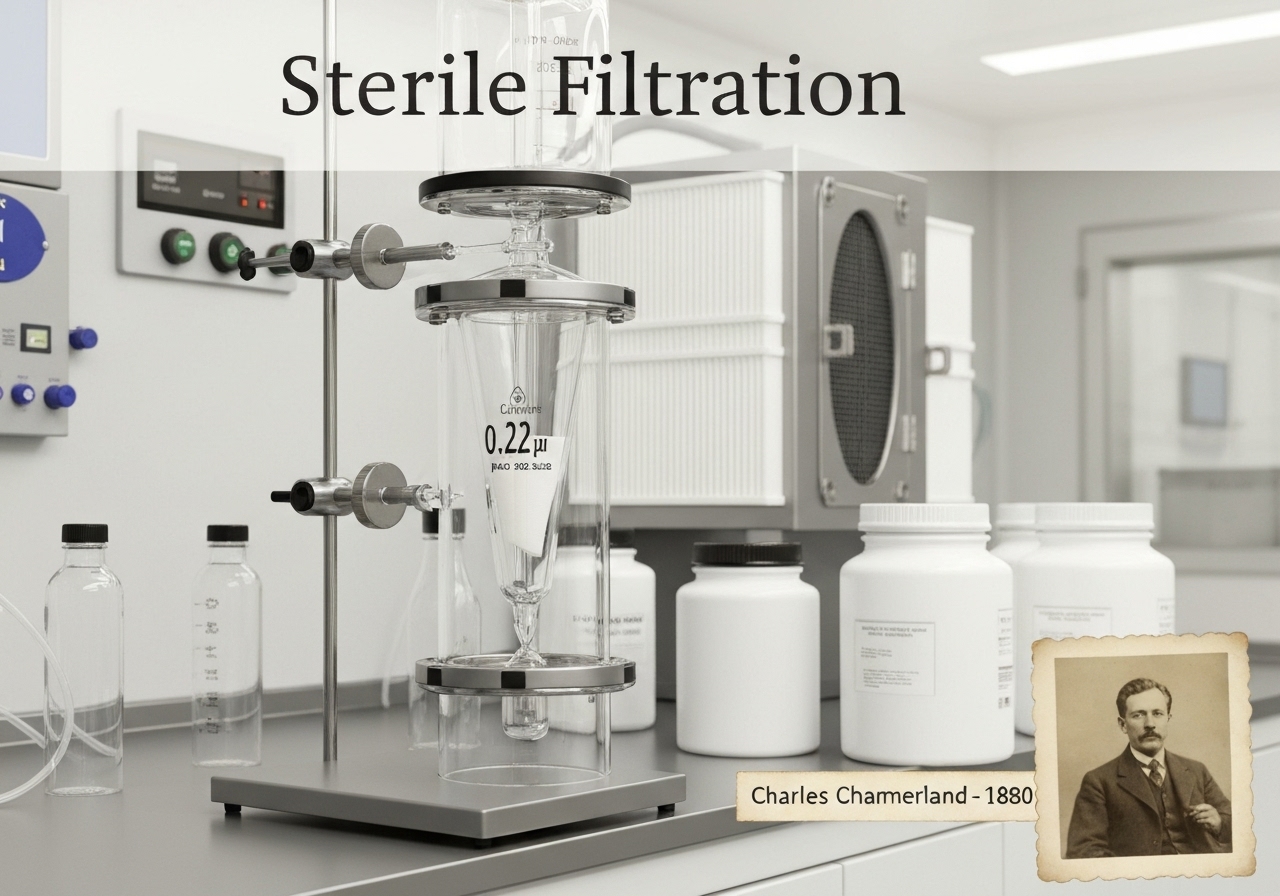
Sterile filtration apparatus for microbiological applications in a cleanroom setting.

(generated image for illustration only)

A physical sterilization method that removes microorganisms from liquids and gases by passing them through a filter with a pore size small enough to retain the microbes. A common pore size for sterilizing filtration is 0.22 micrometers (µm), which effectively removes most bacteria. This technique does not kill microorganisms but physically separates them, making it ideal for heat-labile solutions.

Sterile filtration is a unique sterilization method because it does not inactivate or kill microorganisms but rather physically removes them from a fluid (liquid or gas). The process relies on a membrane filter, a thin layer of semi-permeable material engineered with a specific pore size distribution. For sterilization, a filter with a nominal pore rating of 0.22 micrometers (µm) or smaller is typically used. This size is chosen based on the dimensions of the smallest known free-living bacteria, such as Brevundimonas diminuta, which is often used as the challenge organism for validating sterilizing-grade filters. As the fluid is forced through the filter by positive pressure or vacuum, the pores allow the fluid molecules to pass through but are small enough to trap bacteria and other microorganisms on the filter’s surface. The primary mechanism of retention is size exclusion, but other effects like electrostatic attraction and tortuous path interception can also contribute to capture. This method is indispensable for solutions containing heat-labile components, such as proteins, enzymes, vaccines, and certain antibiotics, which would be denatured or destroyed by heat-based methods like autoclaving. It is considered a non-destructive sterilization technique. However, it has limitations. It cannot remove all viruses, as many are smaller than 0.22 µm, nor can it remove dissolved endotoxins or pyrogens. The process must also be conducted under aseptic conditions to prevent recontamination of the filtered fluid downstream of the filter.

The history of filtration for microbial removal dates back to the late 19th century. In 1884, Charles Chamberland, an associate of Louis Pasteur, developed the Chamberland filter made of unglazed porcelain. This device was instrumental in early virology; it was used by Dmitri Ivanovsky in 1892 and Martinus Beijerinck in 1898 to demonstrate that the agent causing tobacco mosaic disease was smaller than any known bacterium, as it could pass through the filter. They called this new class of infectious agent a ‘filterable virus.’ These early filters were effective but slow and brittle. The technology evolved significantly throughout the 20th century with the development of modern membrane filters made from materials like cellulose esters, nylon, and polysulfone. These new materials allowed for the creation of filters with highly controlled pore sizes, greater durability, and higher flow rates, making sterile filtration a reliable and scalable process for the pharmaceutical, biotechnology, and food and beverage industries.

UNESCO Nomenclature: 2401
– Microbiology

Type

Physical Process

Disruption

Substantial

Usage

Widespread Use

Precursors

  • louis pasteur’s work on fermentation and germ theory
  • advances in porcelain and material science
  • the need to isolate bacteria and viruses from liquids

Applications

  • sterilization of heat-sensitive pharmaceuticals like vaccines and protein solutions
  • purification of water in laboratories and manufacturing
  • air filtration in cleanrooms and biological safety cabinets (hepa filters)
  • clarification and sterilization of beverages like beer and wine

Patents:

NA

Potential Innovations Ideas

  • smart filters with embedded sensors that detect pressure changes indicative of clogging or membrane failure in real-time
  • development of virus-retentive filters with pore sizes in the nanometer range for sterilizing biological products
  • self-cleaning filter systems using back-flushing or ultrasonic vibrations to extend filter life
  • biodegradable filter cartridges to reduce plastic waste in laboratory and industrial settings
  • filters with surface coatings that actively kill trapped bacteria, preventing biofilm formation and grow-through
  • 3d-printed, custom-designed filter housings optimized for specific fluid dynamics to maximize efficiency
  • integration of sterile filtration into portable water purification devices for hikers or disaster relief
  • multi-stage filters that combine different pore sizes and materials to remove a broader spectrum of contaminants, from particulates to endotoxins
  • graphene-based membranes with atomically precise pores for highly efficient and selective filtration
  • filters designed for use in microgravity environments for life support systems on spacecraft
Related to: sterile filtration, membrane filter, 0.22 micron, physical removal, heat-labile, pharmaceuticals, aseptic, hepa, virology, chamberland filter.

Historical Context

Sterile Filtration

1800
1834-01-01
1880
1902
1920
1928
1930
1800
1800-05-02
1880
1900
1910
1921
1930
1930

(if date is unknown or not relevant, e.g. "fluid mechanics", a rounded estimation of its notable emergence is provided)

10th year anniversary

Full size images and downloads are only available, 100% free, for registered members.

> Login <