Product Design, Manufacturing & Innovation Resources
घर » रोगाणुरहित निस्पंदन

रोगाणुरहित निस्पंदन

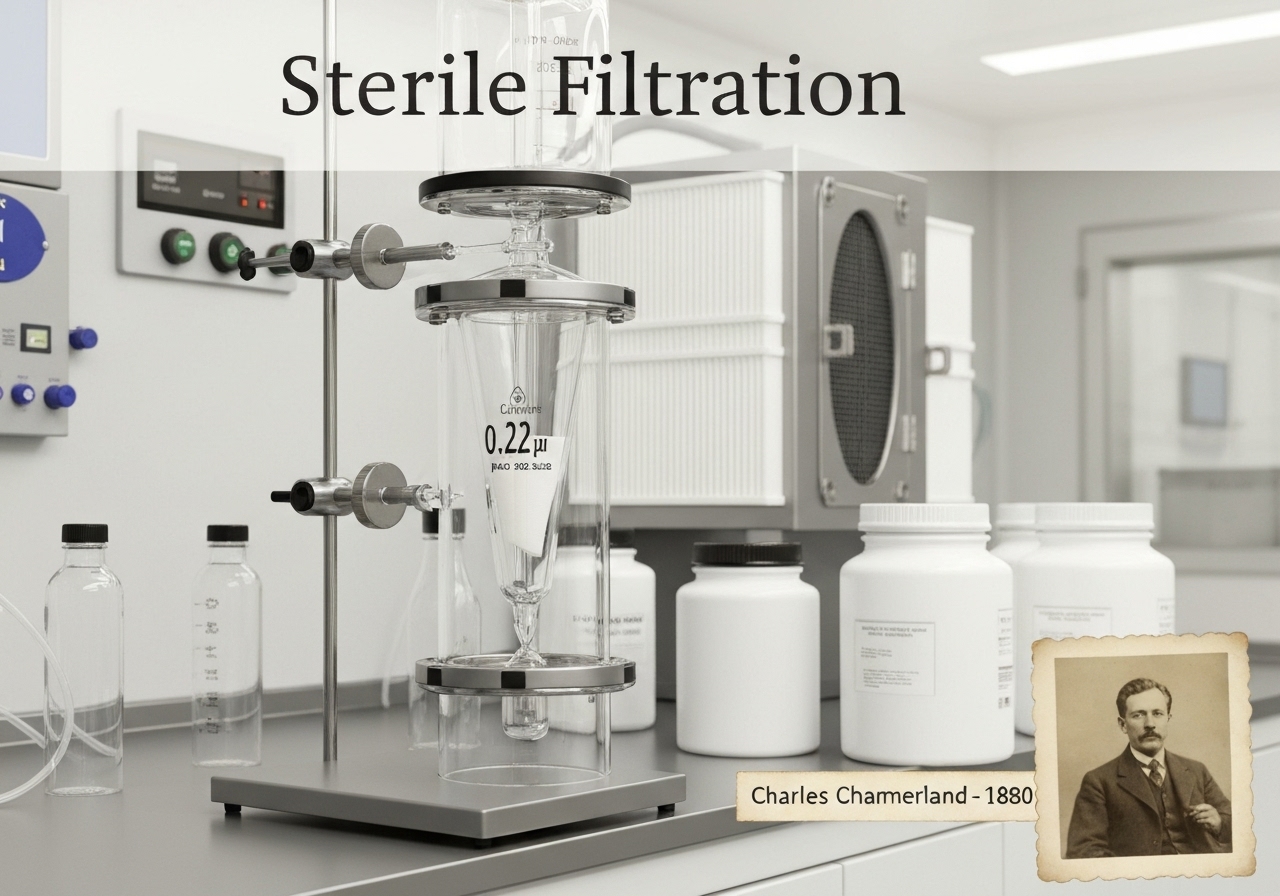
1880
  • Charles Chamberland
Sterile filtration apparatus for microbiological applications in a cleanroom setting.

(यह छवि केवल उदाहरण के लिए बनाई गई है)

यह एक भौतिक नसबंदी विधि है जो तरल पदार्थों और गैसों से सूक्ष्मजीवों को हटाने के लिए उन्हें एक ऐसे फिल्टर से गुजारती है जिसका छिद्र आकार इतना छोटा होता है कि सूक्ष्मजीव उसमें फंस जाते हैं। नसबंदी फिल्टर के लिए आमतौर पर 0.22 माइक्रोमीटर (µm) का छिद्र आकार उपयोग किया जाता है, जो अधिकांश जीवाणुओं को प्रभावी ढंग से हटा देता है। यह तकनीक सूक्ष्मजीवों को मारती नहीं है बल्कि उन्हें भौतिक रूप से अलग करती है, जिससे यह ऊष्मा के प्रति संवेदनशील विलयनों के लिए आदर्श है।

Sterile filtration is a unique sterilization method because it does not inactivate or kill microorganisms but rather physically removes them from a fluid (liquid or gas). The process relies on a membrane filter, a thin layer of semi-permeable material engineered with a specific pore size distribution. For sterilization, a filter with a nominal pore rating of 0.22 micrometers (µm) or smaller is typically used. This size is chosen based on the dimensions of the smallest known free-living bacteria, such as Brevundimonas diminuta, which is often used as the challenge organism for validating sterilizing-grade filters. As the fluid is forced through the filter by positive pressure or vacuum, the pores allow the fluid molecules to pass through but are small enough to trap bacteria and other microorganisms on the filter’s surface. The primary mechanism of retention is size exclusion, but other effects like electrostatic attraction and tortuous path interception can also contribute to capture. This method is indispensable for solutions containing heat-labile components, such as proteins, enzymes, टीके, and certain antibiotics, which would be denatured or destroyed by heat-based methods like autoclaving. It is considered a non-destructive sterilization technique. However, it has limitations. It cannot remove all viruses, as many are smaller than 0.22 µm, nor can it remove dissolved endotoxins or pyrogens. The process must also be conducted under aseptic conditions to prevent recontamination of the filtered fluid downstream of the filter.

निस्पंदन का इतिहास सूक्ष्मजीव फ़िल्टरिंग की शुरुआत 19वीं सदी के उत्तरार्ध में हुई थी। 1884 में, लुई पाश्चर के सहयोगी चार्ल्स चैंबरलैंड ने बिना पॉलिश किए चीनी मिट्टी से बना चैंबरलैंड फ़िल्टर विकसित किया। यह उपकरण प्रारंभिक विषाणु विज्ञान में महत्वपूर्ण था; इसका उपयोग दिमित्री इवानोव्स्की ने 1892 में और मार्टिनस बेइजेरिंक ने 1898 में यह प्रदर्शित करने के लिए किया कि तंबाकू मोज़ेक रोग पैदा करने वाला कारक किसी भी ज्ञात जीवाणु से छोटा था, क्योंकि यह फ़िल्टर से गुजर सकता था। उन्होंने संक्रामक कारक के इस नए वर्ग को "फ़िल्टर करने योग्य वायरस" नाम दिया। ये प्रारंभिक फ़िल्टर प्रभावी थे लेकिन धीमे और भंगुर थे। 20वीं सदी में सेल्युलोज एस्टर, नायलॉन और पॉलीसल्फोन जैसी सामग्रियों से बने आधुनिक झिल्ली फ़िल्टरों के विकास के साथ प्रौद्योगिकी में महत्वपूर्ण विकास हुआ। इन नई सामग्रियों ने अत्यधिक नियंत्रित छिद्र आकारों, अधिक स्थायित्व और उच्च प्रवाह दर वाले फ़िल्टरों के निर्माण की अनुमति दी, जिससे बाँझ निस्पंदन दवा, जैव प्रौद्योगिकी और खाद्य एवं पेय उद्योगों के लिए एक विश्वसनीय और स्केलेबल प्रक्रिया बन गई।

UNESCO Nomenclature: 2401
माइक्रोबायोलॉजी

Type

भौतिक प्रक्रिया

व्यवधान

संतोषजनक

उपयोग

व्यापक उपयोग

शगुन

  • लुई पाश्चर का किण्वन और रोगाणु सिद्धांत पर कार्य
  • पोर्सिलेन और पदार्थ विज्ञान में प्रगति
  • तरल पदार्थों से बैक्टीरिया और वायरस को अलग करने की आवश्यकता

आवेदन

  • टीकों और प्रोटीन घोल जैसे ऊष्मा-संवेदनशील औषधियों का कीटाणुशोधन
  • प्रयोगशालाओं और विनिर्माण में जल का शुद्धिकरण
  • क्लीनरूम और जैविक सुरक्षा कैबिनेट में वायु निस्पंदन (हेपा फ़िल्टर)
  • बीयर और वाइन जैसे पेय पदार्थों का शुद्धिकरण और रोगाणुशोधन

पेटेंट:

NA

संभावित नवाचार विचार

  • smart filters with embedded sensors that detect pressure changes indicative of clogging or membrane failure in real-time
  • development of virus-retentive filters with pore sizes in the nanometer range for sterilizing biological products
  • आत्म-सफाई filter systems using back-flushing or अल्ट्रासोनिक vibrations to extend filter life
  • biodegradable filter cartridges to reduce plastic waste in laboratory and industrial settings
  • filters with surface coatings that actively kill trapped bacteria, preventing biofilm formation and grow-through
  • 3d-printed, custom-designed filter housings optimized for specific fluid dynamics to maximize efficiency
  • integration of sterile filtration into portable water purification devices for hikers or disaster relief
  • multi-stage filters that combine different pore sizes and materials to remove a broader spectrum of contaminants, from particulates to endotoxins
  • graphene-based membranes with atomically precise pores for highly efficient and selective filtration
  • filters designed for use in microgravity environments for life support systems on spacecraft
संबंधित विषय: स्टेराइल फिल्ट्रेशन, मेम्ब्रेन फिल्टर, 0.22 माइक्रोन, भौतिक निष्कासन, ऊष्मा-अस्थिर, फार्मास्यूटिकल्स, रोगाणुरहित, हेपा, वायरोलॉजी, चैंबरलैंड फिल्टर।

ऐतिहासिक संदर्भ

रोगाणुरहित निस्पंदन

1800
1834-01-01
1880
1902
1920
1928
1930
1800
1800-05-02
1880
1900
1910
1921
1930
1930

(यदि तिथि अज्ञात है या प्रासंगिक नहीं है, उदाहरण के लिए "द्रव यांत्रिकी", तो इसके उल्लेखनीय उद्भव का एक अनुमानित आंकड़ा प्रदान किया गया है)

नवीनतम परिवर्धन

शीर्ष पोस्ट और लेख

शीर्ष मूल उपकरण

10वां वर्ष सालगिरह

पंजीकृत सदस्यों के लिए पूर्ण आकार की छवियाँ और डाउनलोड 100% निःशुल्क उपलब्ध हैं।