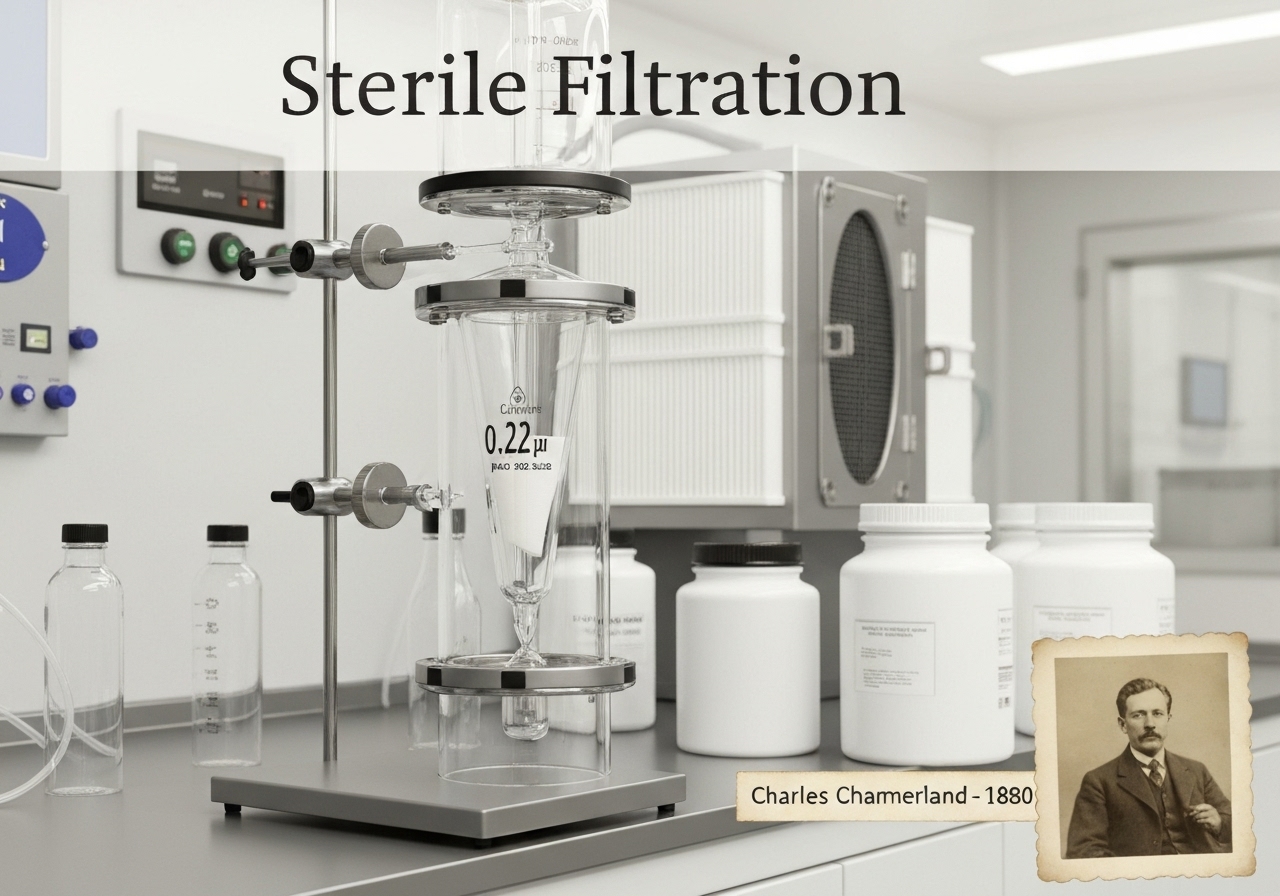
Sterile filtration is a unique sterilization method because it does not inactivate or kill microorganisms but rather physically removes them from a fluid (liquid or gas). The process relies on a membrane filter, a thin layer of semi-permeable material engineered with a specific pore size distribution. For sterilization, a filter with a nominal pore rating of 0.22 micrometers (µm) or smaller is typically used. This size is chosen based on the dimensions of the smallest known free-living bacteria, such as Brevundimonas diminuta, which is often used as the challenge organism for validating sterilizing-grade filters. As the fluid is forced through the filter by positive pressure or vacuum, the pores allow the fluid molecules to pass through but are small enough to trap bacteria and other microorganisms on the filter’s surface. The primary mechanism of retention is size exclusion, but other effects like electrostatic attraction and tortuous path interception can also contribute to capture. This method is indispensable for solutions containing heat-labile components, such as proteins, enzymes, 疫苗, and certain antibiotics, which would be denatured or destroyed by heat-based methods like autoclaving. It is considered a non-destructive sterilization technique. However, it has limitations. It cannot remove all viruses, as many are smaller than 0.22 µm, nor can it remove dissolved endotoxins or pyrogens. The process must also be conducted under aseptic conditions to prevent recontamination of the filtered fluid downstream of the filter.