Product Design, Manufacturing & Innovation Resources
بيت » Sterile Filtration

Sterile Filtration

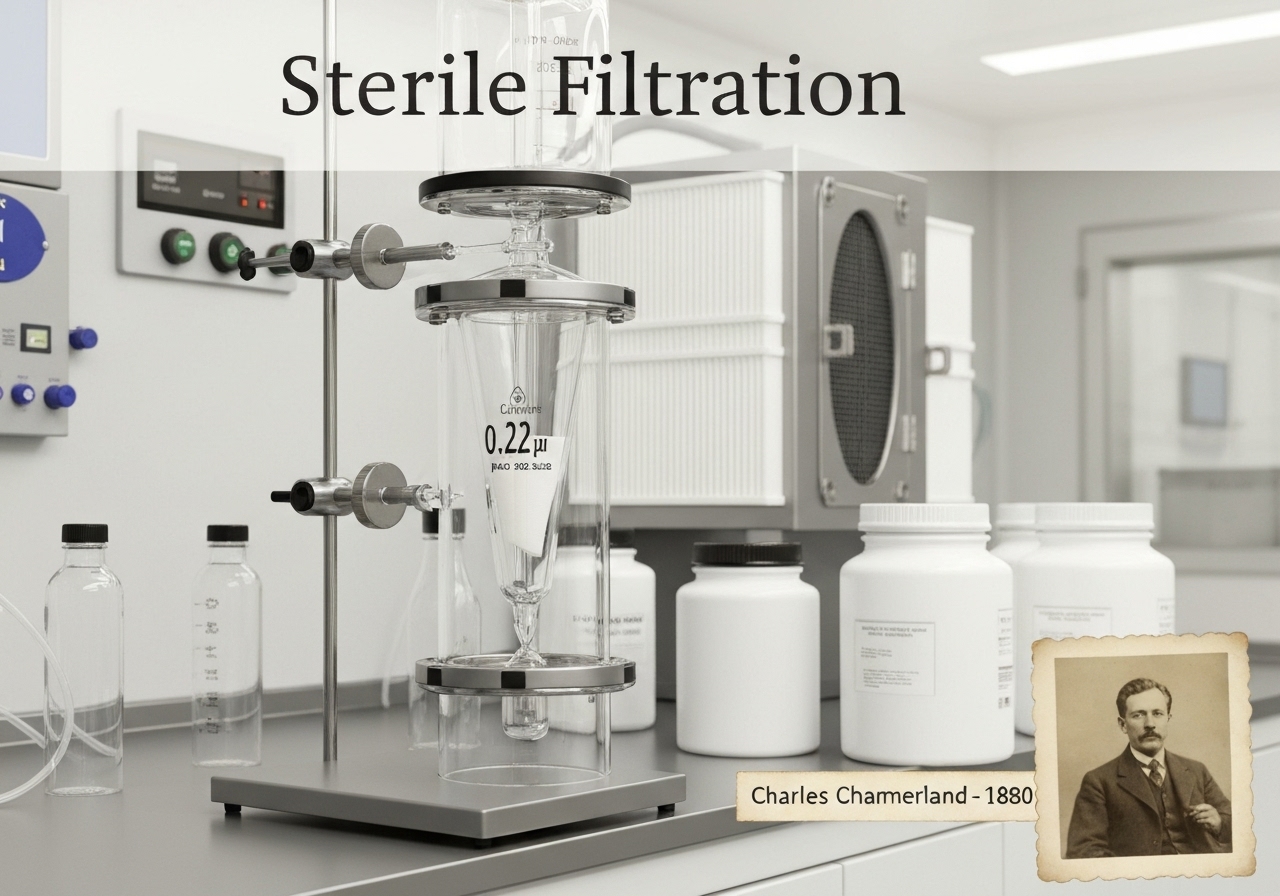
1880
  • Charles Chamberland
Sterile filtration apparatus for microbiological applications in a cleanroom setting.

(صورة توضيحية فقط)

A physical sterilization method that removes microorganisms from liquids and gases by passing them through a filter with a pore size small enough to retain the microbes. A common pore size for sterilizing filtration is 0.22 micrometers (µm), which effectively removes most bacteria. This technique does not kill microorganisms but physically separates them, making it ideal for heat-labile solutions.

Sterile filtration is a unique sterilization method because it does not inactivate or kill microorganisms but rather physically removes them from a fluid (liquid or gas). The process relies on a membrane filter, a thin layer of semi-permeable material engineered with a specific pore size distribution. For sterilization, a filter with a nominal pore rating of 0.22 micrometers (µm) or smaller is typically used. This size is chosen based on the dimensions of the smallest known free-living bacteria, such as Brevundimonas diminuta, which is often used as the challenge organism for validating sterilizing-grade filters. As the fluid is forced through the filter by positive pressure or vacuum, the pores allow the fluid molecules to pass through but are small enough to trap bacteria and other microorganisms on the filter’s surface. The primary mechanism of retention is size exclusion, but other effects like electrostatic attraction and tortuous path interception can also contribute to capture. This method is indispensable for solutions containing heat-labile components, such as proteins, enzymes, اللقاحات, and certain antibiotics, which would be denatured or destroyed by heat-based methods like autoclaving. It is considered a non-destructive sterilization technique. However, it has limitations. It cannot remove all viruses, as many are smaller than 0.22 µm, nor can it remove dissolved endotoxins or pyrogens. The process must also be conducted under aseptic conditions to prevent recontamination of the filtered fluid downstream of the filter.

تاريخ الترشيح لـ الميكروبات يعود تاريخ إزالة المرشحات إلى أواخر القرن التاسع عشر. ففي عام ١٨٨٤، طوّر تشارلز تشامبرلاند، أحد معاوني لويس باستور، مرشح تشامبرلاند المصنوع من الخزف غير المطلي. وكان لهذا الجهاز دورٌ محوري في علم الفيروسات المبكر؛ إذ استخدمه ديمتري إيفانوفسكي عام ١٨٩٢ ومارتينوس بييرينك عام ١٨٩٨ لإثبات أن العامل المسبب لمرض تبرقش التبغ أصغر من أي بكتيريا معروفة، حيث تمكن من المرور عبر المرشح. وأطلقوا على هذه الفئة الجديدة من العوامل المعدية اسم "الفيروس القابل للترشيح". كانت هذه المرشحات المبكرة فعالة، لكنها بطيئة وهشة. وقد تطورت هذه التقنية بشكل ملحوظ خلال القرن العشرين مع تطوير مرشحات الأغشية الحديثة المصنوعة من مواد مثل إسترات السليلوز والنايلون والبولي سلفون. سمحت هذه المواد الجديدة بإنتاج مرشحات ذات أحجام مسام دقيقة، ومتانة أكبر، ومعدلات تدفق أعلى، مما جعل الترشيح المعقم عملية موثوقة وقابلة للتطوير في صناعات الأدوية والتكنولوجيا الحيوية والأغذية والمشروبات.

UNESCO Nomenclature: 2401
– Microbiology

يكتب

Physical Process

خلل

Substantial

الاستخدام

استخدام واسع النطاق

مقدمات

  • louis pasteur’s work on fermentation and germ theory
  • advances in porcelain and material science
  • the need to isolate bacteria and viruses from liquids

التطبيقات

  • sterilization of heat-sensitive pharmaceuticals like vaccines and protein solutions
  • purification of water in laboratories and manufacturing
  • air filtration in cleanrooms and biological safety cabinets (hepa filters)
  • clarification and sterilization of beverages like beer and wine

براءات الاختراع:

NA

أفكار ابتكارية محتملة

  • smart filters with embedded sensors that detect pressure changes indicative of clogging or membrane failure in real-time
  • development of virus-retentive filters with pore sizes in the nanometer range for sterilizing biological products
  • التنظيف الذاتي filter systems using back-flushing or الموجات فوق الصوتية vibrations to extend filter life
  • biodegradable filter cartridges to reduce plastic waste in laboratory and industrial settings
  • filters with surface coatings that actively kill trapped bacteria, preventing biofilm formation and grow-through
  • 3d-printed, custom-designed filter housings optimized for specific fluid dynamics to maximize efficiency
  • integration of sterile filtration into portable water purification devices for hikers or disaster relief
  • multi-stage filters that combine different pore sizes and materials to remove a broader spectrum of contaminants, from particulates to endotoxins
  • graphene-based membranes with atomically precise pores for highly efficient and selective filtration
  • filters designed for use in microgravity environments for life support systems on spacecraft
Related to: sterile filtration, membrane filter, 0.22 micron, physical removal, heat-labile, pharmaceuticals, aseptic, hepa, virology, chamberland filter.

السياق التاريخي

Sterile Filtration

1800
1834-01-01
1880
1902
1920
1928
1930
1800
1800-05-02
1880
1900
1910
1921
1930
1930

(إذا كان التاريخ غير معروف أو غير ذي صلة، على سبيل المثال "ميكانيكا الموائع"، يتم توفير تقدير تقريبي لظهوره الملحوظ)

أحدث الإضافات

أهم المنشورات والمقالات

أفضل الأدوات الأصلية

السنة العاشرة عيد

الصور والتنزيلات بالحجم الكامل متاحة فقط، ومجانية تمامًا، للأعضاء المسجلين.