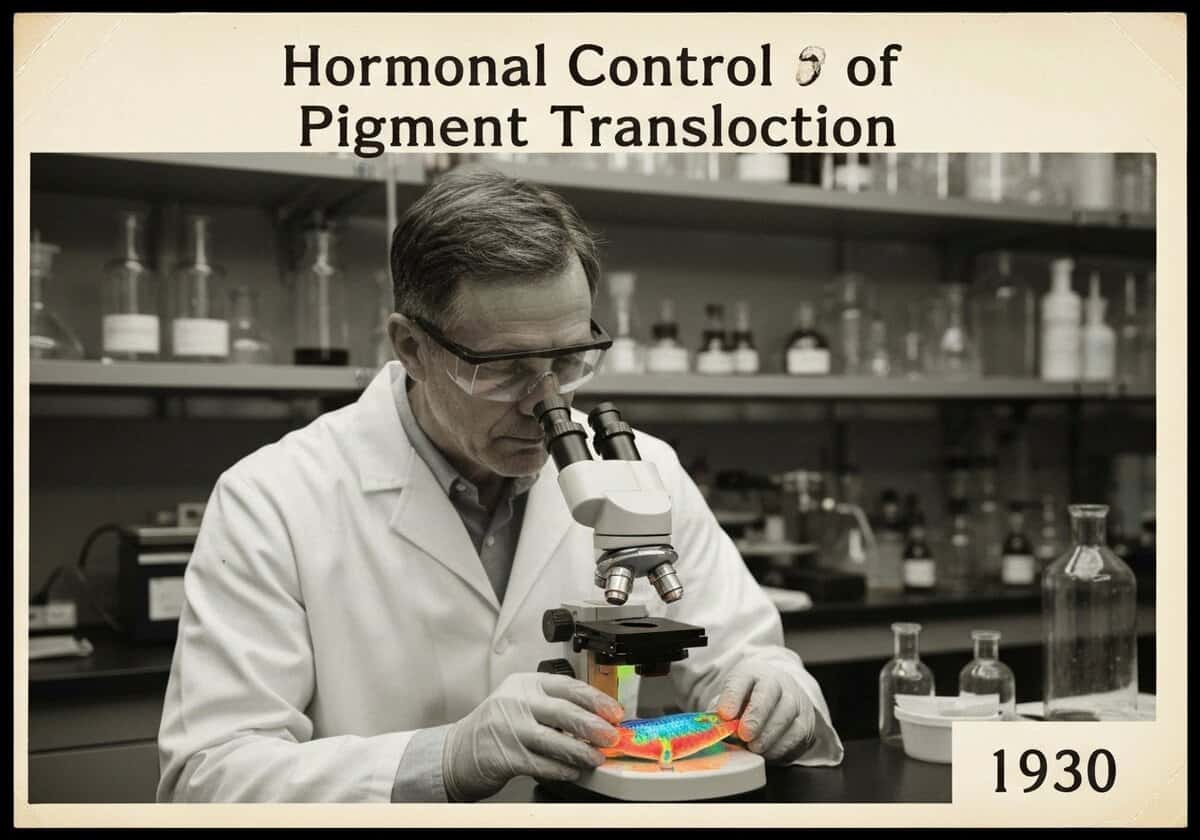
In many ectothermic vertebrates like fish and amphibians, color change is a slower, physiological process regulated by hormones. Pigment granules within chromatophores are translocated along a microtubule cytoskeleton. Hormones such as melanocyte-stimulating hormone (MSH) cause pigment dispersion (darkening), while melatonin or melanocyte-concentrating hormone (MCH) trigger aggregation (lightening), adapting the animal’s color to its environment over minutes to hours.