Product Design, Manufacturing & Innovation Resources
家 » 高压蒸汽灭菌

高压蒸汽灭菌

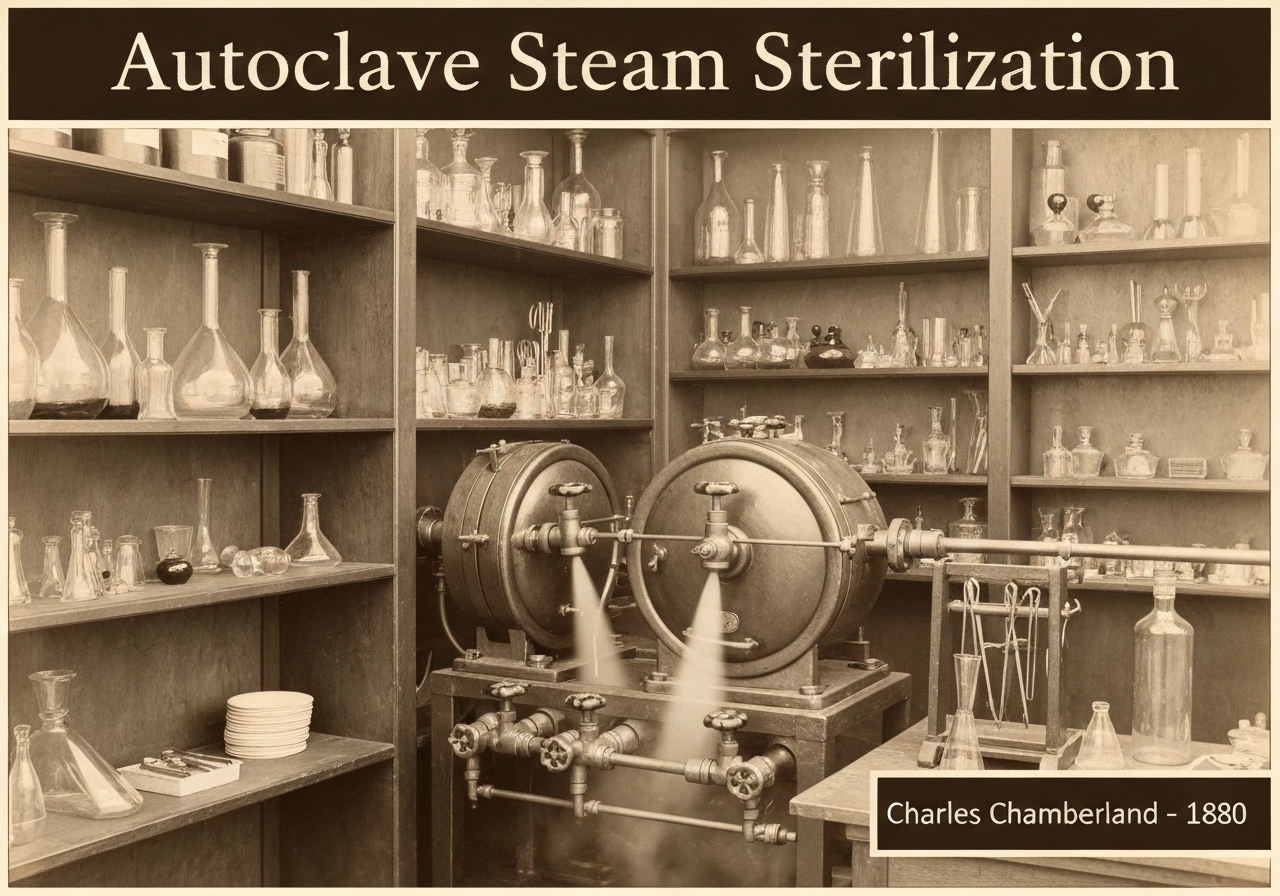
1880
  • Charles Chamberland
应用微生物学中用于蒸汽灭菌的古式高压锅。

(图片仅供参考)

一种利用高温高压饱和蒸汽对设备和用品进行灭菌的方法。典型的循环条件为:温度 121 °C (250 °F),压力比大气压高 100 kPa (15 psi)。 压力 for 15 minutes. This combination of heat and moisture effectively denatures proteins and enzymes, killing all microorganisms, including resilient bacterial spores. An autoclave is released for production only after IQ OQ PQ process validation shows that every cycle reaches the required temperature and exposure time.

The autoclave’s effectiveness stems from the principles of thermodynamics and microbiology. Unlike dry heat, which kills microorganisms through slow oxidation, moist heat from saturated steam is far more efficient. The steam transfers heat energy rapidly and upon contact with a cooler surface, it condenses, releasing its 潜热 of vaporization. This process causes a rapid and irreversible coagulation and denaturation of essential proteins, enzymes, and nucleic acids within the microbial cells, leading to their death. The increased pressure inside the autoclave serves a critical purpose: it raises the boiling point of water. At standard atmospheric pressure, water boils at 100 °C, a temperature insufficient to reliably kill bacterial endospores, which are highly resistant dormant structures. By increasing the pressure to approximately 15 psi (100 kPa) above atmospheric pressure, the boiling point is elevated to 121 °C. This higher temperature, combined with the penetrating power of steam, ensures the destruction of even the most resilient spores, such as those from Geobacillus stearothermophilus, which is often used as a biological indicator to validate autoclave performance. The typical 15-minute cycle time at 121 °C is a standard derived from thermal death time studies, providing a significant safety margin to achieve a high 无菌保证级别 (SAL). The process is not suitable for heat-sensitive materials like plastics or delicate electronics, which would be damaged by the high temperatures and pressure.

从历史上看,高压灭菌器直接源自丹尼斯·帕潘于1679年发明的“蒸汽消化器”(一种压力锅)。然而,将其应用于微生物学领域是由路易·巴斯德的合作者查尔斯·尚伯兰于1879年开创的。尚伯兰在巴斯德的实验室工作时,意识到需要一种可靠的方法来对培养基和设备进行灭菌,以支持蓬勃发展的细菌学领域并验证疾病的病原体理论。他的发明提供了第一个能够彻底消灭所有微生物的可靠工具,彻底改变了实验生物学、医学和外科手术。它使得制备无菌培养基成为可能,从而能够分离和研究纯细菌培养物,这是罗伯特·科赫奠定的现代微生物学基石。高压灭菌器引入临床实践后,显著降低了手术部位感染率,使复杂的手术更加安全,成为世界各地医院不可或缺的工具。

UNESCO Nomenclature: 2401
- 微生物学

类型

物理过程

中断

革命

用法

广泛使用

前体

  • 丹尼斯·帕潘的蒸汽消化器(压力锅)
  • 拉扎罗·斯帕兰扎尼 (Lazzaro Spallanzani) 的煮沸实验 微生物 生长
  • 路易·巴斯德的疾病细菌理论

应用程序

  • 医疗和手术器械的消毒
  • 净化实验室设备和介质
  • 处理医疗机构的废物
  • 罐头和食品保鲜

专利:

NA

潜在创新理念

  • 智能高压灭菌器配备集成生物传感器,可进行实时无菌验证,无需使用循环后指示器
  • 便携式太阳能高压灭菌器,适用于缺乏可靠电力的偏远地区或受灾地区
  • 高压灭菌系统可回收水和热量,最大限度地减少大型医疗机构对环境的影响
  • specialized autoclaves for 3d-printed 医疗植入物, with cycles optimized for complex geometries and novel materials
  • 集成人工智能来预测维护需求并根据负载组成和密度优化周期时间
  • 使用微波辅助蒸汽生成的快速循环高压灭菌器,用于手术室的即时灭菌
  • autoclave systems designed for sterilizing electronic components for 太空探索 missions
  • 家用高压灭菌器,用于对婴儿用品、罐头和高级真菌学爱好者进行消毒
  • 用于高通量工业高压釜的自动化机器人装卸系统
  • 具有可变压力循环的高压灭菌器,用于对精细、压敏材料进行灭菌
相关术语:高压灭菌器、蒸汽灭菌、微生物学、压力、温度、孢子、消毒、医疗器械、查尔斯·钱伯兰、湿热。

历史背景

高压蒸汽灭菌

1800
1800-05-02
1880
1900
1910
1921
1930
1930
1800
1834-01-01
1880
1902
1920
1928
1930

(如果日期未知或不相关,例如“流体力学”,则提供其显著出现的近似估计)

第十年 周年纪念日

只有注册会员才能免费获得 100% 的全尺寸图片和下载。.

> 登录 <